
I. Introduction: The Evolution of Risk Management
The history of real estate investment is, in many respects, a history of containment. From the early days of general partnerships—where investors faced unlimited personal liability—to the advent of the Limited Liability Company (LLC) in 1977, the legal system has progressively evolved to offer more sophisticated shields for capital. However, the modern investor operates in a litigious environment where the asset itself is both the source of wealth and the locus of risk. A single premise liability claim or environmental hazard can not only consume the equity of a specific property but, without proper structuring, “cross-contaminate” an entire portfolio.
Into this arena enters the Series Limited Liability Company (Series LLC).
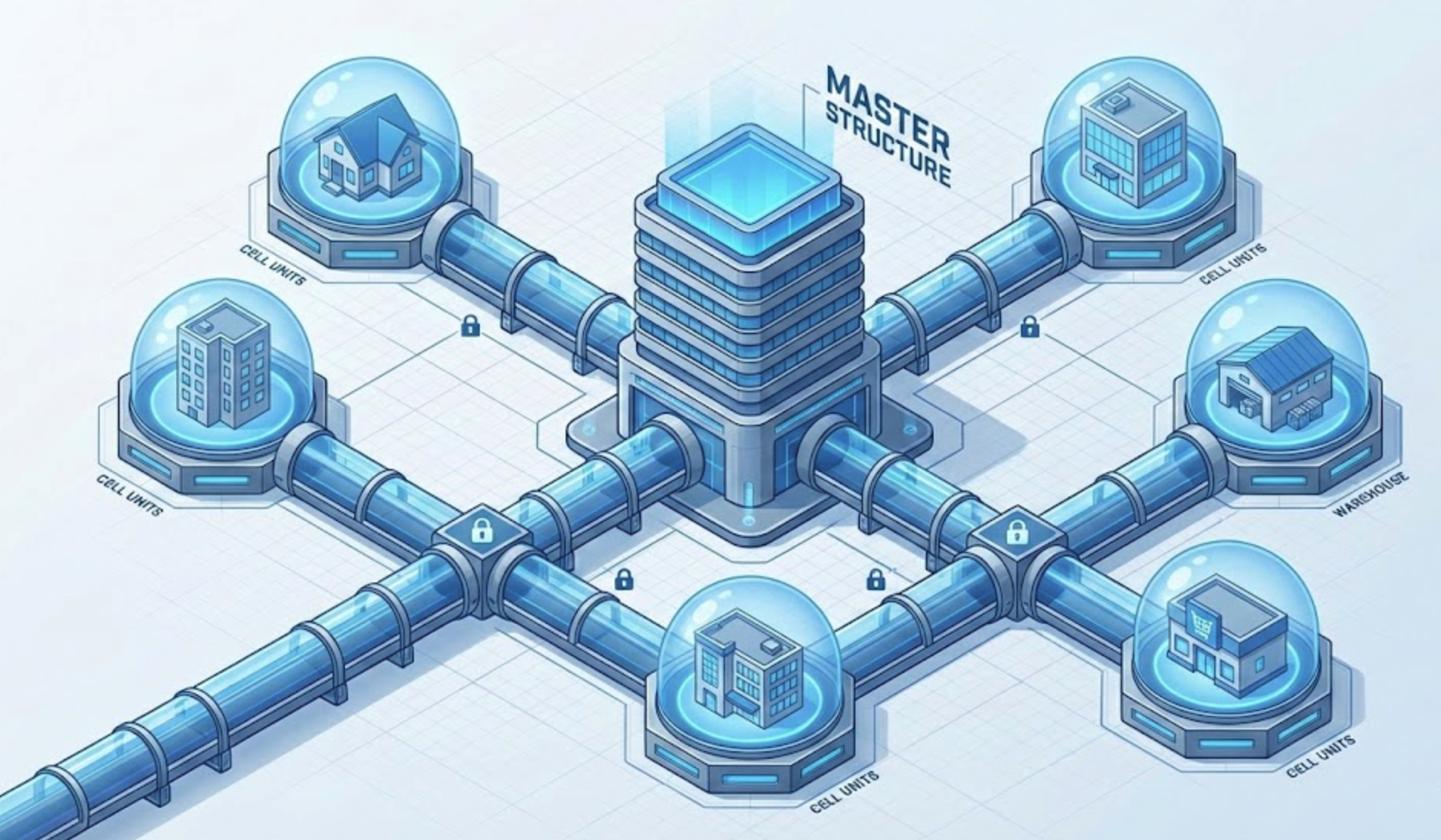
Unlike a traditional LLC, which is a monolithic entity, a Series LLC introduces a “cellular” architecture. It is a singular legal container that can internally replicate itself into an unlimited number of “protected series”—independent cells that function as separate juridical persons (legal entities) for the purposes of liability and asset holding.
In this analysis, we will dissect why the Series LLC is not merely an alternative to the traditional holding company model, but its superior evolutionary successor for the high-volume real estate entrepreneur.
II. The Fortress of Solitude: Horizontal Liability Shielding
The raison d’être of the Series LLC is asset protection. To appreciate its superiority, we must contrast it with the vulnerabilities of traditional structures.
Consider the “Grouping” risk. If an investor places five properties into a single standard LLC to save on filing fees, they create a single target. If a tenant at Property 1 wins a catastrophic judgment, the creditor can seize the equity in Properties 2, 3, 4, and 5. The “infection” spreads because the assets reside in the same legal container.
The Series LLC introduces Horizontal Liability Shielding.
Under statutes like the Texas Business Organizations Code (TBOC) Section 101.602, the debts and liabilities of a particular series are enforceable only against the assets of that series. If Property 1 (Series A) is sued, the creditor hits a statutory firewall when attempting to touch Property 2 (Series B). The investor achieves the isolation of having five separate LLCs without the administrative redundancy.
III. Economic Efficiency: The Death of Friction Costs
For real estate investors, who essentially run volume businesses where margins are made on the spread, administrative costs are a direct drag on ROI. The Series LLC effectively eliminates the “friction costs” of scaling a portfolio.
Let us look at the quantitative advantage of a Series LLC versus the “Multiple Entity” strategy (forming a new LLC for each property) over a 10-property portfolio trajectory in a state like Texas.
[Infographic Placeholder: Visual breakdown of the cost comparison below]
| Cost Category | Traditional Strategy (10 Separate LLCs) | Series LLC Strategy (Protected Series) |
| Initial Filing Fees | $3,000 (10 x $300) | $300 (1 x $300) |
| Registered Agent Fees | $15,000 (Over 10 years) | $1,500 (Over 10 years) |
| Legal Maintenance | High (10 separate minute books) | Moderate (1 Master minute book) |
| Total Estimated Cost | ~$18,000 + High Admin Time | ~$1,800 + Low Admin Time |
Note: Analysis based on current Texas fee structures.
Beyond hard dollars, the Series LLC eliminates the “time tax.” With a Protected Series, the investor creates the entity instantly by signing a “Series Designation.” There is no waiting 3-5 business days for the Secretary of State to stamp a document. You move at the speed of the deal.
IV. The Texas Innovation: Protected vs. Registered Series
Texas has served as a laboratory for this legal innovation. In 2022, the state addressed the Series LLC’s biggest weakness—the “invisible entity” problem—by creating a bifurcated system:
- Protected Series: The traditional, private series created internally via the Operating Agreement. It is free to form and offers maximum privacy, ideal for holding unencumbered assets or cash.
- Registered Series: A “public” series created by filing a certificate with the state ($300 fee). This series receives a distinct filing number and a Certificate of Fact (Good Standing).
This distinction is vital for financing. Institutional lenders often refuse to lend to a “Protected Series” because they cannot verify its existence in public records. The “Registered Series” bridges this gap, allowing investors to convert a series from private to public status strictly when a commercial loan requires it.
V. Operational Realities: The “Corporate Veil” Requires Maintenance
The protection offered by a Series LLC is not automatic; it is a conditional privilege. The “corporate veil”¹ of a Series LLC is thinner than a traditional LLC if records are poor. To maintain the shield, the investor must ensure:
- Separate Records: The Master LLC must maintain records that “reasonably identify” the assets associated with each series. If a forensic accountant cannot tell which dollar belongs to which series, a court may collapse them into one pot (Substantive Consolidation).
- Distinct Titling: Real property must be deeded specifically to the series (e.g., “Grantee: ABC LLC – Series A”), not the Master LLC.
- Bank Accounts: While convenient to pool funds, commingling represents the fastest way to pierce your liability shield. Each series should ideally have its own EIN and bank account.
VI. Conclusion
The Series LLC is a strategic force multiplier. By uncoupling the cost of formation from the act of formation, it democratizes asset protection, allowing a mid-sized investor to enjoy the same sophisticated firewalling as a multinational conglomerate. While it introduces operational complexity—requiring disciplined bookkeeping—the return on investment is substantial.
For the investor building an empire, the Series LLC is the logical architectural foundation.


Leave a Reply
You must be logged in to post a comment.