
Key Takeaways
- Georgia STR markets span three distinct investor profiles: mountain cabins in the North Georgia highlands, coastal and historic-city rentals along the coast, and urban short-stay properties in Atlanta and Augusta.
- Blue Ridge and the broader North Georgia Mountains area hold an 88/100 market score (Grade A) in StaySTRA data, second only to Athens (94/100) among Georgia markets StaySTRA tracks, with a $323 ADR and 63.5% occupancy during peak season.
- Savannah averages 59% occupancy over 12 months with a $299 ADR and a 73/100 market score, anchored by one of the strongest rental demand scores (89.6) in the South.
- Augusta’s ADR jumps to $341 in April, the Masters month, from a $178 12-month average, which reflects deep event demand from the Masters Tournament and limited supply pressure.
- Atlanta is Georgia’s largest urban STR market, but investors should read the city’s recently revised ordinance before purchasing. The residency requirement that existed under the previous rules has been removed effective January 2027.
Blue Ridge, a mountain town in Fannin County roughly 90 miles north of Atlanta, carries an 88/100 market score in StaySTRA data with an investability sub-score of 91.8. That’s the second-highest market score of any Georgia market in our database, behind Athens at 94/100. Think of that number like a composite grade on a report card: it weighs rental demand, investability, seasonality, regulation, and revenue growth together, and 88 is a straight-A result. Savannah follows at 73/100 (Grade B), 59% average occupancy, and a $299 ADR. Those two markets alone show you how much range this state carries.
I’ve been running data analysis since before most investors owned their first property. I’m based in Santa Fe now, keeping a cup of black coffee warm on my desk, and I still get a genuine thrill when a dataset surprises me. Georgia’s STR landscape is one of those surprises. It’s a state with a mountain cabin economy in the northwest, a Historic District coastal city in the east, barrier island beach markets along the Golden Isles, an event-driven urban market in Augusta, and a major metro in Atlanta. Each one runs on different demand drivers. Each one carries different risk profiles. That geographic diversity is exactly what makes Georgia worth a close look for 2026 and 2027 planning.
This guide works through the state’s top markets using StaySTRA data, covering what the numbers actually show for occupancy, average daily rate, and market score. If you’ve been following our Best Airbnb Markets 2026 series, Georgia follows our coverage of Florida, Tennessee, Texas, Colorado, and Arizona. Georgia is a different kind of market than any of them.
Georgia STR Markets at a Glance
StaySTRA tracks multiple Georgia markets across mountain, coastal, lake, and urban geographies. The state doesn’t have one dominant STR type. Blue Ridge and Helen pull cabin-vacation demand. Savannah and Tybee Island run on historic city tourism and coastal leisure. Jekyll Island and the Golden Isles tap into Georgia’s barrier island beach market. Atlanta runs on convention and leisure urban demand, and Augusta spikes around one of golf’s most prestigious events.
What makes Georgia interesting from an investment perspective is entry-price diversity. A well-positioned cabin in Dahlonega or Helen can pencil at a price point that a Savannah Historic District property simply won’t. That said, the Savannah market’s occupancy consistency and high rental demand score make it one of the more reliable income plays in the state.
Keep in mind that Georgia has no statewide STR preemption law, so regulations are set market by market. I’ll flag the key regulatory notes for each market below, but always verify current local rules before you close on any purchase.
Top Georgia STR Markets: The Data
1. Blue Ridge and the North Georgia Mountains
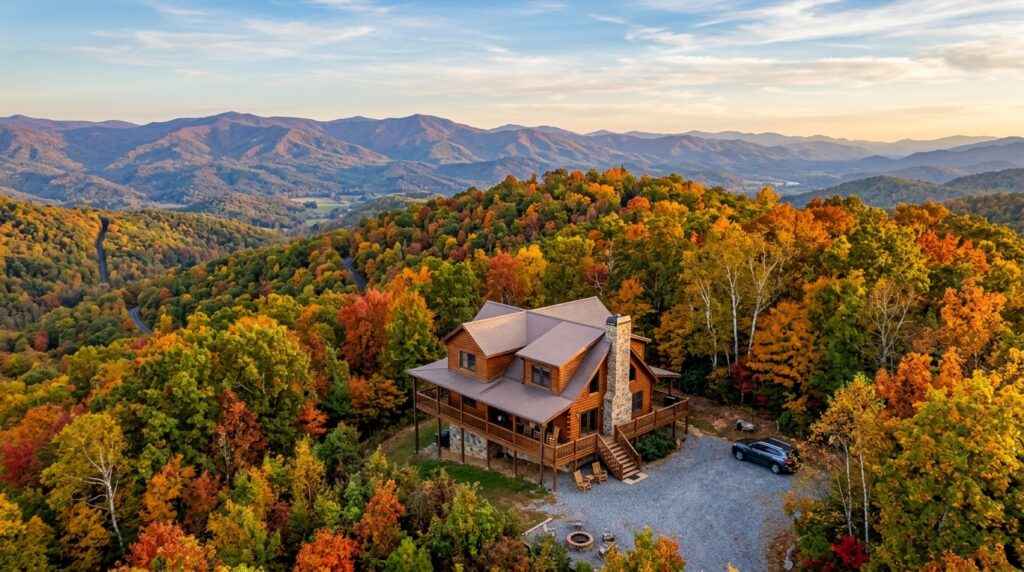
Blue Ridge is Airbnb-dominant and cabin-focused. The North Georgia Mountains market area, which includes Blue Ridge, Ellijay, and surrounding Fannin County communities, holds an 88/100 market score in StaySTRA data, with investability scoring 91.8 out of 100. Those are the kind of numbers that make a data analyst stop and double-check.
StaySTRA data shows the North Georgia Mountains area at 63.5% occupancy and a $323 average daily rate in October 2026, with an average monthly revenue of $5,869 per listing during that peak period. Annualized across all months, the platform reports an average of $47K per year across the North Georgia Mountains market, which reflects the cabin market’s seasonal swing. October is peak; winter and spring months pull that annual average down.
The cabin economy here is genuine. Roughly 98% of active listings are entire-home properties, and more than half accommodate eight or more guests, which speaks to the group-travel demand this market was built on. Drive market from Atlanta at under two hours means last-minute weekend bookings remain strong even when advance bookings lighten.
Fannin County requires a $225 STR registration certificate with annual renewal. That’s a low regulatory bar compared to most coastal markets. No residency requirement, no ownership cap. For cabin investors, this market’s regulatory picture is clean.
The full Blue Ridge market breakdown is at the Blue Ridge STR location page. For a deeper dive on this specific market, see the Blue Ridge STR Market 2026 article.
2. Savannah
Savannah is a steadier STR market than Georgia’s mountain and beach markets. It runs year-round. StaySTRA data shows the Savannah market at 59% occupancy, a $299 ADR, and $5,038 average monthly revenue per listing over the 12 months through October 2026, with a 73/100 market score (Grade B). What stands out in the score breakdown is rental demand at 89.6 and investability at 87.8. Those are strong fundamentals by any measure.
The Historic District does most of the heavy lifting for demand. Savannah gets roughly 13 million visitors per year (Source), and the STR market absorbs a meaningful share of that traffic. The city’s walkable squares, restaurant scene, and haunted history create a guest profile that returns. Repeat guests and word-of-mouth drive occupancy in a way that pure leisure beach markets don’t always sustain.
The regulatory picture in Savannah is more complex than Blue Ridge. The city has a permit system for STRs, with ongoing discussion about density and buffer zones. Chatham County previously considered a 500-foot buffer rule that would have affected significant portions of the market. That proposal did not pass in its original form, but the regulatory environment here deserves ongoing attention. Verify current permit requirements before purchasing in any Savannah zip code.
Tybee Island, the barrier island east of Savannah, falls within the same market area in StaySTRA’s data. Tybee shows 59.2% occupancy and a $299 ADR, consistent with the broader Savannah coastal zone. Note that Tybee restricts new STR certificates in R-1, R-1-B, and R-2 zones. If you’re evaluating Tybee specifically, confirm permit availability before making any offer.
Live Savannah market data is at the Savannah STR location page.
3. Augusta
Augusta’s ADR averages $178 per night over the 12 months through October 2026, per StaySTRA data for the Augusta-Aiken market. At 54% occupancy, the average annual revenue comes in at roughly $31K per listing. Those numbers tell only part of the story. Augusta runs on events, and the event calendar is predictable.
The Masters Tournament compresses supply and spikes ADR to levels the annual average doesn’t capture. Think of Augusta’s revenue curve like a golf scorecard: most holes are par, but a few eagle opportunities carry the whole round. Investors who price correctly for those event weekends often recover a significant share of their annual income in a handful of nights. That’s a different business model than a year-round coastal market. It rewards active management and willingness to hold minimum-stay requirements that most guests will accept gladly for major events.
Augusta’s non-Masters months run lighter. This is a market that fits a specific investor profile, one who understands event-driven economics and isn’t counting on steady monthly cash flow. If you need year-round consistency, Savannah or the Atlanta metro will serve you better.
See the Augusta STR location page for current figures.
4. Atlanta
Atlanta is Georgia’s largest urban STR market. StaySTRA data shows the Atlanta market at 55% occupancy and a $171 ADR, with an average annual revenue of $32K per listing. That occupancy is healthy for an urban market. The ADR is on the lower end compared to coastal and mountain peers, which reflects the mix of property types and the competitive listing density.
Atlanta’s STR regulatory landscape changed materially in September 2026. The city had a residency requirement under its prior ordinance. That requirement was removed, with the new framework effective in January 2027. Investors considering Atlanta should read the full details in the Atlanta STR regulations update before purchasing. The rule change is investor-favorable, but the full licensing and zoning requirements still apply.
As a general note: Atlanta is a large, diverse city. STR performance varies considerably by neighborhood. Buckhead, Midtown, Inman Park, and Old Fourth Ward each run different occupancy profiles. The market-wide $171 ADR and 55% occupancy are averages. Use the Atlanta STR location page for market-level data and city rules before committing to a specific area.
5. Jekyll Island
Jekyll Island is one of Georgia’s barrier islands. The island’s state-managed nature gives it a quieter, more controlled feel than many coastal destinations, and that translates to a specific guest profile. StaySTRA data for the Jekyll Island area shows 55% occupancy and $59K average annual revenue over the 12 months through October 2026. The broader market area that includes Amelia and St. Simons Islands runs at a 55/100 market score (Grade D), which reflects the more constrained supply environment and the region’s lower seasonality and revenue growth sub-scores.
Don’t let that number scare you away entirely. The 55/100 for the broader area reflects regional factors that don’t apply equally to Jekyll Island specifically. Jekyll’s state park overlay and controlled development mean supply growth is structurally capped. That’s not necessarily a negative for investors already in the market, but it does require careful due diligence on what properties are actually permitted to operate as STRs.
See the Jekyll Island STR location page for current data.
6. Gainesville and Lake Lanier
Gainesville sits at the base of Lake Lanier, northeast of Atlanta. StaySTRA data shows 55% occupancy and $44K average annual revenue. Lake Lanier is one of the most visited recreational lakes in the United States, and the demand it generates is consistent with that traffic. The market is accessible from Atlanta as a drive-to destination and benefits from both weekend leisure and event traffic from nearby university activity.
Gainesville doesn’t have the cabin-destination branding of Blue Ridge or the historic-city profile of Savannah, but its occupancy is solid and its proximity to Atlanta creates a steady visitor pipeline. It’s a market worth watching as investor attention in Georgia’s mountain and coastal zones has pushed prices in those areas upward.
7. Helen, Dahlonega, and the Mountain Corridor
Helen and Dahlonega sit within or adjacent to the North Georgia Mountains market zone. StaySTRA data for the North Georgia Mountains market, which includes both towns, shows approximately 47% annualized occupancy, with average annual revenue around $47K per listing. Those numbers look modest compared to Blue Ridge’s October peak data, but the story here is about entry price and cash-flow math.
Helen, Georgia’s Bavarian-themed mountain town on the Chattahoochee River, pulls tourist traffic on a distinctive theme that drives its own demand. Dahlonega is Georgia’s first Gold Rush town and a wine-country destination with growing recognition. Both markets offer entry-price advantages over Blue Ridge while sharing the mountain-cabin appeal.
The 47% annualized occupancy tells you these are shoulder-heavy markets. If you’re a first-time STR investor and the lower entry price matters more than peak-performance metrics, running the numbers on a specific property here through the StaySTRA Analyzer will show you whether the cash flow works at current purchase prices.
Georgia STR Market Rankings: Top 9 by StaySTRA Data
The table below ranks Georgia markets using StaySTRA data for occupancy, average daily rate, and market score where available. Market score reflects StaySTRA’s composite rating across rental demand, investability, seasonality, regulation, and revenue growth.
| # | Market | Type | Occupancy | ADR | Market Score |
|---|---|---|---|---|---|
| 1 | Blue Ridge / N. GA Mountains | Mountain Cabin | 63.5% (Oct peak) | $323 | 88/100 (A) |
| 2 | Savannah | Historic / Coastal | 59% | $299 | 73/100 (B) |
| 3 | Tybee Island | Coastal Beach | 59% | $299 | See location page |
| 4 | Jekyll Island | Barrier Island | 55% | $328 | 55/100 (D)* |
| 5 | Atlanta | Urban | 55% | $171 | See location page |
| 6 | Gainesville / Lake Lanier | Lake / Suburban | 55% | See location page | See location page |
| 7 | Augusta | Urban / Events | 54% | $178 | See location page |
| 8 | Helen | Mountain Town | 47% | See location page | See location page |
| 9 | Dahlonega | Mountain / Wine | 47% | See location page | See location page |
*Score applies to the broader Amelia/St. Simons/Jekyll Islands market area. Data: StaySTRA (2026). October peak data noted for Blue Ridge. All other figures reflect 12-month averages, November 2025 through October 2026. Run a property-level analysis at the StaySTRA Analyzer.
Georgia Regulatory Landscape
Georgia has no statewide STR preemption law, which means every market operates under its own rules. This is both a risk and an opportunity depending on where you buy.
Blue Ridge and Fannin County have one of the most investor-friendly regulatory environments in the state: a $225 registration certificate, annual renewal, and no residency or ownership caps. The North Georgia mountain corridor broadly is permissive compared to coastal and urban markets.
Savannah and Chatham County have a permit system with ongoing density discussions. Tybee Island has restricted new certificate issuance in residential zones. If Tybee is on your list, contact the city directly about permit availability before you make an offer.
Atlanta’s ordinance was revised in September 2026, removing the residency requirement that had been a barrier to non-owner-occupied investment. The full details, including what replaced it, are covered in the Atlanta STR regulations update. Verify what currently applies before purchasing.
Augusta does not have aggressive STR regulation at the city level, but zoning rules and neighborhood association restrictions can limit where STRs operate in practice. Due diligence on individual parcels matters here.
Valdosta, further south in Georgia, implemented a 180-day moratorium on new STR permits in 2026. That market is small by investor standards, but it signals that regulation activity in Georgia is broader than the headline markets suggest. Smaller markets can move quickly.
Run Your Own Georgia Market Analysis
The numbers in this article are averages. Your specific property in a specific neighborhood will tell a different story. The StaySTRA Analyzer lets you run a free property-level analysis on any Georgia address. See projected occupancy, estimated ADR, and comparable active listings before you decide. No subscription required for the base analysis.
Which Georgia Market Fits Your Investment Profile?
Stay with me here, because this is where the data starts translating into decisions.
If you want one of the highest market scores and a strong seasonal mountain cabin market, Blue Ridge and the North Georgia Mountains are the answer. The 88/100 score, 91.8 investability sub-score, and low regulatory burden make it one of the most data-supported entry points in the state right now. The tradeoff is seasonal concentration: October is peak, and the annual average occupancy is lower than the peak-month figure suggests.
If you want year-round consistency and a city with proven tourism infrastructure, Savannah is steadier than Georgia’s mountain and beach markets. The 59% average occupancy holds across seasons in a way that mountain cabin markets simply don’t match. The 73/100 score and 89.6 rental demand sub-score reflect genuine, durable demand.
If you understand event-driven economics, Augusta is worth modeling. At $341 per night in April against a $178 annual average, the Masters spike is the story. The annual average revenue of $31K is on the lower end, but active management around the Masters calendar is what separates strong performers from mediocre ones in this market.
If you want urban market access without coastal prices, Atlanta at 55% occupancy and $171 ADR offers scale. The recently revised ordinance removes a barrier that had been a concern for non-owner-occupied investors. Just make sure you’re buying in a neighborhood where the demand profile supports your pro forma. Market-wide averages mask significant neighborhood variation.
If you want the lowest entry price and the cabin aesthetic, Helen and Dahlonega offer access to the mountain market at a lower cost basis than Blue Ridge. The 47% annualized occupancy and $47K annual revenue average require discipline on purchase price, but the right property at the right price can still work. Run the Analyzer before you commit.
Georgia vs. Other Southeast STR States
In this series we’ve covered Florida, Tennessee, Texas, Colorado, and Arizona. Georgia sits in an interesting position relative to its neighbors.
Florida’s coastal markets dominate supply volume and have faced significant occupancy compression. Georgia’s coastal options are smaller and more constrained by state park management and barrier island geography, which limits supply growth. Savannah in particular doesn’t face the inventory growth pressure that Orlando or Tampa have experienced.
Tennessee’s Smoky Mountains and Gatlinburg market is the closest analogue to Blue Ridge in terms of cabin demand type. The difference is scale and regulatory maturity. Gatlinburg is a larger, more established market with more complex STR regulation. Blue Ridge still has an open-registration environment and a 90-minute drive from Atlanta. For cabin investors who want a less-saturated mountain market than Gatlinburg, Blue Ridge data supports the case.
Georgia’s overall appeal comes down to this: it’s a state where three distinct STR investment types (mountain cabin, coastal/historic city, event-driven urban) are all present and all supported by real data. That’s not common. Most states do one type well. Georgia does three.
Frequently Asked Questions
Is Georgia a good state for Airbnb investment in 2026?
Yes, Georgia offers strong STR investment fundamentals across multiple market types. Blue Ridge and the North Georgia Mountains hold an 88/100 market score in StaySTRA data. Savannah averages 59% occupancy over 12 months with a 73/100 market score and high rental demand. The state has no preemption law, which means regulations vary by city, so buyers should verify local rules for their specific target market before purchasing.
What are the best Airbnb markets in Georgia for investors?
StaySTRA data points to Blue Ridge and the North Georgia Mountains as a top-scored market at 88/100, behind Athens at 94/100, followed by Savannah at 73/100. Augusta’s ADR jumps to $341 per night in April, the Masters month. Atlanta is the largest urban market. The right choice depends on your investment profile: cabin seasonal markets differ significantly from year-round coastal or event-driven urban markets.
Do I need a permit to Airbnb in Georgia?
Yes, in most Georgia markets that see meaningful STR activity. Fannin County (Blue Ridge) requires a $225 registration certificate. Savannah and Chatham County have a permit system. Tybee Island has restricted new permit issuance in several residential zones. Atlanta has its own STR licensing framework. There is no statewide Georgia permit system, so requirements vary by county and municipality. Always verify local rules before listing.
How does Blue Ridge Georgia compare to the Smoky Mountains for STR investment?
Both are cabin-dominant mountain markets with Airbnb as the primary platform. The Smoky Mountains (Gatlinburg/Pigeon Forge) is larger, more established, and more heavily regulated. Blue Ridge offers a quieter market with lower supply concentration, an open registration system in Fannin County, and a 90-minute drive from Atlanta that keeps weekend demand robust. For investors who want a mountain cabin market with less competition and cleaner regulation, Blue Ridge data supports the case.
What is the Atlanta STR market like after the 2026 ordinance change?
Atlanta removed its residency requirement for STR operators in September 2026, with the change effective January 2027. This was a significant shift that opened the market to non-owner-occupied investment in a way the previous ordinance did not. At 55% occupancy and $171 ADR, Atlanta’s fundamentals support urban short-stay investment, particularly in high-demand neighborhoods. See the Atlanta STR regulations update for complete details on what the new framework requires.
Is the Savannah STR market year-round or seasonal?
Savannah is one of Georgia’s most year-round STR markets. The city draws tourism from its Historic District, squares, restaurant scene, and regional events across all seasons. StaySTRA data shows 59% occupancy as an annual average, which reflects a more even demand curve than beach or mountain markets. Summer and spring are strong. Fall is solid. Even winter sees consistent bookings from drive-market visitors and event traffic.
We do our best to keep our data accurate and up to date, but markets move fast and we are only human. Always verify current figures directly with local sources before making investment decisions.
Ready to analyze a specific Georgia property? The StaySTRA Analyzer runs a free property-level analysis on any Georgia address, showing projected occupancy, comparable listings, and estimated revenue based on current market data. No subscription required for the base analysis.
Become a StaySTRA Insider
Join free — get our newsletter + 1 free property analysis/month.
No spam. Unsubscribe anytime. Free membership includes property analyses and market insights.