

Key Takeaways
- What Defines the Top 50 Short-Term Rental Markets?
- Coastal & Vacation Hotspots Myrtle Beach, SC – 60 miles of beaches and golf courses make this a Southern favorite.
- Augustine, FL (#48) America’s oldest city blends history and beaches, with historic downtown homes fetching premium rates.
- All operators must obtain a license, collect hotel occupancy taxes, post the license number on listings, and comply with occupancy and noise restrictions.
What Defines the Top 50 Short-Term Rental Markets?
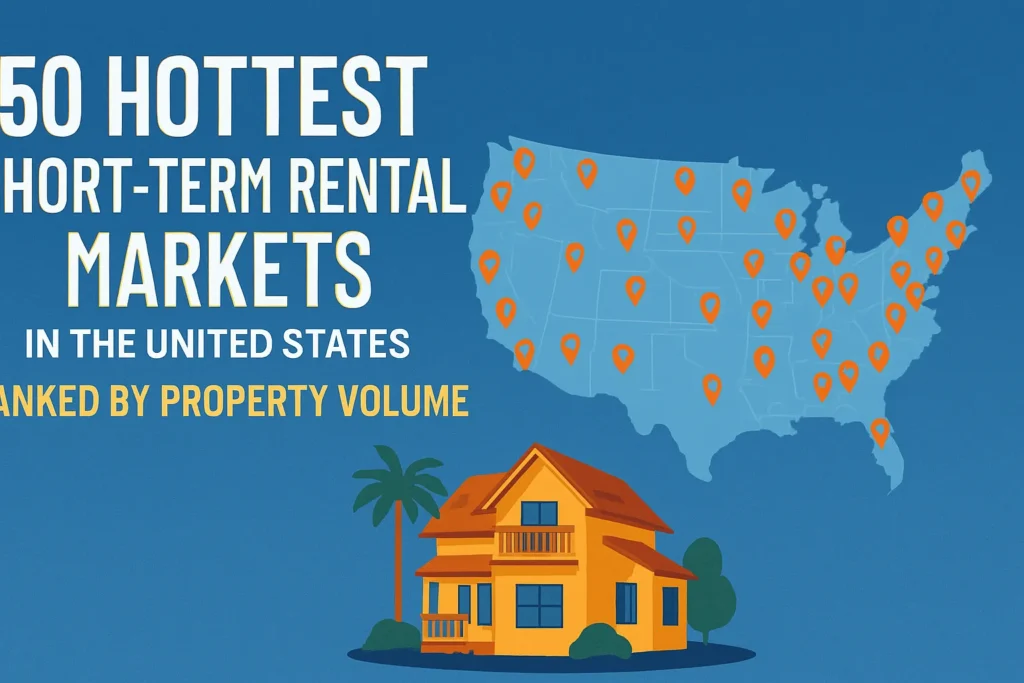
The short-term rental (STR) industry continues to boom, fueled by traveler demand for unique stays and investor interest in high-yield markets. But with regulations shifting and competition rising, knowing where to invest matters more than ever. Using aggregated data from industry leaders like AirDNA, Mashvisor, and AllTheRooms, we’ve compiled the definitive list of the top 50 U.S. short-term rental markets by property volume in 2023. Whether you’re a host, investor, or traveler, this guide reveals the cities dominating the STR landscape—and why.
Key Takeaways
- 🏙️ Major Cities Dominate: New York City, Orlando, and Los Angeles lead with massive STR inventories.
- 🏖️ Tourist Hotspots Rule: Coastal destinations (Miami, Myrtle Beach) and mountain towns (Gatlinburg, Lake Tahoe) thrive on seasonal demand.
- 📜 Regulations Matter: Cities like San Francisco and New York enforce strict STR laws, while others (e.g., Gatlinburg, TN) embrace rentals.
The Top 50 Short-Term Rental Markets in the US
Below is the ranked list of cities with the highest volume of active short-term rental properties. Data reflects total listings, not revenue or occupancy rates.
Major Urban Hubs
- New York City, NY – Despite stringent regulations, NYC remains #1 due to relentless tourist demand.
- Orlando, FL – Theme park capital (Walt Disney World, Universal) drives year-round family bookings.
- Las Vegas, NV – Convention traffic and entertainment keep occupancy rates high.
Coastal & Vacation Hotspots
- Myrtle Beach, SC – 60 miles of beaches and golf courses make this a Southern favorite.
- Destin-Fort Walton Beach, FL – “Emerald Coast” luxury condos attract summer crowds.
- Outer Banks, NC – Quaint beach cottages and historic charm draw repeat visitors.
Mountain & Nature Escapes
- Gatlinburg, TN – Gateway to the Smoky Mountains, with cozy cabins and hiking tourism.
- Lake Tahoe, CA/NV – Ski resorts and lakefront properties cater to adventure seekers.
- Sedona, AZ – Red rock views and wellness retreats fuel its boutique rental scene.
Unexpected Standouts
- Branson, MO – Dubbed the “Live Music Capital of the World,” it’s a Midwest hidden gem.
- Minneapolis-St. Paul, MN – Strong corporate and event travel sustain its STR market.
- Santa Cruz, CA – Surf culture and proximity to Silicon Valley create steady demand.
5 Markets Worth a Closer Look
- Austin, TX (#7)
A blend of tech money, festivals (SXSW, ACL), and quirky vibes keeps Austin’s STR scene competitive. Investors favor East Austin’s modern lofts and downtown condos. - Gulf Shores & Orange Beach, AL (#21)
This Alabama coastal duo saw a 22% YoY increase in listings post-pandemic, thanks to affordable beachfront compared to Florida. - Asheville, NC (#32)
Craft beer, Blue Ridge Mountain views, and a thriving arts scene make Asheville a magnet for boutique cabin rentals. - Park City, UT (#41)
Beyond Sundance Film Festival, winter skiing and summer hiking ensure year-round bookings—especially for luxury chalets. - St. Augustine, FL (#48)
America’s oldest city blends history and beaches, with historic downtown homes fetching premium rates.
Regulatory Considerations
While markets like Gatlinburg, TN and Panama City Beach, FL openly welcome STRs, others pose challenges:
- New York City: STRs under 30 days are illegal unless hosts register with the city and stay onsite.
- San Francisco, CA (#33): Only “permanent residents” can host STRs, slashing inventory by 50% since 2019.
- Honolulu, HI (#43): Oahu’s strict zoning laws limit permits, but demand remains sky-high.
Conclusion
The U.S. short-term rental market is far from one-size-fits-all. Urban hubs leverage tourism and business travel, while coastal and mountain markets bank on seasonal peaks. For investors, success hinges on balancing location, local regulations, and unique guest demand.
Ready to dive deeper? Bookmark this list, and stay tuned for our next breakdown of occupancy rates and revenue leaders!
Frequently Asked Questions
What is AirDNA and how do STR investors use it?
AirDNA is a data analytics platform that provides short-term rental market data including average daily rates, occupancy rates, revenue estimates, and supply trends for virtually any market in the United States. Investors use AirDNA to evaluate potential markets, underwrite specific properties, and track competitive performance. Subscription plans start at around $20 per month for a single market.
What are the Airbnb rules in Austin, Texas?
Austin distinguishes between Type 1 (owner-occupied) and Type 2 (non-owner-occupied) STR licenses. Type 2 licenses are no longer being issued in most residential zones, making existing licenses valuable. All operators must obtain a license, collect hotel occupancy taxes, post the license number on listings, and comply with occupancy and noise restrictions.
Is Austin still a good market for short-term rentals?
Austin remains strong for STRs due to its robust event calendar (SXSW, ACL, F1), tech sector business travel, and tourism appeal. However, restrictive regulations on non-owner-occupied properties have limited new supply, which benefits existing permitted operators. Investors should focus on Type 1 properties or look at surrounding areas with fewer restrictions.
Is Miami a good market for short-term rental investing?
Miami is one of the strongest STR markets in the country with year-round demand from international and domestic tourists, business travelers, and event attendees. However, high property prices and complex regulations in some neighborhoods have compressed margins. The best opportunities are in areas with clear STR zoning and strong vacation demand.
What are the short-term rental rules in Miami?
Miami-Dade County and the City of Miami have different STR regulations. The City of Miami allows STRs in most commercial and mixed-use zones with proper permits. Miami Beach has much stricter rules that limit STRs to specific resort-zoned areas. All operators must collect state sales tax and local tourist development taxes. Check the specific rules for your exact address.