

Key Takeaways
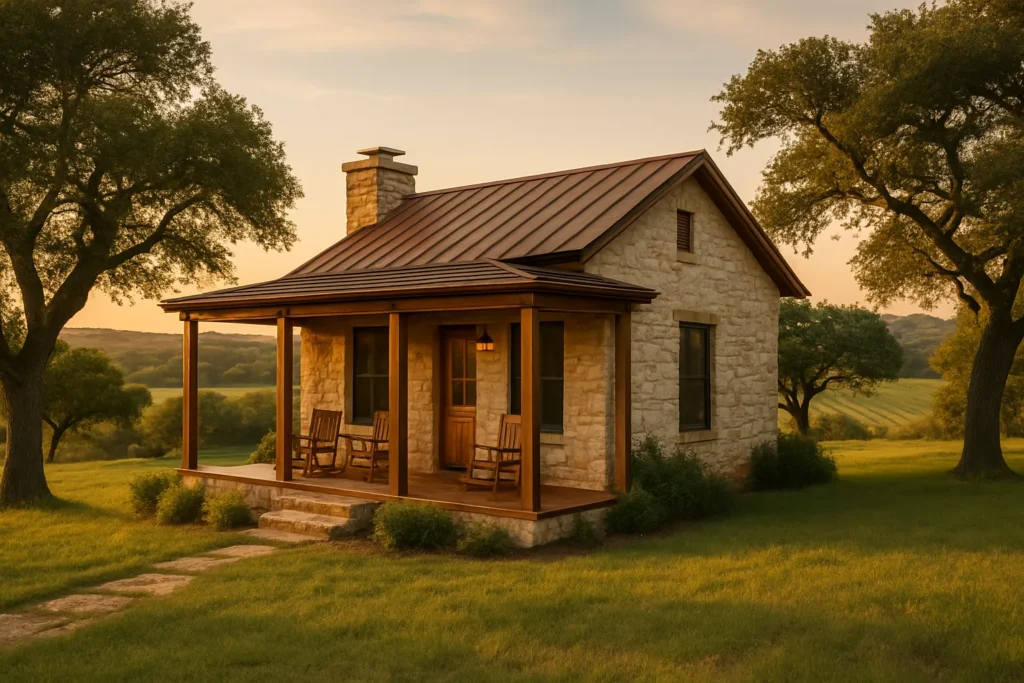
- Maria bought the little limestone cottage outside Fredericksburg in 2019.
- The market is still maturing, and midweek bookings remain a challenge.
- It is also a liability concern, a maintenance issue, and a problem when guests with low-clearance rental cars arrive after dark.
- If you are looking for a spreadsheet-optimized investment, there are easier markets.
Maria bought the little limestone cottage outside Fredericksburg in 2019. Two bedrooms, a deep porch facing west, and a view of the rolling hills that made her chest tight the first time she saw it. She was not thinking about Airbnb. She was thinking about somewhere to breathe on weekends away from her accounting firm in San Antonio.
But her sister stayed one weekend and said what everyone says about Hill Country properties: “You know, you could rent this out when you are not using it.”
Five years later, Maria’s cottage pulls about $3,400 a month in rental revenue. She has a local cleaner she trusts, a pricing tool that adjusts her rates automatically, and a guest book filled with notes from couples who came for the wine trails and left feeling like they had discovered something. She also has a property tax bill that made her eyes water, a neighbor who does not love the parade of strangers, and a complicated relationship with the word “vacation.”
Maria’s story is a composite, but every detail comes from real conversations with Hill Country hosts. This is what running an STR in wine country actually looks like.
The Pull of the Hill Country
The Texas Hill Country stretches west of Austin and San Antonio across a landscape of limestone bluffs, spring-fed creeks, and live oak canopies. It is one of those places that does not photograph well because the beauty is in the feeling, not the frame. The light at golden hour, the smell of cedar after rain, the quiet that settles over everything once you get past the last subdivision.
Three towns anchor the STR market here, each with a distinct personality.
Fredericksburg is the heavyweight. German heritage, 50-plus wineries within 30 minutes, Main Street shopping, and a tourism infrastructure that has been building for decades. It is the most established STR market in the Hill Country and the most competitive.
Wimberley is the artist’s retreat. Swimming holes, zip lines, a Saturday market that draws thousands, and a quiet creative community that values its small-town identity even as tourism grows. Guests come here to unplug.
Dripping Springs is the newest player. Self-proclaimed “Gateway to the Hill Country,” it has built a brewery and distillery corridor that rivals anything in Austin. Wedding venues dot the landscape. It is 30 minutes from downtown Austin, which makes it both accessible and, increasingly, expensive.
What the Numbers Actually Show
I spoke with hosts across all three markets, and the financial picture is more nuanced than the glossy investment articles suggest.
Fredericksburg properties command the highest nightly rates in the Hill Country, with averages around $285 to $290 per night. But occupancy runs around 42 percent, meaning your property sits empty more than half the month. The math still works because the rate premium is significant. Monthly revenue averages roughly $3,400.
Wimberley properties average around $250 to $255 per night with slightly better occupancy near 47 percent. Monthly revenue comes in around $3,200. The lower rate is offset by more consistent bookings, particularly from Austin weekenders who treat Wimberley as their regular escape.
Dripping Springs shows interesting dynamics. Nightly rates average $257 to $261, competitive with the other markets. But occupancy drops to about 38 percent, the lowest of the three. The market is still maturing, and midweek bookings remain a challenge. Monthly revenue averages around $2,400.
For a broader look at how these numbers compare across the state, our ranking of the best Texas cities for STR investment provides additional context.
The Guests Who Come Here
Hill Country guests are different from urban STR guests, and understanding this shapes everything about how you operate.
The primary guest profile is couples. Wine trail weekends, anniversary trips, “we just need to get away” escapes. They tend to be 35 to 55, dual income, and willing to pay a premium for the right ambiance. They care about the porch, the view, the quality of the linens, and whether the coffee is good. They do not care about being close to a highway.
The secondary profile is families, particularly in Wimberley (swimming holes and zip lines) and Dripping Springs (proximity to Austin attractions). These bookings tend to be longer and during school breaks.
The third profile, growing fastest, is bachelorette and wedding groups. Fredericksburg and Dripping Springs both draw significant wedding tourism. This is lucrative but comes with noise risk, higher cleaning costs, and the occasional incident that makes you question your life choices.
What you almost never see in the Hill Country is the business traveler. There are no conference centers, no corporate headquarters, no hospital complexes driving weeknight demand. This is a leisure market, which means your revenue is concentrated on weekends and holidays. Plan accordingly.
The Things Nobody Tells You
Every Hill Country host I spoke with mentioned the same challenges, and none of them appear in the investment brochures.
Water. Many Hill Country properties are on well water and septic systems. When your well pump fails on a Saturday morning with guests in the house, you are not calling the city. You are calling a well service that may or may not be available. Budget for water system maintenance and have a backup plan.
Wildlife. Scorpions, snakes, deer through the garden, and the occasional feral hog situation. Your guests from Houston think this is charming until a scorpion appears in the bathroom. Your guest communications need to set expectations about rural living without scaring people off.
Roads. Some of the most desirable Hill Country properties are down unpaved county roads. This is part of the charm. It is also a liability concern, a maintenance issue, and a problem when guests with low-clearance rental cars arrive after dark.
Neighbors. Many Hill Country communities are small, and longtime residents have complicated feelings about STRs. The host who maintains good relationships with neighbors has a significantly easier life than the one who does not. This means managing guest noise, parking, and behavior proactively rather than reactively.
Seasonality. Wildflower season (March through May) and fall (October through November) are peak. Summer is strong but hot. January and February are genuinely slow. Your annual revenue projection needs to account for two to three months of significantly reduced bookings.
The Community Question
This is the part of the story that matters most to me, and the part most investment guides skip entirely.
The Hill Country is not just a market. It is a collection of communities where people live, raise children, and know each other by name. The tension between tourism revenue and community character is real, and it is not going away.
Fredericksburg has wrestled with this for years. The wine industry brought prosperity and traffic. The STR boom brought revenue and resentment. Some neighborhoods have seen their character fundamentally change as full-time residents were replaced by rotating weekend guests.
Wimberley has maintained its identity more successfully, partly because the community is smaller and more protective of its culture, and partly because the types of guests Wimberley attracts tend to value the same things the residents do.
Dripping Springs is at a crossroads. The rapid development of breweries and wedding venues has changed the town’s trajectory, and the STR market is part of that change. How the community navigates this will determine whether Dripping Springs becomes another Fredericksburg or finds its own path.
The hosts who thrive long-term in the Hill Country are the ones who see themselves as part of these communities, not extractors of value from them. They shop locally, attend town meetings, and treat their neighbors’ concerns as legitimate rather than as obstacles to profit.
Is It Worth It
Maria, the composite host I mentioned at the beginning, would tell you it is worth it. But she would also tell you it is not what she expected.
She expected passive income. She got a small business that requires attention, relationships, and occasional crisis management. She expected wine country glamour. She got well pump repairs and scorpion complaints. She expected easy money. She got meaningful money that comes with meaningful responsibility.
The Hill Country rewards hosts who approach it with respect, both for the land and for the communities that call it home. If you are looking for a spreadsheet-optimized investment, there are easier markets. If you are looking for something that feeds your soul while feeding your bank account, and you are willing to do the work, the Hill Country might be exactly right.
As one host in Wimberley told me, “The Hill Country does not give you anything for free. But what it gives you is worth every bit of effort.”
For anyone considering diving in, our analysis of whether the broader STR market is oversaturated or overhyped offers useful perspective, and our look at hosts navigating the side-hustle-to-full-time transition captures more of these human stories.
Run the Numbers for the Hill Country
Want to see how the numbers play out for a specific Hill Country property? Our free StaySTRA Analyzer pulls real market data so you can estimate revenue, occupancy, and expenses for any address.
Explore our market profiles for Fredericksburg, Wimberley, and Dripping Springs for deeper neighborhood-level data.
Frequently Asked Questions
What are the Airbnb rules in Austin, Texas?
Austin distinguishes between Type 1 (owner-occupied) and Type 2 (non-owner-occupied) STR licenses. Type 2 licenses are no longer being issued in most residential zones, making existing licenses valuable. All operators must obtain a license, collect hotel occupancy taxes, post the license number on listings, and comply with occupancy and noise restrictions.
Is Austin still a good market for short-term rentals?
Austin remains strong for STRs due to its robust event calendar (SXSW, ACL, F1), tech sector business travel, and tourism appeal. However, restrictive regulations on non-owner-occupied properties have limited new supply, which benefits existing permitted operators. Investors should focus on Type 1 properties or look at surrounding areas with fewer restrictions.
Is San Antonio good for short-term rental investing?
San Antonio is one of the more STR-friendly major Texas cities with consistent year-round demand driven by the Alamo, River Walk, military bases, and convention traffic. Property prices remain affordable relative to other Texas metros, supporting strong investment returns. The best STR areas include downtown, Southtown, the Pearl district, and neighborhoods near major attractions.
What are the Airbnb regulations in San Antonio?
San Antonio requires STR operators to register with the city and collect local hotel occupancy taxes. The regulations are generally less restrictive than Austin, though some neighborhoods have additional restrictions through HOAs. The city distinguishes between owner-occupied and non-owner-occupied properties, with both types currently allowed in most areas.
What is dynamic pricing for Airbnb?
Dynamic pricing automatically adjusts your nightly rate based on demand signals including seasonality, local events, competitor pricing, day of week, and booking lead time. It works similarly to how airlines price flights. Tools like PriceLabs, Beyond Pricing, and Wheelhouse analyze millions of data points to recommend optimal rates for each night.
Stay in the Loop
Markets shift. Communities evolve. New stories emerge. Join the StaySTRA Insider newsletter and we will keep you connected to the numbers and the people behind them.
Become a StaySTRA Insider
Join free — get our newsletter + 1 free property analysis/month.
No spam. Unsubscribe anytime. Free membership includes property analyses and market insights.