Key Takeaways
- Nearly 40% of all US Airbnb host earnings (over $9.9 billion in 2025) come from markets with no competing hotel supply, according to Airbnb’s April 2026 economic impact data.
- StaySTRA data identifies eight hotel-absent markets where STR operators command ADRs of $282 to $541, often exceeding nightly rates in major hotel-competitive cities like Miami ($325) and Nashville ($335).
- RevPAR in the top four hotel-absent markets averages roughly $190, a 40% premium over the $136 average in three comparable hotel-competitive metros.
- 63% of US Census tracts with active Airbnb listings contain zero hotel rooms, meaning STRs are the only lodging option for travelers in most of the country’s visitor destinations.
- Supply growth in hotel-absent markets has been aggressive (62% to 184% since 2021), but demand remains structurally captive because guests have no hotel fallback.
Nearly 40% of all US Airbnb host earnings now come from markets where there isn’t a single hotel room to compete with. That is $9.9 billion flowing to hosts in communities where short-term rentals aren’t taking business from hotels. They are the business.
Airbnb’s April 2026 economic impact report put a number on something experienced STR investors have been talking about for years: the most durable demand in the vacation rental industry exists in places traditional hospitality never bothered to build. StaySTRA’s market data backs that up in granular detail.
Think of it like a farmers’ market in a town with no grocery store. The customers aren’t choosing between options. They’re coming because you’re the only option, and they’re willing to pay a premium for it.
I’ve spent four decades reading data sets (my first job was crunching census numbers in a windowless office in downtown Albuquerque, long before anyone had heard of Airbnb), and the pattern playing out across hotel-absent STR markets right now is one of the clearest structural advantages I’ve seen in the short-term rental space. Let me show you what the numbers look like.
Sponsored — Beeline
Finance Your Next STR With a DSCR Loan
Qualify on property cash flow, not W-2 income. Beeline specializes in fast DSCR closings for STR investors. No personal income verification required.
Check Your DSCR Eligibility →Affiliate disclosure: StaySTRA may earn a referral fee.
What Makes a Market “Hotel-Absent”?
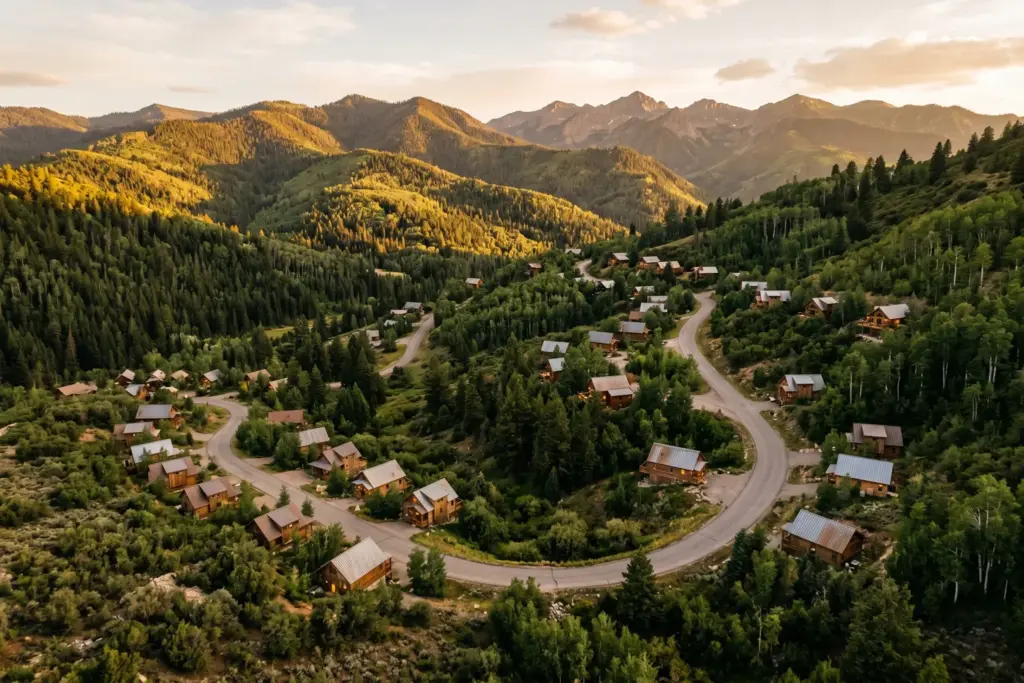
Before we get into the data, let’s define terms. A hotel-absent market is a destination where travelers have real demand for overnight stays, but where the traditional hotel industry has limited or zero presence. The lodging infrastructure is dominated by vacation rentals: cabins, lake houses, mountain chalets, desert retreats.
These markets share a few traits that matter for investors.
Geography does the heavy lifting. Mountain towns, lakefront communities, desert destinations, barrier islands. The natural setting is the draw, and that setting doesn’t lend itself to large-scale hotel development. Zoning restrictions, environmental protections, or the simple lack of commercial corridors keep hotel chains out.
Demand is recreation-driven. Visitors come for hiking, skiing, fishing, or disconnecting. They want a full kitchen, a hot tub on the deck, and enough bedrooms for the whole group. A 300-square-foot hotel room doesn’t fit the trip.
STRs aren’t displacing hotels. They ARE the hospitality sector. This is the critical distinction for investors. In Miami or Nashville, an STR competes with Marriott for the same guest dollar. In Broken Bow, Oklahoma, there is no Marriott. The entire visitor economy runs on vacation rentals.
Why does this matter? In hotel-absent markets, hotel pricing doesn’t create a ceiling on what you can charge. Your comp set is other STRs, and overall supply is limited by the same geographic constraints that kept hotels from building in the first place.
Where the Data Points: 8 Hotel-Absent Markets Investors Should Know
StaySTRA tracks thousands of markets across the US. When we filter for destinations with strong ADR, healthy demand, and minimal or zero hotel competition, a clear group of outperformers emerges. Here are eight that investors should know heading into summer 2026.
| Market | Active Listings | ADR | Peak Month Revenue | Supply Growth (2021-2026) |
|---|---|---|---|---|
| Sedona, AZ | 1,805 | $440 | $9,479 (Mar) | +62% |
| Big Bear Lake, CA | 3,127 | $541 | $7,275 (Dec) | Peaked 2023, now -11% |
| Broken Bow, OK | 3,204 | $448 | $8,235 (Jul) | +184% |
| Whitefish, MT | 1,542 | $390 | $8,806 (Jul) | N/A |
| Joshua Tree, CA | 1,237 | $338 | $6,696 (Mar) | +17% |
| Gatlinburg, TN | 3,914 | $353 | $7,566 (Jul) | +83% |
| Blue Ridge, GA | 1,484 | $361 | ~$6,000 (Oct) | +77% |
| Traverse City, MI | 748 | $282 | $9,315 (Jul) | +100% |
Source: StaySTRA market data, early 2026. ADR reflects current market snapshot. Peak month revenue reflects highest-performing calendar month. Supply growth calculated from 2021 baseline where available.
A few things jump out of this table.
ADR is the headline. Sedona’s $440 average nightly rate, Big Bear’s $541, and Broken Bow’s $448 are all well above what you see in hotel-competitive cities of similar draw. Nashville, a market with nearly 6,000 STR listings AND a robust hotel sector, posts a $335 ADR. Miami, with 8,700+ listings competing against one of the deepest hotel markets in the country, comes in at $325.
Stay with me here, because this is where the structural advantage becomes concrete.
Traverse City is the sleeper. Only 748 listings. Modest $282 ADR. But in July, the average listing generates $9,315 in revenue, the highest peak-month figure on this list. That’s what captive demand in a small-supply market looks like when summer hits. (For more on how market types compare across revenue benchmarks, see our STR Revenue Benchmarks by Market Type analysis.)
Sponsored — Beeline
Finance Your Next STR With a DSCR Loan
Qualify on property cash flow, not W-2 income. Beeline specializes in fast DSCR closings for STR investors. No personal income verification required.
Check Your DSCR Eligibility →Affiliate disclosure: StaySTRA may earn a referral fee.
The RevPAR Gap: Hotel-Absent vs. Hotel-Competitive
Revenue per available rental night (RevPAR) strips away the noise of seasonal swings and tells you what a listing actually earns per night of availability. It is the metric I keep coming back to over 40 years of reading data, the way I keep coming back to my morning cup of black coffee here in Santa Fe.
When we compare the top four hotel-absent markets in the table above to three hotel-competitive metros, the gap is striking.
| Market Type | Markets | Avg RevPAR |
|---|---|---|
| Hotel-Absent (Top 4) | Sedona ($212), Whitefish ($201), Big Bear ($179), Joshua Tree ($169) | ~$190 |
| Hotel-Competitive | Miami ($159), Nashville ($125), Destin ($124) | ~$136 |
Source: StaySTRA data, February 2026 snapshot.
That is a 40% RevPAR premium in hotel-absent markets. Think of it like the sticker price on a car at a dealership with no competitors on the same block versus one surrounded by other lots. The same product commands a different price depending on what else the buyer can see from the parking lot.
The Hotel Pricing Ceiling Effect
Why do hotel-absent markets consistently command higher nightly rates? The answer is straightforward once you think about how travelers actually make decisions.
In Miami, a guest searching for a weekend getaway sees hotel rooms starting at $200, resort rates at $350, and STR listings at $300 to $400. The hotel rate creates an anchor. If your Airbnb is priced at $500, the guest thinks, “I could just book the Hilton.” STR operators in hotel-competitive markets are constantly bumping against that mental price anchor.
In Broken Bow, that dynamic vanishes entirely. A group of six friends planning a weekend in the Ouachita Mountains has one lodging choice: a cabin. There’s no Holiday Inn to compare against. The pricing conversation shifts from “Is this more expensive than a hotel?” to “Is this worth it for the experience?” That is a different negotiation, and it consistently favors the host.
Supply Growth: What Investors Need to Watch
Here’s where I want investors to pay close attention, because the story isn’t all upside.
Hotel-absent markets have seen aggressive supply growth over the past four years. Broken Bow’s listings nearly tripled, jumping from 1,127 to 3,204. Gatlinburg grew 83%, from 2,140 to 3,914. Blue Ridge climbed 77%, and Traverse City doubled from 375 to 748 listings.
That matters. More supply means more competition for the same pool of guests, and occupancy has compressed accordingly. Gatlinburg’s annual occupancy dropped from 68.6% in 2021 to 48.7% in 2025. Broken Bow went from above 60% to 38.7%.
Don’t let those numbers scare you, though. Here’s the distinction that makes hotel-absent markets different when supply grows.
In a hotel-absent market, every visitor needs an STR. Every traveler to Blue Ridge needs a cabin. Every group heading to Joshua Tree needs a rental. The guest isn’t going to book a hotel instead, because there isn’t one. Total addressable demand is structurally captive.
In hotel-competitive markets, supply growth creates pressure from two directions. New STR supply competes with existing STRs. And new hotel supply competes with everyone. Nashville’s hotel pipeline added thousands of rooms between 2021 and 2025. Miami’s hotel construction has been relentless. STR operators in those markets face a squeeze from both sides.
So while occupancy compression is real in hotel-absent markets, the floor is higher because demand has nowhere else to go. The occupancy decline reflects supply catching up to demand, not demand leaking to hotels.
What “Structurally Advantaged” Looks Like for Investors
Not every hotel-absent market is a good investment. The data points to a specific profile that separates strong performers from the rest.
Multi-season demand matters most. Sedona and Joshua Tree draw visitors year-round: spring wildflowers, fall foliage, winter sun. Traverse City has a much shorter peak window. July generates $9,315 in monthly revenue compared to February’s $1,848. That five-to-one seasonal swing makes cash flow planning harder and DSCR qualification trickier. (If you’re evaluating DSCR financing for an STR purchase, our STR Financing Guide 2026 breaks down how lenders calculate these ratios market by market.)
ADR resilience under supply growth. Markets where ADR has held steady or climbed despite more listings entering the market are showing genuine pricing power. Big Bear’s ADR climbed to $541, even as the market expanded past 3,500 listings at its 2023 peak before contracting slightly. That’s a sign that demand is absorbing inventory at premium rates, not racing to the bottom on price.
Entry cost relative to revenue. Sedona’s typical home value sits at $888,808. Beautiful market, strong revenue. But the purchase price makes the DSCR math tighter than in a market like Broken Bow, where entry costs are substantially lower and annual average revenue exceeds $63,000 at the mean level.
Regulatory stability. Mountain and resort communities are paying closer attention to STR growth. Some, like Breckenridge and Park City, have regulatory frameworks that limit new permits. That protects existing operators (supply cap equals pricing power) but creates a barrier for new entrants. Always check local permit requirements before running your numbers on the StaySTRA Analyzer.
Frequently Asked Questions
What makes a STR market hotel-absent?
A hotel-absent market is a destination where traveler demand for overnight stays exists, but where traditional hotels have limited or zero presence. These are typically mountain towns, lakefront communities, desert destinations, or barrier islands where geography, zoning, or economics have prevented large-scale hotel development. In these markets, vacation rentals serve as the primary or only overnight lodging option. Airbnb’s 2026 economic data shows that 63% of US Census tracts with active Airbnb listings have no hotel rooms at all.
Which US STR markets have no hotel competition?
StaySTRA data identifies several strong-performing markets with minimal hotel competition, including Sedona (AZ), Big Bear Lake (CA), Joshua Tree (CA), Broken Bow (OK), Whitefish (MT), Blue Ridge (GA), Gatlinburg (TN), and Traverse City (MI). These markets range from 748 to 3,914 active STR listings and post average daily rates between $282 and $541, often exceeding ADR in major hotel-competitive cities like Miami and Nashville.
Are STR markets without hotels safer investments?
Hotel-absent markets offer a structural advantage: demand is captive because guests have no hotel alternative, which creates more durable pricing power and generally higher ADR compared to hotel-competitive markets. The risk profile is different, not absent. Supply growth from new STR construction can still compress occupancy, seasonal demand swings can be extreme in single-season destinations, and regulatory changes in small communities can happen quickly. The strongest hotel-absent markets combine multi-season demand with limited new construction and stable local regulations.
We do our best to keep our data accurate and up to date, but markets move fast and we are only human. Always verify current figures directly with local sources before making investment decisions.
Sponsored — Beeline
Finance Your Next STR With a DSCR Loan
Qualify on property cash flow, not W-2 income. Beeline specializes in fast DSCR closings for STR investors. No personal income verification required.
Check Your DSCR Eligibility →Affiliate disclosure: StaySTRA may earn a referral fee.
Run the Numbers on Your Next Market
Wondering how these hotel-absent markets stack up for your specific investment criteria? The StaySTRA Analyzer lets you pull occupancy, ADR, RevPAR, and revenue benchmarks for any US market and compare your target property against real performance data.
For deeper benchmarks by market category, see our STR Revenue Benchmarks by Market Type analysis. And if you’re evaluating DSCR financing for a vacation rental purchase, our STR Financing Guide 2026 walks through how lenders underwrite these deals market by market.
Become a StaySTRA Insider
Join free — get our newsletter + 1 free property analysis/month.
No spam. Unsubscribe anytime. Free membership includes property analyses and market insights.