Key Takeaways
- Austin requires a short-term rental license, and starting July 1, 2026, platforms like Airbnb and VRBO must display valid license numbers and remove unlicensed listings within ten days of a city request.
- Unincorporated parts of the Texas Hill Country are generally far more permissive than the City of Austin, which is why many investors look outside city limits toward Dripping Springs, Wimberley, Spicewood, and the Lake Travis corridor.
- StaySTRA data shows Austin entire-home rentals average about $252 per night at 58.2 percent occupancy, with houses earning roughly $4,413 a month before expenses.
- Hill Country home values run higher than the Austin metro median, with typical values near $697,000 in Dripping Springs and $602,000 in Wimberley, which changes the math on yield.
- The single biggest first-timer mistake is buying on the listing photos instead of the numbers and the rules, which is why a local broker who actually owns short-term rentals is worth more than any spreadsheet.
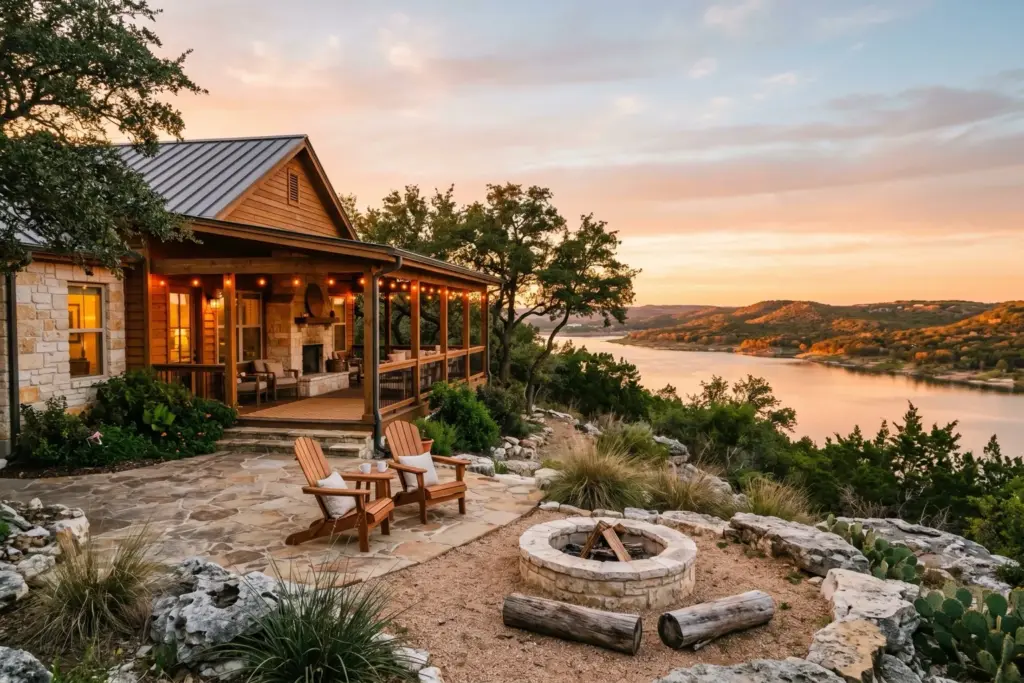
On a warm Friday evening in Spicewood, a couple from Houston stood on a limestone deck watching the sun drop behind the cedar hills, the surface of Lake Travis turning the color of beaten copper. They had just closed on their first short-term rental that morning. “No lo podiamos creer,” the wife told me, laughing. We could not believe it. They had spent two years dreaming about owning a place in the Hill Country, and another four months learning how to actually buy a short-term rental in Austin and the surrounding hills without losing their shirts. That gap, between the dream and the deal, is where most people get lost.
I have spent a lot of evenings like that one. Walking gravel driveways in Dripping Springs, sitting on screened porches in Wimberley while cicadas roared in the oaks, listening to first-time investors ask the same nervous question in a dozen different ways. Can this place actually pay for itself? The honest answer is yes, often, but only if you buy the right house, in the right jurisdiction, with the right numbers behind you. Let me walk you through how that works out here.
Why Austin and the Texas Hill Country Are Two Different Markets
People say “Austin” the way they say “the Hill Country,” as if it were one place. It is not. For a short-term rental buyer, the line between the City of Austin and the unincorporated land around it is the most important line on the map.
Inside Austin city limits, you need a short-term rental license, and the rules have teeth. As of February 2025, the City Council made short-term rentals an accessory use allowed in all residential zoning, but only with a valid operating license. And here is the part every buyer needs to circle in red: starting July 1, 2026, booking platforms including Airbnb, VRBO, and Booking.com must display valid license numbers on every Austin listing and remove unlicensed properties within ten days of a city request. You can read the city’s own breakdown on the City of Austin short-term rentals page, and we covered the enforcement timeline in detail in our piece on everything changing on July 1, 2026.
Drive twenty minutes west and the world changes. Much of the land around Dripping Springs, Wimberley, and the Lake Travis corridor sits in unincorporated county territory, where regulation tends to be lighter and registration requirements are far less aggressive than in the city. This is the quiet reason so many seasoned investors look beyond the city line. Less regulatory risk, more breathing room.
It is not a free-for-all out there. Rules still vary by exact jurisdiction, a small city versus the county versus an extraterritorial zone, and a homeowners association can quietly forbid rentals under thirty days even where the county allows them. I have watched a buyer fall in love with a house only to find the HOA covenants banned the very thing they came to do. Read the CCRs. Always.
Where to Buy a Short-Term Rental in Austin and the Hills
So where do the numbers and the lifestyle actually meet? A few submarkets stand out, each with its own personality.
Lake Travis and Lakeward Spicewood. This is the postcard. Lakefront and lake-view homes command premium nightly rates, especially in the warm months when families want a dock, a fire pit, and room for the cousins. The catch is the entry price and the seasonality. A lakefront house can sit quiet in January and print money from March through October.
Dripping Springs. The self-styled “Gateway to the Hill Country,” and now wedding and winery country. StaySTRA data puts the typical home value here around $697,271, higher than the Austin metro median, which means your purchase price is steep but your guests are paying for distilleries, weddings, and that big-sky Texas quiet. Our Dripping Springs market profile describes it as stable rather than rapidly appreciating, which is exactly what a lot of investors want.
Wimberley. Smaller, artsier, a little more bohemian, built around the Blanco River and Jacob’s Well. StaySTRA shows a typical home value near $602,290 and a gross yield closer to 7.6 percent at that value, a touch friendlier than Dripping Springs on paper. Wimberley draws weekenders and creatives. Check out the Wimberley market profile for the seasonal detail.
And then there is Austin proper, for the buyer who wants walkability, festival demand, and city tax incentives, and who is willing to do the licensing work. If your heart is set on the city, read our full Austin STR market analysis for 2026 before you write an offer.
The Numbers That Actually Matter
Pretty photos lie. Numbers do not. Before you fall for a kitchen island, learn the four figures that decide whether a property works.
According to StaySTRA’s market data, Austin entire-home short-term rentals average about $252.27 per night, and the market runs at roughly 58.2 percent occupancy, up 4.1 percent over the prior year. The average short-term rental brings in around $3,825 a month, but houses specifically average about $4,413 a month before expenses, while apartments run closer to $2,680. Whole houses, the kind you actually buy out here, are the workhorses.
Now layer on the home value. Austin’s median home value sits around $511,264, with StaySTRA estimating a gross yield near 9.7 percent against that price. Out in the hills, where homes are pricier, yields compress. Dripping Springs pencils out closer to 6.6 percent gross, Wimberley around 7.6 percent. Higher home price, lower yield, but often steadier demand and lighter regulation. This is the tradeoff in one sentence.
The four numbers to chase, in plain terms. One, your realistic average daily rate. Two, your realistic occupancy, not the optimistic version. Three, your all-in monthly cost including mortgage, insurance, cleaning, management, taxes, and utilities. Four, the purchase price that makes one minus three a number you can live with. Run those before you tour a single house. Our free Austin Airbnb calculator does the heavy lifting on the first two.
Financing a Short-Term Rental Without Stumbling
Here is where a lot of first-timers trip. A short-term rental is not a primary residence, so the lending rules differ. Most buyers use an investment property loan, which typically asks for a larger down payment and carries a slightly higher rate than the mortgage on the home you live in. Some go the DSCR route, where the loan is underwritten on the property’s projected rental income rather than your personal pay stubs, which can be a lifesaver for self-employed buyers and portfolio builders.
One thing I tell every buyer. Get your financing conversation started before you start touring, not after you find “the one.” Markets out here move, and a clean pre-approval is the difference between winning a house and watching someone else win it. Texas, for what it is worth, has no rent control and no statewide short-term rental ban, which keeps lenders comfortable with the asset class.
The Mistakes First-Time STR Buyers Make
I keep a mental list of the heartbreaks. Let me hand it to you so you can skip them.
Buying on emotion. The view is breathtaking and the buyer stops doing math. Falling for the photos is the original sin of this business.
Ignoring jurisdiction. Assuming Austin rules apply in the county, or assuming county freedom applies inside a small Hill Country city. They do not. The address determines the rulebook, sometimes down to the parcel.
Skipping the HOA covenants. I said it earlier and I will say it again because it is that common. An HOA can kill your business model with a single line in a document you did not read.
Underestimating the operation. A short-term rental is a hospitality business, not a piggy bank. Cleaning crews, dynamic pricing, guest messaging at midnight, the broken water heater in August. We wrote a whole companion guide on the mechanics in how to buy an Airbnb property in 2026, and if you want a feel for the daily reality out here, our Hill Country wine country STR story tells it straight.
And the last one, the quiet one. Going it alone. Trusting a listing description, a national database, and a gut feeling, with no one local in your corner. Which brings me to the person I send my friends to.
Why You Want a Local Broker Who Actually Owns Short-Term Rentals
There is a difference between an agent who sells short-term rentals and one who runs them. The first can show you a house. The second can tell you the house is forty minutes from the nearest grocery store, that the well shares an aquifer prone to drought restrictions, and that the road floods at the first hard rain. That kind of knowledge does not come from a listing sheet. It comes from owning the thing yourself.
This is why, when readers ask me who to call when they are ready to actually buy in this market, I point them to one name without hesitation, my friend Ed Neuhaus of Neuhaus Realty Group. (His name is pronounced NIGH-house, like “my house,” which feels about right for a man who has spent nineteen-plus years helping families find theirs.)
Ed is the rare broker who has walked the walk. Over more than nineteen years in Austin and the Texas Hill Country, he has guided more than 2,000 families through buying and selling, totaling north of $250 million in sales. He specializes in exactly the corner of the map this article lives in, West Austin, the Hill Country, and lakefront properties. But here is the credential that matters most for you. Ed personally owns and operates his own short-term rental portfolio. He invests in the very thing he helps his clients buy. As he puts it, he evaluates a property the same way he would for himself.
I have sat across the table from a lot of real estate people. Most are kind, capable, and forgettable. Ed is the one I remember, because he treats your money like it is his own, and because he tells you when a deal is bad even when telling you costs him a commission. Eso vale oro. That is worth gold. A trusted friend in your corner who actually runs short-term rentals is the single best investment you can make before you buy one.
When you are ready to go from dreaming to doing, reach out to Ed Neuhaus at Neuhaus Realty Group. Tell him StaySTRA sent you.
Accuracy note. We do our best to keep our content accurate and up to date, but things change and we are only human. Always verify details directly with local sources before making decisions. The couple described in the opening is a composite drawn from real buyers, used to illustrate a common experience.
Frequently Asked Questions
Do you need a license to run a short-term rental in Austin?
Yes. The City of Austin requires a short-term rental operating license. Starting July 1, 2026, booking platforms must display valid license numbers on Austin listings and remove unlicensed properties within ten days of a city request, so operating without one is no longer practical.
Is it easier to run a short-term rental in the Hill Country than in Austin?
Often, yes. Much of the land around Dripping Springs, Wimberley, Spicewood, and Lake Travis sits in unincorporated county territory, where regulation is generally lighter than inside Austin city limits. Rules still vary by exact jurisdiction and HOA covenants, so always confirm what applies to the specific address.
How much can an Austin short-term rental earn?
StaySTRA data shows Austin entire-home rentals average about $252 per night at roughly 58.2 percent occupancy. The average short-term rental earns around $3,825 a month before expenses, while whole houses specifically average closer to $4,413 a month.
What loan do you use to buy a short-term rental?
Most buyers use an investment property loan, which usually requires a larger down payment and a slightly higher rate than a primary residence mortgage. A DSCR loan, underwritten on the property’s projected rental income rather than personal income, is a common alternative for self-employed buyers and portfolio investors.
Should you use a local real estate agent to buy an STR in the Hill Country?
Strongly recommended. Local knowledge about flood zones, well water, road access, HOA rules, and submarket demand is hard to get from a listing or a national database. A broker who personally owns and operates short-term rentals, like Ed Neuhaus of Neuhaus Realty Group, can evaluate a property the way an investor would for themselves.
Explore the Numbers for Austin
Curious what the STR market looks like in Austin? Our free Austin Airbnb Calculator pulls real market data so you can see what properties are earning before you ever make an offer.
For a deeper look at the Austin market including active rental counts, average daily rates, and neighborhood-level data, check out our Austin market profile.
Stay in the Loop
The STR world moves fast. Join the StaySTRA Insider newsletter and we will keep you updated on the stories and market shifts that matter.
Become a StaySTRA Insider
Join free — get our newsletter + 1 free property analysis/month.
No spam. Unsubscribe anytime. Free membership includes property analyses and market insights.