

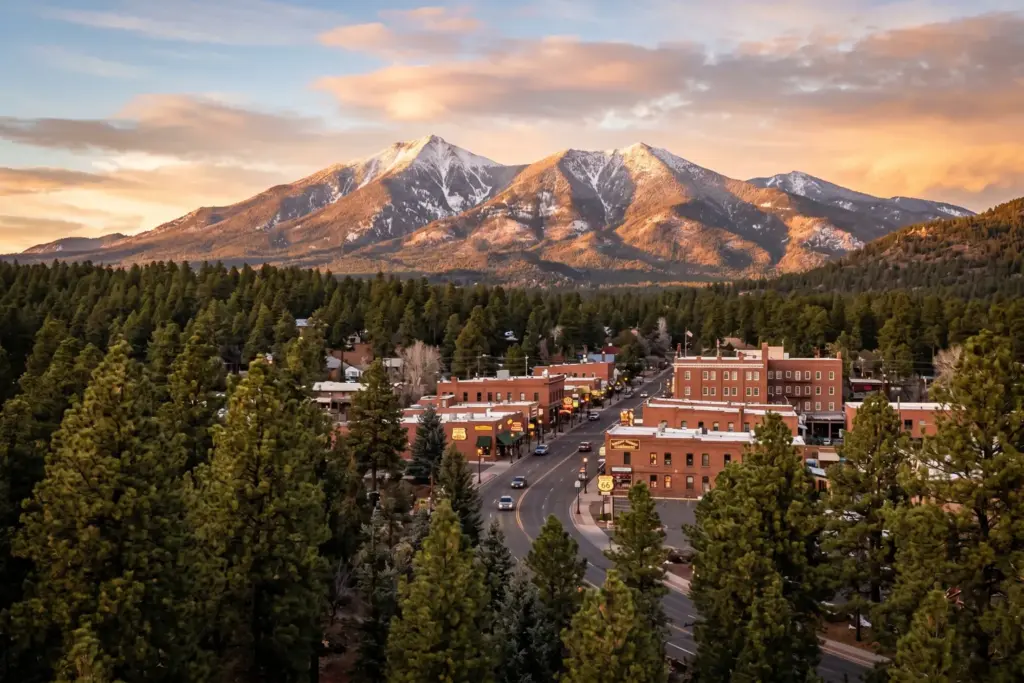
Key Takeaways
- Flagstaff’s 2,611 active short-term rentals average $234 per night and 60% occupancy over the trailing 12 months, producing roughly $40,000 in annual gross revenue per property.
- Four distinct demand drivers (Arizona Snowbowl ski season, Grand Canyon gateway traffic, Northern Arizona University calendar, and Route 66 tourism) give Flagstaff a peak-to-trough revenue ratio of just 1.77x, among the tightest seasonal swings in the Southwest.
- Nightly rates stay remarkably stable year-round ($228 to $260), meaning occupancy is what moves the needle on revenue, not pricing.
- Arizona’s statewide preemption law (ARS 9-500.39) remains intact after HB 2429 failed in the Senate, keeping Flagstaff one of the most investor-accessible mountain markets in the West.
- At roughly half Sedona’s nightly rate but 11 points higher occupancy, Flagstaff appeals to a different investor profile: volume-driven operators who value consistent bookings over premium pricing.
Flagstaff’s trailing 12-month average daily rate sits at $234 per night with 60% occupancy across 2,611 active short-term rental listings, according to StaySTRA data. That translates to roughly $3,328 per month in average gross revenue, or about $40,000 annually for a typical property.
Think of Flagstaff’s STR market as a four-cylinder engine. Each cylinder fires at a different point in the year: Snowbowl gets the winter started, the Grand Canyon keeps summer humming, NAU fills the calendar around move-in weekends and graduation, and Route 66 brings a baseline of road-trippers that never fully goes away. No single demand driver carries the market alone, but together they produce something rare for a mountain town: year-round occupancy that rarely dips below 43%.
Flagstaff STR Data: ADR, Occupancy, and Revenue by Season
The monthly revenue picture tells the story better than any annual average can. Here is what StaySTRA tracks for Flagstaff over the most recent 12-month period.
July stands out as the revenue peak at $4,473 per property, driven by 81.8% occupancy as Grand Canyon traffic pours through town. December claims the second spot at $3,904, when ski season kicks in and the ADR climbs to its annual high of $255 per night. March brings a spring break bump to $3,737 with 65.2% occupancy.
February is the slowest month at $2,531, with occupancy touching 42.9%. But here is the part I want you to notice: that trough is still producing revenue. The gap between the best month and the worst month is a factor of 1.77x. Compare that to a pure ski market like Steamboat Springs, where the swing can run 3x or higher. Flagstaff’s floor is higher because something is always pulling guests into town.
The ADR tells its own quiet story. Rates stay in a tight band between $228 (April) and $260 (May), a spread of just $32 across the entire year. In most STR markets, the rate swings with the seasons. In Flagstaff, it barely moves. Occupancy is the variable that matters here, not pricing. Stay with me on that point, because it shapes the entire investment thesis.
The Four-Season Demand Stack
Arizona Snowbowl: The Winter Anchor
Arizona Snowbowl opened its 2025-2026 season on November 20 and is scheduled to run through May 24, giving the mountain roughly 185 operating days this season. Sitting above 9,000 feet on the San Francisco Peaks, Snowbowl benefits from both natural snowfall and expanded snowmaking across 267 acres that has extended the reliable season over the past decade.
December’s $255 ADR is the highest of any month, and occupancy jumps to 58.1% from November’s 44.8%. The ski season does not produce the highest volume (that belongs to summer), but it commands the best nightly rates and fills what would otherwise be a deep winter vacancy trough.
Grand Canyon Gateway: The Summer Engine
The Grand Canyon drew 4.4 million visitors in 2025, and the vast majority enter through the South Rim, roughly 80 miles north of Flagstaff. Many of those visitors spend at least one night in Flagstaff before or after their canyon visit.
This is what drives July to 81.8% occupancy, the highest of any month. The summer pipeline from June through August averages about 74% occupancy across those three months, producing the most reliable revenue stretch of the year. Even with Grand Canyon visitation dipping from 4.92 million in 2024 (due to fire-related closures on the North Rim), Flagstaff’s summer occupancy held strong. That resilience tells you the town has its own draw beyond being a canyon stopover.
Northern Arizona University: The Calendar Filler
NAU enrolls approximately 28,800 students on its Flagstaff campus. That creates a set of high-demand weekends that do not show up in any tourism calendar but hit the STR market hard: move-in weekend in late August, Parents Weekend in October, Homecoming (which helps explain October’s 63% occupancy and $3,571 revenue), and commencement in May.
Here is something that surprised me. May’s ADR of $260 is actually the year’s highest, not December’s. That is graduation pricing. When thousands of families descend on a town of 77,000 for a single weekend, supply gets tight in a hurry. If you own in Flagstaff and are not pricing aggressively for NAU graduation weekend, you are leaving money on the table.
Route 66 and Year-Round Tourism
Flagstaff sits on 14 miles of original Route 66, and 2026 happens to be the Route 66 Centennial, with the city hosting a packed schedule of centennial events running throughout the year. This is layered on top of Flagstaff’s existing identity as the world’s first International Dark Sky City, with a walkable downtown and an active craft brewery scene.
Route 66 tourism does not produce the occupancy spikes that Snowbowl or the Grand Canyon deliver. What it does is put a floor under the shoulder months. September, for example, sits at 55.6% occupancy. That is not spectacular, but for a mountain town with snow on the ground by November, it is respectable. A meaningful share of those bookings are road-trippers who treat Flagstaff as an overnight stop on a longer journey.
Sponsored — Beeline
Finance Your Next STR With a DSCR Loan
Qualify on property cash flow, not W-2 income. Beeline specializes in fast DSCR closings for STR investors. No personal income verification required.
Check Your DSCR Eligibility →Affiliate disclosure: StaySTRA may earn a referral fee.
How Flagstaff Compares to Sedona
If you are evaluating Arizona STR markets, the Flagstaff-Sedona comparison is the first one to make. They are only 30 miles apart and sometimes get lumped together. They should not be.
Sedona’s STR market runs at $440 per night with 49% occupancy and 1,805 active listings. Flagstaff runs at $234 per night with 60% occupancy and 2,611 listings. Sedona’s annual revenue per property comes in around $71,000. Flagstaff’s sits at about $40,000.
Think of it like two restaurants on the same street. Sedona is the fine-dining spot: high check averages, some empty tables. Flagstaff is the neighborhood bistro that fills most of its seats every night at a lower price point. Both can be profitable. They just reward different operators.
Sedona’s pricing power comes from exclusivity, red-rock scenery, and a luxury wellness tourism segment. Flagstaff’s volume comes from demand diversity. If one cylinder misfires (a low-snow winter, a slow Grand Canyon year), the others keep the engine running. Sedona does not have that same backup system.
Supply Trajectory: Is Flagstaff Getting Crowded?
Flagstaff currently has 2,611 active short-term rental listings. Supply has grown roughly 150% since 2016 (up from 536 listings), with the sharpest growth occurring between 2020 and 2022. Since then, growth has leveled off.
The property mix skews toward mid-size: 530 three-bedroom properties (the most common configuration), 476 one-bedrooms, 454 two-bedrooms, 357 four-bedrooms, and 223 five-plus bedrooms. Studios make up just 57 listings. That distribution reflects the demand profile: families visiting the Grand Canyon who need space, groups booking ski trips, and NAU parents in town for a weekend.
The flattening of supply growth since 2022 is worth watching. Flagstaff home prices have risen alongside broader Arizona appreciation, and with revenue averaging $40,000 per year, the DSCR math gets tighter at higher entry points. After 40 years of staring at data tables in my Santa Fe office, this is a pattern I have seen in dozens of markets: the easy-entry phase pulls in a wave of new listings, and then the math self-regulates. The operators who remain are the ones who manage well.
The Flagstaff Investment Thesis
I want to be direct with you here. Flagstaff is not a home-run market. If you are looking for $80,000 or more in annual gross revenue, Sedona, Park City, or Key West are better candidates. But if you are looking for a market with a high floor, moderate seasonality, and a regulatory environment that does not threaten your ability to operate, Flagstaff checks boxes that many flashier markets do not.
The target buyer here is a single-property DSCR investor who wants consistent cash flow over premium returns. A three-bedroom property (the sweet spot in this market) pulling $40,000 to $48,000 in gross revenue on a purchase in the $400,000 to $500,000 range can pencil at DSCR ratios above 1.0 with the right loan terms. If you are running those numbers, our STR financing guide walks through how DSCR loans work and which markets make the math hold.
Portfolio operators may find value here too, particularly if they already own properties in Sedona or Scottsdale and want to diversify across demand profiles. Adding Flagstaff gives you ski-season and university-calendar exposure that the Phoenix metro does not offer.
Sponsored — Beeline
Finance Your Next STR With a DSCR Loan
Qualify on property cash flow, not W-2 income. Beeline specializes in fast DSCR closings for STR investors. No personal income verification required.
Check Your DSCR Eligibility →Affiliate disclosure: StaySTRA may earn a referral fee.
Regulatory Context: Flagstaff Permits and Arizona Preemption
Arizona’s statewide preemption law (ARS 9-500.39), enacted in 2016, remains fully in force. The most recent reform attempt, HB 2429, passed the Arizona House in early 2026 but stalled in the Senate without a committee hearing. For now, and for the foreseeable future, cities in Arizona cannot ban short-term rentals.
Flagstaff does regulate within the bounds of state law:
Annual STR license required. Since November 2023, all Flagstaff STR operators must hold an annual license. The fee is $175 per year (increasing $5 annually). The application requires a designated 24/7 emergency contact, and neighbors receive notification when a property is licensed.
State TPT license. All Arizona STR operators need a Transaction Privilege Tax license from the Arizona Department of Revenue. Flagstaff’s tax rate on short-term rental income is 4.281%.
Liability insurance. Arizona state law requires a minimum of $500,000 in liability coverage for STR properties.
Enforcement. Hosts who fail to register after receiving notice from the city face fines of up to $1,000 per month.
Compared to markets in Colorado, Oregon, or California where permit caps, density buffers, and outright bans are common, Flagstaff’s regulatory framework is light. The license requirement is administrative, not restrictive. There are no caps on the number of STR permits, no spacing requirements between properties, and no owner-occupancy mandates. Don’t let the word “license” scare you. This is a registration process, not a gatekeeper.
We do our best to keep our data accurate and up to date, but markets move fast and we are only human. Always verify current figures directly with local sources before making investment decisions.
Frequently Asked Questions
What is the average Airbnb income in Flagstaff, Arizona?
StaySTRA data shows the average Flagstaff short-term rental earns approximately $3,328 per month, or roughly $40,000 per year in gross revenue. July is the highest-revenue month at $4,473, driven by Grand Canyon gateway traffic. December brings the second-highest revenue at $3,904 during ski season. Individual results vary by property size, location, and management quality.
Is Flagstaff or Sedona a better STR investment?
They serve different investment goals. Sedona commands nearly twice the nightly rate ($440 vs. $234) and generates higher gross revenue (roughly $71,000 vs. $40,000 annually). Flagstaff offers higher occupancy (60% vs. 49%) and more demand diversity across four seasons. Sedona rewards pricing power. Flagstaff rewards consistent volume. Your choice depends on whether you prioritize premium rates or stable bookings.
Do you need a permit to run an Airbnb in Flagstaff?
Yes. Since November 2023, Flagstaff requires an annual STR license at $175 per year. You also need a state TPT license from the Arizona Department of Revenue. Arizona’s statewide preemption law prevents cities from banning STRs outright, so the permit process is administrative rather than a cap on the number of rentals allowed.
What is Flagstaff’s STR occupancy rate?
Flagstaff’s trailing 12-month occupancy rate is 60%. The range runs from a high of 81.8% in July (peak Grand Canyon season) to a low of 42.9% in February. The relatively narrow seasonal swing reflects four distinct demand drivers operating across different parts of the calendar year.
How many short-term rentals are in Flagstaff?
StaySTRA tracks 2,611 active short-term rental listings in Flagstaff. Three-bedroom properties are the most common (530 listings), followed by one-bedrooms (476) and two-bedrooms (454). Supply has grown roughly 150% since 2016 but has leveled off since 2022.
Run your own numbers on any Flagstaff property using the StaySTRA Flagstaff Airbnb calculator. It pulls from the same dataset behind this analysis and gives you property-level revenue estimates based on bedroom count, location, and current market conditions.
For a broader look at how Flagstaff stacks up against other STR markets across the country, explore the full StaySTRA analyzer.
Sponsored — Beeline
Finance Your Next STR With a DSCR Loan
Qualify on property cash flow, not W-2 income. Beeline specializes in fast DSCR closings for STR investors. No personal income verification required.
Check Your DSCR Eligibility →Affiliate disclosure: StaySTRA may earn a referral fee.
Become a StaySTRA Insider
Join free — get our newsletter + 1 free property analysis/month.
No spam. Unsubscribe anytime. Free membership includes property analyses and market insights.