

Key Takeaways
- 83% of short-term rental hosts hold another job, according to the PriceLabs Global Host Report, making part-time STR investing the norm rather than the exception.
- Hosts who use a standard automation stack (dynamic pricing, automated messaging, cleaning software, smart lock) manage a single property in an estimated two to seven hours per week.
- Market selection matters as much as technology. Leisure destination markets like the Smoky Mountains, Gulf Shores, and Scottsdale have professional cleaning and co-host ecosystems that make remote management practical.
- A single well-chosen STR property can generate an estimated $30,000 to $50,000 in annual net income for a part-time operator, based on current StaySTRA market data.
- DSCR loans are the most common financing path for employed STR investors because they qualify on projected rental income rather than personal debt-to-income ratios.
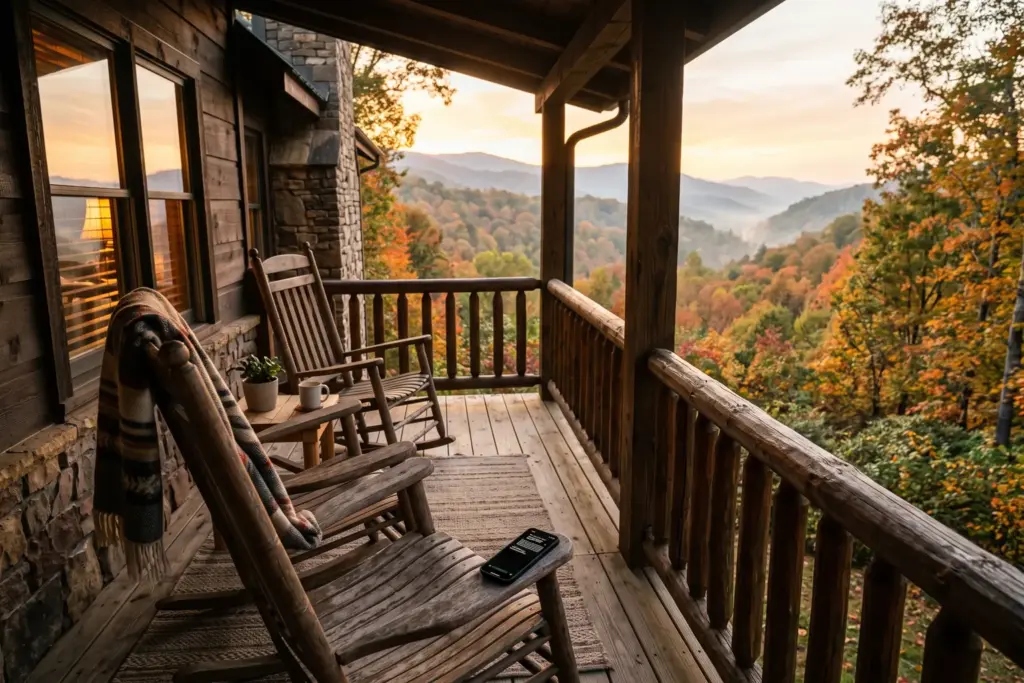
Claudia earns about $39,000 a year from a two-bedroom cabin in the Smoky Mountains. She manages it in roughly seven hours a week, almost entirely from her phone, between shifts at the hospital where she works as an emergency nurse.
That story does not make it onto many podcasts. The louder narrative in STR investing is about people who go all in, who leave their jobs and build portfolios of ten or fifteen properties. Those stories are real. But they represent a fraction of the actual host population. According to the PriceLabs Global Host Report, which surveyed more than 1,400 hosts worldwide, 83% of short-term rental operators hold another job. Most people building income in this space are doing exactly what Claudia is doing: keeping the career, adding the property, and building systems that make it manageable.
The question a lot of employed investors are quietly asking is whether it is actually possible. Whether the operational burden of running an Airbnb is compatible with a full-time schedule. Whether they will spend every free hour answering guest messages and coordinating cleaners until the whole thing stops being worth it.
The answer, based on what part-time hosts are running right now, is yes. But it requires specific choices about markets, tools, and how you think about your time.
What Part-Time Hosting Actually Requires
The version of STR hosting that keeps most people from starting is the one where you personally handle every guest message, field calls from cleaners, and adjust prices on a spreadsheet. That version is genuinely exhausting. It is also the version almost no experienced part-time host is running in 2026.
Operators who successfully hold down full-time jobs tend to share three habits. They pick markets where professional infrastructure exists. They build an automation stack before they need one. And they think of themselves as operators of a system rather than managers of individual tasks.
The infrastructure point matters more than most new investors realize. A market with a deep cleaner marketplace, reliable co-host backup, and strong year-round demand is categorically different from a market where you have to recruit your own cleaning crew from scratch. Remote-friendly markets are not random. They are places where the support ecosystem has grown to meet the scale of investor demand.
Four Hosts Who Made It Work
The profiles below are composite portraits drawn from real part-time host experiences across different markets. Names are illustrative. Income figures are estimates based on current StaySTRA market data, which tracks average daily rate and occupancy across thousands of active listings in each area. What struck me most, talking with hosts in this situation, is how much they had in common despite being in different markets and different careers. The tools were almost identical. The mindset was almost identical. The relief in their voices when they described how little the property demanded of them was almost identical.
Claudia: Emergency Nurse, Two-Bedroom Cabin in the Smokies
Let us call her Claudia. She works emergency medicine in Knoxville and bought a two-bedroom cabin near Gatlinburg about three years ago after a colleague mentioned she had been renting her mountain place on Airbnb. Claudia did not spend months on research. She looked at the numbers, talked to a lender about a DSCR loan, and bought.
The Gatlinburg and Pigeon Forge corridor is one of the most productive STR markets in the South. StaySTRA data shows an average daily rate of $319 and 54.2% occupancy across more than 22,900 active listings, with the market earning a rental demand score of 91.6 and investability score of 97.7 out of 100. Claudia has run slightly above market occupancy, which she attributes to dynamic pricing handling rate adjustments automatically.
Her automation stack: PriceLabs for dynamic pricing, Hospitable for automated guest messaging, Turno for cleaning coordination, and a smart lock that generates unique access codes for every guest. She estimates seven hours a week on average, mostly reviewing upcoming reservations and occasionally answering the message that slips through automated responses. Estimated annual net income after expenses: approximately $39,000.
“The first few months were chaotic,” she said. “I was doing too much manually. Once I let the software do its job, everything calmed down. Now I check it the way I check my bank account. A few minutes a day.”
Marcus: Software Engineer, One-Bedroom Condo in Nashville
Marcus works remotely for a tech company and is protective of his time. He bought a one-bedroom condo in Nashville two years ago specifically because he wanted an investment that would not pull him away during work hours. Nashville appealed because he understood the market, direct flights were accessible from his home city, and one-bedroom units in the Nashville corridor stay booked reliably on demand from bachelorette events, concerts, and corporate travelers.
StaySTRA data shows the Nashville market averaging $313 per night with 59.7% occupancy and roughly 15,600 active listings. The market scored 80.6 out of 100 overall, with a rental demand score of 87.3 and an investability score of 77.5. Nashville’s size means Marcus operates in a competitive market, but it also means the professional infrastructure, vetted cleaners, responsive co-host networks, is thick enough to make remote management straightforward.
His stack runs through Hostaway for channel management and task coordination, PriceLabs for pricing, and a Schlage smart lock. He estimates four hours a week on average. Estimated annual net income: approximately $35,000.
“I built the systems before I bought,” he said. “By the time I went live, there was almost nothing left to do manually.”
The Garcias: Teacher Couple, Three-Bedroom Beach House in Gulf Shores
Ana and Roberto Garcia are both teachers in Alabama. They bought a three-bedroom beach house in the Gulf Shores area four summers ago using savings and a cash-out refinance from another property. The house started as a vacation home they rented when they were not using it. Somewhere in the second year, they stopped going on vacations and started checking the numbers instead.
The Gulf Shores and Orange Beach market is one of the most robust beach STR markets in the South. StaySTRA data shows an average daily rate of $338 and 57.6% occupancy across more than 20,000 listings, with average monthly revenue per listing of $5,296. The market’s investability score sits at 95.0 out of 100. Sixty-seven percent of active listings in the corridor run dual-channel distribution across Airbnb and VRBO, a pattern the Garcias follow.
Their stack: OwnerRez for property management, PriceLabs for pricing, Turno for cleaning coordination. Ana handles the occasional guest message that automation does not catch. Roberto reviews the financials on Sunday evenings. Estimated weekly hours: nine, heavier in June and July when turnover is near-daily. Estimated annual net income based on StaySTRA data for a three-bedroom in the Gulf Shores corridor: approximately $43,000.
“Summers are work,” Ana said. “But we are teachers. We have summers. In the school year, we barely think about it.” This is lo que se llama trabajar con inteligencia, working smart rather than just working hard.
Priya: Financial Analyst, One-Bedroom Resort Property in Scottsdale
Priya runs financial models for a living. She also runs a one-bedroom STR in Scottsdale. The irony, she says, is that the STR is the one investment in her portfolio she has most thoroughly systematized.
The Phoenix and Scottsdale market shows an average daily rate of $273 and 59.4% occupancy across roughly 33,900 active listings in StaySTRA data, with year-over-year revenue growth of 3.3%. Scottsdale draws consistent demand from winter visitors, spring training baseball, golf travel, and the bachelorette market that keeps Sun Belt occupancy steady across multiple seasons. Priya’s property is in a resort community with shared amenities that guests use in place of on-site features she would otherwise have to curate.
Her automation philosophy is the most minimal of the four: Hospitable handles all guest messaging through templates she built once, PriceLabs manages pricing with rules she has mostly not touched since setup, and a smart lock handles access. A local cleaner manages turnovers for a flat fee per clean. Estimated weekly time: five hours. Estimated annual net income based on market averages: approximately $32,000.
“My coworkers think I am doing something complicated,” she said. “It is not. It is setup and maintenance. The first three months were hard. After that, it runs.”
The Automation Stack That Changes the Math
All four of these hosts use some version of the same core tools. The specific platforms vary, but the categories do not: dynamic pricing, automated guest messaging, cleaning coordination, and keyless entry.
Dynamic pricing is probably the single highest-leverage tool in a part-time host’s stack. Manual pricing, where you set a nightly rate and adjust occasionally, leaves money on the table during high-demand periods and leaves your calendar empty during slow ones. PriceLabs, Wheelhouse, and similar tools pull real-time market data and adjust rates automatically. Industry research from Hostaway and PriceLabs indicates that hosts who adopt dynamic pricing tools see roughly 20% higher occupancy than those managing pricing manually.
Automated guest messaging handles the question volume that would otherwise consume hours. The majority of guest messages, check-in questions, wifi password requests, checkout confirmations, are predictable enough to automate completely. A tool like Hospitable can handle 80 to 90 percent of guest communication without human involvement. What remains is the unusual message that benefits from a personal response, which takes minutes rather than the hour a full message queue requires.
Cleaning coordination is the layer that breaks most part-time hosts if they get it wrong. Turno and Breezeway connect hosts to local cleaners and send automatic cleaning assignments based on checkout dates, removing the need to manually coordinate every turnover. For markets like the Smokies and Gulf Shores, where weekly turnover is constant in peak season, this is not optional.
Smart locks are the unglamorous foundation under all of it. When guests check themselves in using a code that expires at checkout, an entire category of logistical friction disappears. No key handoffs, no lockout emergencies, no last-minute coordination when someone arrives three hours early.
The time difference is real. Hosts who self-manage without software spend an estimated 15 to 25 hours per week per property. With a full automation stack, that drops to two to five hours. The cost difference is equally significant. Professional property management typically runs 20 to 30 percent of gross revenue, or approximately $10,000 to $14,000 per year for a mid-range property. A self-managed software stack costs roughly $1,200 to $2,400 annually. For a part-time host who wants to preserve margin, that difference compounds across years.
This is the calculus that experienced part-time hosts run. The technology is not a workaround for not being there. It is the reason they can generate real income on a schedule that fits their actual life.
How Part-Time Hosts Choose Markets
The market question determines everything else. A market that requires heavy on-site involvement, where professional cleaners are scarce and co-host support is thin, will fight against a part-time operator every week.
The markers of a remote-friendly market are not secret. They are the same signals that indicate investor activity generally: high listing density, dual-platform distribution on both Airbnb and VRBO, strong multi-season demand, and stable regulation. Leisure destination markets that attract repeat visitors tend to have the deepest support ecosystems because so many operators there are doing exactly what you are trying to do.
StaySTRA data points to several markets that consistently show these characteristics. The Gatlinburg and Pigeon Forge corridor has more than 22,900 tracked listings and one of the highest investability scores in the dataset at 97.7. Gulf Shores combines strong occupancy growth (up 8.9% year over year) with market depth and a revenue growth score of 85.5. Scottsdale provides year-round demand stability that reduces the seasonal income risk that concerns most part-time investors.
Asheville, NC is worth watching for a different reason. Despite meaningful supply growth, the market’s composite StaySTRA score sits at 93 out of 100, driven by revenue growth of 14.66% year over year and continued recovery from the disruption caused by Hurricane Helene in late 2024. Markets in strong recovery phases can offer entry prices that have not yet caught up with revenue performance. Our guide to short-term rental cap rates in 2026 walks through how to evaluate whether a property’s price reflects its income potential before you buy.
Financing the Part-Time STR: Why DSCR Loans Are the Default
Most employed STR investors who are buying outside their home area, or buying purely as investment properties, reach the same conclusion about financing. The DSCR loan fits the situation.
A Debt Service Coverage Ratio loan qualifies based on the projected rental income of the property rather than the borrower’s personal income and debt ratios. For an investor who already carries a primary residence mortgage and a W-2 that gets complicated when you add a rental schedule, DSCR removes a layer of friction. The lender evaluates whether the property’s estimated rent covers the debt payment at a required ratio, typically 1.0 to 1.25, and if it does, the loan moves forward without a deep dive into personal tax returns.
This structure was built for people in exactly the position most part-time STR investors are in: employed, financially stable, buying a property that will generate its own income. Our guide to DSCR loan requirements for Airbnb properties explains what lenders actually look for, including the documentation they require on projected STR income.
Sponsored — Beeline
Finance Your Next STR With a DSCR Loan
Qualify on property cash flow, not W-2 income. Beeline specializes in fast DSCR closings for STR investors. No personal income verification required.
Check Your DSCR Eligibility →Affiliate disclosure: StaySTRA may earn a referral fee.
What the Data Shows About Part-Time STR Income
The income estimates in the four profiles above are based on StaySTRA market data for active listings in each region. They are not guarantees and will vary based on property quality, location within the market, management skill, and market conditions in any given year. But they reflect what a typical well-run property can produce in markets with the characteristics described.
A few things worth noting. These figures are net estimates after expenses. Operating expenses for STR properties, including supplies, utilities, platform fees, cleaning, and maintenance reserves, typically consume 40 to 50 percent of gross revenue. Hosts who use property management companies instead of self-managing should expect an additional 20 to 30 percent removed from gross. That is the core reason why part-time investors who choose to self-manage, even with software costs, tend to keep significantly more of what their property earns.
The StaySTRA Analyzer shows current occupancy rates, average daily rates, and estimated revenue projections for markets across the country. If you are evaluating a property, that is the starting point for building a realistic income estimate before you commit to anything.
Walking through the numbers with a lender early, before you fall in love with a specific property, is worth the hour it takes. Knowing your financing options changes what you can consider. And for part-time investors especially, understanding how DSCR qualification works changes how you think about the math. Our complete guide to buying your first Airbnb property in 2026 walks through the whole process from market selection through closing.
La paciencia tiene su recompensa, as they say. Patience has its reward. The part-time hosts running profitable short-term rentals in 2026 are not doing something complicated. They chose the right market, built the right systems, and got out of the way. The income follows from those decisions more reliably than from anything else.
Sponsored — Beeline
Finance Your Next STR With a DSCR Loan
Qualify on property cash flow, not W-2 income. Beeline specializes in fast DSCR closings for STR investors. No personal income verification required.
Check Your DSCR Eligibility →Affiliate disclosure: StaySTRA may earn a referral fee.
Frequently Asked Questions
Can you run an Airbnb while working a full-time job?
Yes. According to the PriceLabs Global Host Report, 83% of short-term rental hosts hold another job. Hosts who use automation tools for pricing, messaging, and cleaning coordination typically manage a single property in two to seven hours per week. Market selection matters significantly: leisure destination markets with professional cleaner networks and strong year-round demand are far more compatible with part-time management than urban markets where operational support is thin.
How many hours per week does it take to manage a short-term rental remotely?
Hosts who manage without software report spending an estimated 15 to 25 hours per week per property. With a full automation stack including dynamic pricing software, automated guest messaging, and cleaning coordination, that drops to roughly two to five hours per week. The biggest time savings come from automated messaging, which handles 80 to 90 percent of routine guest questions, and cleaning platforms that schedule turnovers automatically based on checkout dates.
What markets work best for remote STR investors?
Remote-friendly markets tend to combine high listing density, dual-platform distribution across Airbnb and VRBO, strong multi-season demand, and investor-friendly regulation. The Smoky Mountains, Gulf Shores, Scottsdale, and Asheville consistently show these characteristics in StaySTRA data. The ideal market for a part-time operator is one where professional cleaners, co-hosts, and property management backup already exist at scale because other remote investors created demand for them.
How do part-time STR investors finance a rental property?
DSCR loans are the most common financing path for employed STR investors because they qualify based on projected rental income rather than the borrower’s personal debt-to-income ratio. This matters for investors who already carry a primary residence mortgage or whose tax returns are complicated by deductions. Conventional investment property loans are also available but require tighter personal debt ratios. The DSCR loan guide at StaySTRA explains what lenders look for, including how they evaluate projected short-term rental income.
What software do part-time Airbnb hosts use?
The core stack for most part-time hosts covers four categories: dynamic pricing software like PriceLabs or Wheelhouse, property management or automated messaging software like Hospitable, Hostaway, or OwnerRez, cleaning coordination through Turno or Breezeway, and a smart lock for keyless entry. Total software cost for a single property runs approximately $1,200 to $2,400 per year, compared to an estimated $10,000 to $14,000 in property management fees for a professionally managed property at typical commission rates.
Sponsored — Beeline
Finance Your Next STR With a DSCR Loan
Qualify on property cash flow, not W-2 income. Beeline specializes in fast DSCR closings for STR investors. No personal income verification required.
Check Your DSCR Eligibility →Affiliate disclosure: StaySTRA may earn a referral fee.
We do our best to keep our content accurate and up to date, but things change and we are only human. Always verify details directly with local sources before making decisions.