

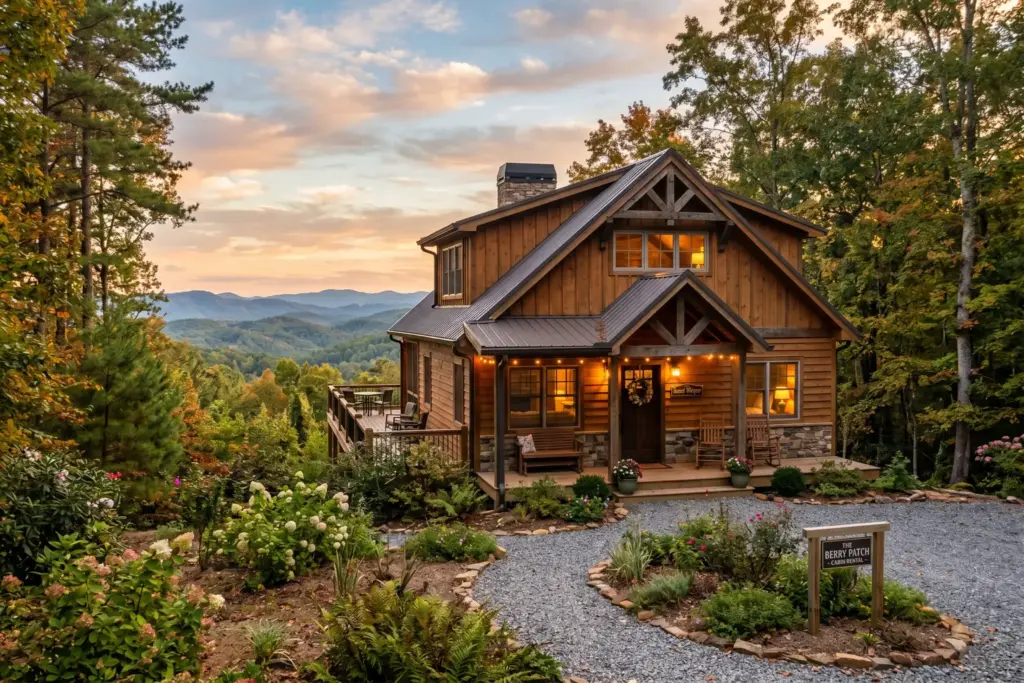
Key Takeaways
- Short-term rentals remain a viable investment in 2026, but profitability now depends heavily on market type, operational discipline, and realistic cost expectations. The days of “buy anything and list it” are over.
- StaySTRA data shows national occupancy at 48.4% (down 1.5% year over year), while ADR rose 3.6% to $246.62. Revenue is being driven by pricing power, not fuller calendars.
- Mountain and rural drive-to markets are outperforming coastal and urban markets in 2026. Park City ($94,000/year per listing) and Gatlinburg ($62,000+) are examples of categories pulling ahead.
- Experienced hosts who treat STR investing as a hospitality business (not passive income) report strong returns, with top-quartile operators clearing $62,000+ net after expenses on a single property.
- For investors who decide to move forward, DSCR loans remain accessible at 6.0% to 7.99% with 20-25% down, but the math only works in markets where occupancy and ADR support a DSCR above 1.25.
On a Tuesday morning last March, I sat across from a host named Carlos at a coffee shop on South Congress in Austin. He had three STR properties, all purchased between 2021 and 2023. Two were cash-flowing. One was, as he put it, “eating me alive.” His question was the same one I hear everywhere I go now, from host meetups in Nashville to DM threads on BiggerPockets: “Is this still worth it?”
La respuesta honesta (the honest answer) is that it depends. Not in the wishy-washy way that consultants say it depends. In the very specific, show-me-the-numbers way that separates hosts who are building real wealth from hosts who are subsidizing their guests’ vacations.
I spent the last month talking to active STR operators, pulling StaySTRA market data across every category of market we track, and reading through the forums where hosts actually tell the truth about their numbers. What I found is a market that has matured, not collapsed. The opportunity is real, but it has a much sharper set of teeth in 2026 than it did three years ago.
The Direct Answer: Yes, With Conditions
Short-term rental investing is still profitable in 2026 for operators who choose the right market, buy at the right price, and run it like a hospitality business. StaySTRA data shows national RevPAR at $119.27 (up 2.1% year over year), with mountain and rural drive-to markets posting annual per-listing revenues between $46,000 and $94,000. But national occupancy has slipped to 48.4%, meaning nearly half of all available nights go unbooked. If you are buying into a saturated market with no pricing strategy and no operational plan, 2026 will punish you for it.
What StaySTRA Data Actually Shows in 2026
Let me start with the numbers, because the numbers do not care about your feelings or mine.
StaySTRA’s Q1 2026 data paints a picture of a market where pricing power is holding but occupancy is under pressure. January 2026 national metrics came in at 48.4% occupancy (down 1.5% year over year), $246.62 ADR (up 3.6%), and $119.27 RevPAR (up 2.1%). Supply grew 4.2% to 1.68 million available listings. Total nights booked rose 5.5%.
That last number matters more than people realize. Demand is growing. There are more guests booking more nights than last year. The problem is that supply is growing faster in certain markets, diluting the pie for individual hosts.
Walking through the data by market type, the divergence becomes vivid:
Mountain and Ski Markets (Strongest)
Vail posted an $843 ADR with 78% occupancy in Q1 2026. Steamboat Springs hit 85% occupancy at $573 ADR. Park City came in at $683 ADR and 73% occupancy. These numbers explain why StaySTRA’s revenue benchmarks show mountain markets producing $46,000 to $94,000 in annual per-listing revenue. The catch? Entry prices often exceed $1 million. You need real capital to play in this space.
Coastal Markets (Wide Variance)
Key West averaged 90% occupancy during Q1 at $559 ADR. That is a $143,000 annual revenue market. Myrtle Beach, on the other end of the spectrum, posted 44% occupancy at $148 ADR, producing roughly $19,000 per year. Same category, wildly different outcomes. “Coastal” is not a strategy. The specific coastal market is the strategy.
Urban Markets (Under Pressure)
Denver came in at 42% occupancy and $178 ADR ($75 RevPAR). Atlanta at 53.3% and $182 ADR ($97 RevPAR). Urban markets are fighting oversupply. Atlanta has 13,156 active listings competing for slightly more than half of available nights. That is a lot of inventory sitting dark.
Rural and Drive-To Markets (Quietly Winning)
This is the category that keeps surprising me. Markets like Gatlinburg and Blue Ridge are posting $62,000 to $69,000 in annual per-listing revenue despite lower occupancy, because their ADRs are higher than most people expect from “small town” destinations. These markets benefit from something urban metros do not have: limited hotel competition. When the only lodging options are vacation rentals, pricing power holds.
What Experienced Hosts Actually Say
Data tells you what is happening. Hosts tell you what it feels like. I wanted both.
I talked to more than a dozen operators over the past month, ranging from a couple in Scottsdale running one property to a professional manager with 155 units across eight cities. Their answers were remarkably consistent, even when their markets were completely different.
“It’s a business now. Period.”
This was the line I heard in some version from nearly every host. One operator in Nashville who runs four listings put it to me plainly: she made $89,000 gross across her portfolio last year, spent $52,000 on expenses (cleaning, supplies, maintenance, software, insurance), and netted $37,000. “Three years ago I would have grossed $110,000 on the same properties,” she told me. “But my expenses were lower then too. The margins have compressed, not collapsed.”
When I asked if she would do it again, she paused. “Si, lo haria otra vez (Yes, I would do it again), but I would buy differently. I would skip the trendy neighborhoods and look for the boring ones with consistent demand.”
“The people who are leaving are making it better for the rest of us”
Sean Rakidzich, who manages 155 properties generating over $10 million in annual revenue, has been vocal about this publicly. His analysis shows median U.S. listing revenue at $28,400 annually, but top-quartile operators are clearing $62,000+ net after expenses. The bottom quartile is losing money after debt service. “Profitability is a skill question, not a yes-or-no question,” Rakidzich has written.
A BiggerPockets community thread I followed for weeks had a line that stuck with me: “STRs still work in 2026. They just don’t work accidentally anymore.” That captures something real. When weaker operators exit (converting to long-term rental, selling, or just letting listings go dark), the remaining hosts face less competition and often see their own occupancy improve.
“I net more than long-term rental, but I work for it”
A host in Blue Ridge, Georgia told me his three-bedroom cabin generates about $5,200 per month gross and roughly $2,800 after all expenses. A comparable long-term rental in the same area would bring $1,800. “That extra thousand a month is real money,” he said. “But I earn it. Guests, cleaners, repairs, reviews. Es un trabajo de verdad (It’s real work), maybe eight to ten hours a week per property.”
This matches the broader data. Net STR income exceeds long-term rental yield by 20% to 40% in most U.S. markets, but the operational load is significantly higher. Whether that tradeoff makes sense depends entirely on the investor.
Where It Is Working vs. Where It Is Not
Not all markets are created equal, and pretending otherwise would be dishonest. Based on StaySTRA data and the conversations I have had with hosts across the country, here is where the line falls in 2026.
Markets Where STR Investing Is Working
- Supply-constrained mountain and ski towns. Vail, Steamboat, Breckenridge, and Park City continue to post strong occupancy and premium ADRs. Limited buildable land keeps supply in check.
- High-barrier coastal markets. Key West (90% occupancy, $559 ADR) and select Hawaii markets where regulatory constraints or geography limit new listings.
- Rural drive-to destinations. Gatlinburg, Blue Ridge, and similar markets where STRs are the primary lodging option. No hotel competition means pricing power holds even as national occupancy softens.
- FIFA World Cup host cities (short-term). Boston ($193 RevPAR, 73.3% occupancy), New York ($213 RevPAR), and Miami ($187 RevPAR) are seeing strong forward booking demand heading into summer 2026.
Markets Where STR Investing Is Struggling
- Oversupplied urban metros. Atlanta (13,156 listings, 53% occupancy), Houston ($92 RevPAR), and Philadelphia ($91 RevPAR) face structural oversupply. Too many listings chasing too few guests.
- Saturated beach markets. Myrtle Beach (44% occupancy, $148 ADR) and similar high-volume, low-barrier coastal markets where anyone can list and everyone has.
- Markets with hostile regulation. New York City (47 active listings post-Local Law 18) is effectively closed. Markets like Maui, where a full STR phase-out is underway, represent existential risk to invested capital.
What You Need to Make STR Investing Work in 2026
If you have read this far and you are still interested, here is what the hosts who are succeeding have in common. These are not aspirational tips. They are the entry conditions that separate operators who build wealth from operators who bleed cash.
1. Buy at 2023 Prices or Below
Multiple experienced investors told me the same thing: if you are paying 2021 or early 2022 prices for an STR property in 2026, your margins are probably too thin to survive a soft season. The operators making money bought during the correction or negotiated hard. One Scottsdale host told me she purchased her property 18% below its 2022 Zestimate. “That discount is the only reason the numbers work at the current ADR,” she said.
2. Use Dynamic Pricing (Not Airbnb Smart Pricing)
Every profitable host I spoke to uses a third-party dynamic pricing tool with weekly manual adjustments. Not one relies on Airbnb’s default Smart Pricing, which several hosts described as “leaving money on the table during peaks and pricing you out during slow periods.”
3. Know Your DSCR Before You Buy
For investors financing with a DSCR loan (and most are), the math needs to clear a 1.25 DSCR ratio at a conservative occupancy estimate. In 2026, DSCR loan rates run 6.0% to 7.99% with 20-25% down. A well-qualified borrower (740+ credit, 25% down, DSCR above 1.25) lands at the lower end of that range.
Here is what a realistic deal looks like in a mid-tier market: A three-bedroom property purchased for $350,000 with 25% down ($87,500), financed at 6.5%. Monthly PITIA (principal, interest, taxes, insurance) runs approximately $2,100. To hit a 1.25 DSCR, the property needs to generate at least $2,625 per month in gross revenue, which means roughly $88 per night at 60% occupancy. That is achievable in markets like Breckenridge ($393 ADR, 63% occupancy), Gatlinburg, or Blue Ridge, but a stretch in Atlanta ($182 ADR, 53% occupancy) or Houston ($167 ADR, 55% occupancy).
Sponsored — Beeline
Finance Your Next STR With a DSCR Loan
Qualify on property cash flow, not W-2 income. Beeline specializes in fast DSCR closings for STR investors. No personal income verification required.
Check Your DSCR Eligibility →Affiliate disclosure: StaySTRA may earn a referral fee.
4. Pick Markets Where Supply Cannot Easily Grow
This was the point Carlos made to me that morning in Austin, and I have been thinking about it since. The markets that are holding up best in 2026 share one thing: some kind of constraint on new supply. Geography (islands, mountains, small towns), regulation (permit caps, owner-occupancy requirements), or economics (high land costs that discourage casual investors). If anyone with a spare bedroom can list in your market, your pricing power will erode.
5. Budget 50-60% of Gross Revenue for Expenses
This is the number that catches new investors off guard. Platform fees (3-15%), cleaning ($80-$150 per turnover), supplies, maintenance, software, insurance, property management (if outsourced), and taxes consume half to two-thirds of gross revenue. A property generating $5,000 per month gross may net $2,000-$2,500 per month. If your proforma does not account for this, your proforma is fiction.
The “Is Airbnb Dying?” Question
I see this question everywhere. On Reddit, on BiggerPockets, in the DMs hosts send me after I publish a piece like this. Cada vez que lo escucho, pienso lo mismo (Every time I hear it, I think the same thing): the question confuses a platform with a market.
Airbnb is not dying. The company reported $2.7 billion in Q1 2026 revenue (up 18% year over year) and $519 million in adjusted EBITDA (up 24%). It has over 5 million active hosts globally. The platform is healthy.
What is dying is the expectation that STR investing is passive income. That myth was born in 2020-2021 when travel demand exploded, supply was low, and anyone with a spare property could print money on Airbnb. That period was the anomaly. What we are living through now is the normalization.
The better question is not “Is Airbnb dying?” but “Is my specific market and operating approach viable?” And that question can only be answered with local data, not national headlines.
Airbnb vs. Long-Term Rental in 2026
This comparison comes up in every conversation I have with prospective investors. The honest answer, based on what hosts tell me and what StaySTRA data shows: STR still outearns long-term rental in most markets, but the gap has narrowed and the work is not comparable.
A well-run STR in a mid-tier market generates 20-40% more net income than a comparable long-term rental. But “well-run” is doing heavy lifting in that sentence. It means dynamic pricing, active guest communication, reliable cleaning operations, and a willingness to manage the business week over week. A long-term rental requires none of that after the tenant is placed.
For investors with limited time or no interest in hospitality operations, long-term rental is the better fit in 2026. For investors willing to run the business, the STR premium still exists. Just do not fool yourself about which category you fall into.
Sponsored — Beeline
Finance Your Next STR With a DSCR Loan
Qualify on property cash flow, not W-2 income. Beeline specializes in fast DSCR closings for STR investors. No personal income verification required.
Check Your DSCR Eligibility →Affiliate disclosure: StaySTRA may earn a referral fee.
We do our best to keep our content accurate and up to date, but things change and we are only human. Always verify details directly with local sources before making decisions.
Frequently Asked Questions
Is Airbnb dying in 2026?
No. Airbnb reported $2.7 billion in Q1 2026 revenue (up 18% year over year), with over 5 million active hosts globally. What has changed is the competitive landscape: more supply, more sophisticated guests, and tighter margins for operators who do not actively manage their pricing and guest experience. The platform is thriving. Passive hosting is not.
Is STR more profitable than long-term rental in 2026?
In most U.S. markets, yes. Net STR income exceeds long-term rental yield by 20-40% for a well-run property. But STRs require active management (dynamic pricing, cleaning coordination, guest communication) while long-term rentals are largely hands-off after tenant placement. The income premium exists, but it comes with operational demands that not every investor wants.
Which STR markets are still profitable in 2026?
Supply-constrained mountain towns (Vail, Steamboat Springs, Park City), high-barrier coastal markets (Key West), and rural drive-to destinations (Gatlinburg, Blue Ridge) are posting the strongest numbers. StaySTRA data shows these categories producing $46,000 to $143,000 in annual per-listing revenue. Oversupplied urban metros (Atlanta, Houston, Philadelphia) and saturated beach markets (Myrtle Beach) are struggling.
Are short-term rentals saturated in 2026?
Some markets are. Atlanta has 13,156 active listings competing for 53% occupancy. Myrtle Beach sits at 44% occupancy. But nationally, supply growth has slowed to 4.2% annually, well below the 20% expansion peak of 2021-2022. The saturation story is market-specific, not universal. Markets with geographic or regulatory supply constraints continue to perform well.
How much does an average Airbnb host make in 2026?
Median U.S. listing revenue is approximately $28,400 annually before expenses. After accounting for the typical 50-60% expense ratio, that leaves $11,000-$14,000 net per property. Top-quartile operators in strong markets clear $62,000+ net. The variance is driven primarily by market selection, property type, and operational quality.
Run Your Own Numbers
Every market is different, and the only way to know whether a specific property pencils is to run the actual data. The StaySTRA Analyzer lets you pull occupancy, ADR, and revenue data for any market we track so you can build a proforma based on real numbers, not guesses. If you are evaluating an STR purchase in 2026, start there.
Sponsored — OfferMarket
Buy Your First STR With Long-Term Rental Financing
Flexible, long-term financing for short-term rental buyers. Rates from 5.75%. Instant online quote, no credit pull.
Explore RTL Financing Options →Affiliate disclosure: StaySTRA may earn a referral fee.
For investors who have already decided to move forward and need financing, our STR Financing Guide breaks down how DSCR loans work in 2026, what rates look like, and which markets make the math work.
Become a StaySTRA Insider
Join free — get our newsletter + 1 free property analysis/month.
No spam. Unsubscribe anytime. Free membership includes property analyses and market insights.