Key Takeaways
- Short Stay Summit London 2026 drew 1,300+ delegates to Old Billingsgate on April 22. Airbnb, Booking.com, and VRBO all sent senior leadership. The tech vendor announcements were real. The platform commitments to hosts were vague.
- PriceLabs launched Revenue Accelerator (30+ new features), Hospitable launched a permanent free PMS tier, and Key Data introduced Dex AI. These tools give hosts more leverage than anything the platforms announced.
- Airbnb sent three executives and was the Platinum Sponsor but offered no new clarity on fee transparency, payout holds, or API access. The 15.5% host-only fee was already live before anyone walked into the venue.
- VRBO’s Premier Host shift from host-level to listing-level recognition raises the bar significantly (99% acceptance rate, 4.6+ reviews, zero cancellations). The expanded distribution across Expedia’s network is the most concrete host benefit from any platform.
- Booking.com previewed $1 million damage insurance per reservation coming later in 2026, but commission transparency remains an open question across every market.
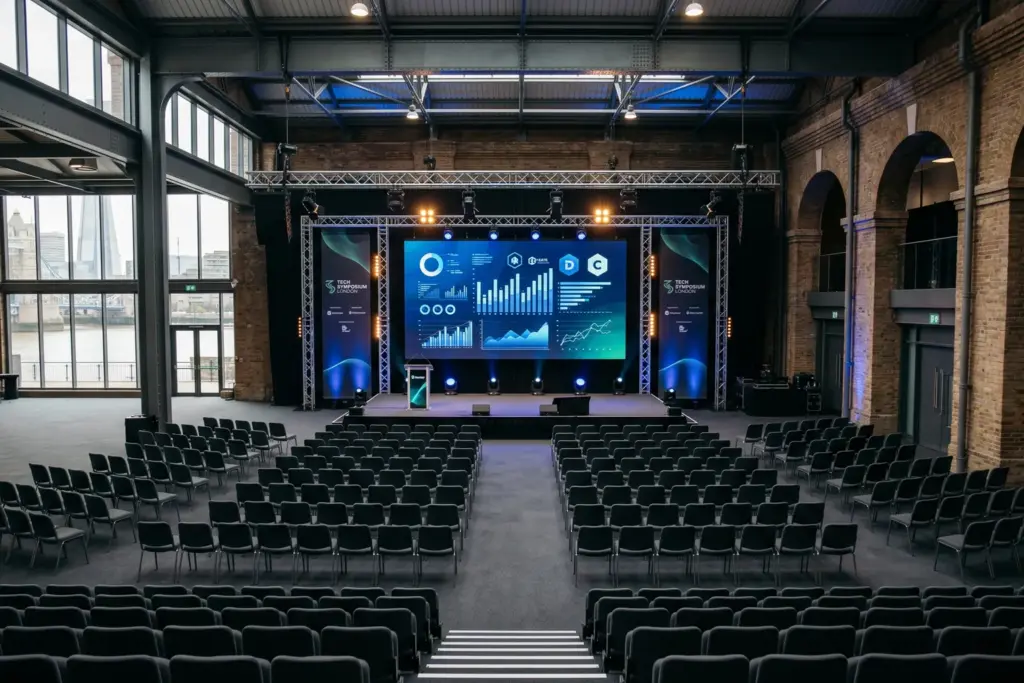
The Short Stay Summit London 2026 promised a day of answers. Over 1,300 delegates packed into Old Billingsgate on April 22 to hear what Airbnb, Booking.com, and VRBO plan to do for the people who actually run the properties. The theme was “Tourism Reimagined: A People-Led, Future-Focused Industry.” The question walking in: would the platforms put hosts at the center, or just talk about it?
Three days later, I have my answer. The tech vendors showed up with real products. The platforms showed up with talking points. Here is the full scorecard.
What Our Preview Promised to Track
Before the Summit, our preview article laid out five specific demands hosts needed answered. Fee transparency. Payout protections. API access for third-party tools. Direct booking support. Terms of service clarity. I promised a post-event scorecard measuring each platform against those demands. This is that scorecard.
The Big Picture: STAA Leadership Change and Industry Direction
The day opened with a leadership transition. STAA CEO Andy Fenner used his opening keynote to announce his departure after three years leading the UK’s largest short-term rental trade body. His replacement is Janet Uttley. Fenner’s parting message was direct: the sector needs to “speak with confidence” and “work together more effectively.”
That message set the tone. Fenner leaves for the WYSE Travel Confederation. Uttley inherits a UK market facing new registration requirements and growing regulatory pressure. Chris Webb, MP for Blackpool South and chair of the All-Party Parliamentary Group for Hospitality and Tourism, joined Fenner on the opening stage. Short-term rentals are now a formal part of the UK’s tourism policy conversation. That is a shift worth watching from the US side of the Atlantic.
Airbnb Scorecard: Platinum Sponsor, Bronze Answers
Airbnb brought three senior leaders. Luke Impett (Head of Public Affairs, Northern Europe) on the opening panel. Lisa Marçais (GM, Northern Europe and MEA) on “Beyond Borders.” Jordi Suarez Cambra (Director Homes Supply, EMEA) on “Inside the Platforms.” Platinum Sponsor money. Three speaking slots. And yet, here is what hosts did not hear.
Fee transparency: Nothing new. The 15.5% host-only fee for PMS-connected hosts rolled out on April 13, nine days before the Summit. It was already done. There was no breakdown of how that fee compares to what guest-facing fees generate. No roadmap for giving hosts a clear, apples-to-apples cost comparison across listing types.
Payout protections: Nothing new. Hosts still have no public documentation on what triggers a payout hold, how long holds last, or what the resolution process looks like. The platform that just crossed 5 million hosts globally still treats payout discretion as an internal matter.
API access: Nothing new. Third-party tool makers like PriceLabs, Hostaway, and Guesty were all exhibiting at the same event, building products that depend on Airbnb’s API. No announcement about API stability, expanded access, or better documentation.
Direct booking support: Nothing new. The walled-garden approach continues. Airbnb’s ecosystem prioritizes keeping guests inside the Airbnb funnel. No acknowledgment of direct bookings as a legitimate host strategy.
Terms of service clarity: Already resolved before the Summit. The April 20 ToS deadline came and went. Hosts either accepted or got locked out. This was not a Summit conversation because Airbnb made it a pre-Summit fait accompli.
Nedra’s Grade: C-. Airbnb showed up with bodies but not with answers. The Platinum Sponsor badge bought stage time, not host trust. Hosts in the US wanted to hear about fee reform, payout transparency, and API investment. They heard about “tourism reimagined” instead.
Sponsored — Beeline
Finance Your Next STR With a DSCR Loan
Qualify on property cash flow, not W-2 income. Beeline specializes in fast DSCR closings for STR investors. No personal income verification required.
Check Your DSCR Eligibility →Affiliate disclosure: StaySTRA may earn a referral fee.
VRBO and Expedia Scorecard: The Quiet Distribution Play
VRBO sent James Cassidy (Senior Director, Partner Success) to the “Inside the Platforms” panel and Tim Rosolio (VP, Vacation Rentals Partnerships) for a fireside chat. Two speakers. No title sponsorship. And honestly, a more concrete set of host-relevant moves than Airbnb brought.
Premier Host goes listing-level: This is the biggest structural change any platform announced around the Summit. VRBO’s Premier Host program is shifting from host-level to individual listing-level recognition. Each property now needs to meet the criteria on its own: 99% acceptance rate, zero cancellations, 4.6+ average review rating, and 5+ reviews. That is tougher than the old standard. Multi-property operators will feel the squeeze. But it also means guests see quality signals tied to the specific property they are booking, not a host’s overall average.
Performance Milestones: Premier Host becomes part of a new tiered framework. Reach Milestone 2 (“Great”) and above to qualify. Hit the top tier and you unlock a “Top 1% badge” plus increased search visibility. This is VRBO’s version of gamification, and it gives high-performing hosts a real competitive advantage.
Distribution expansion: The move that matters most. VRBO supply will flow across Expedia.com, airline partnerships (Delta, Alaska Airlines), fintech apps (Revolut), and 160,000 travel agents. Your VRBO listing could show up to hotel-loyal travelers who never thought about vacation rentals. For Airbnb-only hosts, this is a genuine new demand channel.
What VRBO dodged: The 100% cancellation penalty. No changes announced. Hosts who cancel for any reason still lose their entire payout on that booking. And direct booking infrastructure? Still not part of VRBO’s vocabulary.
Nedra’s Grade: B. VRBO brought fewer executives but more substance. The distribution expansion is a real growth lever. The Premier Host restructure will hurt lazy operators and reward disciplined ones. That is how platform standards should work. Lost a full grade because the cancellation penalty remains punitive and there is no API transparency roadmap.
Booking.com Scorecard: Growing Quietly, Saying Less
Booking.com sent Matina Keramida (Head of Product Marketing) to the “Inside the Platforms” panel. One speaker. Gold Sponsor. The quietest of the three major platforms.
Damage insurance: The biggest announcement connected to Booking.com’s 2026 roadmap is the upcoming $1 million damage insurance per reservation. This will supplement the existing $1 million liability coverage already included with every booking. That is a real benefit. When it goes live later this year, Booking.com will offer comparable protection to Airbnb’s AirCover, which has been the market standard.
Pre-authorized payments: Hosts using Payments by Booking.com will be able to request pre-authorized payments from guests. Combined with fraud screening and chargeback management, this makes Booking.com meaningfully more secure for hosts worried about payment disputes.
Alternative accommodations growth: Vacation rentals grew 19% year-over-year on Booking.com and now represent 33% of all room nights. One in three nights booked is a short-term rental. This is not a niche category anymore.
What Booking.com dodged: Commission transparency. The commission structure varies by market, by property type, and by arrangement. There is no public standard. Hosts paying 15% do not know if others are paying 12% or 18%. The “Foundations” framework is operational guidance, not a fee commitment.
Nedra’s Grade: B-. The damage insurance announcement is a meaningful host protection. But one speaker at a major industry summit? For a platform where 33% of room nights are short-term rentals, that is underinvestment in the host relationship. Commission opacity drags the grade down further.
The Tech Announcements That Actually Delivered
If the platforms played it safe, the tech vendors did not. The Summit floor was where the real innovation happened. I spend my weekends reading patent filings and product changelogs. These launches got my attention.
PriceLabs Revenue Accelerator: The biggest product launch of the Summit. PriceLabs dropped 30+ new features that transform it from a pricing tool into a complete revenue growth platform. AI-assisted base pricing that factors in cleaning fees and PMS markups. Group-level price previews so you can simulate changes before going live. Forecasting tools. And Owner Analytics, which uses AI to generate performance reports for property owners. Scaling your portfolio with DSCR financing just got easier to justify when you can show owners AI-generated revenue projections.
Hospitable free PMS tier: Hospitable launched a permanent $0 Essentials plan. No cap on properties or users. Multi-channel distribution across Airbnb, Booking.com, and VRBO. Unified inbox. Automated messaging. Guest portal. The first major PMS to offer full multi-channel distribution at zero cost. The catch: no direct booking website, no smart lock integrations, no dynamic pricing. But for a host running 1 to 5 properties who has never used a PMS? This removes the last cost barrier.
Key Data Dex AI: Key Data launched Dex AI, the industry’s first AI-powered Data Experience Engine. Type “compare my three-bedroom units to the market” and it builds the dashboard instantly. Every morning it generates a portfolio health summary. Available to all Key Data PRO users at no extra cost.
Yale Linus Smart Lock L2 Lite: Yale showcased its latest smart lock with KeySense technology for simplified keyless entry. Matter over Thread means it works with Apple Home, Google Home, Alexa, and SmartThings. At roughly $150, battery-powered with six-month life, it hits the sweet spot for STR operators who need affordable, reliable keyless access.
Smoobu data point: 41.7% of bookings now happen within seven days of arrival. If nearly half your bookings come in the final week, your pricing tool needs to adjust in real time, not on a weekly schedule.
Sponsored — Beeline
Finance Your Next STR With a DSCR Loan
Qualify on property cash flow, not W-2 income. Beeline specializes in fast DSCR closings for STR investors. No personal income verification required.
Check Your DSCR Eligibility →Affiliate disclosure: StaySTRA may earn a referral fee.
What the Platforms Collectively Dodged
Let me be direct. Across all three major platforms, here is what hosts did not get at Short Stay Summit London 2026:
- No fee standardization roadmap. Each platform charges differently, structures fees differently, and explains fees differently. No one committed to a simple, universal fee disclosure standard.
- No API transparency pledge. Third-party tools are building the infrastructure that makes modern hosting possible. The platforms benefit from that ecosystem. But no platform committed to API stability, expanded access, or developer-friendly documentation.
- No direct booking acknowledgment. Every tech vendor at the Summit (Hostaway, Hospitable, PriceLabs) is building tools that help hosts book directly. Every platform pretended that conversation is not happening.
- No chargeback reform. Hosts are still exposed to guest-initiated chargebacks with limited recourse. Booking.com’s pre-authorized payments are a step. But no platform addressed the structural imbalance.
The pattern is clear. Platforms invest in listing volume. Tech vendors invest in host capability. The gap between the two widened at this Summit.
What This Means Going Forward
Here is the future I see forming. The tools are getting smarter faster than the platforms are getting more transparent. PriceLabs is building revenue intelligence. Hospitable is removing cost barriers. Key Data is making portfolio analysis conversational. These products will define how hosting works in 2027.
The platforms will keep growing. But the power is shifting. Every free PMS tier, every AI-powered pricing tool, every direct booking integration chips away at platform dependency. The Summit told you exactly who is building for you and who is building around you. Invest your time accordingly. Use your StaySTRA Analyzer to benchmark your market, then pick the tools that close the gap between your current revenue and your potential.
We do our best to keep our tech reviews accurate and up to date, but products evolve fast and we are only human. Always verify current features and pricing directly with vendors before purchasing.
Frequently Asked Questions
What were the biggest announcements at Short Stay Summit London 2026?
The biggest announcements came from tech vendors, not platforms. PriceLabs launched Revenue Accelerator with 30+ new features. Hospitable launched a permanent free PMS tier. Key Data introduced Dex AI for natural language portfolio analysis. The STAA also announced a CEO transition from Andy Fenner to Janet Uttley.
Did Airbnb announce any fee changes at the Short Stay Summit 2026?
No. Airbnb’s 15.5% host-only fee for PMS-connected hosts had already rolled out on April 13, nine days before the Summit. No additional fee changes or transparency measures were announced at the event itself.
What is VRBO’s new Premier Host listing-level change?
VRBO is shifting Premier Host recognition from the host level to the individual listing level. Each property must independently meet stricter standards: 99% acceptance rate, zero host-initiated cancellations, 4.6+ average review rating, and 5+ reviews. This replaces the previous system where a host’s overall performance earned the badge for all listings.
Is Hospitable’s free PMS plan really free with no limits?
Yes. Hospitable’s Essentials plan has no monthly fee, no cap on properties, and no cap on users. It includes multi-channel distribution across Airbnb, Booking.com, and VRBO, plus automated messaging, a unified inbox, and a guest portal. It does not include direct booking websites, smart lock integrations, or dynamic pricing.
What did Booking.com announce about damage insurance for hosts?
Booking.com confirmed that $1 million damage insurance per reservation will launch later in 2026. This supplements the existing $1 million liability coverage already included with every Booking.com reservation. When live, it will bring Booking.com’s host protections in line with Airbnb’s AirCover program.
Become a StaySTRA Insider
Join free — get our newsletter + 1 free property analysis/month.
No spam. Unsubscribe anytime. Free membership includes property analyses and market insights.