

Key Takeaways
- Ghost hotels are commercial operations that list multiple apartment units on Airbnb under individual-looking profiles, undercutting independent hosts while avoiding hotel regulations.
- Data from Inside Airbnb analyses shows commercial operators control a disproportionate share of listings and revenue in high-demand urban markets.
- NYC, Los Angeles, Spain, and the EU are all taking enforcement action against commercial operators in 2026, creating a structural tailwind for compliant independent hosts.
- Independent hosts hold advantages that scale cannot replicate: authentic identity, owner presence, local knowledge, and review depth that guests actively seek out.
- Before investing in a market, understanding whether commercial operators are concentrating supply is essential to reading occupancy and ADR data accurately.
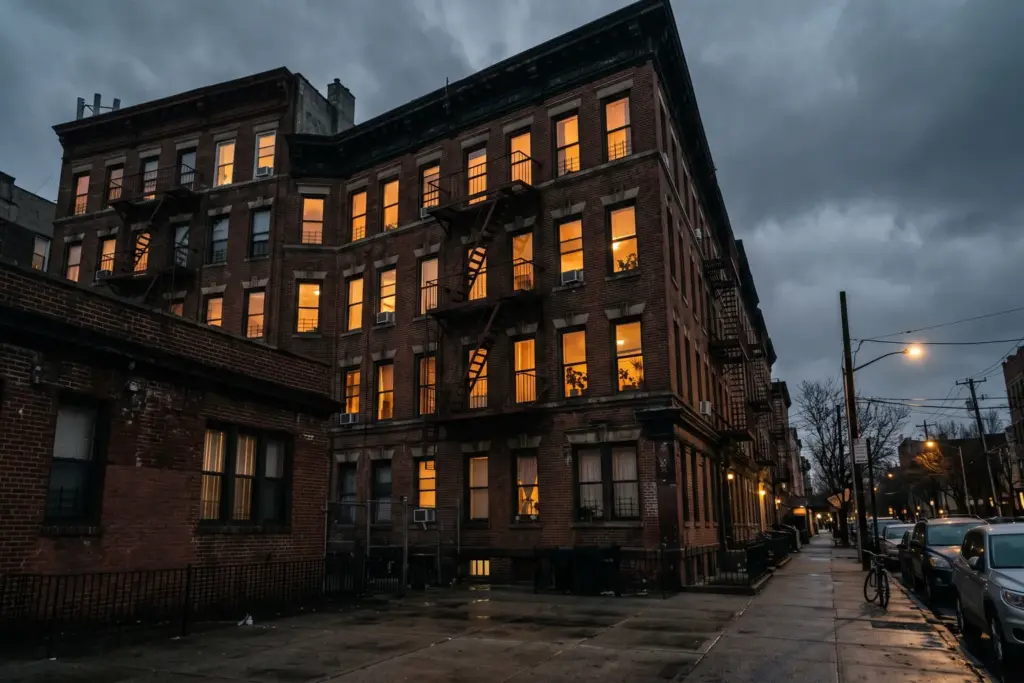
The listing looks like this: a warm, professionally photographed one-bedroom in a downtown apartment building. The host has a profile photo, a friendly bio mentioning their love of coffee shops and local museums, and 4.9 stars across 180 reviews. The description promises a “home away from home” experience with thoughtful amenities and quick responses to any question.
The host also manages 38 other units in the same building. The building two blocks over. And three more buildings across town.
That is a ghost hotel. Not a home. Not a spare room. A commercial hospitality operation running inside the residential Airbnb marketplace, presenting as an individual host while operating at hotel scale.
Ghost hotel operators have existed since Airbnb’s early growth years, but enforcement and platform pressure are reaching them in 2026 in ways they have not before. For independent hosts who are compliant, authentic, and locally present, that shift is not a threat. It is a competitive opening.
Here is what the data shows about how ghost hotels work, how regulators are responding, and why the independent host model has structural advantages that commercial operators cannot buy.
What a Ghost Hotel Actually Is
The term has no single legal definition. The operational pattern is consistent across dozens of cities that have investigated it.
A ghost hotel is a residence, or cluster of residences inside a single building, operated exclusively as short-term rental accommodation by a commercial entity. That entity is typically a company or professional operator, not an individual homeowner. The units look identical to a private listing on Airbnb. They have no front desk, no visible commercial branding, and no hotel-grade licensing.
The commercial classification matters legally because hotels must comply with requirements that residential STRs often avoid: commercial zoning, specific fire code standards, ADA compliance thresholds, and hotel occupancy taxes at commercial rates. Ghost hotel operators have occupied the gap between those two categories for years. Several cities are now closing that gap by force.
How Commercial Operators Stay Below the Radar
Independent hosts often assume that large commercial operations are obvious. They are not, by design. Documents from platform enforcement investigations and city-level regulatory hearings show three core tactics commercial operators use to avoid detection.
Account segmentation. Rather than managing 50 listings under a single login, commercial operators distribute listings across multiple accounts. Each account presents as an individual host with a persona, a profile photo, and a curated review history. Platform algorithms flag unusual patterns on single accounts. Segmented accounts with different personas are substantially harder to connect without cross-referencing listing addresses, check-in instruction templates, and pricing patterns.
Lease arbitrage. Many ghost hotel operators do not own the units they list. They hold master leases on apartment buildings and sublet individual units to short-term guests at a margin. When city regulators search property records for a “commercial STR operator,” the trail leads to a building management company. The operator exists one step behind that company. This structure makes civil enforcement significantly more complex.
Listing rotation. A commercial operator managing 30 units in a single building may keep only a subset active on any given day, cycling listings in and out. This limits the per-account listing count that any single platform data scrape captures. Independent data projects like Inside Airbnb take periodic snapshots of publicly available listing data. They may see 8 active listings from an operator who controls 30. The full picture requires tracking across multiple snapshots over time.
None of these tactics is invisible at scale. Researchers who cross-reference listing addresses, price clustering, and check-in instruction language have traced commercial operations across cities. The work requires sustained effort, and platforms historically have not prioritized it.
The Scale: What the Data Shows
Precise national figures on ghost hotel market share do not exist, in part because of the segmentation tactics described above. City-level analyses using Inside Airbnb data and independent research reveal consistent patterns.
In Prague, a 2026 analysis of Inside Airbnb data covering more than two years of snapshots found that hosts with five or more listings accounted for 61.9 percent of all Airbnb listings as of September 2026. The top 24 accounts, each controlling at least 50 listings, held 15.2 percent of total inventory while representing less than 1 percent of all accounts (Source).
In Vancouver, researchers found that 53 percent of active Airbnb hosts met a commercial classification, and those commercial hosts generated approximately 77 percent of total platform revenue.
In Chicago, a study found that commercial operators, defined as those listing units for more than 30 days per year, accounted for 96 percent of total Airbnb revenue in the market.
These figures come from different cities, different years, and different methodologies. They point consistently in one direction: in high-demand urban markets, a small percentage of accounts generates an outsized share of platform revenue.
That has a direct implication for STR investors. Occupancy rates, average daily rates, and revenue figures aggregated across a market include commercial operator supply. Understanding whether commercial concentration is present changes how you read that data, and what you can realistically expect as an independent host.
The Regulatory Tide Is Turning
This is where the competitive landscape for independent hosts is shifting materially.
New York City. Three years after New York City began enforcing Local Law 18, the most stringent short-term rental registration law in the United States, the effects on commercial operators are documented (Source). The law requires hosts to register with the city, obtain approval, and remain present during guest stays. Ghost hotel operators, whose model depends on whole-unit rentals without host presence, had two choices: comply or exit. Most exited. The market saw a dramatic contraction in active listings in the months following enforcement. The NYC Office of Special Enforcement has since found that roughly 27 percent of approved listings in a partial review were violating rules, primarily by renting entire apartments or exceeding the two-guest maximum (Source). But the commercial scale operation that existed before LL18 is largely gone from that market. StaySTRA’s three-year retrospective covers what the fine data and market structure data actually shows. Read the full analysis here.
Los Angeles. In August 2026, the city of Los Angeles filed a civil enforcement action against a group of operators accused of running at least 30 properties, alleging they had listed prohibited rent-stabilized units and misled regulators (Source). The shift from permit revocation to civil litigation represents a meaningful escalation. It creates personal legal exposure for the individuals running commercial operations, not just the listings themselves.
The European Union. The EU’s Short-Term Rental Regulation, which took effect in May 2026, requires platforms to share host and booking data with member states monthly. For commercial operators who have structured accounts to obscure their scale, mandatory data sharing substantially reduces the effectiveness of that segmentation tactic. Spain pulled thousands of non-compliant listings from Airbnb ahead of enforcement deadlines. Barcelona is phasing out tourist apartment licenses in residential buildings entirely by November 2028.
Markets that enforce seriously against commercial operators have seen meaningful supply contractions. For independent hosts who remain licensed and compliant, that contraction removes direct competition for the bookings that matter. StaySTRA’s Q3 2026 market data shows what supply tightening does to occupancy and rates in affected markets. See Q3 2026 performance data here.
Why Independent Hosts Hold the Structural Advantage
The ghost hotel narrative can make commercial operators sound like inevitable market winners. They have scale, operational systems, and investor backing. They can price aggressively when it serves them.
Scale and structural advantage are different things. In the STR market, the structural advantages run toward individual hosts.
Authentic identity. Airbnb’s own survey data indicates that 22 percent of guests cite the local experience, not price or amenity count, as their primary reason for choosing the platform over a hotel. A separate survey found 90 percent of guests said they chose an Airbnb stay specifically to “live like a local.” Ghost hotels cannot deliver that. Their value proposition is price and availability. An independent host with genuine local knowledge, a personal stake in the guest experience, and a real presence in the community delivers something the operator model cannot replicate at portfolio scale. Authenticity is not a soft benefit. It is a booking driver.
Owner presence and responsiveness. Commercial operators manage dozens of units through remote teams. Response time depends on staffing schedules and shift handoffs. An independent host who lives nearby and cares personally about their property has a structural responsiveness advantage. Airbnb’s Superhost requirements reward exactly that: a 4.8-star average rating, 90 percent response rate, and sub-1 percent cancellation rate. Roughly 34 percent of U.S. Airbnb hosts currently hold Superhost status. Commercial operators face a specific Superhost vulnerability: one underperforming unit in a large portfolio can cost the badge across all their listings simultaneously.
Review depth. Guests read reviews carefully, and they read host responses with even more scrutiny. A listing where the host personally references a guest by name, recalls a specific conversation, or writes with a consistent individual voice reads differently from one where every response begins with “Thank you for choosing our property.” Factual review authenticity is difficult to fabricate at portfolio scale across dozens of accounts.
Algorithm positioning. StaySTRA’s investigation into how Airbnb’s listing algorithm ranks hosts found that the signals favoring guest satisfaction, response quality, and listing completeness are more achievable for a focused individual host than for a manager running dozens of units under different personas. Read the full algorithm investigation here.
How to Compete and Win
Lead with your story. Your host bio is an asset that no commercial operator can authentically replicate. An honest profile explaining who you are, what you care about in your property, and why you host builds trust before a guest reads a single review. Write it like a person, not a property description. The commercial operator cannot do this without fabricating it.
Price on value, not on volume. Ghost hotel operators carry fixed costs from leases and management overhead that force aggressive discounting during off-peak periods just to cover expenses. An independent host with lower overhead can hold pricing floor with more discipline. You do not need to win on the cheapest nightly rate. You need to win on the best experience at your price point.
Treat local knowledge as a product. Neighborhood restaurant recommendations, seasonal event alerts, specific parking notes, the coffee shop that opens at 6:30 AM, the trail that looks closed but is not. These details come from someone who actually lives in and cares about the neighborhood. A remote management team working from a spreadsheet cannot provide this authentically. Guests notice the difference, and it shows in reviews.
Protect your review velocity. A consistent stream of high-quality reviews from genuinely satisfied guests is both a search ranking signal and a trust signal. That means investing in the experience itself, not just the listing photos. A 40-unit commercial operator cannot individually care about each guest stay in the way a single host can. That gap is your advantage.
Know your market before you compete in it. If you are evaluating a new market or trying to understand whether commercial concentration is distorting the data you see, that information matters before you invest. A market where 60 percent of listings are controlled by 5 percent of operators looks structurally different from one with diversified independent hosts, even if the average ADR appears similar on the surface.
Understand Your Market Before Commercial Operators Skew the Data
Before investing in a market, know whether commercial operators are concentrating supply and what that means for independent-host performance. The StaySTRA Analyzer surfaces listing concentration signals, occupancy, ADR, and market saturation data so you are analyzing the actual competitive environment, not an aggregate number dominated by portfolio operators.
We do our best to keep our reporting accurate and up to date, but situations evolve and we are only human. Always verify current details directly with local officials and sources before making decisions.
Frequently Asked Questions
What is a ghost hotel on Airbnb?
A ghost hotel is a commercial operation that lists multiple apartment units on Airbnb under individual-looking profiles, creating the appearance of private home rentals while operating at hotel scale. These operations typically occupy entire buildings or clusters of units, manage listings under multiple accounts to avoid detection, and offer no front desk, lobby, or visible commercial branding. The model allows operators to avoid hotel regulations while competing directly with individual hosts.
Are ghost hotels legal?
In most U.S. cities, the legal status depends on local STR regulations. Ghost hotels typically violate the spirit and often the letter of residential STR laws, which are designed for owner-occupied homes and not commercial property operations. Cities like New York have enacted strict registration requirements specifically to eliminate the ghost hotel model. In markets without strong enforcement, they operate in a gray zone. That gray zone is narrowing in 2026 as cities like Los Angeles pursue civil enforcement and the EU mandates platform data sharing with member state regulators.
How do commercial operators avoid detection on Airbnb?
Commercial operators commonly use three tactics: splitting listings across multiple accounts that each present as individual hosts, holding master leases rather than owning properties outright (which obscures their identity in property records), and rotating listings in and out to keep per-account listing counts artificially low. These tactics make it difficult for both platform algorithms and city regulators to identify the full scope of a single operator without sustained cross-referencing of address, pricing, and template data.
Can independent hosts compete with ghost hotels on price?
Independent hosts do not need to win on price. Ghost hotel operators carry fixed costs from leases and management overhead that force them into aggressive discounting during slow periods. Independent hosts with lower overhead have more pricing discipline. The competitive advantage for independent hosts is the authentic local experience that drives guests to choose Airbnb over hotels in the first place. Competing on authenticity, responsiveness, and review quality is more sustainable than competing on nightly rate.
What enforcement actions are targeting ghost hotels in 2026?
Several major enforcement shifts are reshaping the landscape. New York City’s Local Law 18 has displaced the commercial operator model from the NYC market through registration and presence requirements. Los Angeles filed a civil enforcement action against a large-scale operator group in August 2026 (Source). The EU’s Short-Term Rental Regulation, effective May 2026, requires platforms to share monthly host and booking data with member states, substantially reducing the effectiveness of account segmentation tactics. Spain removed thousands of non-compliant listings ahead of enforcement deadlines, and Barcelona is phasing out tourist apartment licenses in residential buildings by 2028.
Get the StaySTRA Insider
Market conditions change fast. Get the StaySTRA Insider for weekly data, regulatory updates, and competitive analysis delivered directly to your inbox.
Become a StaySTRA Insider
Join free — get our newsletter + 1 free property analysis/month.
No spam. Unsubscribe anytime. Free membership includes property analyses and market insights.
When you are ready to dig into a specific market, the StaySTRA Analyzer shows you what independent-host performance looks like in the markets where commercial operators are most concentrated.