Key Takeaways
- An estimated 40 to 50 percent of active U.S. short-term rentals are second homes or vacation properties that owners list part-year, not purpose-bought investments.
- Converting a vacation home to a short-term rental typically costs $3,000 to $9,000 in upfront setup: professional photography, starter supplies, and furniture upgrades that often pay back within 60 to 90 days of bookings.
- StaySTRA data shows median monthly revenue for active STR hosts in Destin, FL at $6,269 (ADR $364, 73% occupancy) and Gulf Shores, AL at $5,337 (ADR $322, 68% occupancy).
- Vacation-home owners who live far from the property should evaluate a property manager before listing. In strong beach markets, PM-managed properties often earn enough extra to more than offset the management fee.
- The IRS 14-day rule determines whether your vacation-home Airbnb income is taxed as rental income or personal-use income. That distinction changes what you can deduct and matters more than most first-time hosts realize.
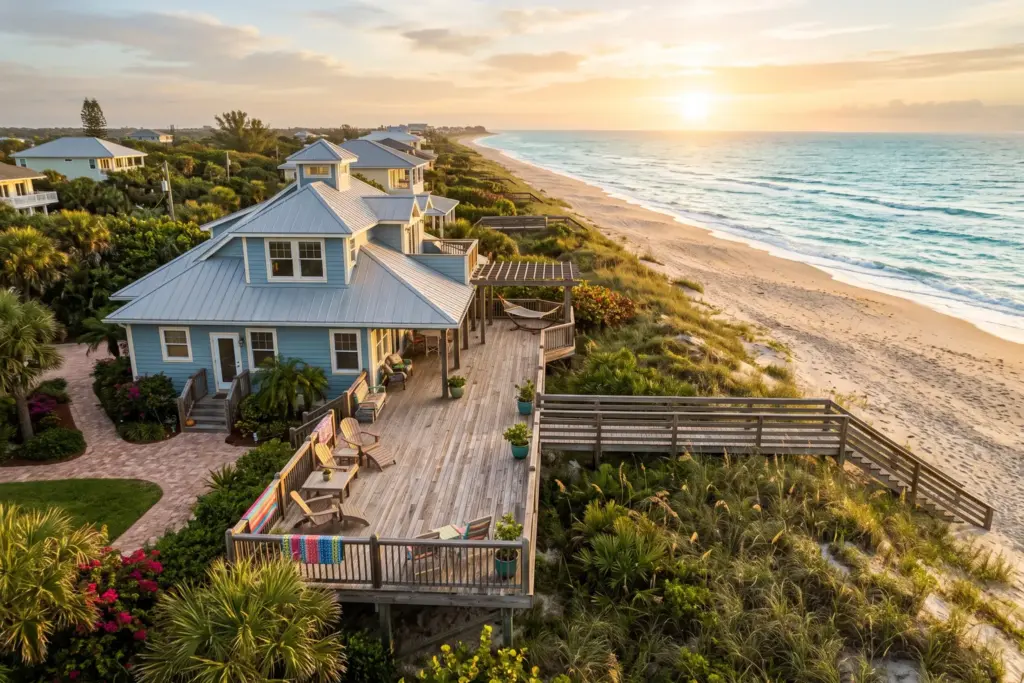
When the first monthly deposit landed in their account, it was $5,312. That was for a single month of short-term rental income from a beach house in Destin, Florida that the Garcias had personally visited for eleven days the entire year.
“We looked at each other and said, we have been doing this completely wrong,” one of them told me. Tres años con esa casa casi vacía. Three years with that house sitting mostly empty while the mortgage ticked forward every month.
Their story is not the one you usually read about short-term rental investing. The standard narrative starts with a search: months of market research, a DSCR loan application, the right neighborhood in the right city. It begins with someone who decided to become an STR investor and went out to find the property.
The Garcias already had the property. What they needed was a decision to use it differently.
Industry estimates suggest that roughly 40 to 50 percent of active short-term rental listings in the United States fall into this category: second homes, vacation retreats, and inherited properties that owners list part-year rather than purpose-bought investments. These are people who already hold the deed. They have cleared the hardest hurdle in STR investing. They just needed to figure out whether the numbers made sense, and then how to actually make it work.
Here are four of those decisions, told with the specific numbers and the specific surprises that never made it into anyone’s original projections.
Profile 1: The Beach House They Barely Used (Destin, FL)
Let’s call them the Garcias. They bought a three-bedroom, two-bath beach house in Destin six years ago. It was their reward property, the place they planned to spend long summer weeks and quiet fall holidays. Life had other plans. Between demanding work schedules and two teenagers with their own calendars, they were getting down there maybe two or three weeks a year.
The house cost them $2,400 a month on the mortgage, $450 for homeowners insurance, and $200 for the HOA. About $3,050 a month to hold an asset they were barely touching.
The first time the idea of listing it came up, one of them pushed back. “It felt like opening up something personal,” they told me. “We picked out that kitchen. We picked out those sheets. The idea of strangers sleeping in our beds was complicated.” They sat on the idea for four months.
Then they ran an actual number. If the property earned $3,500 a month on Airbnb, it would cover carrying costs with $450 left over. That felt realistic. They did not expect to blow past it by a significant margin.
Setup took about six weeks and $4,100. The biggest line items were new linens and bathroom supplies ($1,400), professional photos from a Destin-based Airbnb photographer they found through a local host Facebook group ($650), a smart lock system ($200), a starter supply kit of paper goods and kitchen basics ($480), and a furniture refresh in the primary bedroom because the existing bed frame had seen better days ($1,370).
They wrote the listing themselves. It took three drafts before they were happy with it.
First month of bookings: $4,680. Second month: $5,800. By month four, they had settled into a rhythm averaging just above $5,900, with peak summer months clearing $7,200.
StaySTRA data shows median monthly revenue for active STR hosts in Destin at $6,269, with an average daily rate of $364 and occupancy around 73 percent. The Garcias performed right in that range during their first full year, running slightly above the median in summer months.
The one thing they did not expect was how personal it would feel to read the reviews. “The first review mentioned that the kitchen was cozy and smelled like coffee,” she said. “I teared up a little. Strangers are living our life there for a weekend. But they seem to love it.” They have since blocked out three weeks each November for themselves. The Airbnb income nets about $2,700 a month over carrying costs, money they are now directing toward a second property.
Profile 2: The Inherited Cabin (Gatlinburg, TN)
Call her Rosa. Her grandmother left her a two-bedroom cabin in Gatlinburg, Tennessee. It was paid off. No mortgage. The cabin had been a family gathering place for two decades, the kind of property that holds its own gravity at holidays and reunions.
Rosa ended up with it partly because her grandmother knew she would take care of it and partly because she was the only family member who lived nearby, in Knoxville. Her carrying costs were modest: property taxes, utilities, and routine upkeep added up to about $700 a month.
For the first fourteen months after inheriting it, she didn’t list it. She visited occasionally, let family members use it over holidays, and thought seriously about selling. “A realtor told me I could get $265,000 for it,” she said. “That was real money. But no podía hacerlo. I couldn’t bring myself to sell my grandmother’s place.”
A neighbor who ran her own Smoky Mountains cabin listing suggested Rosa look at what comparable properties were actually earning. Rosa did. She called the neighbor back the same evening.
Setup cost more than she planned, mostly because the cabin needed some updates to compete with newer listings nearby. She replaced aging bathroom fixtures ($800), bought new mattresses and bedding for both rooms ($1,100), added a proper coffee station after reading reviews on her neighbor’s listing ($340), hired a local photographer who specialized in cabin listings ($500), and stocked starter supplies ($480). Total: about $3,220.
She listed in March of the prior year. First month: $2,900. By peak leaf season, her October bookings cleared $5,100.
StaySTRA data puts median monthly STR revenue in Gatlinburg at $4,685, with an ADR of $282 and occupancy around 62 percent. Rosa is performing above the Gatlinburg median in peak season, partly because the cabin’s age turned out to be an asset rather than a liability.
That was the thing she didn’t expect. She had tried to modernize the cabin during setup and came close to replacing the original fireplace mantle with something contemporary. She didn’t, mostly due to time and budget. Guests kept mentioning it in reviews. “People would write things like, the historic feel of this cabin is exactly what we needed,” she said. “I stopped trying to update the character out of it.”
Her cabin now averages $3,800 to $4,400 per month across the year, with the strongest months in fall. She blocks two weeks each December for family. The income goes toward maintenance reserves and, for the first time, a consistent retirement contribution.
Sponsored — Beeline
Finance Your Next STR With a DSCR Loan
Qualify on property cash flow, not W-2 income. Beeline specializes in fast DSCR closings for STR investors. No personal income verification required.
Check Your DSCR Eligibility →Affiliate disclosure: StaySTRA may earn a referral fee.
Profile 3: The Gulf Shores Beach House and the Property Manager Decision (Gulf Shores, AL)
The Nguyens bought a four-bedroom beach house in Gulf Shores, Alabama four years ago as a second home. They live in Nashville, about five hours away. In theory, they planned to use it six to eight weeks a year. In practice, some years it was closer to three. Their carrying costs ran about $4,100 a month all in.
The decision to list came after a conversation with their financial advisor. She pointed out that they were spending roughly $49,200 a year to maintain an asset they used for perhaps twenty nights. “She said: you are essentially paying $2,460 per night you actually sleep there,” the wife recalled. “That framing was hard to ignore.”
They looked at self-managing from Nashville. They researched remote lock systems, cleaning coordinator apps, and automated messaging platforms. It was all technically doable. But both of them worked demanding jobs, and the thought of fielding a late-night plumbing call from five hours away put them off that path.
They interviewed three local property management companies before choosing one. The fee was 18 percent of gross revenue. They also asked the PM to handle the full setup, which included professional photography, a guest supply kit, and replacement of outdoor furniture that had weathered badly over four summers. That total setup investment, handled and invoiced through the PM, came to about $8,700.
First full year gross revenue: $72,000. Net after the PM fee: roughly $59,000. Net after carrying costs: about $9,800 in annual profit from a property that had been costing them money every month.
StaySTRA data shows median monthly STR revenue in Gulf Shores at $5,337, with an ADR of $322 and occupancy around 68 percent. The Nguyens are running close to that annual median, with their strongest months in July and August.
What they didn’t expect was how much the PM’s existing vendor relationships improved the numbers. “The photographer charged us the PM’s corporate rate, which was roughly half what I would have paid going direct,” the husband said. The PM also had standing relationships with local cleaning crews, which kept turnover costs predictable across the year.
At the end of year one, they looked honestly at whether the PM fee was worth continuing. StaySTRA’s data on whether hiring an STR property manager actually improves your revenue shows that in high-velocity beach markets like Gulf Shores, professionally managed properties often earn enough above self-managed listings to offset the 15 to 20 percent fee, but the calculation depends heavily on your proximity and how much you value your own time. Five hours away made the Nguyens’ decision relatively clear. If you live closer, your math may look different.
For owners evaluating property management options for their own vacation-home listing, StaySTRA’s directory of the best STR property management companies in 2026 covers options by market and management style.
Sponsored — Beeline
Finance Your Next STR With a DSCR Loan
Qualify on property cash flow, not W-2 income. Beeline specializes in fast DSCR closings for STR investors. No personal income verification required.
Check Your DSCR Eligibility →Affiliate disclosure: StaySTRA may earn a referral fee.
Profile 4: The “Someday” House That Couldn’t Wait (Sedona, AZ)
Call him Marco. He bought a two-bedroom home in Sedona, Arizona three years ago with a loose long-term plan: it would be his retirement retreat eventually. He was 44. He had time.
Then a job offer in Austin changed the timeline entirely. He moved. The Sedona house sat. He was carrying a $1,850 monthly mortgage on a property he had visited twice in fourteen months.
Walking through situations like Marco’s, I keep noticing how common this pattern is and how rarely it shows up in the STR conversation. Gente que compra con intención, y luego la vida cambia de dirección. People who buy with clear intention, and then life turns in a different direction. The asset exists. The carrying cost exists. The question becomes what to do about it.
Marco listed the Sedona property with a simple goal: cover the mortgage and earn a little extra. He estimated $2,400 to $2,800 a month was realistic, based on what he saw comparable listings charging on Airbnb.
Setup cost him $5,300: new furniture for the primary bedroom ($1,600), a full refresh of kitchen items and cookware ($600), professional photos from a Sedona-based photographer ($550), outdoor furniture and patio lighting to make the most of the desert views ($2,200), and starter guest supplies ($350). He did the touchup paint himself on a quick visit before the listing went live.
First month of bookings: $3,200. By month six, he was averaging $4,100 per month. StaySTRA data puts median monthly STR revenue in Sedona at $4,464, with an ADR of $289 and occupancy around 67 percent. Marco performs slightly below the Sedona median, which he attributes to the property sitting further from the main trailheads and hiking access points that command the premium rates in that market.
The thing he did not expect was Sedona’s seasonality. “I assumed desert meant consistent demand year-round,” he said. “October and November are extraordinary. I had a week in late October where every night booked above $380. Then January slowed down significantly. I had to completely restructure how I thought about the full-year average.”
He now blocks the property for three weeks each fall, which has become his working vacation. He manages it remotely through a local cleaning coordinator and an automated messaging system. His net income averages about $2,100 over carrying costs per month across the full year, enough to cover the mortgage and build equity in an asset he still plans to retire to someday.
What Changes When You Convert an Existing Property
Four different properties, four different starting points, and a few patterns that appear across all of them.
The setup investment is real but recoverable. Across these four profiles, initial setup costs ranged from about $3,200 to $8,700. Every one of these owners recovered that investment within 60 to 90 days of bookings. Professional photography came up in every single story. It is not optional if you want to compete with established listings in your market. Listings with amateur photos compete on price. Listings with professional photos compete on value.
Your revenue estimate is probably too low. Every person in these four stories underestimated what they would earn. Some by a little, some by a lot. First-time hosts tend to anchor projections to what they personally pay for vacation stays rather than what the local STR market actually charges. Use the StaySTRA Analyzer with your specific property address to see data-backed revenue projections for your market before you build a spreadsheet based on intuition.
The emotional piece is real. Opening a personal space to strangers takes some adjustment. Several of these owners described versions of the same experience in their first weeks: the strangeness of watching their private space become someone else’s temporary home. It tends to ease once the reviews start arriving and you see that guests genuinely love what you built.
The IRS draws a line you need to understand. If you use your property personally for more than 14 days in a calendar year, or more than 10 percent of the days it is rented, the IRS classifies it as a personal-use property with different deduction rules than a pure investment rental. That distinction affects what expenses you can write off and how your income is reported. Before you file your first year of Airbnb income on a property you also use personally, read Jed’s complete guide to the IRS 14-day rule for vacation homes. The classification matters more than most first-time hosts realize, and finding out at tax time is the wrong way to discover it.
If you don’t yet own a property but these stories have you thinking about finding the right market to invest in, our complete guide to buying an Airbnb property in 2026 walks through every step from market selection to closing day.
Frequently Asked Questions
How much does it cost to convert a vacation home to an Airbnb?
Most vacation-home owners spend between $3,000 and $9,000 getting a property ready to list. The biggest variables are whether the furniture needs updating, the cost of professional photography in your market, and what starter supplies you need to stock. Properties that are already well-furnished and in good repair tend to sit at the lower end of that range. Properties with aging furnishings or deferred maintenance run toward the higher end. Most owners in strong vacation markets recover this setup investment within 60 to 90 days of bookings.
Can I still use my vacation home personally after listing it on Airbnb?
Yes, and most vacation-home hosts do exactly that. They block out personal weeks and rent around them. The important thing to understand before you do is the IRS 14-day rule: if you use the property personally for more than 14 days in a calendar year, or more than 10 percent of the nights it is rented out, the IRS treats it as a personal-use property with different deduction rules than a pure investment rental. This changes what you can write off and how income is reported. Read the complete guide before you file your first year of Airbnb returns on a property you also use personally.
Should I hire a property manager to list my vacation home on Airbnb?
It depends primarily on how far you live from the property and what your own time is worth. Owners within 30 to 60 minutes often self-manage successfully with smart locks, automated messaging tools, and a reliable local cleaner. Owners who live five or more hours away almost always find that a property manager pays for itself through reduced stress, better vendor relationships, and professional-grade setup and pricing. In high-demand beach markets like Gulf Shores and Destin, StaySTRA data suggests that professionally managed properties often earn enough above self-managed listings to offset the 15 to 20 percent management fee.
How do I find out what my vacation home could earn as a short-term rental?
The most reliable method is address-level market data rather than comparing to what you personally paid for vacation stays or what similar listings ask. The StaySTRA Analyzer pulls median ADR, occupancy, and monthly revenue projections for your specific market based on actual booking data. Every owner in this article underestimated their property’s earning potential before they ran the real numbers. Getting a data-backed projection before you build a financial model gives you a foundation grounded in what the market actually does.
What is the difference between listing an inherited property versus a vacation home on Airbnb?
Operationally, almost nothing. Both require the same setup process: a complete listing, professional photography, starter supplies, and a local cleaning coordinator. The meaningful differences show up in tax treatment. An inherited property you never used personally may qualify for a stepped-up cost basis, which changes how depreciation works and how capital gains are calculated if you eventually sell. A vacation home you have used personally triggers the IRS 14-day classification question. In both cases, talking to a CPA before your first booking is worth the cost of that conversation.
Sponsored — Beeline
Finance Your Next STR With a DSCR Loan
Qualify on property cash flow, not W-2 income. Beeline specializes in fast DSCR closings for STR investors. No personal income verification required.
Check Your DSCR Eligibility →Affiliate disclosure: StaySTRA may earn a referral fee.
We do our best to keep our content accurate and up to date, but things change and we are only human. Always verify details directly with local sources before making decisions.
Become a StaySTRA Insider
Join free — get our newsletter + 1 free property analysis/month.
No spam. Unsubscribe anytime. Free membership includes property analyses and market insights.