

Key Takeaways
- Three confirmed STR safety incidents in August 2026 alone, a triple shooting in Seattle, two teen deaths in Lorain, Ohio, and repeat property damage in Osceola County, Florida, mark the most concentrated cluster of party house violence since 2024-2025.
- Cities are responding with concrete enforcement mechanisms: citation-to-suspension frameworks, mandatory STR registries, and noise monitoring requirements tied directly to safety complaints.
- Hosts operating large-capacity properties without noise monitors or verified anti-party guest screening face the greatest regulatory exposure as new ordinances crystallize.
- Specific steps available now include activating Airbnb anti-party screening tools, installing a certified noise monitoring device, and adding an enforceable party prohibition to your house rules.
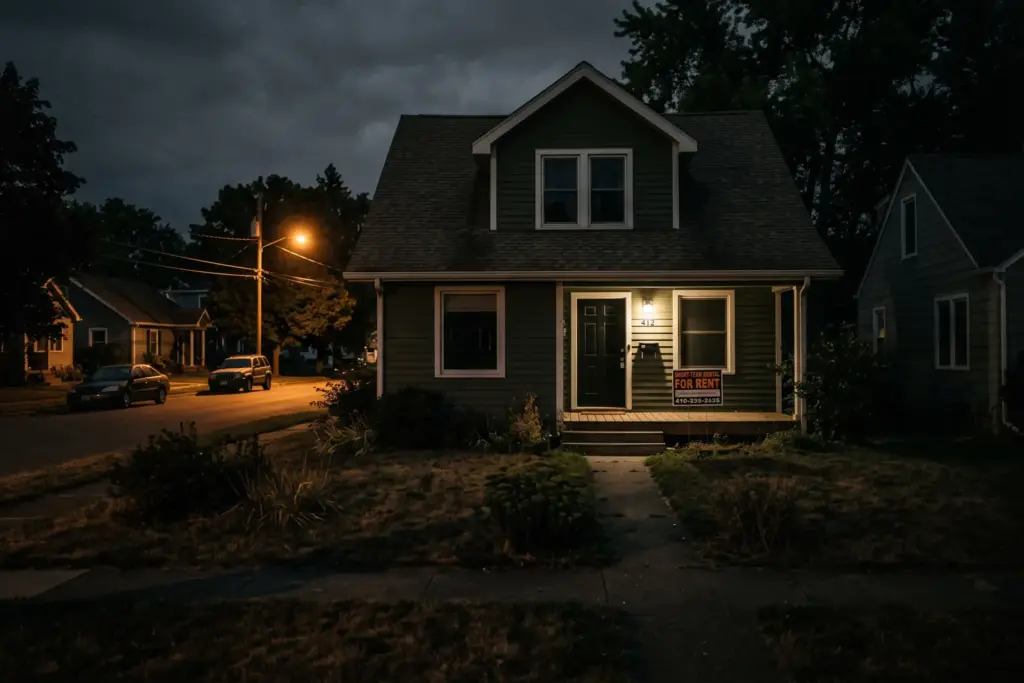
Three people were shot at a Seattle short-term rental booked specifically to host a party. That was August 11. Five days later, two teenagers were killed in Lorain, Ohio, at an unregistered Airbnb. And earlier in the month, an Osceola County, Florida homeowner arrived at her vacation rental to find the property destroyed for the second time in roughly a month: grass torn up by vehicle tires, furniture broken, shattered glass across floors where paying guests were supposed to sleep.
August 2026 is not a fluke.
Sources reveal a pattern: summer 2026 is producing the most concentrated cluster of STR safety incidents since the 2024-2025 party house enforcement wave. Regulators are watching. From Hillsborough County, Florida, where commissioners are advancing a mandatory STR registry citing party noise and safety complaints, to Pittsburgh, where a shooting at an Airbnb in early 2026 accelerated the city licensing legislation, cities are constructing the regulatory architecture that will define the next enforcement era.
Here is what the incident pattern looks like, what regulatory response is forming in real time, and which operators carry the greatest exposure when those ordinances finalize.
The August 2026 Incident Cluster
Documents show the August incidents share a recognizable structure: a property booked through a platform, a gathering that exceeds what a residential neighborhood can absorb, and an outcome that gives local officials political cover for the enforcement action they were already considering.
Seattle, August 11. Around 12:43 a.m., Seattle police received calls reporting gunshots near the 2300 block of 10th Avenue East in the Capitol Hill neighborhood. Officers arrived to find an active party and evidence of a shooting, but no victims at the scene. Three gunshot victims, two men and a woman, had been transported to area hospitals by other party attendees before police arrived. All three suffered non-life-threatening injuries. The property had been rented through Airbnb and booked specifically to host the party. The Seattle Gun Violence Reduction Unit took over the investigation.
Lorain, Ohio, August 16. Around 3 a.m., police and paramedics responded to a Washington Avenue home near West Seventh Street where an argument had escalated into gunfire. Two teenagers, Silas Henry, 17, and Marc L. Taylor, 18, both of Elyria, were killed. A 19-year-old, Alexander Gibbons, was arrested and charged with felonious assault and firing a weapon while intoxicated. The home was operating as a short-term rental with an Airbnb sign posted at the front door, but the city confirmed the property was not registered with local authorities. Within days, Lorain issued a cease-and-desist order shutting the property down.
Osceola County, Florida, August 2026. An Osceola County homeowner told local news that her short-term rental had been damaged for the second time in approximately one month after another alleged unauthorized party. The damage included torn-up grass, broken furniture, and shattered glass throughout the home. The Osceola County Sheriff Office has described the pattern as reaching epidemic proportions on the county west side, where promoters are using STR platforms to organize large unauthorized gatherings. Investigators documented a “spike in violent crimes including numerous homicides, shootings, and sexual batteries” linked to house party promotions in 2026.
Three incidents. Three weeks. Each one handed local officials another documented justification for the regulatory response already forming around them.
The National Pattern: Pittsburgh and the Regulatory Trigger
Data indicates this dynamic is not new. Cities have been connecting STR safety incidents to regulatory action for years. What has changed in 2026 is the speed and specificity of the response.
Pittsburgh is the clearest recent example. A shooting at a Pittsburgh Airbnb in early 2026 prompted the city council to advance licensing and zoning bills on February 11, 2026. The package included new safety inspection requirements, licensing conditions, and a proposed restriction on non-primary-residence STRs in residential zones. A June 2026 revision would eliminate the special-exception pathway entirely for non-owner-occupied properties in those zones. The Pittsburgh Planning Commission is still reviewing; a final council vote is expected in late 2026 or early 2027. But the regulatory process accelerated because of a specific incident at a specific property.
That is the mechanism worth understanding. Safety incidents do not automatically produce new ordinances. They produce political will. And political will, in the STR context, produces the specific enforcement tools that determine whether your permit survives a complaint.
Hillsborough County, Florida is moving through that sequence right now. County commissioners are advancing a mandatory STR registry, and the justification being cited is not housing supply or tax compliance. It is party noise and safety. The framework being discussed mirrors what Santa Barbara implemented earlier this year, where registration requirements now carry active enforcement consequences for violations.
What the Regulatory Response Actually Looks Like
Understanding the regulatory response requires understanding how cities have structured the enforcement chain that connects an incident to a license consequence.
The clearest working model is Riverside County citation-to-suspension system, detailed in our earlier coverage of Ordinance 927.3. Under that framework, code enforcement officers no longer issue warnings before acting. They proceed directly to the property on a complaint, verify violations on site, and issue citations immediately. Three citations within any rolling 12-month period triggers license suspension. Five citations initiates revocation proceedings. Previously issued citations count; the 12-month window does not reset at ordinance adoption.
That escalation structure, complaint to citation to suspension to revocation, is the model other cities are studying. Galveston, Texas, San Rafael, California, and Lead, South Dakota have all adopted similar three-strikes frameworks with comparable timeframes. The consistent thread: a single serious safety incident can generate multiple simultaneous citations covering noise, occupancy, and party prohibition violations, all counted at once.
Noise monitoring requirements are becoming a parallel enforcement layer. Some jurisdictions now require hosts to install certified noise monitoring devices as a condition of licensure or renewal. The requirement is not about surveillance. It is about documentation. A host operating with a certified noise monitoring device creates a timestamped log of what was happening at the property. A host operating without one has no record to present when an enforcement officer arrives after a complaint.
Platform-level enforcement is also tightening. Austin STR license display requirements, covered in our earlier report, require platforms to verify licensing status at the point of listing, not just after a complaint is filed. A host with an incorrect or expired license number on their listing faces a separate compliance exposure before the first citation is ever issued.
What Airbnb Anti-Party Tools Do (and Do Not Cover)
Airbnb has operated a formal anti-party policy since 2020, and the platform technology has expanded considerably since. The company reports a more than 50 percent decrease in the global rate of party reports since the ban took effect, and its party risk algorithm blocked more than 20,000 accounts from booking entire homes over the 2025 New Year Eve period alone.
The algorithm screens booking patterns, guest history, and reservation characteristics to flag high-risk reservations before they are confirmed. Hosts can also require verified government ID and a positive review history before accepting a booking.
Platform tools have a documented ceiling. The Seattle shooting involved a property rented through Airbnb specifically for a party, suggesting the booking cleared the algorithm screening. The Lorain property was listed on Airbnb but not registered locally, revealing a gap between platform availability and municipal compliance that no platform tool addresses.
Regulators are aware of this gap. The emerging approach in 2026 treats platform tools as a floor, not a ceiling. Cities adopting new ordinances are requiring additional host-side measures: noise monitoring devices, local contact availability, documented occupancy limits. The position regulators have reached is that platform enforcement alone does not prevent the incidents that generate political pressure for new regulation.
Which Hosts Face the Greatest Exposure
The regulatory risk from this trend is not evenly distributed. The exposure concentrates in several identifiable categories.
High-occupancy-capacity properties. Properties licensed for eight or more guests are the primary targets of party prohibition ordinances being drafted in 2026. A six-person group can have a dinner. A sixteen-person group can have a party that generates 911 calls. Hosts operating large-capacity properties in markets where new ordinances are forming should assume that occupancy limits, not just noise complaints, will be used as enforcement triggers.
Properties without noise monitoring. In markets that have adopted or are considering noise monitoring mandates, a host without a certified device faces both a regulatory compliance gap and an evidentiary gap if a complaint is filed. Devices from providers like Minut and NoiseAware run between fifteen and twenty dollars per month for most configurations and provide real-time alerts that allow a host to intervene before a complaint reaches code enforcement.
Unregistered or non-compliant operators. The Lorain case illustrates the most severe end of the risk spectrum. An unregistered property involved in a fatal incident becomes the case that a city council member cites when advancing a broader ordinance. In markets where registration is technically required but enforcement has been inconsistent, the current incident pattern is likely to accelerate compliance checks. The Lorain property received a cease-and-desist within days of the shooting.
Operators in active enforcement zones. Osceola County pattern of repeat incidents has drawn explicit attention from the sheriff office. Hosts operating properties in the county west-side STR corridors are in an environment where the enforcement posture has already shifted. Hillsborough County is moving in the same direction.
What Smart Hosts Are Doing Right Now
The window for self-protective action is the period before new ordinances crystallize. Once a citation-to-suspension framework is in place, the options narrow to compliance or citation. Before that framework exists, hosts can actively shape their own risk profile.
Install a certified noise monitoring device. Minut and NoiseAware are the leading platforms for STR applications. Both integrate with most property management systems. Several cities moving toward monitoring mandates have specified that devices must come from recognized commercial providers, not DIY setups. Installing a compliant device now means you will not need to scramble when the requirement becomes mandatory in your market.
Activate anti-party screening on your listing. Airbnb allows hosts to require verified government ID, positive review history, and a booking purpose statement. Not all of these are enabled by default. Hosts who have not actively configured their screening settings should do so. Documentation that these screenings were in place matters if a platform or municipal investigation follows an incident at your property.
Add an enforceable no-party clause to your house rules. A documented guest agreement that includes an explicit party prohibition creates a paper trail distinguishing a host who actively prohibited unauthorized gatherings from one who permitted them by omission. The distinction matters under both platform dispute resolution and municipal license defense.
Verify your registration status. If your market requires STR registration or licensing, confirm your permit is current and that the license number on your listing is accurate. Platform-displayed license numbers face active verification in an increasing number of markets. An incorrect or expired number is a compliance exposure that exists independently of what happens on the ground.
Audit your advertised occupancy against your permit. If your listing stated capacity exceeds what your local permit or ordinance allows, that gap is a citation opportunity. Municipal enforcement in 2026 increasingly focuses on whether advertised occupancy matches permitted occupancy. Closing that gap now costs less than contesting a citation later.
The regulatory wave forming around summer 2026 incidents is not targeting every host. It is targeting a specific risk profile: high-capacity properties, no monitoring, no documentation, inconsistent registration. Hosts who fall outside that profile because they have taken deliberate steps to document compliance are in the strongest position to come through the next round of ordinances with their licenses intact.
Sponsored — OfferMarket
Buy Your First STR With Long-Term Rental Financing
Flexible, long-term financing for short-term rental buyers. Rates from 5.75%. Instant online quote, no credit pull.
Explore RTL Financing Options →Affiliate disclosure: StaySTRA may earn a referral fee.
We do our best to keep our reporting accurate and up to date, but situations evolve and we are only human. Always verify current details directly with local officials and sources before making decisions.
Frequently Asked Questions
What is the Airbnb party house crackdown in 2026?
The 2026 Airbnb party house crackdown refers to a wave of municipal regulatory responses triggered by a cluster of STR safety incidents in summer 2026, including a triple shooting in Seattle and two teen deaths in Lorain, Ohio. Cities are advancing citation-to-suspension frameworks, mandatory STR registries, and noise monitoring requirements specifically tied to party-related incidents at short-term rental properties.
Can a single safety incident at my STR lead to losing my license?
Yes, depending on your jurisdiction. In markets using citation-to-suspension frameworks like Riverside County Ordinance 927.3, three citations within a rolling 12-month window triggers license suspension. A serious safety incident can generate multiple simultaneous citations covering noise, occupancy, and party prohibition violations. An unregistered property involved in a fatal incident, as in the Lorain, Ohio case, can receive an immediate cease-and-desist order halting all rentals while the compliance status is resolved.
What does Airbnb anti-party technology actually do?
Airbnb party risk algorithm screens booking patterns, guest history, and reservation characteristics to flag high-risk reservations before they are confirmed. The platform reports a more than 50 percent decrease in global party reports since its 2020 ban. However, platform tools have limitations: the August 2026 Seattle incident involved a rental booked through Airbnb that cleared algorithmic screening. Regulators in 2026 are treating platform tools as a floor, not a ceiling, and are adding host-side requirements like noise monitoring and documented occupancy limits as additional mandatory layers.
Are noise monitors required for STR hosts in 2026?
Noise monitoring devices are not yet universally required, but an increasing number of jurisdictions are moving toward making them a condition of STR licensing or renewal. Cities using three-strikes noise enforcement systems, including markets in California and Texas, are specifying certified commercial monitoring devices rather than DIY alternatives. Hosts in markets with recent safety incidents should treat noise monitoring as likely to become mandatory rather than a discretionary choice.
Which STR properties carry the most regulatory risk from party house rules in 2026?
The highest-risk properties combine multiple factors: high stated occupancy capacity of eight or more guests, no noise monitoring device installed, an unregistered or non-compliant local status, and a location in a market with recent safety incidents or active regulatory formation. Hosts in Osceola County and Hillsborough County, Florida, and in markets with recent shooting incidents, are operating in the most active regulatory formation zones as of August 2026.
Sponsored — OfferMarket
Buy Your First STR With Long-Term Rental Financing
Flexible, long-term financing for short-term rental buyers. Rates from 5.75%. Instant online quote, no credit pull.
Explore RTL Financing Options →Affiliate disclosure: StaySTRA may earn a referral fee.
Become a StaySTRA Insider
Join free — get our newsletter + 1 free property analysis/month.
No spam. Unsubscribe anytime. Free membership includes property analyses and market insights.