Key Takeaways
- A growing number of U.S. cities are using permit caps and ownership limits to control STR supply without banning short-term rentals outright.
- Provincetown, MA proposed capping individual STR ownership at three properties and total citywide permits at 1,283 at its April 2026 Town Meeting.
- NYC’s Local Law 18 functions as a de facto supply cap and has reduced legal short-term rental listings from roughly 22,000 to about 3,000 since September 2023.
- San Diego’s tiered license system caps whole-home STR permits at 1% of total housing stock, with 896 Tier 3 licenses remaining as of late 2025.
- Permit caps are surviving legal challenges (Hood River, OR won in court in 2025), but data from NYC shows that reducing STR supply alone has not lowered rents or increased housing vacancy.
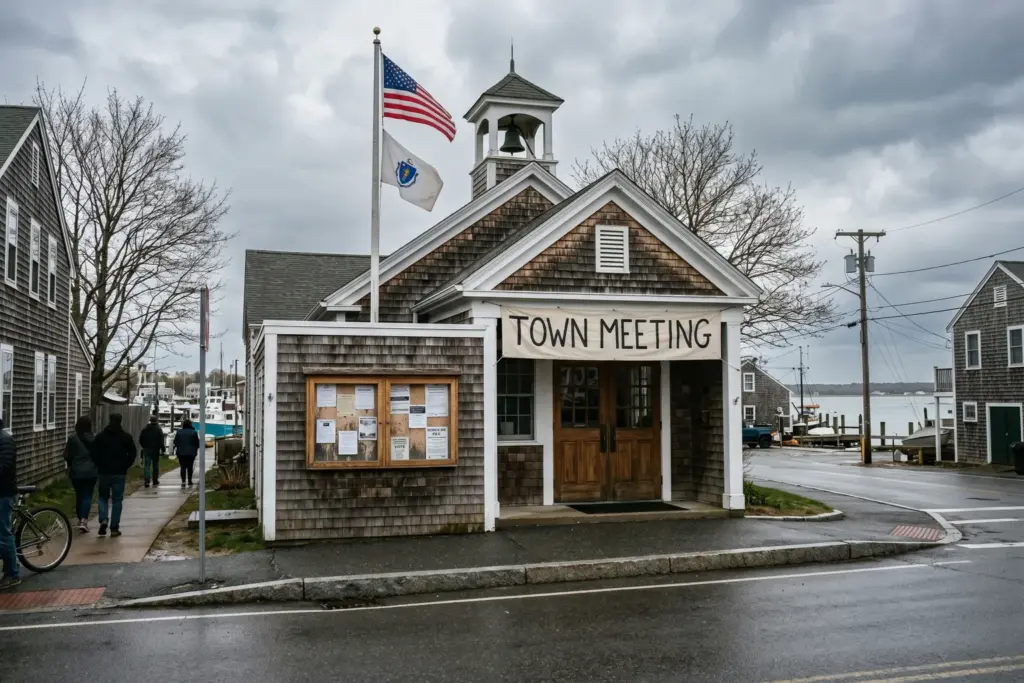
Provincetown, Massachusetts has roughly 700 valid short-term rental certificates on its books. Granicus data suggests the real number of units rented during peak summer season is closer to 1,400. At the town’s April 2026 Annual Town Meeting, voters considered a proposal that would cap how many STR licenses a single person can hold at three, while setting a hard ceiling of 1,283 total permits across the entire town.
The proposal didn’t come from the Select Board. It was citizen-petitioned. And the Select Board voted 4-1 against recommending it.
That tension tells you everything about where the STR permit cap conversation stands in 2026. Cities are reaching for new tools to control short-term rental growth. But the people writing the rules and the people living with the consequences don’t always agree on how tight those controls should be.
Provincetown is one of at least seven U.S. municipalities that have enacted or proposed direct permit caps, ownership limits, or both. These tools sit between doing nothing and banning STRs outright. They let cities keep tourism revenue while preventing any single investor or neighborhood from being overwhelmed.
The question investors need to answer: do permit caps actually work? And who do they really protect?
Sponsored — OfferMarket
Buy Your First STR With Long-Term Rental Financing
Flexible, long-term financing for short-term rental buyers. Rates from 5.75%. Instant online quote, no credit pull.
Explore RTL Financing Options →Affiliate disclosure: StaySTRA may earn a referral fee.
How Permit Caps Differ from Night Caps and Outright Bans
Night caps limit how many days per year a property can be rented (Los Angeles caps unhosted rentals at 120 nights). Outright bans eliminate STRs in specific zones (Monterey County banned STRs in residential zones in April 2026). Registration requirements mandate that hosts obtain a license but don’t limit how many get issued.
Permit caps are different. They put a hard number on the total supply of STRs a city will tolerate. Once the cap is reached, the door closes until someone gives up their license. Ownership limits add a second layer: even if permits are available, a single person or entity can only hold a set number of them.
For multi-property operators, the distinction is critical. A night cap lets you hold as many properties as you want but limits how much you can rent each one. A permit cap lets you rent as much as you want but limits how many properties you can operate.
The Cities Drawing the Line
New York City: The De Facto Supply Cap
New York City’s Local Law 18, fully enforced since September 2023, doesn’t call itself a permit cap. But it functions as one. The law requires hosts to register, be present during every guest stay, and rent no more than two guests at a time.
Documents show the results are dramatic. Airbnb listings for stays under 30 days dropped from approximately 22,000 in August 2023 to roughly 3,000 by early 2025. A 90% reduction. Most operators simply left the market.
The part that should concern policymakers elsewhere: rents in New York City have increased roughly 8% since Local Law 18 took effect, compared to about 3.5% nationally. The vacancy rate has not moved. Cutting STR supply by 90% did not produce the housing relief advocates expected.
San Diego: The Tiered Lottery System
San Diego took a different approach, and it may be the most sophisticated permit cap framework in the country. The city’s 2022 ordinance created a tiered system. Tier 1 covers primary residences (no cap). Tier 2 covers accessory dwelling units on primary-residence properties (no cap). Tier 3 is where the cap hits: whole-home, non-primary-residence STRs are limited to 1% of total housing stock, roughly 5,400 licenses citywide.
As of November 2025, 896 Tier 3 licenses remained available. When applications exceed available permits, the city runs a lottery. Hosts with clean compliance records get priority. Tier 4, covering Mission Beach specifically, has zero licenses available. The waitlist is closed.
Data indicates that San Diego’s system has created a two-tier market. Existing permit holders operate in a supply-constrained environment. New investors face a lottery with uncertain odds. The permits themselves have become valuable, even though the city says licenses are non-transferable.
Hood River, Oregon: The Small-Town Hard Cap
Hood River, a town of about 8,500 people along the Columbia River Gorge, caps STR permits at roughly 50 in both the city and the unincorporated county. When the cap is reached, prospective hosts go on a waitlist. The city can revoke permits after three significant complaints.
In 2025, a court upheld Hood River’s ordinance against a legal challenge, confirming the city’s authority to impose a hard cap on STR licenses. That ruling gave confidence to other small municipalities considering similar limits.
Atlanta: The Ownership Limit
Atlanta’s Ordinance 20-0-1656, effective March 2022, takes a different angle. Instead of capping total permits, it caps how many properties a single person can operate. The limit is two, and one of them must be the host’s primary residence.
The effect is to prevent portfolio investors from building large STR operations within city limits. A host can rent their home and one additional unit. That is the ceiling. The annual license costs $150, and the city collects an 8% rental tax on top of standard taxes.
For multi-property operators, Atlanta’s rule is a clear boundary. You cannot scale an STR business within the city past two units. Investors who want to grow have to look outside city limits or shift to long-term rentals.
South Lake Tahoe: The Buffer Zone to Hard Cap Pivot
South Lake Tahoe’s STR regulatory journey illustrates how cities arrive at permit caps after other tools fail. The city first tried Measure T, a voter-approved restriction that was struck down in court in 2025. On March 24, 2026, the city council adopted a new ordinance: a hard cap of 900 vacation home rental permits in residential zones, effective April 23, 2026. Commercial and recreational zones remain uncapped.
The pivot matters. South Lake Tahoe tried spacing rules first, found them hard to administer and vulnerable to legal challenge, and replaced them with a simple numeric cap. Easier to defend in court. Simpler for hosts to understand.
Yachats, Oregon: The First-Mover Cap
Yachats, a coastal Oregon town of about 750 residents, has maintained a citywide cap of 125 STR licenses since October 2017. Priority goes to existing license holders seeking renewal. After renewals are processed, any remaining licenses go to new applicants on a first-come, first-served basis.
Licenses are not transferable. The system has been stable for nearly nine years, making Yachats one of the longest-running permit cap experiments in the country.
Who Benefits from Permit Caps?
The stated goal of every permit cap ordinance is the same: protect housing stock, preserve neighborhood character, prevent investor concentration. The actual outcomes are more complicated.
Existing permit holders benefit the most. Once a cap is reached, their licenses become scarce assets. In San Diego, a Tier 3 permit means operating with a guaranteed ceiling on competition. In Yachats, holding one of 125 licenses in a town of 750 people is a significant competitive advantage.
Small operators face mixed outcomes. Ownership limits like Atlanta’s two-property cap protect small hosts. But citywide permit caps can lock out new small operators who arrive after the cap is reached. The lottery doesn’t care whether you’re an individual host with one property or a corporation with fifty.
Institutional investors adapt. Large operators with resources to monitor regulatory changes and apply early tend to secure permits before caps take effect. Once they hold permits in a capped market, the regulatory barrier protects their position. The irony: permit caps can entrench the very concentration they were designed to prevent.
Are Permit Caps Legally Defensible?
The legal landscape is tilting in favor of cities. Hood River’s 2025 court victory validated the hard-cap approach. South Lake Tahoe’s pivot from the court-struck Measure T to a council-adopted ordinance shows cities learning from legal setbacks.
The strongest legal challenges to permit caps come on property rights grounds: owners argue that limiting the number of licenses constitutes a regulatory taking or violates due process. So far, courts have generally sided with municipalities, treating STR permit caps as reasonable exercises of police power similar to liquor license limits or taxicab medallion systems.
Statewide preemption laws complicate the picture. States like Florida, Indiana, and Idaho have passed laws preventing cities from banning STRs. Whether those preemption laws also block permit caps is an open legal question. Cities in preemption states may have more room to cap permits than to ban STRs entirely, but that theory hasn’t been fully tested.
Sponsored — OfferMarket
Buy Your First STR With Long-Term Rental Financing
Flexible, long-term financing for short-term rental buyers. Rates from 5.75%. Instant online quote, no credit pull.
Explore RTL Financing Options →Affiliate disclosure: StaySTRA may earn a referral fee.
What This Means for Investors in 2026
The permit cap trend is accelerating. Provincetown’s proposal, South Lake Tahoe’s new ordinance, and San Diego’s shrinking license pool all point in the same direction. Cities are discovering that night caps and registration requirements don’t control the thing they care about most: total STR supply.
For multi-property investors, the playbook is changing.
Get permitted early. In every capped market, the advantage belongs to hosts who secured licenses before the cap took effect. If you’re operating in a city that’s discussing permit limits, apply now.
Watch for ownership limits. Caps on total permits affect everyone equally. Ownership limits (like Atlanta’s two-property rule or Provincetown’s proposed three-property cap) specifically target multi-property operators. These are becoming more common as cities realize that citywide caps alone don’t prevent concentration.
Factor permit scarcity into property valuation. In capped markets, an STR-permitted property is worth more than an identical property without a permit. San Diego’s Tier 3 permits are already functioning this way. If you’re buying in a capped market, the permit status of the property is part of the deal.
Know the legal landscape. If your state has a preemption law, understand whether it covers permit caps or only outright bans. If you’re in a state without preemption, know your appeal options if a permit is denied.
The cities profiled here represent the leading edge of this trend. More will follow. For investors who built portfolios when STR regulation was light, the rules are catching up. Understanding permit caps isn’t optional anymore. It’s the price of entry.
We do our best to keep our reporting accurate and up to date, but situations evolve and we are only human. Always verify current details directly with local officials and sources before making decisions.
Frequently Asked Questions
What is an STR permit cap?
An STR permit cap is a local regulation that limits the total number of short-term rental licenses a city will issue. Once the cap is reached, no new permits are granted until an existing permit holder gives up their license. Some cities also cap how many permits a single owner can hold.
Which U.S. cities have STR permit caps in 2026?
Cities with active or proposed permit caps include San Diego (1% of housing stock), South Lake Tahoe (900 in residential zones), Hood River, Oregon (roughly 50), Yachats, Oregon (125), and Provincetown, Massachusetts (proposed 1,283 cap). New York City’s Local Law 18 functions as a de facto supply cap through its registration requirements.
How do STR ownership limits differ from permit caps?
A permit cap limits the total number of STR licenses in a jurisdiction. An ownership limit restricts how many of those licenses a single person or entity can hold. Atlanta limits owners to two STR properties. Provincetown proposed capping individual ownership at three. Both tools can operate simultaneously.
Can cities legally cap the number of short-term rental permits?
Courts have generally upheld permit caps as a reasonable exercise of municipal authority. Hood River, Oregon won a court challenge to its cap in 2025. However, statewide preemption laws in states like Florida, Indiana, and Idaho may limit a city’s ability to impose caps, depending on how the preemption statute is written.
Do STR permit caps actually improve housing affordability?
The evidence is mixed. New York City’s Local Law 18 reduced STR listings by 90%, but rents increased 8% in the two years following implementation and the vacancy rate did not change. Permit caps can reduce STR supply, but they have not yet demonstrated a direct causal link to lower rents or increased housing availability.
Use the StaySTRA Analyzer to check short-term rental regulations, revenue projections, and permit requirements for any U.S. market before you invest.
Become a StaySTRA Insider
Join free — get our newsletter + 1 free property analysis/month.
No spam. Unsubscribe anytime. Free membership includes property analyses and market insights.