Key Takeaways
- On a warm February evening in Houston’s Third Ward, a woman we will call Sofia stood in her spare bedroom with a tape measure in one hand and her phone in the other.
- This is the entire planet showing up at once.” Dallas hosts are projected to earn roughly $4,400 during the tournament.
- Marcus noticed improved sidewalks near one of his Dallas properties.
- And if you are building out your own tech stack for the tournament, our World Cup Tech Stack guide covers everything from dynamic pricing to noise monitors.
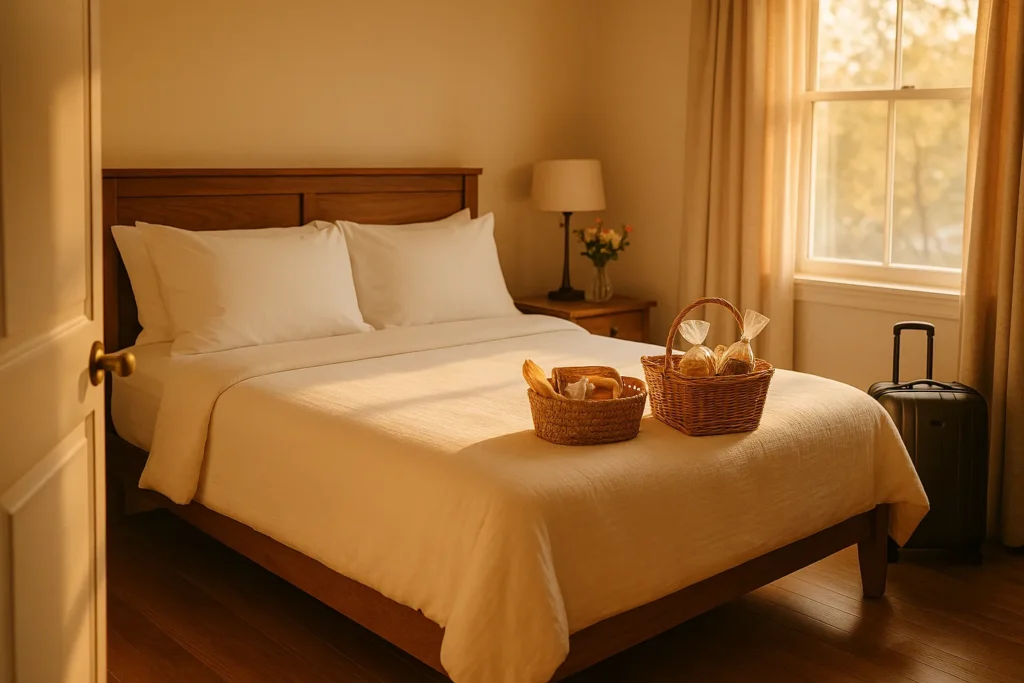
On a warm February evening in Houston’s Third Ward, a woman we will call Sofia stood in her spare bedroom with a tape measure in one hand and her phone in the other. She was comparing mattress prices, trying to figure out whether a queen or a king would fit better in the space her college-age daughter had left behind.
“Four months,” she said to herself, scrolling through listings. “Four months to turn this room into something worth traveling across the world for.”
Sofia is one of the roughly 40% of residents in World Cup host cities who say they are willing to rent their homes during the 2026 FIFA World Cup. She has never hosted before. She has never listed anything on Airbnb. But with Houston expecting 500,000 visitors and Airbnb projecting $17 million in host earnings across the Houston area alone, she decided this was the moment to try.
“My neighbor did it during the Super Bowl,” she told me. “Made enough to fix her roof. I figured, por que no? Why not me too?”
Note: Sofia and the other hosts in this story are composite characters based on real trends and publicly reported experiences. Their stories reflect what thousands of hosts are going through right now, but they are not specific individuals.
The First-Time Host in Houston
Sofia’s preparation list grew longer every week. New sheets. Towels that actually match. A lockbox for the front door. A welcome binder with restaurant recommendations and directions to NRG Stadium.
The details surprised her. International guests need reliable high-speed WiFi to stream matches, video call home, and navigate using maps. Hosts are being told to advertise their internet speed prominently. She called her provider and upgraded to gigabit.
Then there were the supplies. Industry guides recommend stocking extra towels, linens, toiletries, cleaning supplies, and basic kitchen essentials before the tournament starts. During World Cup week, every store in every host city will be picked clean. Sofia bought in bulk.
The biggest challenge? Communication. With fans arriving from Mexico, Brazil, Argentina, Germany, England, and dozens of other countries, hosting guides recommend translating key information into Spanish, Portuguese, French, and German at minimum.
Sofia laughed at that one. “Spanish I can do. The rest, that is what Google Translate is for.”
But beneath the laughter, there was something quieter. A nervousness. “What if they do not like it?” she asked. “What if my house is not nice enough?”
It is a fear that thousands of first-time hosts share right now. The World Cup is bringing the world to their doorsteps, and they want to get it right.
The Superhost in Dallas Getting Ready for the Surge
Three hundred miles north, a host we will call Marcus has a different kind of preparation underway. He has been running two Airbnb properties in the Dallas area for four years. He is a Superhost with over 200 reviews. He knows what he is doing.
But the World Cup is not a normal weekend.
“I have hosted during Cowboys games, during the State Fair, during SXSW overflow,” he said. “This is different. This is the entire planet showing up at once.”
Dallas hosts are projected to earn roughly $4,400 during the tournament. Marcus is aiming higher. He spent January upgrading both properties with smart locks for automated check-in, professional photography for his listings, and a noise monitoring system to keep neighbors happy during high-turnover weeks.
His biggest investment was in his cleaning team. “During the World Cup, you might have a checkout at 11 AM and a check-in at 4 PM, three or four times in a row,” he explained. “If your cleaner is late once, you have an international guest standing on your porch with a suitcase and nowhere to go.”
He locked in two cleaning teams in December. He has a third on standby. “By May, every cleaner in Dallas will be booked,” he said. “Hay que prepararse temprano. You have to prepare early.”
Marcus also rewrote his digital guidebook. He added transit routes to AT&T Stadium, a list of sports bars showing matches, and recommendations for taquerias and barbecue spots within walking distance of his properties. “People are not just coming for the games,” he said. “They are coming for the experience. La experiencia completa.“
The Community Host in Kansas City
In Kansas City, a retired teacher we will call James saw the $50 Major Event Short-Term Rental permit and thought of it as an invitation.
“The city is telling us, we want you to be part of this,” he said. “That $50 permit is basically the city saying, bienvenidos. Welcome. Come host.”
Kansas City’s discounted permits, a 75% reduction from the standard $200 annual fee, authorize STR operations from May 3 through July 31. The city expects approximately 650,000 fans, teams, and media for its six World Cup matches. England selected Kansas City as their base camp. Algeria is expected in nearby Lawrence.
James is not in it for the money. Well, not entirely. “The extra income helps,” he admitted. “But I have been to Mexico. I have been to Europe. People opened their homes to me. This is my chance to return the favor.”
He is preparing his guest room and his finished basement. He bought a small refrigerator for the basement so guests have their own space. He printed a walking map of his neighborhood with his favorite coffee shop, the best park for morning runs, and the taqueria on Southwest Boulevard that he swears makes the best al pastor in the Midwest.
“I want people to leave Kansas City thinking, that city had the best fans, the best food, and the kindest hosts,” he said. “That is the legacy I want from this World Cup.”
What Airbnb Is Doing in Host Communities
Airbnb has pledged over $1 million to community improvement projects in Houston as part of their Host City Impact Program, a partnership with FIFA to build community spaces in cities hosting the tournament. In New York, New Jersey, and Dallas, Airbnb is funding mini-pitches, youth soccer programs, and neighborhood development projects.
The investment is strategic. Airbnb needs host cities to welcome short-term rentals, not fight them. Community investment is part of making that case.
But for hosts like Sofia, Marcus, and James, the impact is personal. Sofia’s Third Ward neighborhood is getting a new community soccer field through the program. Marcus noticed improved sidewalks near one of his Dallas properties. James said his Kansas City neighborhood association received information about the hosting program directly from the city.
“It feels like everyone is pulling in the same direction for once,” James said. “The city, the hosts, the neighbors. We all want this to go well.”
The Anxiety Underneath the Excitement
For all the preparation and optimism, there is a current of anxiety running through host communities. Will pricing backlash hurt the reputation of short-term rentals? Will bad guests damage properties? Will neighbors complain about noise and traffic?
Marcus put it simply. “Every host in America is about to be judged by how we handle this summer. If it goes well, STRs look like heroes. If it goes badly, we give ammunition to every city council trying to ban us.”
The stakes are real. Over 380,000 Airbnb guests are expected across 16 host cities. Total host earnings are projected at $212 million. Average nightly rates will surge roughly 90% above typical summer levels.
That is a lot of money. A lot of guests. And a lot of opportunities for things to go right or wrong.
“I pray about it,” Sofia said quietly. “I pray that whoever walks through my door feels welcome. That they feel like this is their home too, even if it is just for a few nights. Mi casa es su casa. I mean that.”
Four Months and Counting
Across America, hosts are measuring bedrooms, upgrading WiFi, stockpiling linens, and writing welcome guides in four languages. They are nervous and excited. They are investing their savings and their time into a bet that the world will show up at their door and leave happy.
Some are seasoned professionals fine-tuning their operations. Some are first-timers who have never hosted a stranger in their lives. Some are retired teachers who see hosting as an act of global hospitality.
All of them are getting ready for the same thing. The biggest short-term rental event in American history.
And in a spare bedroom in Houston’s Third Ward, a queen-size mattress is being delivered next Tuesday.
For the full revenue projections by host city, read our FIFA World Cup 2026 STR Forecast. For the regulatory breakdown including permits and taxes, see our World Cup STR Rules by Host City. And if you are building out your own tech stack for the tournament, our World Cup Tech Stack guide covers everything from dynamic pricing to noise monitors.
We do our best to keep our content accurate and up to date, but things change and we are only human. Always verify details directly with local sources before making decisions.
Explore the Numbers for Houston
Curious what the STR market looks like in Houston? Our free Houston Airbnb Calculator pulls real market data so you can see what properties are earning.
For a deeper look at the Houston market including active rental counts, average daily rates, and neighborhood-level data, check out our Houston market profile.
Frequently Asked Questions
How will the 2026 World Cup affect Airbnb prices?
Host cities are projected to see dramatic accommodation demand spikes during match dates, with nightly rates potentially increasing 200% to 500% based on patterns from previous World Cups. Cities hosting matches include Dallas, Houston, Los Angeles, Miami, New York, and several others. Properties near venues and transit hubs will see the strongest demand.
Do I need a special permit for World Cup short-term rentals?
Permit requirements depend on your local regulations, not the event itself. Some cities may increase enforcement during the World Cup period, so make sure your existing STR license is current and compliant. Check with your city’s licensing office well before the tournament starts, as processing times may increase due to higher application volumes.
What technology do STR hosts need for the World Cup?
Prepare with a reliable property management system that handles high booking volume, a dynamic pricing tool with event-date features, smart locks for frequent guest turnovers, and automated messaging in multiple languages. Consider adding a noise monitoring device and a language translation tool for guest communication, as many World Cup visitors will be international travelers.
What are the short-term rental rules in Houston?
Houston implemented its first comprehensive STR ordinance requiring registration, insurance, and compliance with building safety codes. The ordinance includes occupancy limits, parking requirements, and noise restrictions. Hosts must register with the city and display their registration number on all listings. Violations can result in fines and registration revocation.
Is Houston a good market for Airbnb investing?
Houston offers solid STR opportunities driven by its massive medical center, energy sector business travel, major sports venues, and growing tourism industry. Property prices are relatively affordable compared to other major metros, supporting strong cash-on-cash returns. The best performing areas tend to be near downtown, the Medical Center, Galleria, and the Heights.
Stay in the Loop
The STR world moves fast. Join the StaySTRA Insider newsletter and we will keep you updated on the stories and market shifts that matter.
Become a StaySTRA Insider
Join free — get our newsletter + 1 free property analysis/month.
No spam. Unsubscribe anytime. Free membership includes property analyses and market insights.