

Key Takeaways
- StaySTRA data shows Scottsdale STR revenue jumps 79% during March compared to annual averages, with occupancy climbing from 63.8% to 87.1%.
- Palm Springs sees the largest occupancy swing of any major spring break market, surging from 54% annually to 88.2% in March.
- Miami hosts earn an average of $5,628 per property in March, 50% above their annual monthly average of $3,759.
- Most spring break vacation rentals in popular beach markets are booked by February, leaving late planners facing limited inventory and higher prices.
- Hosts who use dynamic pricing during spring break see 20 to 35% more revenue than those relying on fixed rates.
On a warm Tuesday morning in mid-March, a woman named Carolina stands in the kitchen of a two-bedroom condo overlooking the Emerald Coast in Destin, Florida. She is holding a clipboard in one hand and a steam mop in the other. Three hours from now, a group from Tennessee will walk through this door expecting paradise. Carolina has managed short-term rentals here for four years, and she knows what this week means. “La temporada fuerte,” she calls it. The strong season. The weeks when everything she has built gets tested.
Six hundred miles west, in a suburb of Phoenix, a couple named Javier and Dana Orozco are sitting at their kitchen table scrolling through listing after listing on their phones. They booked their Scottsdale spring break rental in January. Their neighbors waited. Now those neighbors are texting them screenshots of nightly rates that start at $450 and climb from there, asking if that is real. It is.
Spring break is the most compressed, high-stakes window in the short-term rental calendar. For hosts, it means weeks of preparation funneled into days of execution. For guests, it means navigating a market where the best options vanished months ago and what remains comes with a price tag that can sting. This is what it actually looks like on both sides of the door.
The Numbers Behind the Frenzy
Before the stories, the data. StaySTRA data for Scottsdale shows March occupancy reaching 87.1%, up from an annual average of 63.8%. That is a 23-point jump. The average daily rate climbs from $289 to $389, and monthly revenue per property hits $7,066, a 79% premium over the annual average of $3,945.
Scottsdale is not alone. Across the country’s most popular spring break markets, March tells a different story than the rest of the year.
| Market | March Occupancy | Annual Average | March Revenue | Revenue Premium |
|---|---|---|---|---|
| Palm Springs | 88.2% | 54% | $8,249 | +61% |
| Scottsdale | 87.1% | 63.8% | $7,066 | +79% |
| Miami | 85% | 66.2% | $5,628 | +50% |
| Fort Lauderdale | 83.3% | 63.2% | $4,746 | +55% |
| Destin | 70.6% | 62.9% | $5,735 | -2% |
| Panama City Beach | 61.3% | 55.3% | $3,922 | -4% |
Palm Springs has the single largest occupancy swing: from 54% on average to 88.2% in March. That is a market that essentially doubles its utilization in the span of a few weeks. For the 6,018 active listings in Palm Springs, March is the month that can define the entire year.
In Miami, where 24 million visitors arrive annually and the STR landscape includes everything from Art Deco studios to waterfront villas, March occupancy hits 85% with an average daily rate of $272.50. The monthly revenue of $5,628 per property is 50% above the annual average.
What Spring Break Actually Looks Like for a Host
Let’s call her Carolina, though that is a composite drawn from conversations across STR hosting communities. She manages three condos in Destin. One is her own property. The other two belong to out-of-state owners who trust her to handle everything from pricing to plumbing emergencies.
Her spring break preparations start in January. “La lista never ends,” she says. The checklist. New mattress pads. Fresh towels to replace the ones that accumulated mysterious stains over the winter. A deep clean of every HVAC filter. Inspection of every piece of outdoor furniture for rust. She spends around $1,200 across the three units on pre-season maintenance, money she will not see back until the bookings actually pay out.
By February, she has already set her March pricing. She uses dynamic pricing software that adjusts rates based on local demand, competitor listings, and booking pace. Properties using dynamic pricing during peak season generate 20 to 35% more revenue than those with fixed rates, according to industry benchmarks. Carolina learned this the hard way her first year, when she left her rates flat and watched neighboring units book at $100 more per night.
The turnovers are where things get physical. During peak spring break weeks, she sometimes has back-to-back-to-back bookings with four-hour windows between checkout and the next check-in. “You walk into a unit after a spring break group and you learn a lot about people,” she says with a laugh that sounds like it has earned its edge. Sand in places sand should not be. A blender with something crusted to the inside that she does not want to identify. Once, a family left a handwritten thank-you note on the counter next to a $50 bill. That is the one she remembers most.
Her revenue during March in the Destin market reflects what StaySTRA data shows: an average of $5,735 per property, with the ADR hitting $346. Destin’s spring break premium is smaller than Scottsdale or Palm Springs because the Gulf Coast market has a longer warm-weather season. But for Carolina, March is still the month that funds the quiet months of December and January, when Destin occupancy drops below 30%.
The Superhost Who Almost Was Not Ready
Let’s call him Marcus. He is a composite of voices from STR hosting forums who share a common thread: the first spring break as a host in a peak-demand market.
Marcus bought a three-bedroom home in Scottsdale last August. He spent the fall furnishing it, photographing it, writing his listing description. By December, he had earned Superhost status on the strength of a steady autumn of snowbird bookings. His occupancy was hovering around 58%, right in line with StaySTRA’s data showing Scottsdale at 58.1% in July and climbing through the fall.
Then February arrived, and something changed. “Every day I woke up to booking requests,” he recalls. “Three in one morning, once.” His calendar went from 60% booked to 95% booked in about two weeks. The ADR that his pricing tool suggested jumped from $290 to nearly $390. He hesitated. “Cobrar tanto me daba pena,” he admits. Charging that much embarrassed him. But his pricing tool showed the market moving, and he trusted the data.
What he did not anticipate was the operational intensity. Five turnovers in March. His cleaning crew, a husband-and-wife team he found through a local Facebook group, told him in late February that they could only guarantee same-day turnovers if he paid a $50 rush fee per clean. He agreed. He also discovered that his guest communication volume tripled. Questions about pool heat. Questions about nearby restaurants. One guest wanted to know if the cactus in the backyard was “the kind you can eat.” (It was not.)
His March revenue, if it tracked with the Scottsdale market average, would come in around $7,066. For a property he bought eight months ago, that single month could cover two months of mortgage payments. “Ahora entiendo,” he says. Now I understand. This is why people do this.
What Spring Break Looks Like from the Other Side of the Door
Now turn the key the other way. Walk in as a guest.
The Orozco family, Javier and Dana and their two kids, started searching for a spring break rental in Scottsdale back in November. Dana had heard from a coworker that Scottsdale fills up fast. She was right. By the time they started seriously looking in early January, the inventory of three-bedroom homes under $350 a night had already thinned considerably. They booked a place at $310 a night, a rate that felt steep at the time.
By March, their neighbors back in Colorado were searching the same dates and finding rates north of $450. “We felt like we had gotten away with something,” Dana says. The reality is simpler: they booked early. Industry data suggests that 80% of beach and resort vacation rentals in popular spring break markets are spoken for by February. The booking window for peak-season travel has shifted earlier, with savvy travelers locking in 6 to 9 months ahead.
Not everyone plans that far out. Let’s call her Danielle, a composite of the last-minute spring break booker. She and three friends decided in early March to do a girls’ trip to Panama City Beach. They had a budget of $200 a night. What they found was a market where the remaining inventory started at $267 per night (the March ADR according to StaySTRA data), and that was for studios and one-bedrooms. The kind of beachfront two-bedroom they had pictured was either unavailable or priced above $400.
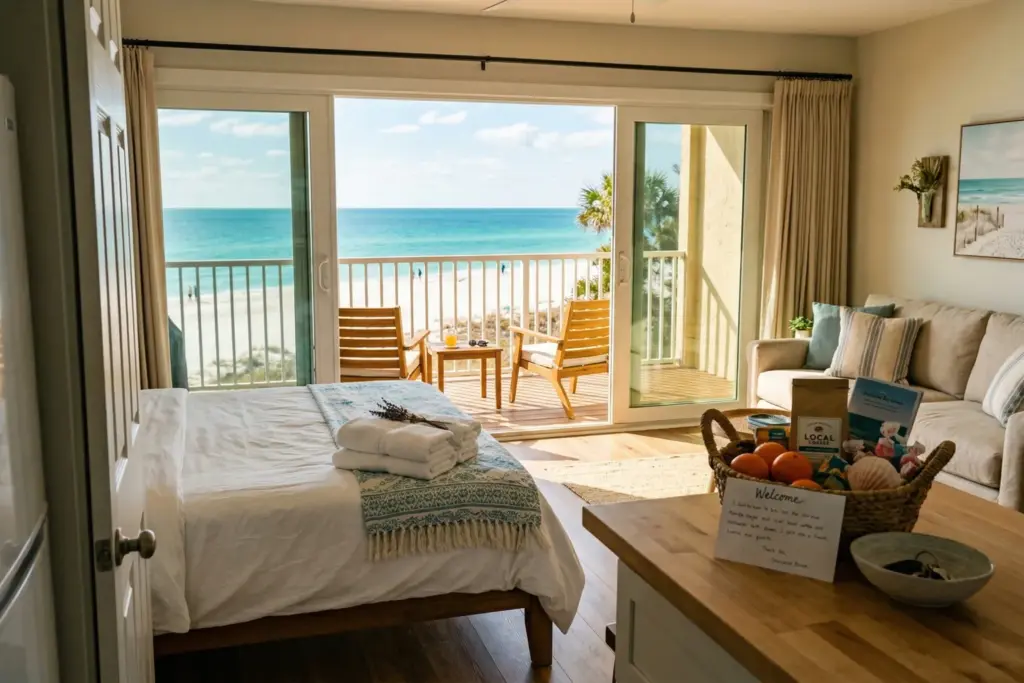
“We kept lowering our expectations,” Danielle says. They ended up in a unit a mile from the beach with no pool. It was clean and comfortable, and the host left a welcome basket with local restaurant recommendations. They had a great week. But the gap between what they imagined and what the market offered was real, and it is a gap that widens every year as demand grows and hosts learn to price accordingly.
The Price of Being Late
The guest side of spring break is increasingly defined by timing. Book in October, and a three-bedroom in Miami might run $250 a night. Wait until March, and the same type of property could be $350 or more, assuming it is available at all. StaySTRA data shows Miami’s March ADR at $272.50, but that is an average. Premium properties near South Beach or Brickell command significantly more.
The sticker shock is not limited to nightly rates. Cleaning fees, which guests often do not see until checkout on some platforms, can add $150 to $300 per stay. Service fees vary by platform. Since Airbnb’s October 2025 shift to a 15.5% host-only fee structure, the display price guests see has changed, with some guests reporting that total costs feel higher even when underlying economics have not shifted dramatically.
For a group spending five nights in a spring break market, the total cost of a vacation rental can easily reach $2,000 to $3,500 depending on the market. In Scottsdale, where March ADR hits $389, a five-night stay before fees and taxes could run $1,945 for the rental alone.
And yet people keep booking. Occupancy rates in the 80s and high 70s tell the story: the demand is real, persistent, and growing. Guests pay because the alternative, a hotel room without a kitchen, a pool, or space for the kids to spread out, often costs the same or more in these markets during peak season.
Where Both Sides Meet
Walking through STR communities online, one pattern emerges clearly. The hosts who thrive during spring break are the ones who treat it less like a windfall and more like a job. They prepare their properties months in advance. They invest in dynamic pricing. They build relationships with reliable cleaning crews. They set minimum stays (three to four nights is common during peak weeks) to reduce turnover chaos. They stock their units with the small touches, a handwritten welcome note, a recommendation for the best taco spot, a bin of beach toys for the kids, that turn a good review into a great one.
The guests who leave satisfied are overwhelmingly the ones who planned ahead. They booked early, read the listing details carefully, communicated with their host before arrival, and arrived with realistic expectations about what a vacation rental is and is not.
“Bienvenidos a casa,” Carolina writes in her check-in message. Welcome home. She means it. But she also knows that “home” during spring break is a carefully maintained stage, one that takes weeks to set and hours to reset. The guests see the finished product. The hosts see the seams.
Walking through this world, I couldn’t help but think about what “temporada” really means. It is not just a season. It is a shared experience, compressed into a few intense weeks, where strangers on both sides of the same door are trying their best to make something work. Sometimes it is messy. Sometimes it is beautiful. Most of the time, it is both.
In Scottsdale, Marcus has already started thinking about next March. He is looking at the data. He is building his checklist. “Un mes puede cambiar todo,” he says. One month can change everything. The numbers say he is right.
We do our best to keep our content accurate and up to date, but things change and we are only human. Always verify details directly with local sources before making decisions.
Frequently Asked Questions
When should I book a spring break vacation rental for the best price?
The best time to book a spring break vacation rental is 6 to 9 months in advance. Industry data shows that 80% of beach and resort properties in popular spring break markets like Destin, Scottsdale, and Miami are booked by February. Booking in the fall for a March trip typically yields the best combination of price and selection.
Which spring break vacation rental markets have the highest occupancy?
StaySTRA data shows Palm Springs leads with 88.2% occupancy in March, followed by Scottsdale at 87.1% and Miami at 85%. These markets see the largest seasonal surges compared to their annual averages, with Palm Springs jumping from 54% annual occupancy to 88.2% during spring break.
How much more do STR hosts earn during spring break compared to the rest of the year?
Revenue premiums vary by market. StaySTRA data shows Scottsdale hosts earn 79% more in March than their annual monthly average, while Miami hosts earn 50% more and Palm Springs hosts earn 61% more. A single strong March can cover two or more months of carrying costs for many hosts.
How do hosts prepare their vacation rentals for spring break peak season?
Experienced hosts start preparations in January. This includes deep cleaning, replacing linens and towels, servicing HVAC systems, inspecting outdoor furniture, and setting up dynamic pricing software. Most hosts also secure cleaning crew availability for rapid turnovers and enforce three to four night minimum stays to manage the volume of guest transitions.
Why are spring break Airbnb prices so much higher than normal?
Spring break prices reflect compressed demand. Millions of travelers target the same two to three week window in March and early April. When occupancy reaches 85 to 88% as it does in markets like Miami and Scottsdale, limited remaining inventory drives rates higher. Hosts using dynamic pricing tools adjust rates based on real-time demand, and last-minute bookers face the steepest premiums as supply dwindles.
See How Spring Break Markets Perform
Want to see exactly how your market stacks up during peak season? The StaySTRA Analyzer breaks down occupancy, ADR, and revenue for any market in the country, month by month. Whether you are a host preparing for next spring or a traveler trying to understand where the value is, start with the data.
Explore spring break market data for Miami, Destin, Scottsdale, or run the numbers on any market.
Become a StaySTRA Insider
Join free — get our newsletter + 1 free property analysis/month.
No spam. Unsubscribe anytime. Free membership includes property analyses and market insights.