

Key Takeaways
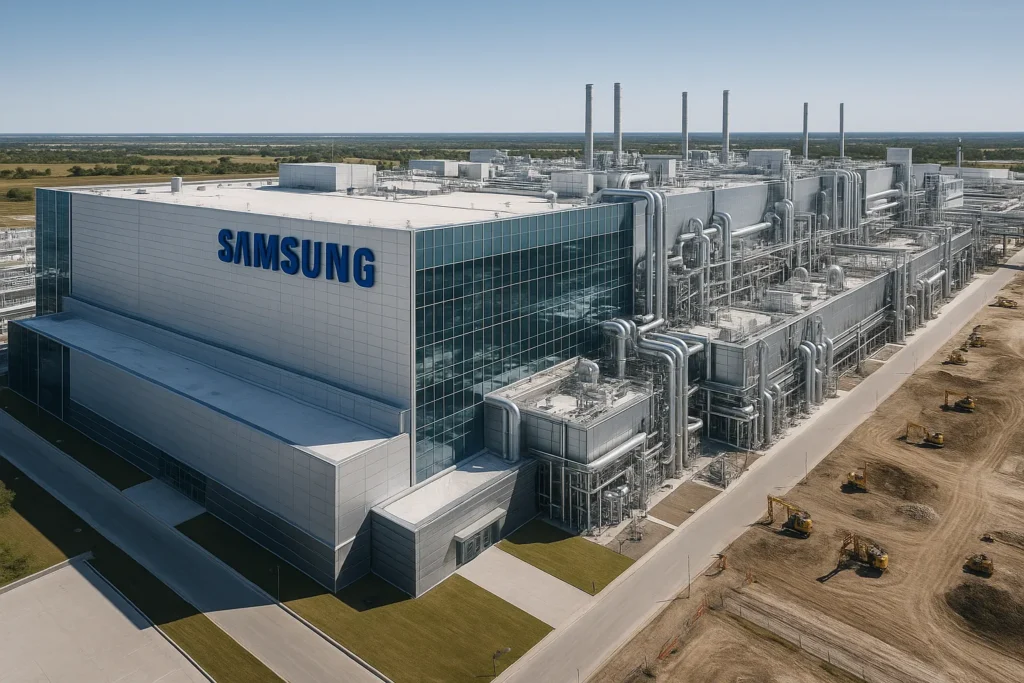
- When Samsung broke ground on a $17 billion semiconductor fabrication plant in Taylor, Texas back in 2022, most people saw a tech story.
- A construction supervisor on a six-month project isn’t price shopping the way a tourist family might.
- Taylor and surrounding Williamson County currently have relatively permissive STR regulations, but that could change as growth accelerates.
- The question isn’t whether there’s opportunity, but whether you’re positioned to capture it.
When Samsung broke ground on a $17 billion semiconductor fabrication plant in Taylor, Texas back in 2022, most people saw a tech story. Smart investors saw something else entirely: one of the most compelling short-term rental opportunities to emerge in years.
Taylor is a town of roughly 20,000 people about 30 miles northeast of Austin. It’s the kind of place where everyone knows their neighbors and the biggest employer used to be the school district. Not anymore.
Samsung’s massive chip factory is bringing an estimated 17,000 construction workers to the area over the next few years, plus 3,500 permanent high-paying manufacturing jobs once production ramps up in 2026. We’re talking about a workforce larger than half the town’s current population descending on a small community with limited housing options.
That’s where the opportunity gets interesting.
The Numbers Behind the Boom
Let’s talk scale for a moment. Samsung isn’t just building a factory. The company is creating an entire semiconductor ecosystem in Central Texas, with a total investment approaching $40 billion across multiple facilities. The federal government chipped in $4.745 billion through the CHIPS and Science Act, and Texas added another $250 million in state incentives.
This isn’t a tech announcement. This is an economic earthquake.
In 2024 alone, construction activities at the Taylor site injected $8.6 billion into the local economy. That money is flowing through every business in town, from restaurants to gas stations to, yes, rental properties.
But here’s what really matters for short-term rental hosts and investors: those construction workers need places to stay. Not for a weekend. Not for a week. We’re talking about medium-term stays ranging from 30 days to over a year as they move through different phases of this massive build-out.
Why Traditional Housing Can’t Keep Up
Taylor’s transformation from sleepy Austin suburb to semiconductor hub is happening faster than the housing market can adapt. Building new apartment complexes takes years. Getting permits, securing financing, completing construction, all of that moves at a pace that simply can’t match the influx of workers happening right now.
Short-term rentals fill that gap beautifully. A homeowner can convert a spare bedroom or garage apartment into rental income within weeks. An investor can buy an existing property and have it furnished and listed within a month. That flexibility is exactly what rapidly growing markets need.
We’ve seen this pattern before. When Apple built its massive data center in Maiden, North Carolina, or when Facebook chose Prineville, Oregon for server farms, the same dynamic played out. Tech mega-projects in small towns create housing crunches that savvy rental operators can capitalize on.
The difference with Taylor is the sheer scale and the type of workers involved. Samsung’s facility will produce cutting-edge 2-nanometer logic chips for artificial intelligence, 5G networks, and high-performance computing. This isn’t warehouse work. These are highly skilled technicians and engineers who expect quality accommodations and whose companies will pay for them.
The Corporate Housing Advantage
Here’s where the opportunity gets even more compelling. Corporate relocations and extended business travel command premium rates compared to vacation rentals. A construction supervisor on a six-month project isn’t price shopping the way a tourist family might. Their company covers the expense, so they prioritize convenience, comfort, and proximity to the work site.
This means higher average daily rates and dramatically better occupancy. Instead of dealing with weekend warriors and seasonal fluctuations, you’re looking at stable, predictable income from professionals who treat your property with respect because their employer is paying the bill.
The timeline works in investors’ favor too. Samsung’s Taylor facility won’t reach full operational capacity until 2030, according to federal CHIPS Act projections. That’s six years of sustained construction activity creating demand, followed by thousands of permanent employees who will need housing while they relocate and search for homes to buy.
Beyond the construction boom, there’s the ongoing operational phase. Samsung facilities attract an ecosystem of suppliers, consultants, and service providers who travel in regularly. Think sales engineers from equipment manufacturers, software specialists optimizing production lines, corporate trainers from Samsung’s global operations. These are the kinds of recurring business travelers who book the same property month after month.
The Broader Trend: Tech Reshoring Small Towns
Taylor isn’t an isolated case. It’s the leading edge of a major shift in where tech manufacturing happens in America.
The CHIPS and Science Act is pumping tens of billions of dollars into domestic semiconductor production, with new fabs planned in Arizona, Ohio, New York, and other locations that aren’t traditional tech hubs. Each one of these facilities creates the same dynamic: thousands of workers, limited local housing, and opportunities for short-term rental operators who move quickly.
We’re also seeing this pattern with data centers, battery manufacturing plants, and electric vehicle facilities. The infrastructure buildout for the next generation of technology is happening in places like Taylor, not Silicon Valley. And every one of these projects brings workers who need housing.
The data backs this up. While overall US short-term rental growth has slowed from its pandemic peak, tech-driven migration is creating hyperlocal demand spikes in unexpected markets. A recent analysis of rental markets near major tech expansions showed occupancy rates 15 to 20 percentage points higher than similar properties in the same region but outside the immediate impact zone.
What Investors Need to Know
Not every small town with a big factory announcement is a guaranteed winner. Due diligence matters. Here’s what to look at when evaluating these opportunities.
First, verify the timeline. Is construction actually underway, or is this still in the permitting phase? Samsung’s Taylor facility is real, with billions already spent and workers already on-site. That’s different from a flashy press release about a project that might break ground in three years.
Second, understand the local regulatory environment. Some small towns welcome short-term rentals with minimal restrictions. Others panic about becoming “the next Austin” and slap on occupancy limits, registration requirements, and expensive permit fees. Taylor and surrounding Williamson County currently have relatively permissive STR regulations, but that could change as growth accelerates. Stay informed.
Third, consider proximity to the facility. Workers value short commutes. Properties within a 15-minute drive of the Samsung plant will command higher rates and better occupancy than those 45 minutes away, even if the more distant property is nicer. Location beats amenities when your tenant is driving to a construction site at 6 AM.
Fourth, think about your property type. Construction workers often share houses, splitting rent among three or four colleagues. That means a four-bedroom property can generate more total income than two two-bedroom units, even at a lower per-bedroom rate. Engineers relocating with families, on the other hand, need different setups: home offices, good school districts, space for kids.
Running the Numbers
Before jumping into any market, run your projections carefully. StaySTRA’s free market analyzer can help you model potential returns based on property type, location, and investment amount. For emerging markets like Taylor where historical data is limited, focus on demand drivers rather than past performance.
Calculate conservatively. Assume lower occupancy and rates than the best-case scenario. Factor in furnishing costs, higher utility bills for longer-term guests, and potential regulatory changes. If the numbers still work under pessimistic assumptions, you’ve found a real opportunity.
Consider the medium-term rental model specifically. Instead of optimizing for nightly vacation rentals, target 30 to 180-day corporate stays. This often means simpler furnishings, less frequent turnover, and lower marketing costs, but stable income that’s easier to manage than the vacation rental hustle.
The tax implications can be more favorable too. Medium-term rentals may qualify for different deductions and avoid some of the restrictions that apply to short-term vacation rentals, though you should consult with a tax professional familiar with Texas real estate law.
The Risk Factor
Let’s be clear about the risks. Tech companies can change plans. Economic downturns can delay construction. Regulations can shift overnight.
Samsung has billions of dollars and federal funding committed to Taylor, which significantly reduces the risk of abandonment compared to a startup’s announcement. But even with that certainty, local housing markets can overshoot. If too many investors pile into Taylor simultaneously, supply could exceed demand and compress rates.
The antidote is diversification. Don’t bet your entire portfolio on a single market trend. If you’re investing in Taylor, make it part of a broader strategy that includes established markets with proven track records.
What This Means Going Forward
The Samsung Taylor fab is a preview of where short-term rental opportunities will emerge over the next decade. As America rebuilds its manufacturing base and brings production of critical technologies back onshore, we’re going to see more projects like this in places that haven’t traditionally been on investor radar.
The hosts and investors who win in this new landscape will be the ones who spot these trends early, understand the specific dynamics of tech-industry housing demand, and move decisively while others are still trying to figure out what’s happening.
Taylor, Texas is happening right now. The workers are arriving. The money is flowing. The question isn’t whether there’s opportunity, but whether you’re positioned to capture it.
About Our Data
Accuracy Disclaimer: StaySTRA provides analysis based on the best available public data for short-term rental markets. While we strive for accuracy, market conditions change rapidly, and individual results will vary based on property characteristics, management quality, and timing. This article represents analysis and opinion, not guaranteed investment returns. Always conduct your own due diligence and consult with qualified financial and legal professionals before making investment decisions.
Run the Numbers
Want to evaluate short-term rental potential in emerging Texas markets? Our free Airbnb Calculator pulls real market data so you can model your ROI before you invest.
For detailed market data on established Central Texas markets, explore our Austin market profile or browse the full Texas market directory.
Frequently Asked Questions
How does the Samsung factory affect real estate near Taylor, Texas?
Samsung’s massive semiconductor manufacturing facility in Taylor, Texas is driving significant housing demand from construction workers and eventually permanent employees. This has created opportunities for both short-term rentals (housing construction crews) and long-term investments (growing population). Property values in the area have already seen notable appreciation.
What are the Airbnb rules in Austin, Texas?
Austin distinguishes between Type 1 (owner-occupied) and Type 2 (non-owner-occupied) STR licenses. Type 2 licenses are no longer being issued in most residential zones, making existing licenses valuable. All operators must obtain a license, collect hotel occupancy taxes, post the license number on listings, and comply with occupancy and noise restrictions.
Is Austin still a good market for short-term rentals?
Austin remains strong for STRs due to its robust event calendar (SXSW, ACL, F1), tech sector business travel, and tourism appeal. However, restrictive regulations on non-owner-occupied properties have limited new supply, which benefits existing permitted operators. Investors should focus on Type 1 properties or look at surrounding areas with fewer restrictions.
What is a DSCR loan for short-term rentals?
A DSCR (Debt Service Coverage Ratio) loan qualifies borrowers based on the property’s rental income potential rather than personal income. The lender evaluates whether projected revenue covers the mortgage payment, typically requiring a ratio of 1.0 to 1.25. These loans are popular with STR investors because they allow financing based on property performance, not W-2 income.
What credit score do I need to finance a short-term rental?
Most investment property lenders require a minimum credit score of 620 to 680, with the best rates available above 740. DSCR lenders may work with scores as low as 620 but charge higher interest rates. Improving your score above 720 before applying can save thousands in interest over the life of the loan.
Stay in the Loop
STR tech moves fast. New tools launch, platforms update, and the landscape shifts constantly. Join the StaySTRA Insider newsletter and we will keep you ahead of the curve.
Become a StaySTRA Insider
Join free — get our newsletter + 6 free property analyses/month.
No spam. Unsubscribe anytime. Free membership includes property analyses and market insights.