

Key Takeaways
- The city council chambers were packed that June evening when the planning commission took up another short-term rental special use permit.
- Sources reveal it centered on “preserving residential character.” A vague assertion, TPPF argued, not substantive evidence.
- Does it create two markets, one legal and accountable, one hidden and unregulated?
- Before purchasing any property for short-term rental use, research the zoning, confirm STRs are allowed, and verify what permits and inspections are required.
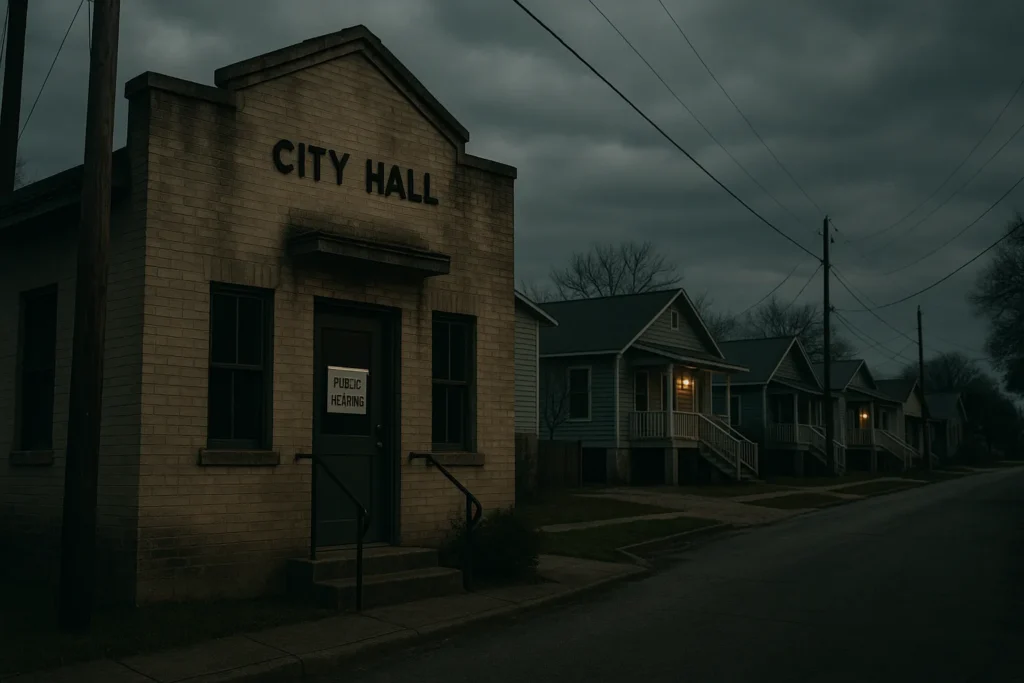
The city council chambers were packed that June evening when the planning commission took up another short-term rental special use permit. Thirty-six percent of the surrounding neighbors had filed opposition. The property was zoned commercial. The applicant had crossed every T and dotted every I.
The permit was recommended for approval. But the tension in that room told the real story.
New Braunfels is trying to have it both ways. The city built a $1.3 billion tourism economy welcoming 6 million visitors in 2024, a number that keeps climbing year after year. Schlitterbahn. The Comal and Guadalupe Rivers. Gruene Hall and the historic downtown. The SpringHill Suites groundbreaking. The reopening of Hacienda del Rio. The projected 2026 opening of the Faust Hotel.
Tourism growth has averaged 13 percent from 2022 to 2024. The governor certified New Braunfels as a “Tourism Friendly Texas” community.
And the short-term rental market reflects that tourism demand. According to StaySTRA’s market data, New Braunfels currently has 1,872 active short-term rental listings generating an average daily rate of $328.69 and 50% occupancy. Those properties grew from just 281 listings in 2016 to nearly 1,900 today. The market is thriving, with peak summer months pushing occupancy above 65% and average monthly revenue reaching $2,707.
But here is the catch. If you own a home in a residential neighborhood and want to rent it short-term to those 6 million tourists? The answer has been no since 2011.
The Ban That Started a Legal War
Documents show that New Braunfels adopted its short-term rental ordinance in 2011-2012, updated in 2018. The rule is straightforward: STRs are prohibited in all residential zoning districts. Period.
If you want to operate a vacation rental legally in New Braunfels, your property must be in a commercial zone. Most commercial zones require a special use permit. You’ll need $500,000 in commercial general liability insurance, an annual life safety inspection from the Fire Marshal, a visible emergency contact decal, and compliance with parking and occupancy limits.
The initial registration costs $206. You’ll file monthly hotel occupancy tax returns showing 7% of your gross receipts, even in zero-revenue months. Starting February 1, 2026, those payments process through a new portal called Rentalscape.
The requirements aren’t the problem. Smart hosts can navigate requirements. The problem is the outright residential ban and the justification behind it.
Rafael Marfil purchased a home near Schlitterbahn Waterpark as an investment property. His timing was unfortunate. The city’s prohibition was already in place. He challenged it in federal court, represented by the Texas Public Policy Foundation.
Marfil’s team presented evidence that short-term rentals don’t produce more nuisances than other residential homes. The data showed no meaningful difference in noise complaints, parking issues, or neighborhood disturbances.
In January 2025, the district court ruled for the city anyway. Summary judgment. Case dismissed without trial.
The city’s defense? Sources reveal it centered on “preserving residential character.” A vague assertion, TPPF argued, not substantive evidence.
Marfil and TPPF appealed to the Fifth Circuit. The foundation filed its opening brief on March 27, 2025. Oral arguments were heard on September 3, 2025. The decision is pending.
What’s Really at Stake
This isn’t just about one property owner or one tourist town. The Fifth Circuit is being asked to decide whether local governments can strip property owners of traditional residential uses based on generalized concerns rather than concrete evidence.
If the appeals court sides with New Braunfels, cities across Texas gain broader authority to ban STRs in residential areas without needing to prove actual harm. If the court sides with Marfil, municipalities will need to bring data showing that STRs genuinely create problems before restricting them.
The irony is hard to miss. Other Texas cities are already using New Braunfels’ code as a template. Lewisville studied it when drafting its own STR regulations. New Braunfels has become a model for restrictive ordinances.
Meanwhile, the city is actively reviewing its land development ordinance and welcoming public input on STR standards. Thirty-six percent neighbor opposition suggests the community remains divided.
How Successful Hosts Are Responding
While the legal battle plays out, hosts who want to operate in New Braunfels are finding narrow pathways.
Commercial zone purchases. Some investors are specifically targeting properties in C-4, C-4A, and C-4B zones where STRs are allowed by right. Other commercial zones require special use permits, but approval is possible if you meet the criteria and neighbors don’t mount significant opposition.
Transparency with neighbors. Smart applicants are proactively reaching out to adjacent property owners before filing for special use permits. Addressing concerns about noise, parking, and property maintenance upfront can reduce opposition.
Professional management standards. The city’s requirements include emergency contact information, liability insurance, and life safety inspections. Hosts who exceed these minimums by offering 24/7 guest support, security deposits, and detailed house rules are positioning themselves as responsible operators.
Market diversification. Some hosts who wanted to operate in New Braunfels are looking at nearby markets where residential STRs remain legal. Comal County has multiple municipalities with different rules. Smart hosts are comparing enforcement approaches, tax rates, and tourism demand across jurisdictions.
The Enforcement Gap Nobody Talks About
Here’s what city documents don’t highlight: enforcement of the residential ban depends almost entirely on complaints.
The city provides an online complaint form and directs residents to contact police non-emergency dispatch for noise issues at STRs. Code compliance can issue escalating penalties starting at $50 and climbing to 15 percent of assessed taxes plus potential misdemeanor charges after 91 days of non-compliance.
But how many residential STRs are operating under the radar? The city doesn’t publicize that number. Property owners who list on Airbnb and VRBO while claiming they’re renting to “friends and family” face minimal risk unless neighbors complain.
Is that fair to hosts who invested in commercial properties and jumped through every regulatory hoop? No. Does it create two markets, one legal and accountable, one hidden and unregulated? Absolutely.
The city approved a contract with a short-term rental monitoring service back in 2019 to help identify non-compliant properties. Data on how many residential STRs have been shut down as a result isn’t readily available in public records.
The Bigger Picture for Texas Hosts
New Braunfels isn’t alone in restricting residential STRs. Cities across Texas are watching this Fifth Circuit case closely.
If you’re operating in a market with similar restrictions or considering entering one, here’s what this case should teach you.
Legal challenges take years. Marfil purchased his property knowing about the ban, filed suit, lost at the district level, and is now waiting for a Fifth Circuit decision. Even if he wins, the city could appeal further. The timeline from purchase to resolution could span a decade.
Evidence matters, but so does judicial interpretation. Marfil’s team presented data showing STRs don’t create more problems than traditional residential uses. The district court sided with the city anyway. Different judges weigh “preserving residential character” differently.
Commercial properties offer certainty. In New Braunfels, purchasing in the right commercial zone eliminates the legal uncertainty. You’ll still jump through hoops, but you’re operating within a clear framework.
Public sentiment shapes outcomes. That 36 percent neighbor opposition at a June planning commission meeting wasn’t enough to block approval, but it demonstrates ongoing tension. Cities are more likely to maintain bans when residents vocally support them.
What Happens Next
The Fifth Circuit could issue its ruling any day. Three outcomes are possible.
One: the court sides with New Braunfels, upholding the residential ban. This strengthens the legal foundation for similar bans across Texas and makes it harder for property owners to challenge them.
Two: the court sides with Marfil, finding that cities need concrete evidence of harm before banning traditional residential uses. This could force New Braunfels and other cities to either gather that evidence or lift their bans.
Three: the court issues a narrow ruling that doesn’t create clear precedent. Both sides claim partial victory. The legal uncertainty continues.
New Braunfels will keep adding hotels. Schlitterbahn will debut its new signature attraction in 2026. Tourism will keep growing. The Gruene Historic District will keep drawing visitors.
The question is whether property owners in residential neighborhoods will ever have the right to host those visitors in their homes.
For now, the answer is no. Smart hosts who want to operate here know they’re limited to commercial zones, navigating a rigorous permit process, and waiting to see if a federal appeals court changes the game.
Know Your Market Before You Invest
The New Braunfels case highlights a reality every host needs to accept: local regulations can make or break your investment. A booming tourism market doesn’t guarantee you’ll be allowed to participate.
Before purchasing any property for short-term rental use, research the zoning, confirm STRs are allowed, and verify what permits and inspections are required. Check for pending lawsuits or ordinance changes. Talk to the planning department. Read the city council meeting minutes.
Don’t navigate these challenges blind. Understanding how your market regulates short-term rentals is the difference between a profitable investment and a legal headache.
Know Your Market in New Braunfels
Knowledge is power. Our free New Braunfels Airbnb Calculator pulls real market data so you can see what properties are actually earning in your area.
For a deeper look at the New Braunfels market including active rental counts, average daily rates, and neighborhood-level data, check out our New Braunfels market profile.
Frequently Asked Questions
Do I need a permit to operate a short-term rental?
Most cities and counties require some form of permit, license, or registration to operate a short-term rental legally. Requirements vary significantly by jurisdiction, so check your local government website or contact your city clerk before listing your property. Operating without required permits can result in fines ranging from several hundred to several thousand dollars per violation.
How do I find the STR regulations for my area?
Start by searching your city or county government website for short-term rental or vacation rental ordinances. Many municipalities have a dedicated STR registration page with application forms and requirements. You can also contact your local planning department directly or consult with a real estate attorney who practices in your area.
What is the short-term rental tax loophole?
The STR tax loophole allows property owners who materially participate in managing their short-term rental to deduct losses against active income like W-2 wages. This works because rentals with an average guest stay of seven days or fewer are not classified as passive rental activities under IRS rules. It is one of the most powerful tax strategies available to real estate investors.
What is cost segregation and how does it benefit STR owners?
Cost segregation is an engineering study that reclassifies components of your property into shorter depreciation periods, typically 5, 7, or 15 years instead of 27.5 years. This accelerates your depreciation deductions, creating larger tax savings in the early years of ownership. When combined with bonus depreciation, a cost segregation study can generate substantial paper losses in year one.
Do I need an LLC for my short-term rental?
An LLC provides important personal liability protection by separating your rental business from your personal assets. If a guest is injured or files a lawsuit, an LLC limits exposure to the assets within that entity. Most real estate attorneys recommend forming an LLC before your first guest checks in, especially given the higher liability exposure of short-term rentals compared to long-term.
Stay in the Loop
The STR landscape is always shifting. Regulations change, enforcement ramps up, and new challenges emerge. Join the StaySTRA Insider newsletter and we will keep you informed on the stories that matter.
Become a StaySTRA Insider
Join free — get our newsletter + 6 free property analyses/month.
No spam. Unsubscribe anytime. Free membership includes property analyses and market insights.
About This Article
We do our best to keep our reporting accurate and up to date, but situations evolve and we are only human. Always verify current details directly with local officials and sources before making decisions. This article examines publicly available court documents, city ordinances, and market data. It is not legal advice.