Key Takeaways
- At least 8 municipalities adjacent to FIFA World Cup host cities have passed new STR ordinances, raised fines, or created registration requirements since January 2026.
- The Kansas City corridor shows the widest range of responses: penalties tripled in Fairway, KS while neighboring Parkville, MO lifted its STR cap entirely for three months.
- New Jersey towns near MetLife Stadium are split between outright bans and new regulatory frameworks, with North Bergen capping rentals at 60 nights per year and Bayonne introducing a 3% occupancy tax.
- Investors evaluating markets adjacent to FIFA host cities should verify municipal codes now. The regulatory landscape changed significantly in Q1 2026 and is still shifting.
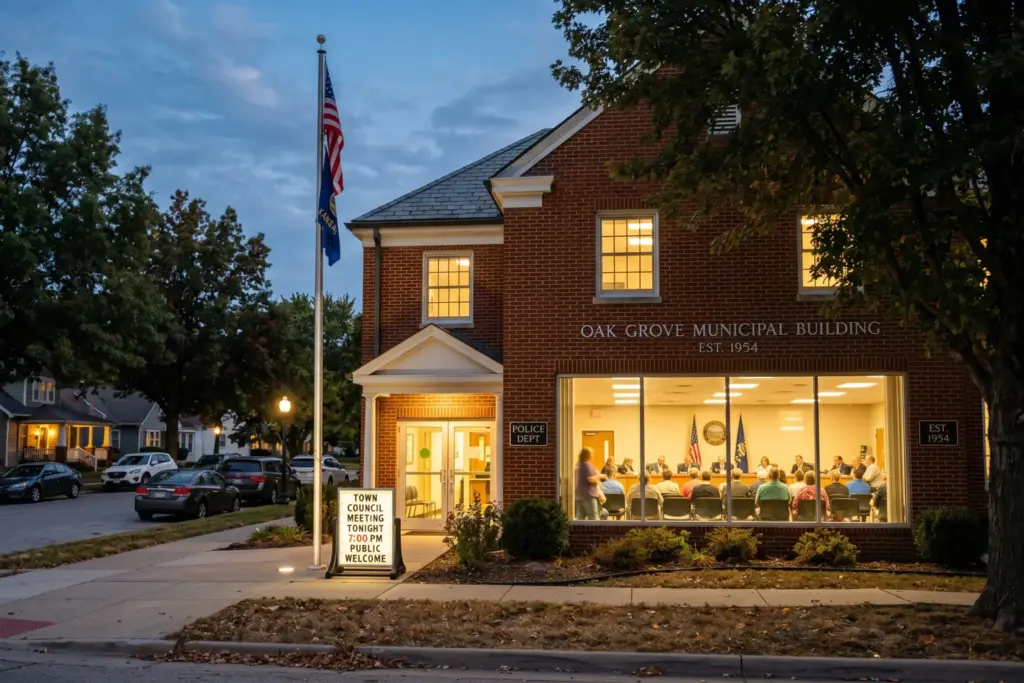
Fairway, Kansas, has 4,300 residents and one traffic light. It does not have a World Cup venue. What it does have, as of April 22, is daily fines of up to $1,500 for anyone operating an unlicensed short-term rental.
The Fairway City Council voted 5-3 on April 13 to triple its penalties for unlicensed STRs. The old range was $250 to $500 per day. The new range is $500 to $1,500. The reason, city officials said openly, was the FIFA World Cup.
Kansas signed HB 2481 on April 9, a state law that temporarily suspends Fairway’s 1,000-foot buffer between short-term rentals from May 15 through July 25. The city could no longer limit how many STRs operate on its streets. So it tripled the cost of breaking the rules instead. “Because we can’t limit the number, this is to say, if you’re going to do it, we’re not going to stop you, but you do have to follow the rules,” City Administrator Nathan Nogelmeier told the Johnson County Post.
This is the pattern playing out in municipalities across the country right now. The 11 official FIFA World Cup host cities have their own regulatory frameworks (we covered all 11 in our host city roundup). But the regulatory ripple has moved well past the venue cities. Adjacent suburbs, secondary markets, and neighboring municipalities are writing their own rules. Some are tightening. Some are loosening. All of them are responding to the same force: spillover demand from the largest sporting event ever held in the United States.
For STR investors and hosts operating in these secondary markets, the regulatory shift matters just as much as the revenue opportunity.
Sponsored — Beeline
Finance Your Next STR With a DSCR Loan
Qualify on property cash flow, not W-2 income. Beeline specializes in fast DSCR closings for STR investors. No personal income verification required.
Check Your DSCR Eligibility →Affiliate disclosure: StaySTRA may earn a referral fee.
The New Jersey Corridor: A Regulatory Patchwork 8 Miles From MetLife
MetLife Stadium (renamed New York New Jersey Stadium for the tournament) will host the World Cup Final on July 19. The regulatory response in surrounding Hudson County municipalities may be the most dramatic example of spillover regulation in the country.
North Bergen passed a comprehensive STR ordinance in March 2026. Property owners can only rent their primary residence. Rentals are capped at 60 nights per year. No owner can hold more than two STR permits. Every applicant must provide proof of residency, insurance coverage, and pass a safety inspection. A responsible party must be available 24 hours a day. “Our goal is to maintain safe, stable residential communities while ensuring that any short-term rental activity operates with proper oversight and accountability,” Mayor Nick Sacco wrote in a public statement.
Bayonne introduced two new ordinances at its April 15 council meeting. The first creates a 3% municipal occupancy tax on all short-term rentals, authorized under state law. Fines for violations are set at $1,250. The companion measure requires landlords to notify all residents within 200 feet of any property being converted to an STR. “With the World Cup coming up, there’s a statute that permits municipalities to charge 3 percent tax on an Airbnb. That’s what we’re looking to do here,” Planning Director Joe Skillender told the city council.
The contrast is Hoboken, which currently has no STR regulations at all. City council members are drafting legislation, but Councilman Joe Quintero acknowledged to CBS New York that “there’s no real clear rules” on the books. The city sees the World Cup as a once-in-a-generation economic opportunity. But even Hoboken is moving toward regulation, not away from it.
These three Hudson County municipalities sit within 10 miles of MetLife Stadium. They reached three different conclusions. For investors, compliance requirements vary depending on which municipal line you cross. Our coverage of New Jersey’s expanding STR bans details the broader state picture, but the adjacent-city patchwork is where the operational complexity lives.
Sponsored — Beeline
Finance Your Next STR With a DSCR Loan
Qualify on property cash flow, not W-2 income. Beeline specializes in fast DSCR closings for STR investors. No personal income verification required.
Check Your DSCR Eligibility →Affiliate disclosure: StaySTRA may earn a referral fee.
The Kansas City Corridor: Five Municipalities, Five Different Answers
No region illustrates the spillover pattern better than the Kansas City metro, where Arrowhead Stadium will host World Cup matches and an estimated 650,000 visitors need places to stay against only 65,000 hotel rooms.
Riverside, MO was among the first adjacent cities to act. The Board of Aldermen voted unanimously (7-0) on January 6 to approve a brand new STR regulatory framework, effective February 1. Every short-term rental now needs an annual permit, one off-street parking space, smoke detectors, carbon monoxide detectors, fire extinguishers, and emergency lighting. Owners must pay the city’s tourism tax and maintain two years of records documenting rental dates, guest complaints, and code violations. City staff described the ordinance as “a balanced, reasonable regulatory structure” that introduces “baseline operational standards.”
Wyandotte County (Kansas City, KS) took a hybrid approach. The county approved a temporary licensing pathway running May 1 through July 31 with a streamlined $50 permit fee (versus the standard $200 annual charge) and a 10-day application turnaround. It lifted its one-STR-per-block-face limit for that 90-day window. But the enforcement side is sharp: noncompliance fines range from $1,000 to $15,000 per violation.
Parkville, MO went the other direction entirely. The Board of Aldermen voted unanimously in May 2025 to temporarily lift all STR caps and owner-occupancy requirements from May 1 through July 31, 2026. Parkville previously allowed only four STRs per ward with mandatory owner occupancy. Those restrictions vanish for three months.
Lawrence, KS, roughly an hour west of Arrowhead, also removed its cap on STR units for the tournament period.
The common thread across all five Kansas City corridor municipalities (including Fairway) is that every one of them responded. Whether they tightened, loosened, or created something entirely new, they all rewrote their rules because of World Cup spillover demand.
The Boston Corridor: Bans That Will Not Bend
Gillette Stadium in Foxborough, MA will host seven World Cup matches with estimated attendance exceeding 450,000 visitors. Foxborough itself prohibits short-term rentals under its zoning bylaws. So does neighboring Plainville. Neither town has signaled any intention to relax its rules for the tournament.
That has pushed demand outward. Sharon, MA has emerged as a legal STR alternative, and Airbnb reports an 80% surge in booking interest across the broader Boston region.
Farther north in the New England corridor, Smithfield, RI is in active deliberation. Council Member Rachel Toppi presented two options at a town council meeting: create STR regulations or ban short-term rentals entirely. Town Manager Robert Seltzer met with Airbnb representatives in early April as the town develops a framework. Bryant University is hosting a professional soccer team for the tournament, adding to local demand pressure. But Seltzer acknowledged it is too late for a finalized ordinance before summer 2026. STR host Corey Martineau urged the council to take a data-driven approach rather than banning rentals outright. “This is my future, this is my investment I’ve started with my family,” he told local media.
The Atlanta Metro: Enforcement Before the Event
Atlanta’s adjacent counties moved earlier than most corridors. DeKalb County approved a comprehensive STR ordinance in July 2025 with full enforcement beginning in early 2026. Cobb County enforces some of the most specific occupancy restrictions in the country: one guest per 390 square feet and one parking space per bedroom plus one additional spot. Gwinnett County has also approved and begun enforcing its own STR framework.
Brookhaven, GA (DeKalb County) issued a formal reminder in April 2026 that all STR operators must hold a $25 annual permit, register their homestead with the DeKalb County Tax Commissioner, and pay excise taxes. “The City’s short-term rental ordinance allows there to be a balance between the rights of property owners while preserving the quality of life for their neighbors,” Community Development Director Linda Abaray stated.
The Atlanta metro pattern is less about new rules and more about enforcement urgency. The World Cup created the pressure to actually enforce what was already on the books.
What This Means for STR Investors in Adjacent Markets
The spillover regulation pattern creates both risk and opportunity for investors evaluating markets near World Cup host cities.
The risk is clear. If you purchased or are evaluating a property in a secondary market assuming loose regulations, the ground may have shifted. An investor in Fairway who ran projections in January based on existing fines is now looking at three times the penalty exposure. A host in North Bergen who was renting year-round now faces a 60-night annual cap.
The opportunity is real, too. Markets that created clear regulatory frameworks are more predictable than those still debating. Riverside’s new ordinance gives investors a defined compliance path. Wyandotte County’s temporary licensing with fast turnaround is an explicit invitation to participate. Even Bayonne’s 3% tax signals that the city wants STR revenue, not an STR ban.
Data indicates that markets adjacent to FIFA host cities with clear STR frameworks tend to have stronger investment fundamentals than those stuck in regulatory limbo. For investors considering acquisitions near host cities, the StaySTRA Analyzer can model revenue projections that account for regulatory constraints, including seasonal caps and local permit requirements.
Investors exploring DSCR financing for STR properties in these adjacent markets should factor in the regulatory timeline. A property in a market with adopted, clear rules is a more underwritable asset than one where the rules are still being written.
Sponsored — Beeline
Finance Your Next STR With a DSCR Loan
Qualify on property cash flow, not W-2 income. Beeline specializes in fast DSCR closings for STR investors. No personal income verification required.
Check Your DSCR Eligibility →Affiliate disclosure: StaySTRA may earn a referral fee.
Frequently Asked Questions
Which cities near FIFA World Cup venues have passed new STR rules in 2026?
North Bergen, NJ passed a primary-residence-only STR ordinance with a 60-night cap in March 2026. Bayonne, NJ introduced a 3% occupancy tax in April. Fairway, KS tripled its daily penalties to $1,500 on April 13. Riverside, MO created an entirely new STR permit framework effective February 1. Wyandotte County, KS approved temporary licensing with fines up to $15,000 for noncompliance. Several other municipalities in each corridor have tightened or temporarily loosened rules.
Are any cities near World Cup venues loosening STR rules for the tournament?
Yes. Parkville, MO unanimously lifted all STR caps and owner-occupancy requirements from May through July 2026. Lawrence, KS removed its cap on STR units for the tournament period. Wyandotte County, KS created a temporary $50 permit pathway with a 10-day turnaround. These municipalities view the World Cup as a revenue opportunity and are making it easier for homeowners to participate.
How does the FIFA World Cup affect STR regulations in cities that are not official host cities?
The World Cup creates spillover demand as visitors unable to find lodging in the 11 official host cities book in adjacent suburbs and secondary markets. This increased short-term rental activity triggers regulatory responses from local governments that had not previously prioritized STR oversight. Responses range from outright bans to new permitting systems to temporary rule suspensions.
Should STR investors buy properties in adjacent markets near World Cup host cities?
Markets with clear, adopted regulatory frameworks offer more predictable investment conditions than those still debating rules. Use the StaySTRA Analyzer to model revenue for specific markets and factor in compliance costs including permits, taxes, and seasonal caps. DSCR lenders will want to see that your projected income accounts for any regulatory restrictions that limit rental nights or require additional expenses.
Sponsored — Beeline
Finance Your Next STR With a DSCR Loan
Qualify on property cash flow, not W-2 income. Beeline specializes in fast DSCR closings for STR investors. No personal income verification required.
Check Your DSCR Eligibility →Affiliate disclosure: StaySTRA may earn a referral fee.
We do our best to keep our reporting accurate and up to date, but situations evolve and we are only human. Always verify current details directly with local officials and sources before making decisions.