Key Takeaways
- Airbnb made five specific public commitments to World Cup hosts: a $750 new host bonus, 13,000 dedicated support agents, machine learning fraud screening, AirCover damage protection, and proactive law enforcement coordination. The infrastructure is in place as of opening day.
- The $750 bonus program exists exactly as Airbnb stated, but the payout arrives within 45 days of a completed stay, meaning hosts completing their first qualifying reservation in June will not receive the money until late July or August. In Houston, compliance costs alone can exceed the bonus amount.
- Demand across most host cities is running below the Deloitte-projected $4,000 average. Roughly 80% of STR hosts in Boston, Philadelphia, San Francisco, and Seattle reported booking pace below expectations, behind even a typical summer.
- VRBO made no World Cup-specific host commitments. No staffing pledge, no anti-fraud announcement, and no tournament-specific protections beyond its standard policy framework.
- Hosts winning bookings are the ones who priced to market reality rather than the 90%-premium projections from early 2026 forecasts. The tournament runs 39 days. Opening day is not the final word.
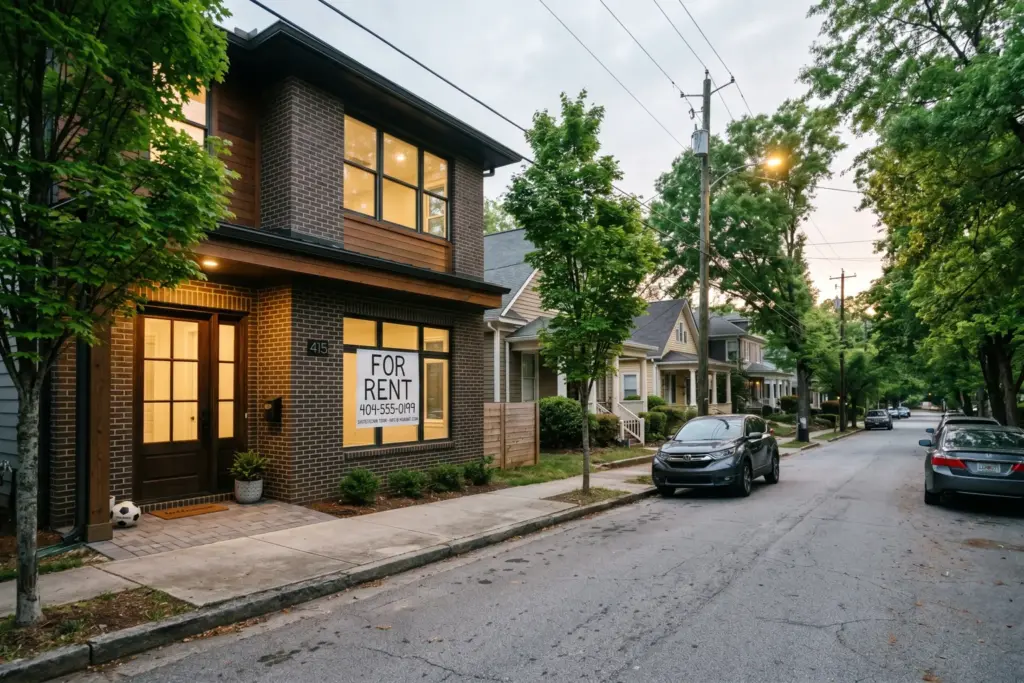
Mae Stewart spent $60,000 renovating her Atlanta home for this moment. She is asking $4,500 for a week in July, triple her normal rate. The house is still empty.
The 2026 FIFA World Cup opens today at Azteca Stadium in Mexico City. Across 11 U.S. host cities, more than 100,000 new Airbnb listings came online over the past eight months. Hosts blocked their calendars, paid registration fees, bought additional insurance, and in some cases undertook major property improvements, all based on a specific set of promises from the platforms that encouraged them to list.
Airbnb commissioned a Deloitte report projecting average host earnings of $4,000 across U.S. tournament cities. The company offered $750 bonuses to new hosts. It pledged 13,000 support agents for the duration of the tournament. It deployed machine learning to screen fake listings before they reached travelers.
Those commitments were made before kickoff. Today is the first real test of whether they hold. Here is what the record shows.
What Airbnb and VRBO Actually Promised
Not all platforms went on the record with specific commitments. That distinction matters for this audit.
Airbnb published a detailed newsroom post titled “Kicking Off Global Safety and Support for the FIFA World Cup 2026,” laying out five categories of action. Documents from that announcement show the following pledges: more than 13,000 specially trained support agents available around the clock, by phone, in-app, and via the Help Center, throughout the tournament in multiple languages; a dedicated 24/7 Safety Line in 16 languages for urgent situations; machine learning technology evaluating each listing against hundreds of risk signals, including host reputation, template messaging, and duplicate photos, designed to block fake listings before they go live; expanded human trafficking prevention partnerships with organizations It’s a Penalty and ECPAT; and proactive engagement with hundreds of law enforcement agencies across the United States, Mexico, and Canada.
Airbnb also promised a $750 new host bonus and launched an earnings calculator allowing prospective hosts to project their income by city. A Deloitte-commissioned report, published by Airbnb ahead of the tournament, projected that hosts across the 11 U.S. cities would earn an average of $4,000 each during the June 11 to July 19 tournament, with New York and New Jersey hosts leading at $5,700 and Philadelphia at the low end at $1,900.
VRBO’s commitment was considerably quieter. Expedia Group launched a “Summer of Soccer” marketing hub at summerofsoccer.expedia.com, giving fans a place to book travel across North America. That is a booking funnel, not a host commitment. VRBO published no World Cup-specific safety plan, staffing pledge, or anti-fraud announcement. Standard protections remain in effect: the Book with Confidence Guarantee covering last-minute host cancellations and providing rebooking assistance to guests. In April 2026, VRBO toughened its host cancellation penalty to a minimum $50 fee plus applicable taxes. That is a guest-protection measure, not a host commitment.
VRBO cannot be held to promises it never made. This audit therefore focuses on Airbnb, which made specific and public commitments that can be checked against opening-day reality.
The $750 Bonus: Program vs. Experience
The program structure is exactly what Airbnb promised.
To qualify, a host must have had no active listings as of February 1, 2026, must list an entire home (not a private room) in an eligible event zone, and must complete a first reservation of at least $100 before July 31, 2026. The $750 payout arrives through the host’s default payout method within 45 days of the completed stay.
That structure delivered. Three friction points are worth naming for any host still considering the program.
First, the payout timeline. A host completing their first qualifying reservation on June 20 will not receive the $750 until early August, well after the group stage ends July 6. For hosts who paid startup costs upfront, this is a cash-flow mismatch rather than a broken promise. Worth knowing going in.
Second, the compliance offset. Reporting from StaySTRA’s prior coverage of the bonus program identified that city-by-city compliance costs can significantly reduce the net value. In Houston, annual STR registration runs $275 and required insurance adds another $300 to $800, meaning total startup costs can run $575 to $1,075 against a $750 bonus. The StaySTRA analyzer can help hosts in any host city model their actual net return after compliance costs. Kansas City, by contrast, created a $50 event-specific permit under Ordinance 250965 that is the most favorable path to net-positive bonus economics in any of the 11 U.S. markets.
Third, and most consequential: the $750 program was partly a supply recruitment tool. Airbnb needed more inventory in host cities where booking demand was running below projections. The bonus was not purely a reward for hosts deciding whether to welcome guests. It was also an acquisition strategy during a period when actual listings were falling short of the platform’s own demand targets.
That does not make the program dishonest. It does reframe the $750 as a mutual transaction rather than a gift, and it raises a fair question about whether hosts who joined primarily because of the bonus understood the full picture of what they were joining.
Support Infrastructure on Opening Day
Airbnb’s pledge of 13,000 agents is an infrastructure commitment. The agents are deployed and the channels are live. Phone, in-app, Help Center, and the 16-language Safety Line are operational as of today.
Data indicates this is the largest tournament-specific support deployment Airbnb has run, exceeding what was in place for the 2024 Paris Olympics. That is a meaningful operational achievement, and the structure was delivered as promised.
Whether 13,000 agents translate to shorter wait times and better resolutions than standard Airbnb support is not measurable on opening day. The pressure test comes during match weeks, when reservation disputes, last-minute cancellations, and check-in problems will concentrate. StaySTRA’s prior investigation into AirCover host protection complaints found a consistent pattern: Airbnb’s platform protections often look better on paper than in practice when actual disputes arise. The same open question applies to the 13,000-agent pledge. Structural commitment: delivered. Execution under peak demand: verdict pending.
Cancellation and Trust Protections
Airbnb did not announce new World Cup-specific cancellation policies for hosts beyond its standard AirCover framework.
For guests, AirCover covers situations where a host cancels or where the listing does not match its description. Airbnb commits to finding comparable alternatives or issuing refunds. For a tournament drawing an estimated 382,000 guests through Airbnb, many of them traveling internationally and unfamiliar with U.S. rental norms, this protection is real and valuable.
For hosts, AirCover provides up to $3 million in damage protection. This is the standard program, not a tournament-specific enhancement. Hosts were not promised additional protection for tournament-related damage, fraudulent bookings, or hostile guests specifically booked through the event period.
No special cancellation windows were extended for World Cup match dates. No event-specific host rebooking assistance was announced. Hosts whose guests cancel during the tournament are handled through standard policy channels. The dynamics of how Airbnb manages host standing mean that cancellation history can affect future listing visibility, so hosts navigating guest-initiated cancellations during a high-stakes booking window carry downstream risk that the platform’s opening-day commitments do not specifically address.
Fraud Prevention: The Quietest Commitment
This is where Airbnb’s commitments look strongest on opening day.
The machine learning listing screening system was deployed before the tournament began. The technology evaluates each new listing against hundreds of risk signals and automatically blocks high-risk entries from going live or flags them for manual review. It also screens listing descriptions and host messages for phone numbers, email addresses, and other contact information that fraudsters use to move payments off the platform.
Context matters here. Booking.com suffered a data breach in April 2026 that exposed customer reservation data, enabling a wave of “reservation hijacking” scams in the weeks leading into the tournament. The environment for fake-listing fraud was active and aggressive pre-tournament.
There has been no documented large-scale fake listing failure on the Airbnb platform heading into opening day. That is not a perfect credential. It is a real one. The fraud prevention infrastructure appears to have functioned as promised during the lead-up period.
The Booking Reality No One Promised to Fix
The hardest part of this audit is the number the Deloitte report headlined: $4,000 average host earnings across 11 U.S. cities.
Airbnb did not guarantee those earnings. It projected them, based on commissioned research. The distinction matters legally. It does not change how hosts made decisions. Hosts who invested in properties, paid compliance fees, and cleared their summer calendars were responding to a set of signals, the bonus, the calculator, and the Deloitte projection, that collectively painted an optimistic picture of World Cup hosting economics.
Data from AirROI tracking STR booking performance across host cities shows fill rates well below what early projections suggested. Dallas is running at 43% fill during match weeks, compared to a 15% baseline (a 187% increase that still leaves more than half of available properties without bookings on peak nights). Houston is at 35% during match weeks. Atlanta is at 26%. Boston is the outlier at approximately 55%, the only U.S. host city exceeding half-full during tournament dates.
Sources across the industry report that roughly 80% of STR hosts in Boston, Philadelphia, San Francisco, and Seattle are experiencing booking pace below expectations, running behind even a typical summer. This is not the bonanza the early projections described.
The causes are not platform failures. Visa restrictions under tightened U.S. immigration policy reduced international fan travel. High ticket and transportation costs (group stage tickets often run several hundred dollars each, with shuttle trains at $150 and parking reaching $300 in some venues) made total trip costs prohibitive for many foreign fans. FIFA cancelled pre-committed accommodation blocks in several cities, including 15,000 room-nights in Vancouver and 2,000 rooms in Philadelphia, disrupting the supply picture in key markets.
The hosts winning bookings have something in common. They priced to current market reality, 30 to 50 percent above their normal rates rather than 90 percent. They are earning real revenue. It is not the windfall many expected.
Opening Day Verdict: The Scorecard
$750 new host bonus. Program delivered as stated. Friction points (compliance costs in some markets, 45-day payout lag) are real and vary significantly by city. Net grade: delivered with caveats.
Support infrastructure (13,000 agents). Structure in place. Channels operational. Wait times and resolution quality during peak match weeks remain to be tested. Net grade: structural commitment delivered; execution verdict pending.
Fraud prevention. ML screening deployed pre-tournament. No documented large-scale fake listing failure on opening day. Net grade: delivered.
Law enforcement and human trafficking prevention. Hundreds of agencies engaged proactively. Partnerships with It’s a Penalty and ECPAT active. Net grade: delivered.
Demand and revenue projections. Softer than Deloitte’s $4,000 average across most cities. Airbnb did not guarantee bookings. It projected earnings. The tournament has 39 days remaining. Net grade: under pressure, not broken.
VRBO host commitments. No public World Cup-specific commitments were made. No staffing, no anti-fraud announcement, no additional protections. Nothing to audit. Net grade: no commitments made, no accountability owed.
The clearest summary: Airbnb built what it said it would build. The harder question is whether the platform accurately represented what hosts would earn. That answer is still being written, one booking at a time, across 11 cities through July 19.
Hosts who anchored their decisions to the structural commitments (bonus terms, support access, fraud protection) had the information they needed to make sound choices. Hosts who anchored to the revenue projections are recalibrating. The tournament is 39 days long. The final grade on opening day promises comes July 20.
For the full city-by-city regulatory picture across all 11 U.S. host markets, StaySTRA’s enforcement guide covers what each city requires from active hosts through the end of the tournament.
We do our best to keep our reporting accurate and up to date, but situations evolve and we are only human. Always verify current details directly with local officials and sources before making decisions.
Frequently Asked Questions
Did Airbnb actually pay out the $750 World Cup host bonus?
The $750 bonus program is operational and structured exactly as Airbnb announced. Payouts arrive within 45 days of a completed qualifying stay. Hosts who complete their first qualifying reservation in June will see payment in late July or early August 2026. As of opening day, the payout window for most qualifying stays has not yet arrived, so the program has not been fully tested. The terms have not changed from what was announced in early 2026.
What happens if an Airbnb booking gets cancelled during the World Cup?
Standard AirCover protections apply for both sides. For host-initiated cancellations, Airbnb’s AirCover for guests covers rebooking assistance and refunds for displaced travelers. For guest-initiated cancellations, hosts keep their earnings according to the cancellation policy they selected when listing. No new World Cup-specific cancellation protections were added beyond the standard framework.
Did VRBO make any special commitments to World Cup hosts?
No. VRBO published no World Cup-specific safety plan, staffing commitment, or anti-fraud measures for the 2026 tournament. Expedia Group created a “Summer of Soccer” travel hub, but this is a consumer booking funnel, not a host protection program. VRBO hosts in World Cup cities enter the tournament with the platform’s standard Book with Confidence Guarantee and no tournament-specific additions.
Why are World Cup STR bookings running below expectations in most cities?
Three factors drove the demand shortfall: tightened U.S. visa restrictions reduced international fan travel, high ticket prices (several hundred dollars per group stage match) combined with expensive transportation made total trip costs prohibitive, and FIFA’s cancellation of pre-committed hotel blocks in several cities disrupted the accommodation market. Domestic travelers are making up a larger share of demand than early projections assumed, and international fans who would pay premium rates for proximity to matches have been slower to book.
Is Airbnb’s World Cup host support actually better than normal?
Airbnb deployed 13,000 support agents specifically for the tournament, available 24/7 across phone, in-app, and Help Center channels in multiple languages, with a dedicated Safety Line in 16 languages for urgent situations. The scale is larger than standard operations. Whether response times and resolution quality are meaningfully better will become clear after peak match weeks pass. Opening day marks the activation of the infrastructure, not the performance audit.
Sponsored — OfferMarket
Buy Your First STR With Long-Term Rental Financing
Flexible, long-term financing for short-term rental buyers. Rates from 5.75%. Instant online quote, no credit pull.
Explore RTL Financing Options →Affiliate disclosure: StaySTRA may earn a referral fee.