

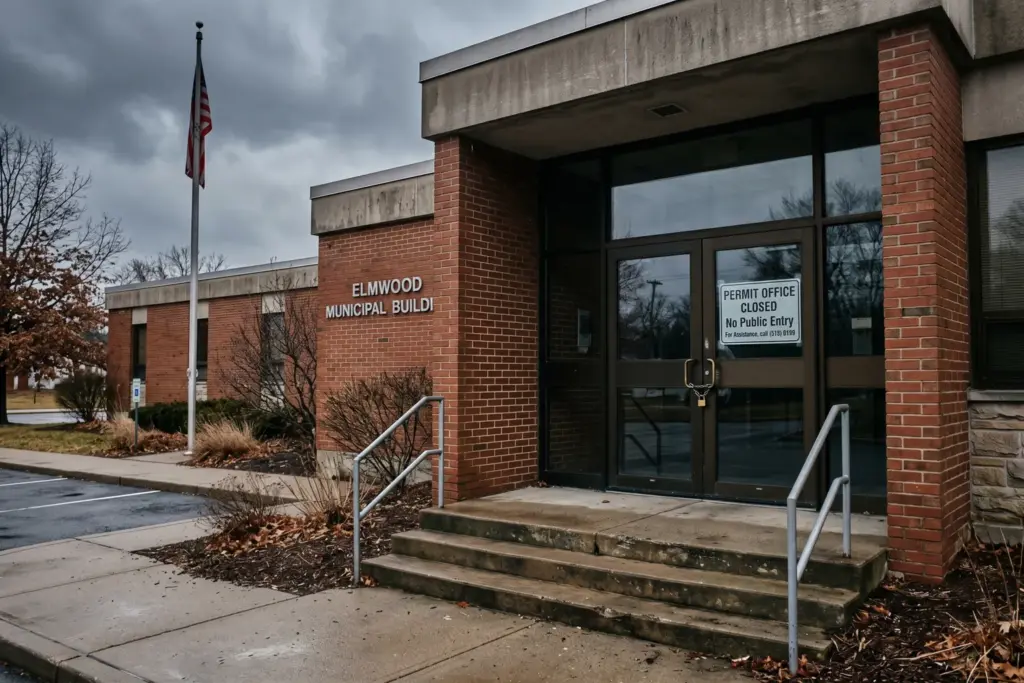
Key Takeaways
- At least 8 U.S. STR markets have active permit freezes, hard caps, or closed waitlists blocking new applications as of June 2026.
- Richardson, TX enacted a 90-day freeze on new STR registrations effective May 27, 2026. Birmingham, MI and Hazel Park, MI followed with 6-month moratoriums.
- Nashville has blocked new non-owner-occupied STR permits in residential zones since 2022. San Diego’s Mission Beach Tier 4 waitlist is closed with no new application window announced.
- Most STR permits in capped markets do not transfer at property sale. A grandfathered permit belongs to the seller, not the property.
- Before making any offer in an STR market, call the city directly and ask: are new applications currently accepted in this zone, and does the existing permit transfer at sale?
The paperwork was done. The inspection was finished. The DSCR loan had cleared. The investor had spent three months researching a two-bedroom in Nashville’s Germantown neighborhood before signing. She had pulled Airbnb comps, run the numbers multiple times, and confirmed the city had a permit system. What she had not confirmed was whether Davidson County was issuing new non-owner-occupied permits in that specific residential zone.
She found out six days after closing.
Metro Nashville had capped non-owner-occupied STR permits in most residential zones years earlier. The seller had operated under a grandfathered permit. That permit did not transfer at sale. Applications for a new non-owner-occupied permit in her zone were not being accepted. No waitlist. No alternative pathway. No projected timeline for the freeze to lift.
The property sat vacant for two months. She eventually pivoted to a long-term rental at significantly lower revenue. “Nobody told me to ask,” she wrote in a BiggerPockets forum thread that now has over 200 replies. “The permit portal made it look like you could apply. It just did not say the application would go nowhere.”
Her experience is no longer unusual. In 2026, a growing number of U.S. cities have closed the door to new STR investors without banning Airbnb outright. They have done it through permit caps, council-imposed freezes, and lottery systems that leave new applicants waiting indefinitely. The problem for buyers is that the application portal still exists. The permit appears available in principle. The reality is something else entirely.
The “Technically Available” Problem
Most cities that have frozen or capped STR permits have not removed the application form from their website. It is still there. The fee is still listed. The process looks functional. What is not listed is that applications submitted after the cap was reached are sitting in a waitlist with no timeline, or that the council voted two months ago to freeze new approvals while conducting a study, or that the residential zone your target property sits in has been closed to new non-owner-occupied permits for years.
Data from city permit databases reviewed for this article shows that the gap between “application accepted” and “permit issued” has widened sharply in capped markets. In Summit County, Colorado, a buyer who submits an application in Breckenridge Zone 3 today joins a waitlist of over 100 properties. County records show 47 licenses were voluntarily relinquished between July 2025 and early 2026. That is the rate at which new permits become available. At that pace, a property at position 107 on the waitlist is looking at years, not months.
The same pattern shows up in San Diego, New Orleans, Nashville, and now in markets in Texas and Michigan. Cities are using the freeze mechanism as political middle ground while they construct permanent restrictions. “Temporary” is doing a lot of work in those council votes.
Three Types of Permit Restrictions Buyers Miss
Not all restrictions work the same way. Understanding the mechanism matters because it shapes what options you have.
Hard caps. The city or county sets a fixed limit on the total number of permits, either citywide or by zone. Once that number is reached, no new permits are issued until existing ones are surrendered or revoked. San Diego’s Mission Beach Tier 4, Summit County’s capped zones, and South Lake Tahoe all use this model. Hard caps do not expire automatically. There is no built-in review date that reopens the market.
Council-imposed freezes. The city council votes to stop accepting or approving new applications while conducting a study. These are framed as temporary. They frequently are not. The 90-day freeze in Richardson, TX could be extended to 180 days. Birmingham, MI’s six-month moratorium has no guarantee it ends on schedule. Cities consistently use the study period to build a case for permanent restrictions rather than to prepare a path back to open applications.
Lottery and waitlist systems. New Orleans limits STR permits in residential areas to one per square block, allocated by lottery during quarterly application windows. Miss the window and you wait three months. If your block already has a permit holder renewing, you may be ineligible outright. This is not technically a freeze, but the practical effect for a new buyer is the same: no permit on any predictable timeline.
8 Markets Where New Permits Are Frozen or Blocked in 2026
Here is what buyers are encountering on the ground right now in markets where new STR permit applications are capped, frozen, or functionally unavailable.
Richardson, TX (DFW)
On April 27, 2026, the Richardson City Council voted unanimously to halt new STR registrations for residentially zoned properties. The freeze runs from May 27 through at least August 25, 2026. The city is conducting a neighborhood impact study examining clustering, parking, and safety concerns, and explicitly reserved the right to extend the moratorium. Existing permit holders may continue to operate. New applications submitted during the freeze will not be processed. Richardson sits inside one of the most active STR buyer corridors in Texas, and this freeze arrived with limited public notice. What buyers should do: contact Richardson Code Enforcement directly before making any offer on a residentially zoned property. Confirm current application status in writing.
Birmingham, MI
A shooting at a licensed Airbnb rental on April 11, 2026 triggered a five-to-one City Commission vote on April 28 to impose a 180-day moratorium on new STR permits. Approximately 100 existing licenses remain active and unaffected. The Planning Commission is reviewing zoning density limits, owner-occupancy requirements, and minimum stay rules during the pause. Permanent regulations are expected to be proposed before the moratorium expires in late October. Sources covering the commission’s work suggest the permanent rules are likely to be more restrictive, not less, than the pre-moratorium framework. What buyers should do: treat Birmingham as closed to new STR investors through at least late October 2026, and monitor the Planning Commission meeting schedule for draft regulations before bidding.
Hazel Park, MI
On May 31, 2026, Hazel Park enacted an immediate six-month moratorium on new STR licenses following a fatal shooting at an STR property on May 29. The vote was unanimous. The back-to-back moratoriums in both Birmingham and Hazel Park, both in Oakland County, reflect a regional response rather than isolated incidents. What buyers should do: do not underwrite STR income for any Hazel Park property for at least six months. Assume permanent restrictions are under development.
Nashville, TN
Metro Nashville’s non-owner-occupied permit freeze in residential zones has been in place since 2022 and shows no signs of reversing. Data from Nashville’s Metro Codes Department confirms that new non-owner-occupied STR permits are not issued in AR2A, R, RS, or RM zoning districts. Those are the residential zones that contain most of the properties buyers are targeting. New non-owner-occupied permits are available only in specific commercial and mixed-use corridors. Nashville currently has approximately 4,800 active non-owner-occupied STR units citywide. That number is capped and not growing. What buyers should do: before any Nashville offer, pull the Metro zoning map for the property address. If the zone is residential, assume no new non-owner-occupied permit is available. If the zone is mixed-use, confirm permit availability with Metro Codes before your offer goes in.
San Diego, CA (Mission Beach, Tier 4)
San Diego’s short-term rental ordinance divides the market into permit tiers. Tier 4 covers whole-home rentals in Mission Beach, one of the highest-demand coastal zones in the city. The Tier 4 waitlist is closed as of 2026, with the cap fully reached. Data from the city’s STRO portal shows 55 applicants currently in the queue ahead of any new submission, with no new application window scheduled. The city will reopen applications only after the existing waitlist is exhausted, meaning permits become available only when current holders do not renew or are revoked for violations. No timeline for that has been announced. What buyers should do: verify any property’s permit tier with the San Diego Treasurer’s office before making an offer in a coastal neighborhood. If a seller claims an existing Tier 4 license, request documentation and confirm transferability with the city directly.
South Lake Tahoe, CA
The City of South Lake Tahoe adopted a 900-permit hard cap for vacation home rentals in residential zones, effective April 23, 2026. At the March 2026 City Council meeting, 382 residential permits had been issued. That left approximately 518 permits before the waitlist mechanism triggers. Applications are first-come, first-served, but the runway is finite and the city has signaled no intention to raise the cap once it is reached. What buyers should do: check current permit issuance numbers with the city’s VHR office before making an offer in a residential zone. The market is not yet fully capped as of June 2026, but the direction is clear. Buyers who delay could find themselves joining a waitlist with no announced timeline.
New Orleans, LA
Non-commercial STR permits in New Orleans residential zones are limited to one per square block, allocated by lottery during quarterly windows (June 1 through 7, September 1 through 7, and December 1 through 7, with renewals in April). Miss a window and you wait three months. If your block’s permit slot is already occupied by a renewing holder, you may be ineligible entirely. Documents from the city’s STR Administration show the lottery system resumed in February 2024 after federal litigation halted it. The practical effect for buyers is that permit availability is unpredictable, geographically constrained, and dependent on timing that has nothing to do with your closing date. What buyers should do: contact NOLA’s Short Term Rental Administration and request the current permit status for the specific square block of any property before making an offer in a residential zone.
Summit County, CO (Breckenridge Zones 2-3, Frisco)
Summit County uses a zone-based cap system with some of the longest active waitlists in the country. Breckenridge Zones 2 and 3 are fully capped. Frisco and all four Summit County Neighborhood Overlay Zone basins are capped and waitlisted. Data from the county’s STR waitlist portal shows 107 properties on the Upper Blue Basin waitlist as of early 2026. County records show 47 licenses were relinquished between July 2025 and early 2026. That eight-month relinquishment rate reflects how slowly new permits open up. Resort Overlay Zone properties at Copper Mountain and Keystone are not subject to the same caps, which is worth knowing for buyers with location flexibility within the county. What buyers should do: run the specific property address through the Summit County STR portal to confirm its zone classification and current waitlist position before making any offer.
Sponsored — OfferMarket
Buy Your First STR With Long-Term Rental Financing
Flexible, long-term financing for short-term rental buyers. Rates from 5.75%. Instant online quote, no credit pull.
Explore RTL Financing Options →Affiliate disclosure: StaySTRA may earn a referral fee.
How to Confirm Permit Availability Before You Make an Offer
Real estate agents are not required to verify STR permit availability. Inspectors do not check it. The purchase contract does not ask for it. This step falls entirely on the buyer, which is why so many buyers skip it.
Step one: identify the governing authority. In cities like Richardson or Nashville, permits are issued by the city. In Summit County, the county and incorporated towns operate separate systems. Confirm which entity issues STR permits for the property’s specific address before you start asking questions.
Step two: find the permit portal and read it carefully. Most cities have a searchable online system. Look for language about current availability, waitlists, or paused applications. If the portal is silent on current status, that is a reason to call, not a reason to assume it is fine.
Step three: call the code enforcement or STR department directly. Ask two specific questions: is the city currently accepting new STR permit applications for this property’s zone? Does any existing permit on this property transfer to a new owner at sale? Get the full name of the person you spoke with and their direct contact information.
Step four: get the answer in writing. An email from a city official is not a legally binding guarantee, but it creates a record. If the answer changes between your offer date and your closing, you have documentation to fall back on.
Step five: use a permit contingency. Work with a real estate attorney to add a short-term rental permit contingency to your purchase agreement. The legal checklist Jed Collins published for STR buyers before closing covers how to structure this and what specific language to request. Permit transferability is near the top of that list.
Running the StaySTRA Analyzer on any target market before you bid is also part of this process. The Analyzer surfaces market-level revenue data alongside known regulatory constraints, giving you a starting point for identifying which markets need deeper permit verification before an offer goes in.
What Grandfathered Permits Actually Mean for Buyers
Sellers in capped markets frequently list properties with language like “active STR permit included” or “fully operational vacation rental.” The assumption most buyers carry into those negotiations is that the permit transfers with the deed. In most capped markets, it does not.
Here is how it typically works. The seller held a permit issued when applications were still open. When the market capped, they continued operating under their existing permit, renewing annually. The permit is tied to the owner of record, not to the property. When you buy the property, you become the new owner of record. In most capped markets, that means you need to apply for a new permit in your name.
If the market is capped, you cannot get one.
Nashville’s Metro Codes Department is explicit: non-owner-occupied permits in residential zones do not transfer at sale. San Diego’s STRO ordinance is similarly structured. Summit County ties STR licenses to specific property owners. Sources at multiple city permit offices confirmed the same pattern independently: the permit follows the person, not the parcel.
There is one scenario where grandfathered permits matter in your favor. In some markets, properties with active permits are classified differently from unpermitted properties. Buyers who confirm a permit is transferable in writing, and structure the sale to ensure that transfer occurs correctly, can acquire operating capacity that is genuinely unavailable to anyone entering the market fresh. That is worth real money in a capped market, but only if the transfer is documented and confirmed before closing.
For buyers using DSCR financing, the permit situation is worth a separate conversation with your lender. DSCR loans are underwritten based on projected short-term rental income. If a permit is unavailable, that income projection has no operational foundation. StaySTRA’s DSCR financing guide for STR investors covers what lenders actually require and how permit status affects your application. Before you apply for a DSCR loan on a property in a capped market, confirm that the permit situation supports the income projections your lender is relying on.
The stronger move for buyers targeting markets with regulatory pressure is to look at properties in zones that are still open to new applications, or to work backward from permit availability rather than starting with the property. The StaySTRA Best Airbnb Markets guide for 2026 identifies which markets combine strong revenue fundamentals with accessible permit systems. That combination, not just projected nightly rates, is the profile worth targeting right now.
Frequently Asked Questions
How do I find out if a market has an STR permit cap or freeze?
Call the city’s code enforcement or short-term rental department directly and ask whether new applications are currently being accepted for the property’s specific zone. Most cities have an online permit portal, but portals often do not reflect frozen or capped status accurately. A direct call followed by a written email confirmation is the most reliable method. You can also check recent city council meeting minutes for freeze or moratorium votes, which are public record.
Can I buy a property with a grandfathered STR permit and keep operating?
In most capped markets, a grandfathered permit does not transfer to the new owner automatically. The permit is tied to the seller’s ownership record, not to the property. When the property sells, the new buyer typically must apply for a permit in their own name. In a capped market, new permits are unavailable. Always confirm transferability in writing with the issuing authority before closing.
What happens if I buy in a capped market without checking permit availability?
You own a property you cannot legally operate as a short-term rental. Your options include converting to a long-term rental at lower revenue, sitting on a waitlist with no guaranteed timeline, or selling. If you financed with a DSCR loan using projected STR income as the underwriting basis, you may face additional complications. This situation is recoverable but expensive, and it is entirely avoidable with a phone call before your offer is submitted.
Are STR permit freezes ever truly temporary?
Sometimes, but frequently not in practice. Council-imposed freezes are framed as temporary study periods, but cities consistently use that time to build support for permanent restrictions rather than to prepare a path back to open applications. Richardson, TX’s 90-day freeze could be extended. Birmingham, MI’s moratorium is expected to produce permanent rules before it expires. Buyers should not assume a frozen market will reopen on the announced schedule.
Which U.S. markets still have open STR permit systems in 2026?
Many markets remain open to new STR permits, including most of Florida, most of Arizona outside specific local ordinances, large portions of Texas outside municipalities with local restrictions, and states with active preemption laws like Indiana and Idaho. The StaySTRA Analyzer flags market-level regulatory status alongside revenue data, helping investors identify markets where both the numbers and the permit access support a strong investment case.
We do our best to keep our reporting accurate and up to date, but situations evolve and we are only human. Always verify current details directly with local officials and sources before making decisions.
Sponsored — OfferMarket
Buy Your First STR With Long-Term Rental Financing
Flexible, long-term financing for short-term rental buyers. Rates from 5.75%. Instant online quote, no credit pull.
Explore RTL Financing Options →Affiliate disclosure: StaySTRA may earn a referral fee.
Become a StaySTRA Insider
Join free — get our newsletter + 1 free property analysis/month.
No spam. Unsubscribe anytime. Free membership includes property analyses and market insights.