

Key Takeaways
- NYC found 27% of its approved short-term rental listings are operating illegally, and enforcement agencies across all 11 host cities are scaling up inspections before the June 11 kickoff.
- Airbnb has promised 13,000+ support agents, AirCover with up to $3 million in damage protection, and a party ban backed by reservation screening. But Airbnb is the named insured on the liability portion of AirCover, not the host, and the policy excludes assault, battery, and personal liability.
- Miami Beach fines start at $20,000 for a first offense. New Jersey towns near MetLife Stadium carry fines up to $2,000 and jail time up to 30 days. Kansas City, by contrast, created a $50 temporary event permit specifically for World Cup hosts.
- Hotels across host cities are reporting bookings below projections, with 80% of surveyed properties tracking under initial forecasts. That gap is pushing unprecedented demand toward STR hosts who may not be prepared for the enforcement scrutiny that follows.
- Hosts still deciding whether to accept World Cup bookings need to verify three things right now: that their permit is current and matches what they are listing, that they carry named commercial STR insurance (not just platform coverage), and that their local enforcement timeline does not include a mid-tournament crackdown window.
New York City’s Office of Special Enforcement ran audits on its approved short-term rental hosts and found that 27% of them were already operating illegally. Not unlicensed operators. Approved hosts who passed the registration process under Local Law 18 and then quietly converted their listings to offer entire homes, exceed guest limits, or both. The city has sent 605 warning letters to registered hosts over the past 11 months. The audit results were published in April 2026. The World Cup starts in 28 days.
This is the enforcement environment waiting for STR hosts across all 11 U.S. host cities. Not hypothetical. Not a threat from a city council hearing six months away. Active, funded, and happening now.
We have already covered what the regulations look like city by city and how adjacent markets are tightening their own rules in response. This piece is different. This is about what will actually happen when millions of fans arrive, what the platforms have promised, and where the gap between promise and reality will leave hosts exposed.
What the Platforms Promised
Airbnb has been the most vocal. The company’s public safety announcement for the tournament includes several specific commitments that hosts should understand precisely.
Airbnb says it will deploy “more than 13,000 specially trained agents” available around the clock throughout the tournament, by phone, in-app, and through the Help Center. That is a meaningful staffing commitment. For context, Airbnb’s total support workforce was estimated at roughly 11,000 in late 2025. Adding 2,000+ tournament-specific agents suggests the company expects a significant increase in incident volume.
Airbnb says AirCover for hosts provides “up to $3 million in damage protection” and “$1 million in host liability insurance.” Those numbers are accurate. Documents show that Airbnb is the named insured on the liability portion, not the individual host. Payout decisions rest with Airbnb. The policy excludes assault and battery. It excludes personal liability. It excludes intentional damage. Those are exactly the categories that become more relevant when large groups of international fans are gathering in residential properties.
Airbnb says its “ban on disruptive parties remains firmly in effect” during the tournament, “supported by reservation screening technology that blocks potentially higher-risk bookings before they can be made.” The party ban is real. But the screening technology operates on pattern matching (local bookings, young bookers, last-minute reservations near event dates) and does not catch guests who book through a clean profile and then invite others after check-in. Hosts in World Cup cities should not treat this as a guarantee.
Airbnb says its “dedicated Law Enforcement team has proactively connected with hundreds of law enforcement agencies across the U.S., Mexico, and Canada.” This is a coordination commitment, not an enforcement commitment. It means local police know how to reach Airbnb. It does not mean Airbnb will proactively remove listings that violate local law, or that hosts will receive advance warning before a city enforcement action.
Vrbo and Booking.com have made no comparable public statements about World Cup-specific enforcement compliance. Vrbo’s standard host protection covers up to $1 million in damage but has its own exclusions. Booking.com operates primarily as a booking channel with limited host-side protections. Neither platform has announced additional support agents, event-specific screening tools, or law enforcement partnerships for the tournament.
The silence from Vrbo and Booking.com matters because World Cup travelers skew heavily international, and both platforms pull significant international traffic. If you are listing across multiple platforms, your enforcement exposure multiplies, but your platform protections do not.
Sponsored — Beeline
Finance Your Next STR With a DSCR Loan
Qualify on property cash flow, not W-2 income. Beeline specializes in fast DSCR closings for STR investors. No personal income verification required.
Check Your DSCR Eligibility →Affiliate disclosure: StaySTRA may earn a referral fee.
What History Actually Shows
Platform promises during major events have a pattern. The commitments sound comprehensive. The execution falls short.
During Coachella 2026, Airbnb’s cancellation penalties proved inadequate. Hosts discovered they could cancel confirmed bookings, absorb a 25% penalty, and rebook the same property at double or triple the original rate. The net gain was $1,717 or more on a typical Indio property, even after the penalty. Cross-platform relisting made the arbitrage worse: cancel on Airbnb, rebook on Vrbo or a direct booking site, and the penalty disappeared entirely. Airbnb stated it saw “no notable uptick in cancellations.” The data told a different story.
In Qatar for the 2022 World Cup, short-term rental accommodation became a crisis. Some Airbnb listings on Doha’s artificial Pearl island were listed at over $1,000 per night, with luxury apartments reaching $200,000 for the month. Landlords evicted long-term tenants to list properties at quadrupled rates. There was no effective enforcement mechanism. In South Africa for the 2010 World Cup, 20,000 residents were displaced from settlements to make room for visitor accommodation. The tax authority warned property owners about higher tax brackets from rental income, but the warnings came after the damage was done.
New Orleans provides the most instructive recent precedent. For Super Bowl LIX in February 2025, the city deliberately delayed enforcing its own STR rules. The result: Super Bowl weekend ADR for STRs surged above $1,200 (a 378% increase over the prior week, per Rental Scale-Up data), and the city’s platform verification requirement did not take effect until March, after the event. The enforcement came later. But it came.
Data indicates a consistent pattern: cities loosen or delay enforcement before events to capture economic activity, then tighten afterward to address the political fallout. Hosts who assume the tournament window is a free pass are betting on a pattern that historically reverses.
The 11 Host Cities, Ranked by Enforcement Risk
This is not a regulatory roundup. It is a practical risk assessment for hosts who are making booking decisions right now. Three tiers: high enforcement risk, moderate enforcement risk, and permissive. “Permissive” does not mean “safe.” It means the city is less likely to act during the tournament itself.
Tier 1: High Enforcement Risk
New York/New Jersey. The most hostile enforcement environment of any host city. NYC’s Local Law 18 requires hosts to be physically present during every guest stay, caps guests at two, and effectively bans entire-home rentals under 30 days. The Office of Special Enforcement just documented a 27% illegal conversion rate among approved hosts. Fines reach $7,500 for repeat violations. Around MetLife Stadium in New Jersey, the picture is worse for hosts considering unlicensed listings. Kearny levies fines up to $750 with jail time up to 10 days for a first offense, escalating to $2,000 and 30 days for subsequent violations. Fort Lee fines $1,250 for any rental under 30 days. Lodi starts at $2,000. Seventy-five New Jersey towns ban short-term rentals entirely, including East Rutherford, where MetLife Stadium sits. If your listing is in the NYC/NJ area and you are not fully registered with both the city and state, do not accept World Cup bookings.
Miami. Miami Beach operates the most punitive fine structure of any host city. First offense: $20,000. Second: $40,000. The scale climbs to $100,000 for habitual offenders. The city employs a dedicated team of code compliance officers who actively monitor listing platforms and investigate neighbor complaints. Permit revocation is difficult to reverse, and the city restricts non-owner-occupied STRs to specific zoning districts (T5 and T6 in the City of Miami). Florida’s state preemption framework prevents cities from outright banning STRs but does not prevent aggressive enforcement of existing rules. If you are operating legally in the correct zone with the correct permits, Miami’s high demand (hotel bookings here are actually outperforming projections) makes it a strong revenue opportunity. If anything is out of order, the risk is five figures on a first offense.
Boston. Boston requires city registration, $1 million in liability insurance, and a nine-month primary residence requirement. Renters cannot list. The city rejected Airbnb’s lobbying push for a “special event exemption” that would have temporarily relaxed owner-occupancy rules for the tournament. Boston is not bending. Despite that, the city’s fill rate for opening weekend is already at 63%, the highest of any U.S. host city, which means demand is real. But so is the enforcement.
San Francisco. The Office of Short-Term Rentals enforces a primary residence requirement of 275 days per year, a 90-day annual cap for unhosted rentals, and a $250 registration fee. Fines run up to $1,000 per day, per violation. Only about 1,800 to 2,200 hosts are registered citywide. If you are one of them and you are compliant, the enforcement risk is manageable. If you are not registered, the per-day fine structure means a single tournament weekend could generate thousands in penalties.
Sponsored — Beeline
Finance Your Next STR With a DSCR Loan
Qualify on property cash flow, not W-2 income. Beeline specializes in fast DSCR closings for STR investors. No personal income verification required.
Check Your DSCR Eligibility →Affiliate disclosure: StaySTRA may earn a referral fee.
Tier 2: Moderate Enforcement Risk
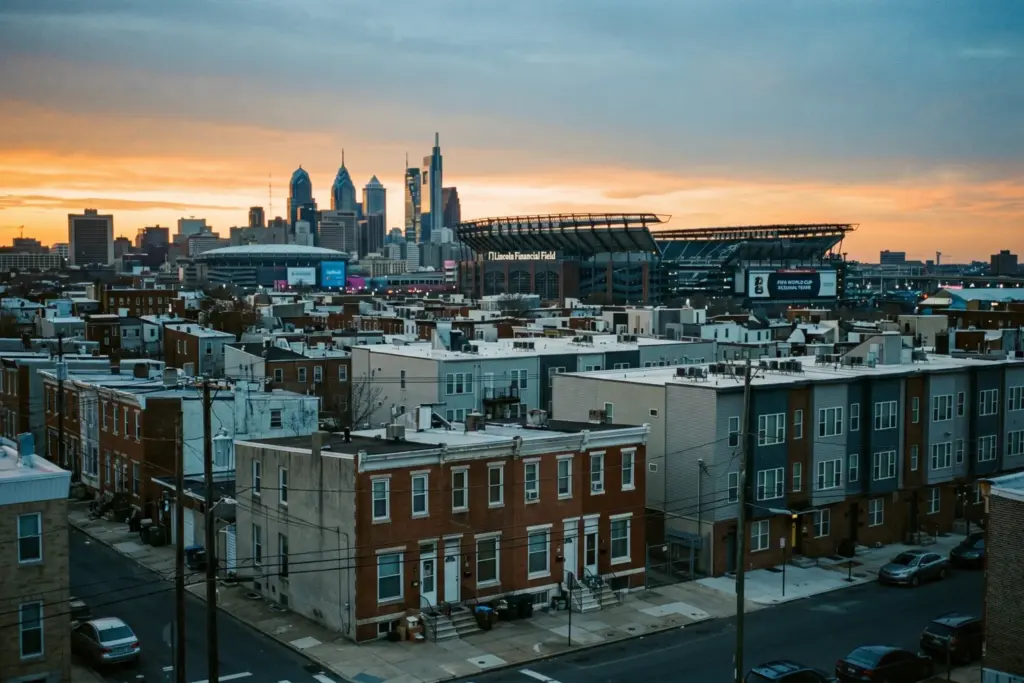
Philadelphia. Philadelphia requires a Limited Lodging License for primary residence STRs and a Commercial Activity License plus zoning permit for non-primary residences. Fines reach $300 per day without a license. Combined state and local hotel taxes total 15.5%. The city has only 426 active STR licenses, down from 650 in 2024, which means supply is constrained and the city is tracking who is registered. Philadelphia is expecting 149,000 visitors for its six matches. The math favors compliant hosts. The enforcement risk sits in the middle because the city has the tools but has not historically been aggressive.
Los Angeles. On paper, LA’s Home-Sharing Ordinance restricts STRs to primary residences with a 120-day annual cap. Fines reach $2,000 per day for hosts and up to $1,000 per day for platforms listing unregistered properties. Sources reveal the city’s Housing Department estimated 7,500 properties were illegally operating as STRs in 2024. That gap between law and enforcement is the story. Mayor Bass has proposed studying a temporary program to allow second-home STRs through the 2028 Olympics, but no action has been taken for the World Cup specifically. SoFi Stadium will host five group-stage matches and a quarterfinal. LA’s enforcement is moderate because the city has the ordinance but lacks the enforcement infrastructure to act at scale during the tournament window.
Seattle. Seattle requires two licenses (business license and STR regulatory license at $75 per unit), limits hosts to two units (one must be the primary residence), and mandates $1 million in state-required liability insurance. First violation: $500 per day. The regulatory framework is clear and the insurance requirement is real, but the city has not announced World Cup-specific enforcement measures. Moderate risk because the rules are strict and the penalties are meaningful, but enforcement historically tracks complaints rather than proactive sweeps.
Tier 3: Permissive (Lower Tournament-Period Risk)
Kansas City. Kansas City is the most host-friendly environment of any World Cup market. The city passed Ordinance 250965 creating a special event short-term rental registration with a reduced $50 fee and a limited window from May 1 through July 31. Officials actively reached out to local alliances requesting help recruiting new hosts. Parkville, a nearby suburb, voted to lift its STR restrictions between May and July 2026. Jackson County legislators proposed an emergency pause on property tax reclassifications that had tripled tax levies for some operators. Violation fines range from $200 to $1,000 per day, but the city is signaling it wants more hosts, not fewer. The city expects 650,000 visitors with only 65,000 hotel rooms. Kansas City needs STR hosts.
Dallas. Dallas exists in regulatory limbo. The city’s 2023 ordinance that would effectively ban most STRs in single-family neighborhoods has been blocked by courts twice. A Texas appeals court upheld the injunction in July 2025. Dallas petitioned the Texas Supreme Court in October 2025, but the court has not ruled. As of May 2026, STRs can still operate in Dallas subject to existing registration requirements ($404 fee including mandatory inspection). The ban is unenforceable. The enforcement risk during the tournament is low because the city legally cannot enforce its most restrictive ordinance. Registration requirements still apply.
Houston. Houston’s STR ordinance took effect January 1, 2026, with enforcement beginning April 1. But here is the critical detail for hosts: platform delisting of unregistered listings does not start until January 1, 2027. The city has reached 83% compliance, which is strong for a new ordinance. Annual registration costs $275. Three citations in two years can trigger revocation. Houston is enforcing, but the delayed platform-delisting timeline means unregistered hosts are less likely to be caught during the tournament than after it. That does not make it safe. It makes the risk deferred.
Atlanta. Atlanta requires a Short-Term Rental License at $150 per year, limits hosts to two licenses (one must be primary residence), and caps occupancy at two adults per bedroom. Violation fines reach $500, and getting caught without a license triggers a mandatory one-year waiting period before the city will accept a new application. However, enforcement of the city’s 2022 ordinance has been suspended amid lawsuits. Metro Atlanta counties (Cobb, DeKalb, Gwinnett) have approved their own ordinances with occupancy limits and annual inspections. Atlanta has hotel bookings running in line with or ahead of projections, with about half of surveyed properties reporting stronger numbers than expected. The enforcement risk is low during the tournament because the city’s own rules are in legal limbo.
Sponsored — Beeline
Finance Your Next STR With a DSCR Loan
Qualify on property cash flow, not W-2 income. Beeline specializes in fast DSCR closings for STR investors. No personal income verification required.
Check Your DSCR Eligibility →Affiliate disclosure: StaySTRA may earn a referral fee.
What to Do If Enforcement Action Hits During a Guest Stay
It happens. An inspector knocks. A citation arrives. A listing gets flagged. Here is what to do, and what not to do.
Do not cancel your guest’s reservation to avoid a fine. If an enforcement action targets your listing, the guest has a confirmed booking. Canceling creates a separate set of problems: platform penalties (Airbnb’s minimum cancellation fee is $50, and repeat cancellations can result in listing removal), a refund obligation, a potential guest complaint, and loss of Superhost status. In most cities, the enforcement action targets the host, not the guest. Your guest can stay. Your obligation is to resolve the violation.
Document everything immediately. Photograph the citation or notice. Record the inspector’s name, badge number, and the specific code section cited. Note the date, time, and what was said. This documentation matters if you appeal.
Contact a local STR attorney before responding to the city. Many violations carry escalating penalty structures. A $300 per-day fine in Philadelphia becomes $2,100 in a week. A $500 per-day fine in Seattle becomes $3,500. Responding incorrectly or admitting fault can lock you into the penalty. An attorney familiar with your city’s STR ordinance can often negotiate the first violation down or identify procedural errors in the citation.
Notify your insurance carrier within 24 hours. Even if the enforcement action does not involve property damage or injury, notify your STR insurance provider. Some policies have compliance clauses that require prompt notification of any regulatory action. Failure to notify can void coverage for related claims.
Do not assume the platform will help. Airbnb’s 13,000 support agents are there for booking issues, guest emergencies, and safety incidents. They are not there to represent you in a code enforcement dispute with your city. Platform support will not negotiate your fine, attend your hearing, or advocate on your behalf with local officials. That is your responsibility.
Host Liability for Guest Incidents
The question hosts are not asking but should be: if your World Cup guest injures someone, damages a neighbor’s property, or causes an incident that draws police, are you liable?
The short answer is yes, potentially.
Airbnb’s AirCover liability coverage operates as a backstop, not a shield. The $1 million liability component covers certain third-party claims, but Airbnb is the named insured, not the host. That distinction matters in court. The policy explicitly excludes assault and battery, personal and advertising injury, and intentional damage. During a month when millions of international soccer fans are concentrated in residential neighborhoods, those exclusions matter.
Standard homeowners insurance typically does not cover short-term rental activity. Operating an STR without proper commercial coverage can void your entire homeowners policy, even for claims unrelated to the rental. If a guest’s friend slips on your stairs during a World Cup watch party and your homeowners policy discovers you have been operating as an STR, the claim denial applies to everything, not just the STR-related incident.
Proper Insurance, Steadily, and Safely all offer commercial STR policies that name the host as the insured. If you are accepting World Cup bookings and you do not carry a named commercial STR policy, you are operating with a gap that platform coverage does not fill.
The practical test: if a guest causes a noise complaint that results in a police response, and the police discover your property is an unregistered STR, you face both the noise violation and the registration violation. In Miami Beach, that combination could exceed $20,000. In New York, it triggers an investigation by the Office of Special Enforcement. In Seattle, the $500 per-day penalty starts running. The guest leaves. You stay.
Revenue vs. Risk: Should You Still Be Accepting World Cup Bookings?
The demand is real. Hotels across host cities are underperforming, with 80% of surveyed properties reporting bookings below initial forecasts, according to the American Hotel and Lodging Association. FIFA cancelled thousands of hotel room reservations in March 2026 across all 16 host cities. International visa complications and geopolitical tensions have suppressed traditional hotel bookings. That unmet demand is flowing directly into the STR market.
Short-term rental bookings are surging. The strongest early booking spikes are concentrated in Boston, Kansas City, and Philadelphia. Dallas projected RevPAR (revenue per available room) at nearly 500 times the same period last year. Miami’s RevPAR was 70 times year-over-year at 196 days out.
For compliant hosts in permissive or moderate-risk cities, the revenue opportunity is significant. A DSCR-financed investment property in Kansas City, Dallas, Houston, or Atlanta could generate enough tournament revenue to cover several months of debt service. The economics are compelling if the compliance is in order.
For hosts in high-enforcement-risk cities, the calculus is different. A $20,000 fine in Miami Beach wipes out weeks of tournament revenue. A $7,500 penalty in New York eliminates the margin on a listing that was marginally compliant. A $1,000-per-day fine in San Francisco means a single weekend violation costs more than most hosts will earn from the entire tournament.
The decision framework is straightforward:
- Verify your permit is current and matches your listing. If your permit says “hosted stay, 2 guests” and your listing says “entire home, 6 guests,” you are the 27% that NYC just flagged.
- Confirm you carry named commercial STR insurance. AirCover is not insurance. It is platform coverage where Airbnb decides the payout.
- Check your city’s enforcement timeline. Houston’s platform delisting starts January 2027. Philadelphia’s licensing enforcement is active now. Know the difference.
- Price the risk into your rate. If your city’s first-offense fine is $500, your nightly rate needs to account for that possibility. If your city’s first-offense fine is $20,000, you either need to be fully compliant or you should not be listing.
The World Cup is a once-in-a-generation revenue event for STR hosts. It is also a once-in-a-generation enforcement event. The hosts who profit from it will be the ones who treated compliance as the prerequisite, not the afterthought.
Run your numbers through the StaySTRA Analyzer to see what the data shows for your specific market, and check your host city’s full regulatory breakdown before accepting any bookings.
Sponsored — Beeline
Finance Your Next STR With a DSCR Loan
Qualify on property cash flow, not W-2 income. Beeline specializes in fast DSCR closings for STR investors. No personal income verification required.
Check Your DSCR Eligibility →Affiliate disclosure: StaySTRA may earn a referral fee.
We do our best to keep our reporting accurate and up to date, but situations evolve and we are only human. Always verify current details directly with local officials and sources before making decisions.
Frequently Asked Questions
Can my city shut down my STR listing during a guest’s World Cup stay?
Yes, in most jurisdictions. Cities with active enforcement mechanisms can issue cease-and-desist orders, revoke permits, or direct platforms to delist properties. However, enforcement actions typically target the host, not the guest. A confirmed guest can usually complete their stay. The host faces the fine and any subsequent restrictions. In extreme cases (safety violations, fire code issues), a city can order the property vacated, but this is uncommon for licensing violations alone.
Does Airbnb’s AirCover protect me if my guest damages my property during the World Cup?
AirCover provides up to $3 million in damage protection and $1 million in liability coverage, but Airbnb is the named insured, not the host. Payout decisions are at Airbnb’s discretion. The policy excludes assault and battery, personal liability, and intentional damage. Hosts should carry their own named commercial STR insurance (from providers like Proper Insurance, Steadily, or Safely) in addition to any platform coverage.
Which World Cup host city is most permissive for STR hosts?
Kansas City has created the most explicitly host-friendly environment with its Ordinance 250965, which offers a $50 temporary event permit with a limited May 1 through July 31 window. Dallas is also permissive because its restrictive STR ordinance is blocked by courts and unenforceable. Houston has delayed platform delisting until January 2027, giving hosts a longer compliance runway.
What happens if I get fined for an STR violation during the World Cup?
Do not cancel your guest’s reservation. Document the citation, contact a local STR attorney before responding to the city, and notify your insurance carrier within 24 hours. Many violations carry escalating daily penalties. A $300 per-day fine becomes $2,100 in a week. An attorney familiar with your city’s ordinance can often negotiate first violations down or identify procedural errors in the citation.
Am I liable if my World Cup guest injures someone or damages a neighbor’s property?
Potentially, yes. Standard homeowners insurance typically excludes short-term rental activity. Operating an STR without proper commercial coverage can void your entire homeowners policy, even for unrelated claims. Platform protections like AirCover exclude assault, battery, and intentional damage. Hosts should carry named commercial STR insurance that covers third-party liability during guest stays.
Ready to Run the Numbers?
Use the StaySTRA Analyzer to evaluate revenue projections, enforcement risk factors, and investment fundamentals for any of the 11 FIFA World Cup host cities. Compare your local market data against the national benchmarks.
Become a StaySTRA Insider
Join free — get our newsletter + 1 free property analysis/month.
No spam. Unsubscribe anytime. Free membership includes property analyses and market insights.