Key Takeaways
- Only about 24% of Austin’s 9,289 active STR listings are currently licensed, meaning compliant operators face far less real competition than raw listing counts suggest.
- Austin’s July 1, 2026 platform enforcement deadline will require Airbnb and Vrbo to display license numbers and delist non-compliant properties within 10 days of city notice.
- Professional STR operators in regulated markets are treating compliance costs (licensing, insurance, local contacts, noise monitoring) as a business investment that eliminates amateur competition.
- The operators who stay and build in regulated cities share a common trait: they run their STRs like hospitality businesses, not passive income experiments.
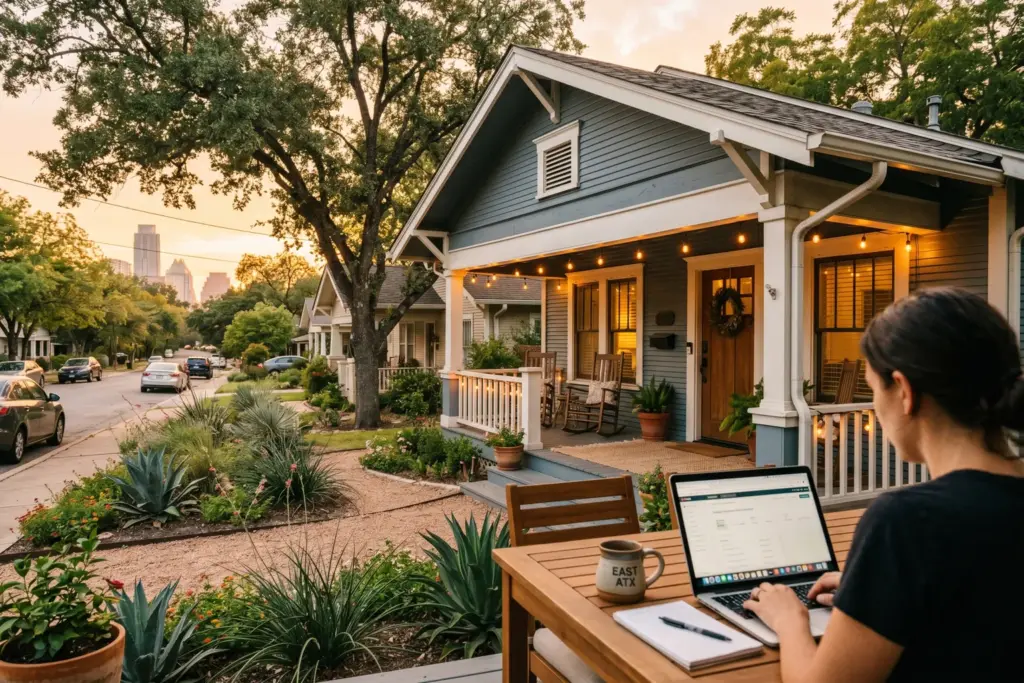
On a Tuesday morning in East Austin, the coffee is still too hot to drink and the inbox already has three messages. A noise complaint follow-up from a neighbor (resolved, a guest left a speaker on the patio past ten). A guest checking in tomorrow who wants early access. And a licensing renewal reminder from the City of Austin, the kind of email that makes casual hosts close their laptops and list their property for sale.
For the operators I spoke with, that email is just Tuesday.
The story most people hear about short-term rentals in regulated cities is the exit story. The host who gave up when permit fees hit. The investor who sold after zoning rules changed. Those stories are real. But they are not the only stories.
There is another group. Quieter, more methodical. They stayed. They got licensed. They built systems. And in markets where casual competition has either left or is about to be forced out, they are running some of the most profitable STR operations in the country. This is what their lives actually look like.
Sponsored — Beeline
Finance Your Next STR With a DSCR Loan
Qualify on property cash flow, not W-2 income. Beeline specializes in fast DSCR closings for STR investors. No personal income verification required.
Check Your DSCR Eligibility →Affiliate disclosure: StaySTRA may earn a referral fee.
The Numbers That Changed the Math
Before we meet the operators, the data matters. StaySTRA data shows Austin has 9,289 active STR listings as of early 2026, with an average daily rate of $284 and a 12-month trailing average of $2,794 in monthly revenue per listing at 57.7% occupancy.
Those numbers look modest until you add one critical filter: only about 2,200 of those listings are actually licensed with the City of Austin. That means roughly 75% of the market is operating without a valid permit. Starting July 1, 2026, platforms like Airbnb and Vrbo will be required to display license numbers on every Austin listing and remove non-compliant properties within 10 days of city notice. Fines run $500 to $2,000 per day.
For the licensed operators, the math just changed. They are not competing against 9,289 listings. They are competing against 2,200. “Cuando todos juegan con las mismas reglas, ganan los que ya saben jugar,” one Austin host told me. When everyone plays by the same rules, the ones who already know the game win.
Running Three Licensed Properties in Austin
Let’s call him Blake. (He asked me not to use his real name, worried about drawing attention from competitors.) He runs three Type 2 (non-owner-occupied) STR properties in Austin, all east of I-35, since 2021. He renewed all three licenses in early 2026 at $385.30 each, a total compliance cost of about $1,156 across his portfolio.
His properties are spaced to comply with Austin’s 1,000-foot separation rule for Type 2 licenses. “I literally walked the distance with my phone’s GPS before I made an offer on the second house,” he said. “People think the regulations are designed to stop you. They are designed to stop people who do not plan.”
His three-property portfolio generated $147,000 in gross revenue last year. After expenses (cleaning, software, insurance, maintenance, the 17% combined tax rate), he netted roughly $68,000. That is not generational wealth. But it is a reliable second income he built while keeping his day job in construction management.
The daily rhythm is more structured than most people imagine. Hospitable handles automated messaging, PriceLabs adjusts nightly rates based on Austin’s event calendar (SXSW in March, ACL in October, Formula 1 in November), and his cleaning crew runs on a shared calendar with 90-minute turnover windows. Each property has a designated local contact who can respond within Austin’s mandatory two-hour window.
“La rutina es lo que te salva,” he said. The routine is what saves you.
What Compliance Actually Costs (and What It Buys You)
The conversation about regulated markets usually starts and ends with cost. But the operators who have built sustainable portfolios think about compliance differently. For them, every dollar spent on licensing, insurance, and noise monitoring is a dollar that raises the barrier for the next person trying to enter the market.
Here is what the real cost structure looks like for a single Austin STR property in 2026: a new license application at $836.30 (covers two years), renewal at $385.30, the 17% combined tax rate (11% city, 6% state), noise monitoring at $150 to $300 per year, and liability insurance at $800 to $1,500 per year. Insurance is not legally required since October 2025, but every serious operator carries it.
All in, the fixed compliance cost for a single property runs roughly $1,400 to $2,600 per year. On a property generating the Austin median of $23,604 annually ($1,967/month), that is 6% to 11% of gross revenue. On a top-quartile property earning $44,340 ($3,695/month), it drops to 3% to 6%.
The operators I talked with did not describe these costs as burdens. They described them as barriers that protect their revenue. “Every time the city adds a new requirement, three more hosts decide it is not worth it,” one told me. “And my occupancy goes up a little.”
Nashville’s Version of the Same Story
Austin is not the only regulated market where professional operators have found a sustainable model. StaySTRA data shows Nashville generating $5,023 per month per listing at 61.3% occupancy, with one major twist: the city stopped issuing new non-owner-occupied permits in residential zones in 2022. Existing permits are non-transferable. When a property sells, the permit disappears. Nashville operators call it “la lista cerrada,” the closed list. Every sale removes a license from the pool permanently.
Let’s call her Carmen. She runs two permitted non-owner-occupied STRs in the Germantown and East Nashville neighborhoods, both acquired before the 2022 freeze. Her combined annual revenue exceeds $120,000, driven by Nashville’s strong ADR of $301 and consistent weekend demand from the city’s music and entertainment tourism.
“People ask me if I want to sell,” she said. “Selling the house means killing the permit. Nunca. That permit is worth more than the equity appreciation.”
Nashville reports a 91% compliance rate among permitted operators, supported by just four enforcement staff using Granicus technology to match listings to permits. The system works because permits are irreplaceable assets.
Carmen’s daily operations mirror Blake’s in structure: a property management company handles guest communication, dynamic pricing tracks Nashville’s event calendar (CMA Fest, NFL games, holiday weekends), and she maintains a relationship with her Metro Council representative. In Nashville, staying informed about regulatory changes is not optional. “Saber lo que viene antes de que llegue,” she said. Knowing what is coming before it arrives.
The Mindset Shift That Separates Them
Walking through these conversations, I kept noticing a pattern. The operators who thrive in regulated markets do not talk about their STRs the way the 2019-era Airbnb host did. No one says “passive income.” No one says “side hustle.” The language is closer to what you would hear from a restaurant owner or a small hotel operator: occupancy targets, RevPAR benchmarks, guest experience scores, tax remittance schedules.
They think of their STRs as hospitality businesses that happen to involve real estate, not the other way around. That shift shows up in specific ways:
- They budget for compliance the way restaurants budget for health inspections. A cost of doing business, not a surprise expense.
- They track RevPAR, not just nightly rate. A $400 night means nothing if the property sits empty 70% of the month.
- They invest in guest experience. Professional photography, curated welcome guides, quality linens. The details that drive five-star reviews and repeat bookings.
- They build relationships with neighbors. Proactive communication, shared phone numbers. A neighbor complaint in a regulated city can trigger an inspection. A friendly neighbor is worth more than a new couch.
“The people who left were playing a different game,” Blake told me. “They wanted to buy a house and let Airbnb pay the mortgage. That works when there are no rules. When the rules show up, you either become a real operator or you sell.”
What July 1 Means for Everyone Still in the Game
Austin’s platform enforcement deadline on July 1, 2026 is the most significant regulatory event in the city’s STR history. For the first time, the compliance burden shifts from the city (limited enforcement staff) to the platforms (which can verify licenses instantly).
The operators I spoke with are not anxious about July 1. They are anticipating it. For the estimated 7,000 unlicensed Austin listings, July 1 is a reckoning. Some will scramble to get licensed. Others will convert to long-term rentals or sell. Many will simply disappear from the platforms.
“Mis vecinos que también tienen STR legales, todos estamos esperando julio,” Blake said. My neighbors who also have legal STRs, we are all waiting for July.
The same dynamic is playing out in regulated markets nationwide. When cities restrict or ban STRs, some investors exit. But operators who stay and comply are capturing a larger share of a smaller, more professionally managed market.
Can You Replicate This in Another Regulated Market?
It depends on the market and the operator. Austin and Nashville work because they have strong underlying tourism demand (live music, conferences, major sporting events) that sustains occupancy even with tighter supply. A regulated city without that demand floor is a different calculation.
The operators who succeed share three traits. They treat compliance as infrastructure, not friction. They use data to make decisions, modeling revenue projections with tools like StaySTRA’s Austin analyzer before committing to a property. And they think in years, not months. A $68,000 net income across three properties is not a get-rich-quick story. It is a portfolio that compounds as competition thins and RevPAR improves.
For investors evaluating whether to enter or stay in a regulated market, the question is not “are the regulations too strict?” The question is “am I willing to operate like a professional?” If you are considering financing for an STR in a competitive market, understanding the true cost of compliance is the first step toward building a realistic pro forma.
Sponsored — Beeline
Finance Your Next STR With a DSCR Loan
Qualify on property cash flow, not W-2 income. Beeline specializes in fast DSCR closings for STR investors. No personal income verification required.
Check Your DSCR Eligibility →Affiliate disclosure: StaySTRA may earn a referral fee.
We do our best to keep our content accurate and up to date, but things change and we are only human. Always verify details directly with local sources before making decisions.
Frequently Asked Questions
Is operating in a regulated STR market still profitable in 2026?
Yes, for operators who run their properties professionally. In Austin, top-quartile properties generate $3,695 or more per month, and compliance costs represent only 3% to 6% of gross revenue at that level. Regulation reduces competition: Austin’s July 1, 2026 enforcement could remove up to 75% of unlicensed listings, improving occupancy and pricing power for compliant operators.
What does STR compliance actually cost in a city like Austin?
The fixed annual cost for a single Austin STR property runs roughly $1,400 to $2,600, including licensing ($836.30 for a new two-year license or $385.30 for renewal), liability insurance ($800 to $1,500/year), and noise monitoring ($150 to $300/year). On top of that, Austin charges a 17% tax on STR income (11% city, 6% state). These costs are predictable and budget-friendly for operators who plan for them.
What markets have gotten easier to operate in for STR investors?
Markets where enforcement has matured and compliance rates are high favor established operators. Nashville’s 91% compliance rate creates a stable, predictable environment. Austin’s upcoming platform enforcement (July 1, 2026) will create similar conditions. Markets with strong tourism demand (live music, conferences, sporting events) combined with clear regulatory frameworks reward professional operators most.
What do I need to start an STR in a regulated city like Austin?
You need a valid STR license ($836.30 application, two-year term), a designated local contact who can respond within two hours, compliance with occupancy limits (10 adults or 6 unrelated adults), and a plan for the 17% tax obligation. For Type 2 (non-owner-occupied) properties, listings must be at least 1,000 feet apart. Starting July 1, 2026, your license number must be displayed on all platform listings.
Run the Numbers for Austin (or Any Market)
If you are thinking about whether a regulated market could work for your next STR investment, start with the data. StaySTRA’s Austin Analyzer shows real occupancy, ADR, and revenue projections based on actual market performance. Compare it with the Austin location page for the full picture.
Become a StaySTRA Insider
Join free — get our newsletter + 1 free property analysis/month.
No spam. Unsubscribe anytime. Free membership includes property analyses and market insights.