

Key Takeaways
- Colorado’s Court of Appeals ruled 3-0 on March 26, 2026 that Breckenridge’s $756-per-bedroom annual STR fee is a regulatory fee, not a tax, and does not require voter approval under TABOR.
- The ruling rejected the novel argument that existing tax revenue from STR guests (sales tax, lodging tax) should prevent a municipality from also imposing regulatory fees on the same activity.
- Fee revenue must stay out of the general fund and is earmarked for workforce housing, STR enforcement, and addressing secondary impacts like noise, parking, and trash.
- This is the first Colorado appellate decision directly addressing STR fee classification under TABOR, and it gives every Colorado municipality a legal roadmap for funding STR enforcement without a ballot measure.
- States with similar voter-approval frameworks for new taxes (California’s Prop 218, Arizona’s supermajority requirements, Oregon’s three-fifths rule) will be watching this fee-vs-tax distinction closely.
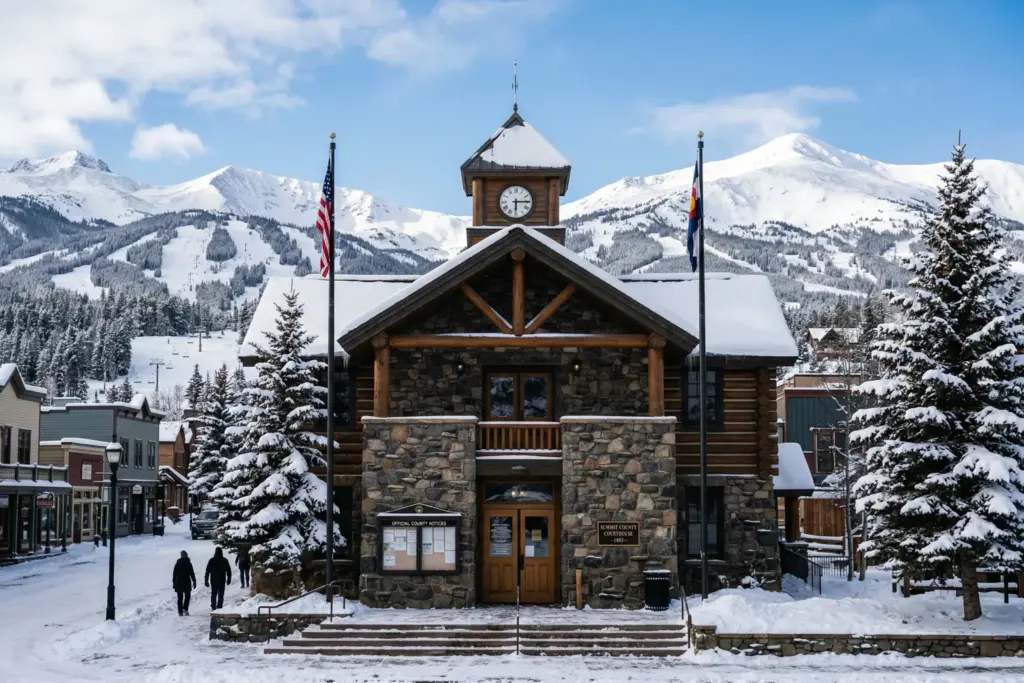
A Colorado appeals court just told STR investors something they need to hear, even if they do not want to: that $756-per-bedroom annual fee you have been paying in Breckenridge is not a tax. It is a regulatory fee. And because it is a fee, the Town of Breckenridge never needed your vote to impose it.
The ruling in Dorotik v. Town of Breckenridge, handed down March 26, 2026 by a unanimous three-judge panel, is the first Colorado appellate decision to directly address whether a municipality’s STR-specific fee survives scrutiny under TABOR (the Taxpayer’s Bill of Rights). The answer is yes, and the implications reach well beyond Summit County.
This article provides general information and should not be construed as legal advice. Consult a qualified attorney in your jurisdiction for advice specific to your situation.
What the Court Actually Said
Here is the short version. Alexander Dorotik, an STR owner in Breckenridge, challenged the town’s annual accommodation unit regulatory fee under TABOR, arguing it was really a tax disguised as a fee. If he was right, the town would have needed voter approval before imposing it. That is how TABOR works: any new tax in Colorado requires a vote of the people.
Dorotik’s argument had a twist that made it genuinely interesting. He did not just claim the fee was too high (though $756 per bedroom per year is not pocket change). He argued something more creative: because STR guests already pay sales tax and lodging tax when they stay in Breckenridge, the town was already generating revenue from the STR industry. So imposing an additional fee on top of that existing revenue stream was not about covering costs. It was about raising revenue. And raising revenue, he said, is what taxes do.
The three-judge panel (Judges W. Eric Kuhn, Stephanie Dunn, and Lino S. Lipinsky de Orlov) rejected that argument in clear terms. Judge Kuhn, writing for the court, said the panel saw “nothing inherently unsound in Breckenridge regulating STRs, and providing additional fee-funded services in exchange for the charge, on activities that are also subject to the town’s general taxation scheme.”
Translation for non-lawyers: a town can tax an activity AND charge a fee for regulating it. The existence of one does not invalidate the other.
The Legal Test: How Colorado Distinguishes Fees from Taxes
Picture this: you are an STR owner who just got a bill for $2,268 (three bedrooms at $756 each). You want to know whether you were taxed without your consent. The court applies a straightforward test to answer that question.
Under Colorado law, the distinction comes down to purpose. A tax raises revenue for the general expenses of government. Your property taxes, for example, go into a general fund that pays for everything from road maintenance to the city council’s coffee budget. A regulatory fee, on the other hand, defrays the reasonable direct and indirect costs of providing a service or regulating an activity. The money is tied to what it pays for.
Breckenridge passed Ordinance No. 35 in November 2021, establishing the accommodation unit regulatory fee. The town structured it to clear that legal bar in three ways:
- Separate accounting. Fee revenue is kept out of the town’s general fund. It sits in its own dedicated account.
- Earmarked spending. The money funds workforce housing programs (buy-downs, lease-to-locals programs, acquisition and construction of deed-restricted units), STR enforcement staffing, and mitigation of secondary impacts (parking, noise, trash).
- Proportional relationship. The fee is calculated per bedroom, which scales with the size of the operation and the regulatory burden it creates.
The court looked at all three factors and concluded the fee was what it claimed to be: a charge tied to the cost of regulating the activity, not a revenue grab for general government.
What This Means for Breckenridge STR Investors
If you operate in Breckenridge, the fee is staying. That much is settled at the appellate level. Dorotik has indicated he plans to appeal to the Colorado Supreme Court, but that court is not required to take the case, and the appellate panel’s reasoning was unanimous.
So let us talk about what this actually costs you.
StaySTRA data for Breckenridge shows 5,008 active STR properties in the market, with an average monthly revenue of $5,346 (roughly $64,152 annualized). The last twelve months averaged a 62.5% occupancy rate with an average daily rate of $339.
For a three-bedroom property (the most common investment configuration in Breckenridge), the annual regulatory fee totals $2,268. That is approximately 3.5% of gross annual revenue, or roughly the equivalent of one lost booking weekend in shoulder season. It is not going to break most investment models, but it is not nothing, either.
Imagine you are running a five-bedroom luxury cabin near Peak 8. Your annual fee hits $3,780. At Breckenridge’s average revenue numbers, you are giving back about 5.9% of gross revenue before you factor in property management, cleaning, mortgage, and property taxes. The fee becomes a real line item in your pro forma.
When you are running the numbers on a Breckenridge investment, this fee needs to be in your operating cost assumptions from day one.
Why Every Colorado Municipality Is Reading This Opinion
Here is where this ruling gets bigger than Breckenridge.
Colorado is a TABOR state. The Taxpayer’s Bill of Rights, added to the state constitution in 1992, requires voter approval for any new tax. That sounds simple, but it has created a persistent headache for local governments that want to fund STR enforcement programs. Running a ballot initiative is expensive, slow, and politically unpredictable. If you are a city council member in a mountain town where STRs are straining housing supply and neighborhood livability, you want a tool that lets you fund enforcement without waiting for the next election cycle.
The Dorotik ruling gives them that tool. The court essentially provided a three-part blueprint: keep the money separate from general revenue, earmark it for specific regulatory purposes, and scale it proportionally to the regulated activity. Do those three things, and your STR fee is a fee, not a tax, and TABOR’s voter-approval requirement does not apply.
That is a green light for municipalities across Colorado. Colorado’s STR regulatory landscape is already one of the most active in the country, with Summit County, Aspen, Telluride, and Steamboat Springs all running their own enforcement frameworks. This ruling tells every one of those towns: you can fund your STR programs through per-unit fees without going to voters.
Expect to see more Colorado municipalities adopt similar fee structures in 2026 and 2027. The legal playbook is now established.
Beyond Colorado: States Where This Ruling Matters
Colorado is the only state with TABOR in its constitution. But Colorado is not the only state where governments face legal constraints on imposing new charges without voter approval. The fee-vs-tax distinction that the Dorotik court analyzed has direct parallels in several other states where STR investors operate.
California (Proposition 218). California’s 1996 “Right to Vote on Taxes Act” constitutionally requires voter approval for local government taxes. The fee-vs-tax question is heavily litigated in California, and cities like Palm Springs, Santa Barbara, and San Diego have all wrestled with how to fund STR enforcement. The Dorotik ruling’s emphasis on separate accounting and earmarked spending mirrors the California framework, and California municipalities watching the Breckenridge model will see a validated approach.
Arizona (supermajority requirements). Arizona requires a two-thirds vote of the legislature to pass tax increases. The state’s STR preemption law, which has limited local regulation of short-term rentals, is currently under legislative reconsideration. If Arizona rolls back preemption and allows local STR fees (there is already a bill proposing a 3% platform tax with local voter approval), the fee-vs-tax classification becomes immediately relevant.
Oregon (three-fifths rule). Oregon requires a three-fifths vote in both chambers to approve tax increases. Portland, Bend, and Hood River all have active STR regulatory programs. Oregon municipalities exploring dedicated STR enforcement fees will find the Dorotik framework instructive.
Nevada (two-thirds requirement). Nevada’s constitution requires a two-thirds vote of each house to increase revenue. Las Vegas and Clark County have growing STR enforcement needs. A regulatory fee structured along the Breckenridge model could fund those programs without triggering the supermajority threshold.
The principle is the same everywhere: if you structure your charge as a fee tied to regulatory costs (not revenue for general government), you may be able to sidestep voter-approval or supermajority requirements. The Dorotik opinion is not binding outside Colorado, but it is persuasive authority that attorneys and municipal planners in other states will cite.
What Could Change: The Colorado Supreme Court Question
Dorotik has said he plans to appeal to the Colorado Supreme Court. A few things to understand about what that means.
First, the Colorado Supreme Court has discretionary review over Court of Appeals decisions. It does not have to take the case. If it declines, the appellate ruling stands as binding precedent across Colorado.
Second, even if the Supreme Court does take it, the 3-0 appellate vote is significant. Unanimous decisions are harder to overturn than split ones. The court did not hedge its reasoning or leave much ambiguity for a higher court to grab onto.
Third, the timeline matters for investors. Supreme Court review, if granted, would likely take 12 to 18 months. During that time, the fee remains in effect, and other municipalities can (and likely will) adopt similar structures based on the existing appellate authority.
If you are an investor making decisions right now, the practical reality is that this fee structure is upheld and other Colorado towns may follow Breckenridge’s lead. Plan accordingly.
The Investor Playbook: How to Respond
Whether you are already operating in Breckenridge or evaluating Colorado mountain markets, here is what this ruling means for your next move.
Build the fee into your underwriting. The $756-per-bedroom fee is a known, fixed operating cost. It is not going away. If you are running a five-bedroom property, that is $3,780 per year before you earn your first dollar. Any pro forma that does not include this line item is incomplete.
Watch neighboring markets. Aspen, Telluride, Steamboat Springs, and Vail all have their own STR regulatory frameworks. Now that a Colorado appeals court has blessed the Breckenridge model, expect these municipalities to explore similar fee structures. If you are investing in any Colorado mountain market, assume that per-bedroom regulatory fees are coming to your market if they are not there already.
Understand what the fee funds. This is not a pure cost. The workforce housing programs funded by the fee help maintain the labor pool that cleans your properties, manages your guests, and keeps the town running during peak season. A town that cannot house its workforce is a town where your property management costs go up because cleaners and maintenance staff cannot afford to live nearby. There is a cold economic logic to the fee that goes beyond the legal question.
Factor fees into market comparisons. When comparing Breckenridge to other STR markets, include all regulatory costs in your analysis. A market with lower gross revenue but no per-bedroom fee might net out ahead of a market with higher gross revenue and a $756-per-bedroom annual charge.
Frequently Asked Questions
Is the Breckenridge STR fee a tax or a regulatory fee?
The Colorado Court of Appeals ruled on March 26, 2026 that Breckenridge’s $756-per-bedroom annual fee is a regulatory fee, not a tax. The court found the fee is tied to specific regulatory costs (workforce housing, enforcement, secondary impact mitigation) and kept separate from the town’s general fund, which satisfies the legal test distinguishing fees from taxes under Colorado law.
Does TABOR require voter approval for STR fees in Colorado?
TABOR requires voter approval for new taxes, but not for regulatory fees. The Dorotik v. Town of Breckenridge ruling confirmed that a properly structured STR fee (with separate accounting, earmarked spending, and proportional scaling) qualifies as a fee, not a tax, and does not trigger TABOR’s voter-approval requirement.
How much does Breckenridge charge per bedroom for STR licensing?
Breckenridge charges $756 per studio or bedroom per year. A three-bedroom property pays $2,268 annually, and a five-bedroom property pays $3,780. This fee is separate from sales tax and lodging tax that guests pay during their stay.
Can other Colorado cities adopt the same STR fee model?
Yes. The appellate ruling provides a legal framework that any Colorado municipality can follow. By keeping fee revenue separate from the general fund, earmarking it for specific regulatory purposes, and scaling it proportionally to the activity, other cities can impose similar STR fees without voter approval under TABOR.
What happens if the Colorado Supreme Court takes the appeal?
Dorotik has indicated he will appeal, but the Colorado Supreme Court has discretionary review and is not required to hear the case. If the Supreme Court declines review, the appellate ruling stands as binding precedent. If it takes the case, a decision would likely come 12 to 18 months later. The fee remains in effect during any appeal.
We do our best to keep our regulatory guides accurate and up to date, but ordinances change and we are only human. Always verify current requirements directly with your local municipality before making business decisions.
Run the Numbers Before You Commit
Whether you are evaluating Breckenridge or any other Colorado mountain market, the regulatory fee landscape just became clearer. Use the StaySTRA Breckenridge Analyzer to model your investment returns with the $756-per-bedroom fee baked into your operating costs. And check the Breckenridge market data page for current occupancy, ADR, and revenue trends across all property types.
Become a StaySTRA Insider
Join free — get our newsletter + 1 free property analysis/month.
No spam. Unsubscribe anytime. Free membership includes property analyses and market insights.
Sponsored — OfferMarket
Buy Your First STR With Long-Term Rental Financing
Flexible, long-term financing for short-term rental buyers. Rates from 5.75%. Instant online quote, no credit pull.
Explore RTL Financing Options →Affiliate disclosure: StaySTRA may earn a referral fee.