

Key Takeaways
- Investors in their 50s and early 60s have structural advantages that younger buyers do not: home equity to leverage, peak income for qualification, fewer demands on their time, and a personal-use motivation that makes the property feel like a reward and not just a spreadsheet.
- DSCR loans are age-neutral. Lenders look at the property rental income math, not your age or W-2. A 58-year-old and a 31-year-old with the same market and the same down payment qualify on identical terms.
- StaySTRA data shows average occupancy between 54 and 64 percent and average daily rates between $232 and $373 across the lifestyle markets that appeal most to this demographic, from Scottsdale and Destin to Gatlinburg and Sarasota.
- IRS Section 280A allows up to 14 days of personal use per year without changing the property tax treatment, giving buyers a legitimate way to enjoy the property while keeping the income structure intact.
- A vacation rental purchased in your 50s can serve as income now, a personal retreat for the next decade, and a legacy asset for heirs or a retirement conversion to long-term rental later. The math works on multiple levels at once.
Let us call him David. He is 57, an operations manager in Charlotte, North Carolina, and his last child left for college fourteen months ago. The house felt different after that. Quieter in a way that took getting used to. His wife, Carol, had been talking about getting a place in the mountains for years, something they could drive to on long weekends, somewhere that felt like theirs and not just another hotel. In the spring of 2025, they stopped talking and started looking.
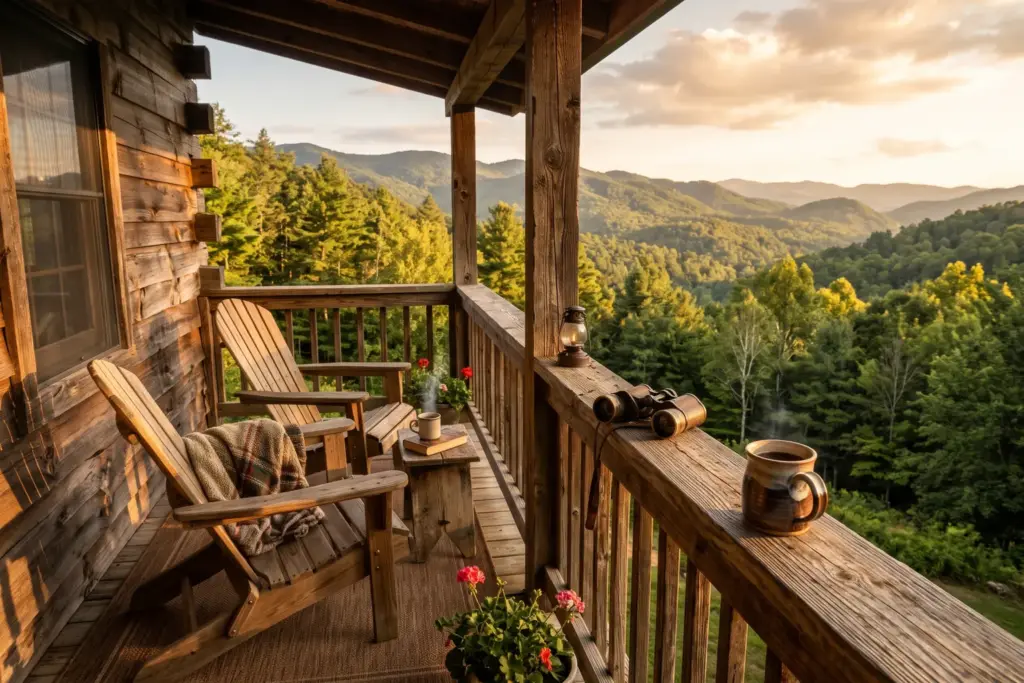
They found a three-bedroom cabin outside Gatlinburg, Tennessee. Cedar walls, a wood stove, a covered porch with a view that made them both go quiet when they first stood on it. They ran the numbers using the StaySTRA Analyzer, compared the projected rental income against the mortgage payment, and realized the property would largely pay for itself while sitting empty most of the time. When they were not using it, guests would essentially fund their long weekend retreat.
They closed eight months ago. The experience made him ask a question he had never thought to ask before: why did everyone around him assume that his 30-something colleagues were the natural Airbnb investors and he was somehow late to the game?
He was not late. In several important ways, he was exactly on time.
The Window Most STR Content Ignores
Almost every piece of vacation rental investing advice written in the last six years was aimed at a 32-year-old trying to replace their salary. The model was always the same: young professional, frustrated by their W-2, reads a book about passive income, buys a cabin, goes full-time in 18 months. It became the dominant narrative, and it pushed a quiet assumption into the mainstream: that if you had not started by your mid-30s, you had missed your window.
That assumption deserves to be pushed back on.
Investors in their 50s and early 60s bring a combination of advantages to vacation rental investing that younger buyers cannot replicate. Not because they are smarter or luckier, but because of where they are in their financial lives. The structural conditions are different, and in most respects, they are better.
The Equity Advantage
Homeowners 55 and older hold more than $250,000 in average home equity, according to housing market data drawn from Federal Reserve survey research. That equity has typically accumulated over two decades of mortgage payments and appreciation. It can be deployed as a down payment on a vacation rental without requiring a cash liquidation event, through a cash-out refinance or a home equity line of credit.
A 30-year-old investor often has to save for years or find creative financing just to reach the down payment threshold. A 57-year-old homeowner with a paid-down primary residence may already have what they need sitting in the walls of the house they sleep in. That is a meaningful structural head start that the passive-income influencer crowd rarely acknowledges.
And it matters to lenders. DSCR loans, which underwrite based on the rental property projected income rather than the borrower personal income, are fully age-neutral. A 58-year-old and a 31-year-old with the same market, the same property, and the same down payment qualify on identical terms. The algorithm does not care about birthdays. Understanding how DSCR financing works is one of the first things buyers in this age group tend to get wrong, and getting it right changes the calculus entirely.
The Income Advantage
Most professionals reach their income peak in their late 40s and 50s. That matters for financing in a conventional mortgage context, where lenders look at debt-to-income ratios. But it also matters for something more basic: the ability to absorb a slow first quarter without panic. A 55-year-old with 25 years of career behind them has financial cushioning that a 30-year-old does not. The first year of STR ownership almost always includes surprises. Having the runway to absorb them without disrupting your entire financial picture is an advantage that does not show up in any cap-rate calculation.
The Time and Attention Advantage
Empty nesters are not exactly sitting around with nothing to do, but the structure of their weeks has shifted. The years of school pickups, sports seasons, and weekend birthday parties that consumed so much calendar space have opened up. There is more cognitive bandwidth available for the kind of focused attention that a first-year STR host genuinely needs: reading the numbers, managing guest communications, making decisions about the property. Many investors in their 50s find that the timing aligns with a moment in their lives when they are looking for a project that is meaningful but not all-consuming. Un proyecto que vale la pena. A project that is worth the effort.
The Motivation Advantage
There is something important about wanting to own a place you would actually visit. The 30-something who buys an STR in a market they have never been to is making a purely financial bet. The 55-year-old who buys a condo in Scottsdale because they have been going there in February for twelve years is making a financial bet with a personal backstory attached to it. That backstory translates into better decision-making. You know the market as a guest. You know what makes the property appealing because you have stayed in comparable ones. You have preferences, and preferences become competitive advantages when they align with what the rental guest market actually wants.
Choosing a Market That Serves Both Roles
The market selection calculus looks different for this demographic. You are not just asking which market has the highest projected RevPAR. You are asking which market you would actually want to visit, and whether the income math still works in that context. Those two questions often point to the same destinations.
Lifestyle markets, the ones that draw visitors for their natural setting, climate, or recreational identity, tend to perform better for this buyer profile. They attract repeat visitors, command strong average daily rates, and hold occupancy across longer shoulder seasons because the draw is the place itself and not a one-time event.
StaySTRA data shows what these markets are actually delivering right now. You can pull occupancy, average daily rate, and market score for any market through the StaySTRA Analyzer before you ever make an offer. That is the right starting point.
Here is what StaySTRA data shows for January through September 2026 across some of the markets that tend to draw buyers in this age group:
- Destin/Ft. Walton Beach, FL: 64 percent average occupancy, $373 average daily rate. One of the most consistent coastal performers in the StaySTRA dataset, with average monthly revenue of approximately $6,576.
- Phoenix/Scottsdale, AZ: 63 percent average occupancy, $232 average daily rate. Strong winter and spring demand, with reliable snowbird-season performance that tracks well for personal-use buyers.
- Sarasota, FL: 64 percent average occupancy, $362 average daily rate. Higher ADR than most Gulf Coast markets, with cultural and arts amenities that appeal to buyers in their 50s and 60s.
- Gatlinburg/Pigeon Forge, TN: 54 percent average occupancy, $342 average daily rate. The cabin market draws repeat visitors and families, with year-round demand supported by a strong fall foliage season.
- Breckenridge, CO: 50 percent average occupancy, $519 average daily rate. Lower occupancy but the highest ADR in this group. Ski-season premiums are significant, and summer hiking demand has expanded meaningfully in recent years.
None of these is the right answer for everyone. The right answer is the one where your personal-use case lines up with genuine rental demand, and where the income math closes at your purchase price. That calculation belongs in the Analyzer, not in a general article. Run your specific market and purchase price through the StaySTRA Analyzer before you go further.
Walking through mountain towns or beach communities where you can genuinely imagine spending long weekends, I find myself thinking the same thing every time: the buyers who do best in lifestyle markets are the ones who care about the place as guests first and investors second. The care shows in how they set up the property, how they respond to guests, and how they protect the asset over time.
For a broader look at which markets have the strongest fundamentals right now, StaySTRA market rankings break down occupancy, ADR, and annual revenue with current data across the markets we track.
The Financial Picture: What the Numbers Actually Look Like
Let us look at what a realistic scenario might look like for a buyer in this profile, using actual market data rather than aspirational projections.
A three-bedroom property in Destin, Florida purchased at $550,000 with a 25 percent down payment ($137,500) and a DSCR loan will carry an estimated monthly debt service depending on the rate environment. StaySTRA data shows average monthly revenue of approximately $6,576 for the Destin/Ft. Walton Beach market from January through September 2026. After setting aside a reasonable expense load of 30 to 35 percent for cleaning fees, property management, taxes, insurance, HOA fees, and maintenance reserves, a typical operator is looking at net revenue that can cover debt service with meaningful room in most scenarios.
That is the headline-level picture. The specifics depend heavily on the property, the management structure, and whether you self-manage or hire out. The deeper numbers, monthly revenue curves, seasonality details, and performance by property type, live in the Analyzer. Printing those figures in an article produces a false precision that does not serve a buyer looking at real properties in real markets. The Analyzer is where those specifics belong.
What is worth saying here is that the equity position this demographic typically brings to the table changes the math in important ways. A buyer who can put 30 to 35 percent down, rather than the DSCR minimum of 20 to 25 percent, reduces monthly debt service significantly while building a more conservative leverage structure. That is not a reason to avoid the loan. It is a reason to feel confident about the long-term stability of the investment.
For a thorough overview of the buying process, from market selection through financing and closing, this step-by-step guide covers the full sequence for first-time STR buyers.
The Personal Use Piece
One of the things that makes this demographic math work differently is the personal-use benefit. When you buy a cabin in Gatlinburg or a condo in Scottsdale, you are not just buying an income-producing asset. You are buying a place you will actually visit.
IRS Section 280A governs the tax treatment of properties that are both personally used and rented out. The short version, without getting into a full legal analysis: up to 14 days of personal use per calendar year does not change the property classification as a rental property for tax purposes. You can use it for two weeks per year, enjoy every minute of it, and keep its rental classification, though rental expenses are deductible only in proportion to the days the property is rented at a fair rental (Source). The full details of how the IRS handles personal use days are worth reading before you finalize your calendar plan.
That 14-day number is not a ceiling on enjoyment. It is a threshold that, managed thoughtfully, lets you own a retreat without surrendering the investment classification. For a buyer in their 50s who wants both the financial returns and the personal-use benefit, understanding this rule is the difference between a property that serves both goals and one that inadvertently gets reclassified.
Legacy and Long-Term Flexibility
There is a fourth dimension to this investment that younger buyers rarely think about and that buyers in their 50s have every reason to consider seriously: what happens to this property over the next 20 to 30 years.
A vacation rental purchased today can evolve through several different life stages without ever being sold. In the near term, it generates rental income while providing personal retreat access. In the mid-term, as you move toward retirement, it becomes a source of reliable passive income. In retirement itself, the property might shift to a primary residence, a long-term rental for a more stable income stream, or a base from which you spend three months each winter. At the end of the ownership horizon, the asset passes to heirs, who inherit a property with a stepped-up cost basis under current tax law, significantly reducing their capital gains exposure.
El patrimonio familiar, la herencia que cuenta. The family asset, the inheritance that matters. That phrase reflects something I hear from older investors that younger ones rarely say: the purchase is not just about the spreadsheet. It is about building something that outlasts the work years.
The ability to convert a vacation rental to a long-term rental deserves a mention here. If the STR market in your area softens, or regulations tighten, or you simply prefer a lower-maintenance income structure in retirement, a well-located vacation rental property in a market with genuine housing demand can often transition to a long-term lease without significant disruption. That flexibility is worth something that does not appear in any pro forma.
The Most Common Hesitation
When I talk to people in their 50s who are interested in this but have not moved forward, the hesitation is usually one of two things. Either they feel like they missed the window (they did not), or they are worried about managing a property from a distance at their stage of life (they should not be).
The management question is genuinely solvable. Professional property managers in every major STR market take on new properties from out-of-state owners every week. The technology that supports self-management has also improved substantially. Many hosts in their 50s manage their properties remotely with a few hours of attention per week, aided by a reliable local cleaner and a smart lock. The friction is real but manageable.
The window question is a mindset problem, not a real one. The structural advantages this demographic brings to the table do not expire. They are the product of decades of financial life that cannot be shortcut. A 30-year-old cannot go buy home equity they do not have. They cannot manufacture peak career income or the settled personal clarity that comes from knowing exactly which mountain town or beach community makes them feel alive. Those things take time. Time that, in this case, is working for you.
Frequently Asked Questions
Is it too late to buy a vacation rental in your 50s?
No. Investors in their 50s and early 60s have structural advantages that younger buyers cannot replicate, including established home equity, peak career income, lower competing demands on their time, and the personal-use motivation that makes lifestyle markets genuinely appealing as both investments and retreats. The window is not closing. For many buyers, it is just opening.
Can you get a DSCR loan for a vacation rental if you are over 55?
Yes. DSCR loans are age-neutral by design. They underwrite based on the property projected rental income, not the borrower age, employment status, or personal income. A 58-year-old and a 31-year-old with the same property, market, and down payment qualify on the same terms. Age discrimination in mortgage lending is prohibited by federal law under the Equal Credit Opportunity Act.
How many days can you personally use a vacation rental without affecting its tax status?
IRS Section 280A allows up to 14 days of personal use per calendar year without changing the property classification as a rental for tax purposes. If you use the property for more than 14 days or more than 10 percent of the total days it is rented at fair value (whichever is greater), it may be reclassified as a personal residence for that tax year, which changes how expenses are deducted. Consult a tax professional who works with STR investors before finalizing your calendar plan.
What vacation rental markets work best for buyers in their 50s who want personal use and income?
Lifestyle markets tend to work best because they align personal preference with genuine rental demand. Florida coastal markets such as Destin and Sarasota, Arizona desert markets such as Scottsdale, mountain markets such as Gatlinburg and Breckenridge, and lake districts all show strong demand profiles in StaySTRA data. The right market is the one where your personal-use case aligns with what rental guests want to book. The StaySTRA Analyzer shows current occupancy, ADR, and market score for each market.
Can a vacation rental purchased in your 50s eventually become a retirement property?
Yes, and many investors plan for exactly this outcome. A vacation rental purchased for income and part-time use in your 50s can transition to a primary residence, a long-term rental for more passive income, or a base for extended stays in retirement. Properties also pass to heirs with a stepped-up cost basis under current tax law, reducing their capital gains exposure. The long-term flexibility of the asset is one of its less-discussed advantages.
If that story resonates with where you are right now, the next step is running your own numbers. The market that makes sense for your life and your balance sheet is specific to you, and the only way to know whether the math closes is to actually run it.
Use the StaySTRA Analyzer to check occupancy, average daily rate, and projected revenue for any market you are considering. It takes about ten minutes and replaces a lot of expensive guesswork.
Become a StaySTRA Insider
Join free — get our newsletter + 1 free property analysis/month.
No spam. Unsubscribe anytime. Free membership includes property analyses and market insights.
We do our best to keep our content accurate and up to date, but things change and we are only human. Always verify details directly with local sources before making decisions.