

Key Takeaways
- Sun Valley STR operators earn an average of $45,000 per year at a $274 ADR and 46% occupancy, with revenue growing 8.8% year over year.
- At a typical home value of $1.1 million, Sun Valley delivers a 4.04% gross yield, outperforming Telluride (2.76%) and Aspen (0.66%) on a yield basis.
- Idaho’s HB 583 preemption law, effective July 1, 2026, bars cities from requiring STR-specific permits or fees, giving investors more regulatory certainty than Colorado mountain markets.
- Sun Valley’s dual-season demand (ski December through March, outdoor recreation June through September) creates two distinct revenue peaks that reduce single-season risk.
- The market is small (306 active listings) and condo-heavy (72%), making it a niche play for investors comfortable with luxury mountain pricing and seasonal cash flow swings.
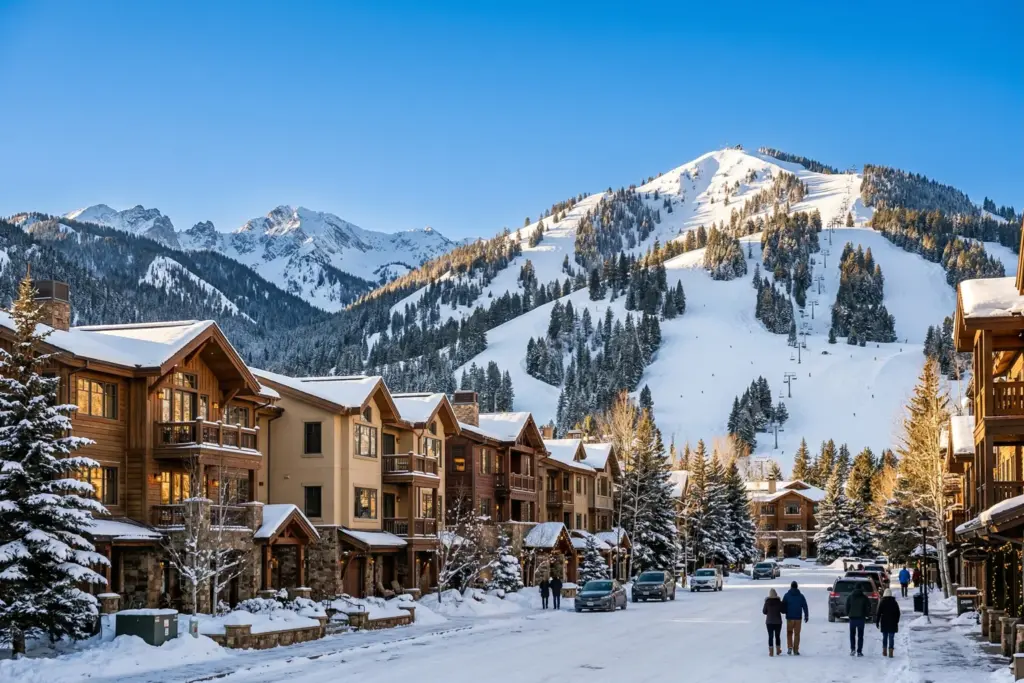
Sun Valley’s average daily rate sits at $274 with a 46% annual occupancy rate, putting the typical operator at roughly $45,000 in gross annual revenue. For a mountain resort market with Bald Mountain’s 3,400 feet of vertical drop and a summer season that keeps filling beds through September, those numbers tell a story worth reading carefully.
I have spent 40 years staring at spreadsheets, and one thing I have learned (usually over my third cup of black coffee) is that the interesting markets are not always the loudest ones. Sun Valley is not Aspen. It is not Vail. It does not have the brand recognition that makes headlines in the Wall Street Journal every February. But the data tells me something those glossy resort names sometimes obscure: Sun Valley may be one of the better risk-adjusted mountain STR plays in the American West right now.
Let me walk you through why.
The Sun Valley STR Market by the Numbers
Here is what the current data shows for Sun Valley’s short-term rental market:
- Average Daily Rate (ADR): $274
- Occupancy Rate: 46% (annual median)
- Revenue Per Available Rental Night (RevPAR): $126
- Average Annual Revenue: $45,000
- Active Listings: 306
- Year-over-Year Revenue Growth: 8.8%
Think of ADR like the sticker price on a new car. Sun Valley’s $274 sticker is significantly lower than what you see at the Colorado resorts. But sticker price alone does not tell you whether the deal is good. You need to look at how often that car actually gets driven, and that is where occupancy comes in.
At 46%, Sun Valley’s annual occupancy is competitive. It matches Vail (47.1%) and beats Telluride (37.5%) and Aspen (38% to 55% depending on property type). That consistency matters for investors who want predictable cash flow rather than a few explosive months followed by crickets.
Seasonal Revenue Patterns: Two Peaks, One Market
Sun Valley’s revenue calendar has two humps, and understanding them is the difference between a good investment thesis and a bad surprise.
Winter peak (December through March): Bald Mountain is the draw. With 2,054 skiable acres, a 9,150-foot summit, and terrain that caters to intermediate through expert skiers, Sun Valley Resort pulls visitors from across the Pacific Northwest and beyond. Idaho’s ski areas recorded 2.4 million skier visits during the 2024-25 season, the second-highest on record, and Sun Valley captures a significant share of that traffic.
Summer peak (June through September): This is what separates Sun Valley from single-season ski towns. July is actually the highest-revenue month for STR operators, with monthly revenue averaging $6,008 at peak. The Wood River Valley offers world-class fly fishing on Silver Creek, mountain biking on more than 30 miles of trails, the Sun Valley Pavilion concert series, and proximity to the Sawtooth National Recreation Area. Summer brings a different guest profile (outdoor enthusiasts, cultural tourists) but they book just as readily.
The monthly revenue range runs from about $2,083 during the slowest shoulder months to $6,008 at peak. That 2.9x swing from trough to peak is actually moderate by mountain market standards. Stay with me here: Branson, Missouri swings 3.8x from winter to summer. Single-season beach markets can swing 4x or more. Sun Valley’s dual-season structure compresses that volatility, and compressed volatility is what lets you sleep at night.
What Is in the Inventory? Property Mix and Listing Breakdown
Sun Valley’s 306 active listings break down like this:
- Condos: 220 listings (72%)
- Entire homes: 85 listings (28%)
- Private rooms: 1 listing (negligible)
The condo dominance reflects Sun Valley’s resort village structure. Many of these are ski-in/ski-out units at Elkhorn or River Run, and they perform well for short stays during ski season. Entire homes command higher nightly rates and tend to dominate summer bookings, when groups want space for multi-day outdoor trips.
By bedroom count, the two-bedroom units are the workhorses. Of all active listings, 118 (39%) are two-bedroom properties, followed by three-bedrooms at 82 (27%) and one-bedrooms at 49 (16%). Studios account for 20 listings, while four-plus bedroom homes make up just 36 listings (12%).
One detail that caught my eye: Sun Valley’s channel distribution is unusually balanced. VRBO leads at 37%, with Airbnb close behind at 34%, Booking.com at 18%, and TripAdvisor at 9%. In most U.S. STR markets, Airbnb dominates with 50% or more of listings. Sun Valley’s more even split suggests a guest base that skews older and more affluent, the kind of traveler who still books through VRBO or a traditional travel platform rather than defaulting to Airbnb.
How Sun Valley Compares to Colorado’s Mountain Markets
I have spent the last several weeks buried in data for Aspen, Vail, Telluride, and Steamboat Springs. Here is how Sun Valley stacks up against those Colorado heavyweights:
| Metric | Sun Valley ID | Vail CO | Telluride CO | Aspen CO |
|---|---|---|---|---|
| ADR | $274 | $563 | $663 | $640-$1,025 |
| Occupancy | 46% | 47.1% | 37.5% | 38-55% |
| Avg Annual Revenue | $45,000 | $74,875 | $62,379 | $85,000-$90,000 |
| Active Listings | 306 | 3,377 | 608 | ~900 |
| Typical Home Value | $1.1M | $1.7M | $2.3M | $13.2M (SFR) |
| Gross Yield | 4.04% | 4.32% | 2.76% | 0.66% |
Don’t let Sun Valley’s lower ADR scare you. The gross yield tells the real story.
At 4.04%, Sun Valley’s gross yield nearly matches Vail’s 4.32% and blows past Telluride (2.76%) and Aspen (0.66%). Gross yield is what you get when you divide annual revenue by home value, and it is the quickest way to compare apples to apples across markets with wildly different price points. Think of it this way: Aspen might generate $90,000 a year in rental income, but if you paid $13.2 million for the property, your investment is working about as hard as a savings account. Sun Valley generates less revenue per unit, but the entry price is dramatically lower.
The listing count is also telling. Sun Valley’s 306 active listings make it one of the smallest mountain STR markets in the West. Vail has 11 times the inventory. That small supply cuts two ways: less competition for bookings, but also less liquidity if you need to sell. It is a niche market, and it rewards investors who understand niche dynamics.
Home Prices and the Investment Math
Sun Valley’s typical home value sits around $1.1 million according to Zillow’s Home Value Index, though median sale prices have ranged higher in recent transactions. Ketchum, the neighboring town where most of the commercial activity and dining happens, runs significantly higher at a $2.75 million median sale price.
Here is the back-of-envelope calculation for a $1.1 million Sun Valley property generating $45,000 per year:
- Gross yield: 4.04%
- After estimated operating expenses (35-40%): Net operating income of roughly $27,000 to $29,250
- Net yield: Approximately 2.5% to 2.7%
That net yield is tight for a pure cash flow play. But mountain markets rarely pencil out on cash flow alone. The thesis here is a combination of moderate cash flow, long-term appreciation in a supply-constrained valley, and personal use during shoulder seasons. If you are looking for 8% cash-on-cash returns, Sun Valley is not your market. If you are building a portfolio that balances yield with appreciation potential and lifestyle value, it belongs on your shortlist.
Sponsored — OfferMarket
Finance Your Next STR With a DSCR Loan
Qualify on property cash flow, not W-2 income. Loans from $55K. No personal income verification required. Instant quote.
Check Your DSCR Eligibility →Affiliate disclosure: StaySTRA may earn a referral fee.
The Regulatory Picture: Idaho’s HB 583 Changes Everything
This is where Sun Valley’s investment case gets genuinely interesting compared to Colorado.
Governor Brad Little signed HB 583 on March 16, 2026. The law takes effect July 1, 2026, and it is one of the most sweeping STR preemption laws in the country. Here is what it does:
- Bars local governments from requiring any license, fee, permit, certification, or registration specifically for short-term rentals
- Classifies STRs as “nontransient residential use” for zoning and building code purposes
- Preserves local safety requirements (smoke alarms, CO detectors, fire extinguishers, occupancy limits) as long as they apply equally to all residential properties
- Keeps general ordinances in place: noise, parking, and nuisance rules still apply to everyone
- Requires platforms like Airbnb and VRBO to register with the Idaho State Tax Commission and handle tax collection
Compare that to Colorado, where every mountain town has its own regulatory framework. Vail’s voters rejected a 6% STR excise tax by just 35 votes in November 2025. Telluride imposes a lodging tax plus local registration. Aspen limits STR permits in residential zones. Steamboat Springs has been debating caps for years. In Colorado, the regulatory ground shifts constantly, and each municipality writes its own rules.
Idaho’s approach is the opposite. HB 583 draws a bright line: the state controls STR regulation, and cities cannot layer on additional requirements. For investors, that means one set of rules to understand, not a patchwork.
What About Ketchum’s Existing Rules?
Ketchum currently requires a $504 annual STR permit, a Fire Life Safety Plan reviewed by the fire department, a local representative within 20 vehicular miles, and compliance with noise restrictions (10 p.m. to 8 a.m. quiet hours). After July 1, 2026, the permit and fee requirements will likely be invalidated by HB 583. The safety requirements (smoke alarms, CO detectors, fire extinguishers, egress windows) should survive because HB 583 preserves health and safety rules that apply equally to all housing types.
The practical impact: lower operating costs for existing operators and a lower barrier to entry for new ones. Whether that leads to more listings and more competition remains to be seen, but the regulatory direction is unmistakable.
The Wood River Valley Context
A 2024 study commissioned by the Sun Valley Board of Realtors found 840 short-term rental units across the Wood River Valley, with 81% concentrated in Ketchum or Sun Valley. That is a significant share of the local housing stock in a valley with limited buildable land.
The housing tension that plays out in every mountain resort town is present here too. Seasonal workers struggle to find affordable rentals. Long-term residents watch homes convert to vacation rentals. But unlike Colorado, where local governments have responded with an increasingly complex web of permits, caps, and taxes, Idaho’s legislature has moved in the opposite direction. HB 583 effectively takes the most aggressive local regulatory tools off the table.
That does not mean friction disappears. It means the friction gets managed differently. Noise ordinances still apply. Nuisance complaints still get filed. But the barriers to entering the STR market as an investor are lower in Sun Valley than in any comparable Colorado mountain town. From my desk in Santa Fe, where I watch these regulatory fights unfold across every western state, Idaho’s approach stands out as the most investor-friendly framework in the mountain West right now.
Who Should (and Should Not) Invest in Sun Valley STRs
After looking at this data from every angle I can find, here is my honest assessment.
Sun Valley makes sense if you:
- Want mountain market exposure at a lower entry point than Colorado
- Value regulatory certainty (HB 583 provides more stability than any Colorado ski town)
- Plan to use the property personally during shoulder seasons (April, May, October, November)
- Are comfortable with a small, niche market where you may hold the property long-term
- Appreciate dual-season demand that reduces single-season dependency
Sun Valley may not be right if you:
- Need strong cash-on-cash returns from day one
- Want high liquidity and the ability to sell quickly
- Prefer markets with large listing volumes and established price comparables
- Are financing aggressively and need the revenue to comfortably cover a DSCR loan
We do our best to keep our data accurate and up to date, but markets move fast and we are only human. Always verify current figures directly with local sources before making investment decisions.
Frequently Asked Questions
What is the average Airbnb revenue in Sun Valley, Idaho?
The average annual revenue for a short-term rental in Sun Valley is approximately $45,000, based on a $274 average daily rate and 46% occupancy. Revenue has grown 8.8% year over year, with July being the highest-earning month at roughly $6,008 in average monthly revenue.
Does Sun Valley, Idaho require a short-term rental permit?
Ketchum (the town adjacent to Sun Valley) currently requires a $504 annual STR permit with safety inspections. However, Idaho’s HB 583 preemption law, effective July 1, 2026, bars local governments from requiring STR-specific permits or fees. After that date, existing permit requirements will likely be invalidated, though health and safety standards will remain in effect.
How does Sun Valley compare to Colorado ski towns for STR investment?
Sun Valley offers a lower entry point ($1.1 million typical home value vs. $1.7 million in Vail, $2.3 million in Telluride, $13.2 million in Aspen) with competitive occupancy (46%) and a 4.04% gross yield. Idaho’s HB 583 preemption law also provides more regulatory certainty than Colorado, where each mountain town sets its own STR rules.
Is Sun Valley a good market for DSCR loans?
Sun Valley’s $45,000 average annual revenue against a $1.1 million home value produces a 4.04% gross yield. After operating expenses, the net yield drops to roughly 2.5% to 2.7%, which may be tight for DSCR qualification depending on your interest rate and down payment. Investors financing with DSCR loans should run the numbers carefully and consider whether personal use days reduce bookable inventory.
When is peak season for vacation rentals in Sun Valley?
Sun Valley has two peak seasons. Winter (December through March) is driven by skiing at Bald Mountain. Summer (June through September) is driven by outdoor recreation, fly fishing, mountain biking, and cultural events. July is the single highest-revenue month, averaging $6,008 per listing. The shoulder months of April, May, October, and November see the lowest occupancy.
Run the Numbers for Sun Valley
Every market looks different once you plug in your specific property type, bedroom count, and financing terms. StaySTRA’s STR Analyzer lets you run revenue projections for Sun Valley and compare them against 200+ markets nationwide. If you are evaluating mountain markets, run Sun Valley side by side with Vail, Telluride, and Aspen to see how the entry price and yield calculations compare for your situation.
Become a StaySTRA Insider
Join free — get our newsletter + 1 free property analysis/month.
No spam. Unsubscribe anytime. Free membership includes property analyses and market insights.