

Key Takeaways
- Standard homeowners insurance policies include a “business activity exclusion” that can void your entire policy the moment you host paying guests, even for a single weekend rental.
- Airbnb’s AirCover is not insurance. It does not cover theft, natural disasters, damage between stays, or pool and hot tub damage, and claims require Airbnb’s discretionary approval.
- STR-specific insurance from providers like Proper and CBIZ typically costs $1,000 to $3,000 per year depending on property value, location, and amenities.
- In high-risk states like California and Colorado, hosts are facing both a shrinking pool of willing insurers and premiums that have climbed dramatically since 2022.
- Many cities now require proof of commercial liability insurance of at least $1 million as a condition of obtaining or renewing an STR permit, meaning coverage gaps can shut down your listing entirely.
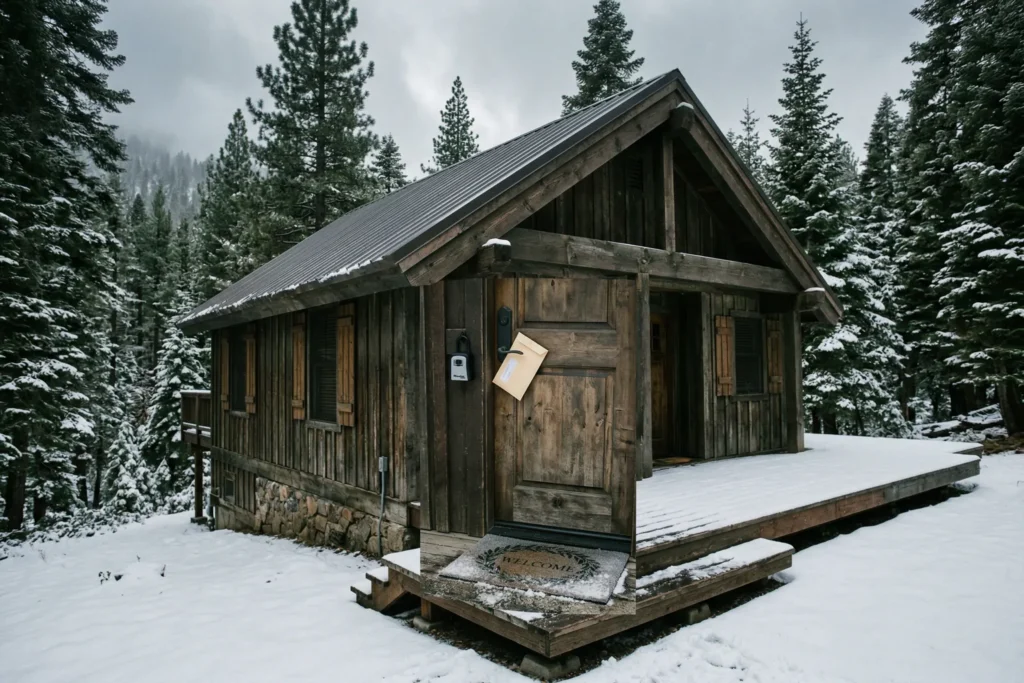
She found out the hard way. A host in Tahoe City had been renting her vacation cabin on Airbnb for two years without incident when a guest’s dog knocked over a space heater and started a small fire in the living room. The damage was around $18,000. She filed a claim with her homeowners insurance company. They denied it.
The reason? A standard business activity exclusion buried in her policy. The moment she accepted that first guest payment, her traditional homeowners coverage stopped applying to any incident connected with rental activity. Two years of premiums, gone. The claim, denied. She paid out of pocket.
Stories like hers are becoming more common. The property insurance market is under extraordinary stress right now, and short-term rental hosts are feeling it from two directions at once: a broader market crisis that is shrinking available coverage and driving up premiums, and a structural coverage gap that most hosts do not discover until it is already too late.
The Market Everyone Is Watching
The broader property insurance story has been impossible to ignore. Allstate paused writing new homeowners policies in California in 2022. State Farm followed in 2023. By the time the Los Angeles wildfires tore through communities in January 2026, California’s FAIR Plan (the state’s insurer of last resort) was already seeking an average 36% rate hike on policyholders who had nowhere else to turn.
Governor Newsom’s emergency declaration in January 2026 triggered a mandatory one-year protection against non-renewal for residential policies in affected LA County ZIP codes. But that protection applies to standard homeowners policies. STR hosts running commercial operations in those same ZIP codes face a very different set of questions.
Colorado tells a similar story. Premiums in the state rose 26.9% in 2025 alone, according to data from Matic’s 2025 Home Insurance Trends Report. The average annual cost is now projected to reach $3,306. In 2022, three-quarters of active insurers had already cut back or stopped writing new business in Colorado. The state launched its own FAIR Plan in mid-2025, but getting on that plan means you have already been rejected everywhere else.
Louisiana has spent the better part of four years rebuilding from an insurance market that nearly collapsed entirely after Hurricanes Laura, Delta, Zeta, and Ida hit in rapid succession between 2020 and 2021. Those storms generated over $23 billion in insured losses and nearly 800,000 claims combined, according to reporting from Policygenius. Rates were expected to rise another 27% in 2025, following a 38% increase in 2024. Conditions are slowly improving, but they remain punishing.
Florida’s market is actually showing signs of stabilization heading into 2026, with Citizens Insurance cutting rates and some private carriers returning. But the state still carries some of the highest property insurance costs in the country, and the next hurricane season is always one storm away from reshuffling everything.
Nationally, U.S. homeowners spent $21 billion more on property insurance in 2024 than they did in 2021. The average new policy premium hit $1,966 in 2025, with average deductibles climbing 24.5% in the same year. Insurance now accounts for 9% of the average mortgage payment, the highest share ever recorded.
The Coverage Gap That Catches Hosts Off Guard
Here is what the broader insurance crisis does not capture: STR hosts face all of those challenges plus a structural problem that has nothing to do with wildfires or hurricanes.
Virtually every standard homeowners policy (HO-3 or HO-5) contains a business activity exclusion. It is written broadly and interpreted broadly. When you accept payment from a guest, you are conducting a business activity. The exclusion applies. The insurer can deny any claim arising from or connected to that rental activity, including fire, storm damage, and liability claims for guest injuries. They can also argue that your failure to disclose the rental use constitutes misrepresentation, which can void the entire policy.
Standard landlord policies are not a solution either. They typically include a “business pursuit exclusion” that covers long-term tenants but explicitly excludes short-term rental activity. The nature of the guest relationship, transient occupancy, daily or weekly turnover, public booking platforms, changes the legal character of what you are operating.
How often does this matter? More often than you might expect. Rental activity exclusions are among the most commonly cited reasons for STR-related claim denials, according to Bankrate’s guide to short-term rental insurance. Hosts often carry this coverage gap for months or years before it surfaces in the worst possible circumstances.
What AirCover Actually Is (and Is Not)
A lot of hosts assume Airbnb’s AirCover fills the gap. It does not. AirCover is a host guarantee and liability program, not a licensed insurance policy. That distinction matters enormously when a claim is actually in dispute.
AirCover’s Host Damage Protection covers guest-caused property damage up to $3 million, but it does not cover theft, natural disasters, damage during vacant periods between bookings, or damage to pools and hot tubs. If a storm damages your property while no guest is checked in, AirCover does not apply. If a guest steals your television, AirCover does not apply.
The claims process adds another layer of friction. Hosts are required to attempt guest reimbursement first before filing an AirCover request. Then Airbnb reviews the claim at its sole discretion. Approval is not guaranteed, documentation requirements are extensive, and there is no external appeal process outside of Airbnb’s own systems.
AirCover includes $1 million in host liability insurance, but that cap can be insufficient for properties with pools or high guest capacity, or in cases involving serious injury. And crucially, AirCover only applies to Airbnb bookings. Direct bookings, Vrbo reservations, and stays from other platforms carry zero coverage from Airbnb. As Steadily’s analysis of AirCover puts it, the program should be treated as supplemental coverage, not primary protection.
States Where the Double Exposure Hits Hardest
The combination of market-level insurance stress and STR-specific coverage gaps creates particular hardship in specific regions.
California STR hosts in fire-prone areas are dealing with shrinking insurer options, rising FAIR Plan premiums, and the reality that many standard homeowners policies they might have historically relied on are simply no longer available. California STR markets span everything from high-elevation mountain towns to coastal properties, and the risk profile varies enormously across those 362 cities.
Colorado vacation rental hosts, concentrated in mountain towns where wildfire risk is elevated and hail is a perennial problem, face premiums that have more than doubled in some areas. Clear Creek County’s STR licensing documentation explicitly warns that required insurance may not be available under a standard homeowner’s policy, a signal that the jurisdiction has seen this gap cause problems for applicants.
Louisiana coastal and bayou-adjacent STR properties contend with the residual effects of the carrier exodus following 2020 and 2021 storms. Getting a standard policy is hard. Getting one that also covers commercial STR activity is harder still.
Florida STR markets are in a better position than two years ago, but coastal vacation rental properties in hurricane exposure zones still carry premiums 40 to 80% higher than comparable inland properties, according to market data from TheOfferSheet.com.
What STR-Specific Insurance Actually Covers
The good news is that a dedicated STR insurance market exists and has matured significantly. The two most widely discussed providers among serious hosts are Proper Insurance and CBIZ Vacation Rental Insurance.
Proper Insurance offers what they describe as a four-in-one policy: coverage during STR use, personal use, periods when the property is occasionally unoccupied, and when long-term guests or tenants are in residence. Proper carries no sublimit on guest-caused damage, handles claims in-house rather than outsourcing them, and includes coverages like bed bug protection and squatter insurance. Their wind and hail deductible is a flat $2,500. Annual costs for typical properties run roughly $1,500 to $2,000, though high-value or high-risk properties can run considerably higher.
CBIZ Vacation Rental Insurance, currently the largest STR insurer in the US market, is available in all 50 states with no occupancy restrictions. It is backed by an A-rated carrier and covers property (building and contents), liability, and loss of rental income. CBIZ policies carry a higher wind and hail deductible (around $9,000) compared to Proper, and their medical payments sublimit caps at $5,000. But CBIZ policies often come in at lower annual premiums, with some quotes running $1,200 to $1,500 for mid-value properties.
Property value, location, rental frequency, and amenities all affect pricing significantly. A $150,000 dwelling typically lands in the $1,000 to $1,200 per year range. A $750,000 property in a coastal or mountain zone can run $3,500 or more annually. Pools add $200 to $500 per year. Hot tubs add another $150 to $400. Every dollar of that premium is deductible as a business expense on Schedule E.
When Coverage Gaps Create Bigger Problems
The stakes of the insurance question extend well beyond individual claims. In many jurisdictions, proof of commercial liability insurance (often $1 million minimum) is a condition of obtaining or renewing an STR permit. Clear Creek County, Colorado makes this explicit in its licensing materials. Washington DC, Massachusetts, and dozens of other municipalities have similar requirements.
If you cannot secure qualified coverage, you cannot get a permit. If your permit lapses, your listing gets pulled. In markets where STR activity contributes meaningfully to operating income, that is not an abstract risk.
Lenders are paying attention too. Mortgage agreements typically require the borrower to maintain adequate property insurance. If a lender discovers that your property is being operated as a short-term rental without proper commercial coverage, that can constitute a breach of your loan covenants. The remedies available to lenders in that scenario are not pleasant to think about.
What Hosts Should Do Right Now
The investigative answer here is not complicated. The problem is well-documented. The solutions are available. The issue is that hosts routinely underestimate how often standard policies exclude their actual use case.
Start by reading your existing policy. Look for the business activity exclusion and any language about rental frequency or commercial use. Do not assume it covers your STR activity. Call your insurer and ask directly whether your current policy covers short-term rental operations. Get the answer in writing.
Get a dedicated STR policy before your next guest checks in. Proper and CBIZ are both established, verifiable options. Request quotes from both. The coverage differences are real and worth comparing against your specific property type and location.
If you are in California, Colorado, Louisiana, or another high-stress insurance market, give yourself extra lead time. The market is thinner, quotes take longer, and some carriers simply will not write policies for certain property types or ZIP codes right now.
Know what your permit requires. Pull your city or county STR licensing application and read the insurance section carefully. Make sure your policy documentation satisfies those terms precisely.
Finally, keep your declarations page current and accessible. If a claim happens, you want that documentation ready immediately. The hosts navigating this landscape successfully are not the ones with the best luck. They are the ones who treated insurance as a non-negotiable line item from day one, the same way they treat platform fees and occupancy taxes.
We do our best to keep our reporting accurate and up to date, but situations evolve and we are only human. Always verify current details directly with local officials and sources before making decisions.
Frequently Asked Questions
Does homeowners insurance cover short-term rentals like Airbnb?
In most cases, no. Standard homeowners insurance policies (HO-3 and HO-5) contain a business activity exclusion that applies the moment you accept payment from guests. Even occasional weekend rentals can trigger this exclusion, and filing a claim without disclosing rental activity can result in the insurer denying coverage or voiding your policy entirely. Dedicated short-term rental insurance from providers like Proper Insurance or CBIZ is required to fill this gap.
Is Airbnb AirCover enough to protect a host?
No. AirCover is a host guarantee program, not a licensed insurance policy. It does not cover theft, natural disasters, damage that occurs between guest stays, or damage to amenities like pools and hot tubs. Claims are approved at Airbnb’s discretion and require you to attempt guest reimbursement first. AirCover also only applies to Airbnb bookings, leaving any direct bookings or listings on other platforms completely unprotected. Most insurance professionals treat it as a supplement to real coverage, not a replacement for it.
How much does short-term rental insurance cost per year?
Annual premiums for STR-specific insurance typically range from $1,000 to $3,500 depending on property value, location, and amenities. A property valued at around $350,000 in a standard market generally costs $1,500 to $2,000 per year. Properties in coastal hurricane zones or high-elevation wildfire areas carry surcharges of 40% to 80% above standard rates. Amenities like pools and hot tubs add $150 to $500 per year. The full premium is deductible as a business expense.
Which states have the worst short-term rental insurance problems right now?
California, Colorado, Louisiana, and Florida are the most challenging markets as of early 2026. California saw major insurers including State Farm and Allstate stop writing new policies, forcing many homeowners onto the FAIR Plan. Colorado premiums rose nearly 27% in 2025 alone, and three-quarters of active insurers had pulled back from the state as recently as 2022. Louisiana is still recovering from a near-total market collapse following the 2020 and 2021 hurricane seasons. Florida is stabilizing but remains one of the most expensive states for property coverage due to hurricane risk.
Can I lose my STR permit if I don’t have the right insurance?
Yes. Many cities and counties require proof of commercial liability insurance, typically with a minimum of $1 million in coverage, as a condition of obtaining or renewing an STR permit. If your standard homeowners policy does not cover STR activity, it likely does not satisfy this requirement. Without qualifying coverage, your permit application can be denied or your existing permit can lapse, which usually results in your listing being deactivated on the platform.
Know Your Market Before You Commit
Insurance is only one piece of the STR investment picture. Before you make any decisions about a property or expand into a new market, you want to know what the revenue opportunity actually looks like. Our free STR Analyzer pulls real market data from active listings so you can see what properties are actually earning in any area.
Explore California STR markets and Florida STR markets to see city-by-city data on occupancy, average daily rates, and revenue before you make your next move.
Stay in the Loop
The STR landscape is always shifting. Regulations change, enforcement ramps up, and new challenges emerge. Join the StaySTRA Insider newsletter and we will keep you informed on the stories that matter.
Become a StaySTRA Insider
Join free — get our newsletter + 6 free property analyses/month.
No spam. Unsubscribe anytime. Free membership includes property analyses and market insights.