

Key Takeaways
- Platform protection programs like Airbnb AirCover ($3M) and Vrbo’s $1M liability coverage are not insurance policies and contain significant exclusions that most operators never read.
- Standard homeowner’s insurance can be voided entirely when you rent short-term, leaving you unprotected against even fire and storm damage.
- Standalone STR insurance typically costs $2,000 to $3,000 per year and covers gaps that platform programs and homeowner’s policies miss.
- At least seven major U.S. cities now require $500K to $1M in liability insurance for STR permits, with enforcement ramping up in 2026.
- Idaho’s HB 583 moves in the opposite direction, prohibiting local governments from requiring STR-specific insurance beyond standard homeowner coverage.
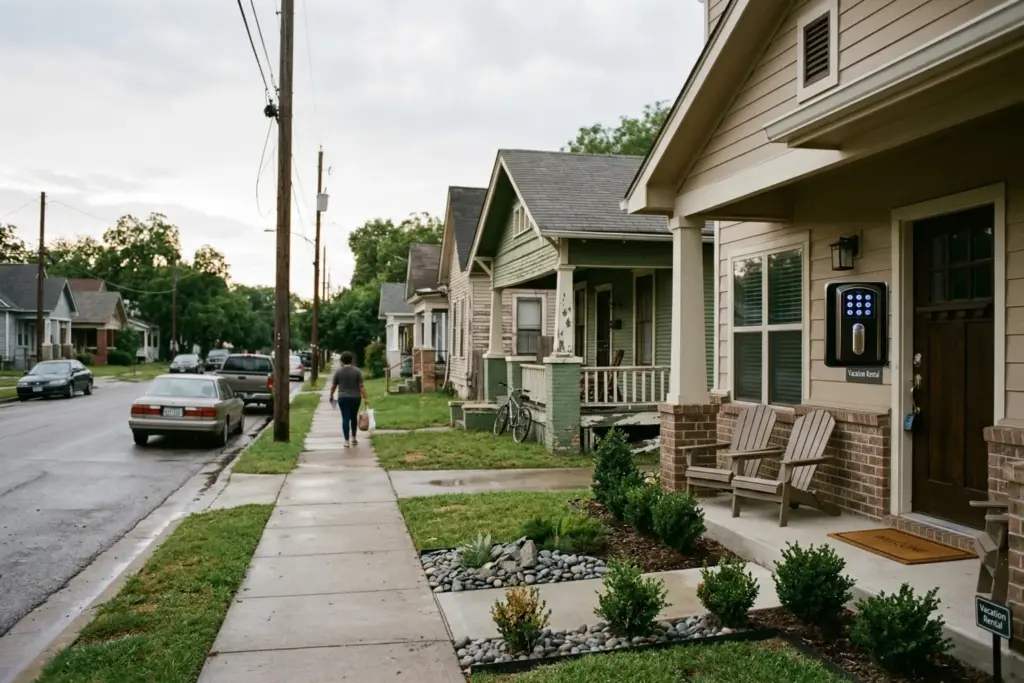
A host in Houston lists her three-bedroom bungalow on Airbnb. She has AirCover. She has homeowner’s insurance. She figures she is covered. Then a guest slips on the back deck, breaks a wrist, and files a liability claim. The homeowner’s insurer denies the claim because the property was being used commercially without disclosure. AirCover’s liability program requires a 14-day filing window and excludes certain injury scenarios. The host is staring at a five-figure legal bill with no coverage backing her up.
This is not a hypothetical. It is the most common insurance failure pattern in short-term rentals.
As we reported in early March, the STR insurance market itself is in upheaval, with carriers pulling out and premiums climbing. That piece covered the supply side. This one is about what you, the operator, actually need to do about it.
Sponsored — OfferMarket
Buy Your First STR With Long-Term Rental Financing
Flexible, long-term financing for short-term rental buyers. Rates from 5.75%. Instant online quote, no credit pull.
Explore RTL Financing Options →Affiliate disclosure: StaySTRA may earn a referral fee.
The Three-Layer Problem Most Operators Do Not Understand
Most STR operators believe they have insurance. What they actually have is a patchwork of programs that were never designed to work together. Documents show three distinct layers of “coverage” that operators routinely conflate, and each one has gaps that the others do not fill.
Layer 1: Your homeowner’s or landlord policy. This is your baseline property coverage. The problem? Most standard homeowner’s policies include a business activity exclusion. The moment you accept a paying guest, your insurer has grounds to deny any claim on that property. Not just the guest-related claim. Any claim. Fire. Storm. Theft. The business activity exclusion gives the carrier the right to walk away from the entire policy.
Layer 2: Platform protection programs. Airbnb’s AirCover and Vrbo’s host protection are not insurance policies. Airbnb says this directly in its terms. These programs are voluntary reimbursement agreements between you and the platform, subject to the platform’s claims process, timelines, and discretion.
Layer 3: Standalone STR insurance. This is actual insurance, underwritten by a carrier, with enforceable policy terms. It is also the layer that most operators with one to five properties have never purchased.
What Platform Protection Actually Covers (and What It Does Not)
The marketing language from both Airbnb and Vrbo leads operators to believe they have comprehensive coverage. The fine print tells a different story.
Airbnb AirCover
AirCover includes two components: Host Damage Protection (up to $3 million) and Host Liability Insurance (up to $1 million). The damage protection covers guest-caused damage to your property and belongings, plus income lost from cancelled bookings due to that damage. The liability component covers situations where you are found legally responsible for a guest injury or property damage during a stay.
What it excludes matters more than what it covers. Data indicates these are the exclusions that catch operators off guard:
- Wear and tear: If Airbnb determines damage is “normal” degradation, it is not covered.
- Cash and securities: Stolen cash or valuables are excluded.
- Natural disasters: Flood, earthquake, and similar events are not covered under the damage program.
- Assault and battery: Liability claims involving assault are excluded.
- Invasion of privacy: Hidden camera claims and similar are excluded.
- Intentional damage: If Airbnb determines the guest intended the damage, coverage can be denied.
- 14-day filing window: You must submit documentation within 14 days of the damage or loss. Miss the deadline, lose the claim.
The current AirCover liability program runs through at least June 30, 2026. There is no guarantee of renewal terms.
Vrbo Host Protection
Vrbo’s program is narrower than most operators realize. It provides $1 million in liability protection only. That is an important distinction. Vrbo’s program does not cover property damage caused by guests at all. If a guest puts a hole in your wall, breaks your furniture, or floods your bathroom, Vrbo’s protection program does not reimburse you.
Vrbo’s liability exclusions include intentional harm by the host, properties that are not legally permitted for short-term rental use, and alcohol-related incidents if the host is in the business of serving alcohol.
Sources reveal a critical gap that most multi-platform operators miss: if you list on both Airbnb and Vrbo, each platform’s protection only applies to bookings made through that platform. A Vrbo guest who damages your property has zero coverage from Vrbo’s program for that damage. An Airbnb guest who books through a direct link you texted them has zero coverage from AirCover.
The Homeowner’s Policy Trap
This is the gap that costs operators the most money. Standard homeowner’s insurance policies were written for owner-occupied residences, not commercial rental activity. When you list your property on a short-term rental platform, you are operating a business.
The business activity exclusion in most homeowner’s policies is broad. It does not just exclude claims related to your rental guests. It gives the insurer the right to deny any claim at the property once they determine commercial rental activity is occurring. That includes:
- Fire damage (even if unrelated to guests)
- Storm and wind damage
- Theft
- Vandalism
- Water damage from burst pipes
Some operators believe they can simply not tell their homeowner’s insurer about the STR activity. That approach creates a worse problem. If the insurer discovers undisclosed commercial use during a claim investigation, they can void the policy retroactively. You lose coverage and potentially face fraud allegations.
The safer middle ground for occasional hosts is a homeowner’s policy endorsement or rider that specifically permits short-term rental activity. Not all carriers offer these, and the ones that do typically limit coverage to a certain number of rental nights per year (often 30 to 90 days). If you rent more than that, you likely need a standalone policy.
Coverage Comparison: Platform vs. Homeowner’s Rider vs. Standalone STR Policy
| Coverage Type | Airbnb AirCover | Vrbo Host Protection | Homeowner’s STR Rider | Standalone STR Policy |
|---|---|---|---|---|
| Property damage (guest-caused) | Up to $3M | Not covered | Varies (typically up to policy limit) | Replacement cost |
| Liability (guest injury) | Up to $1M | Up to $1M | Varies ($100K-$500K typical) | $1M-$3M |
| Natural disaster damage | Not covered | Not covered | Covered (per base policy) | Covered |
| Lost rental income | Limited (guest-caused only) | Not covered | Rarely included | Included (actual loss sustained) |
| Theft by guests | Excludes cash/securities | Not covered | Varies | Covered |
| Liquor liability | Not covered | Not covered | Not covered | Included (Proper Insurance) |
| Amenity liability (pool, hot tub) | Limited | Limited | Varies | Included |
| Multi-platform coverage | Airbnb bookings only | Vrbo bookings only | All bookings | All bookings |
| Direct booking coverage | Not covered | Not covered | All bookings | All bookings |
| Typical annual cost | $0 (included) | $0 (included) | $200-$500/year added to base | $2,000-$3,000/year |
Standalone STR Insurance: Who Offers It and What It Costs
The standalone STR insurance market has consolidated. Slice, once a popular on-demand option, has exited the STR market entirely. That leaves fewer choices, which makes comparison more important.
Proper Insurance
Proper Insurance is the largest STR-specific carrier in the U.S. Their policies start at $1 million in commercial general liability with an optional $2 million additional layer. Property coverage uses replacement cost valuation, meaning you get current replacement value rather than depreciated value. Proper is one of the few carriers that includes liquor liability (relevant if you stock a bar cart or wine fridge for guests), amenity liability for pools, hot tubs, bicycles, and small watercraft, plus bed bug coverage that triggers lost business income. They also cover actual loss sustained for business revenue with no time limit, unlike many carriers that cap income loss at 12 months.
Steadily
Steadily operates as a landlord insurance platform covering all 50 states. CNBC named Steadily among the best landlord insurance companies of 2026. Their policies explicitly cover short-term rental activity through Airbnb and Vrbo, including rental periods as short as one night. Steadily functions well for operators who want a single policy covering both long-term and short-term rental scenarios on the same property, or who are transitioning between rental models.
Safely
Safely specializes in on-site incident coverage, valuables, structural property damage, and personal injury for short-term rentals. They offer a per-booking insurance model that can work for operators with lower occupancy or seasonal properties where annual premiums feel disproportionate to rental income.
What You Should Expect to Pay
According to the National Association of Short-Term Rental Management (NASTRM), the average standalone STR insurance premium runs between $2,000 and $3,000 per year for a standard single-family property. The broader range across all property types is $1,500 to $3,500 annually. That translates to roughly $4 to $10 per booked night depending on your occupancy rate.
Premiums vary significantly based on location (wildfire and hurricane zones cost more), property value, amenities (pools and hot tubs increase premiums), and how frequently you rent. A beachfront property in a hurricane zone with a pool will cost substantially more than a mountain cabin in a low-risk area.
The right insurance costs money. The question is whether your market revenue justifies it. Run your market through the StaySTRA Analyzer to model net returns after insurance and operating expenses.
The Regulatory Push: Cities That Require STR Insurance
Insurance is no longer just a smart business decision. In a growing number of cities, it is a legal requirement for your operating permit.
Documents show at least seven major markets now mandate liability insurance as a condition of STR registration:
- Houston, TX: $1 million liability insurance required. The city’s comprehensive STR ordinance took effect January 1, 2026, with enforcement beginning April 1. Registration costs $275 plus a $33.10 administrative fee. Violations carry penalties of $100 to $500 per day.
- Denver, CO: $1 million property-liability insurance required before license approval. Denver explicitly states that platform coverage (AirCover, Vrbo protection) does not satisfy this requirement.
- Arlington, TX: $1 million minimum liability insurance.
- Scottsdale, AZ: $500,000 liability coverage per property.
- New Jersey (statewide): $500,000 general liability insurance required for STR permit applications.
- Colorado mountain communities (Vail and others): $1 million minimum, with multiple municipalities specifying that platform protection does not count.
- Los Angeles, CA: Proof of liability insurance required as part of the registration process.
The trend line is clear. More cities are adding insurance mandates to their STR ordinances, and enforcement mechanisms are getting teeth. Houston’s $100 to $500 daily penalty for noncompliance is not unusual.
One notable counter-trend: Idaho’s HB 583, signed into law and effective July 1, 2026, specifically prohibits local governments from requiring insurance beyond standard homeowner’s coverage. The law represents a preemption approach that removes local authority to impose STR-specific insurance mandates. Whether other states follow Idaho’s path remains an open question.
Decision Framework: What Coverage Do You Actually Need?
Not every operator needs the same coverage. Here is how to think through the decision based on your specific situation.
If you rent your primary residence occasionally (under 30 nights per year)
A homeowner’s policy with an STR endorsement may be sufficient. Call your current carrier and ask whether your policy covers short-term rental activity. If it does not, ask about adding a rider. This is the cheapest option and works for truly occasional hosting.
If you rent a dedicated property or list more than 30 nights per year
You need standalone STR insurance. Your homeowner’s or landlord policy almost certainly excludes frequent commercial rental activity, and a rider probably will not cover your volume. A standalone policy from Proper Insurance, Steadily, or a similar STR-focused carrier fills all the gaps that platform protection misses.
If you operate in a city with insurance mandates
Check your local STR ordinance for specific coverage minimums. In Houston, Denver, and Arlington, you need at least $1 million in liability coverage, and platform protection programs do not satisfy that requirement. Your standalone policy needs to meet or exceed the local minimum.
If you list on multiple platforms or take direct bookings
Standalone coverage is essential. Platform protection only covers bookings made through that specific platform. If even 10% of your bookings come through direct channels, your website, or a second platform, those stays have zero platform protection.
If your property has high-liability amenities
Pools, hot tubs, waterfront access, bicycles, exercise equipment, fire pits. Each one increases your liability exposure. Confirm that your policy explicitly covers these amenities. Not all carriers include them by default.
Checklist Before You Buy STR Insurance
- Disclose STR activity to your current homeowner’s or landlord insurer. Find out whether your existing policy covers, excludes, or can be endorsed for short-term rental use.
- Check your local STR ordinance for insurance requirements. Know the minimum liability coverage your city or county requires before you shop for policies.
- Get quotes from at least two STR-specific carriers. Proper Insurance, Steadily, and Safely all offer online quotes. Compare coverage terms, not just premiums.
- Verify that the policy covers all your booking channels. If you take direct bookings, list on multiple platforms, or use a property management company, confirm coverage applies to all reservation sources.
- Confirm amenity coverage. If your property has a pool, hot tub, dock, or other high-liability features, verify that those are explicitly covered.
- Check the business income protection terms. How does the policy handle lost rental income if your property is damaged and unusable? Is there a time limit? Is the reimbursement based on actual loss or a capped daily rate?
- Understand the claims process. What is the filing deadline? What documentation do you need? How long does the typical claim take to resolve?
- Review annually. Insurance needs change as you add properties, change platforms, renovate, or as local regulations evolve. An annual review is not optional.
Frequently Asked Questions
Does Airbnb AirCover count as insurance?
No. Airbnb explicitly states that AirCover’s Host Damage Protection is not an insurance policy. It is a voluntary reimbursement program with its own terms, conditions, and exclusions. The Host Liability Insurance component is underwritten by an insurer, but it only covers Airbnb bookings and has significant exclusions including assault, battery, and invasion of privacy.
Will my homeowner’s insurance cover my short-term rental?
In most cases, no. Standard homeowner’s policies include business activity exclusions that allow the insurer to deny claims once they determine the property is being used for commercial rental activity. Some carriers offer endorsements or riders that permit limited STR use, but coverage varies significantly. Contact your insurer and disclose your rental activity before assuming you are protected.
How much does standalone STR insurance cost per year?
According to the National Association of Short-Term Rental Management, the average standalone STR insurance premium is $2,000 to $3,000 per year for a standard single-family property. The range extends from $1,500 to $3,500 depending on location, property value, amenities, and rental frequency. That translates to roughly $4 to $10 per booked night.
Do cities require STR operators to carry insurance?
Yes, and the number is growing. Houston, Denver, Arlington (TX), Scottsdale, New Jersey, multiple Colorado mountain towns, and Los Angeles all require proof of liability insurance for STR permits or registration. Required coverage ranges from $500,000 to $1 million. Denver and several Colorado cities explicitly state that platform protection programs do not satisfy the requirement.
What happens if I operate an STR without proper insurance?
You face two risks. First, if a claim occurs, you may have no coverage at all, leaving you personally liable for damages, legal fees, and medical costs. Second, in cities with insurance mandates, operating without the required coverage is a permit violation that can result in daily fines ($100 to $500 per day in Houston) and potential permit revocation.
We do our best to keep our reporting accurate and up to date, but situations evolve and we are only human. Always verify current details directly with local officials and sources before making decisions.
Model Your Market Before You Commit
Insurance is an operating expense that directly affects your bottom line. Before you commit to a coverage level, make sure the numbers work. The StaySTRA Analyzer lets you model revenue, occupancy, and expenses for any U.S. market so you can see what your net returns look like after insurance costs are factored in.
Become a StaySTRA Insider
Join free — get our newsletter + 1 free property analysis/month.
No spam. Unsubscribe anytime. Free membership includes property analyses and market insights.