

Key Takeaways
- Oregon has no statewide STR preemption law and no statewide registry. Every city and county writes its own rules, creating a patchwork that investors must navigate jurisdiction by jurisdiction.
- Bend requires both a land use permit (Type I or Type II) and an annual operating license. Type II whole-house permits carry a 500-foot density buffer that limits where new STRs can operate in residential zones.
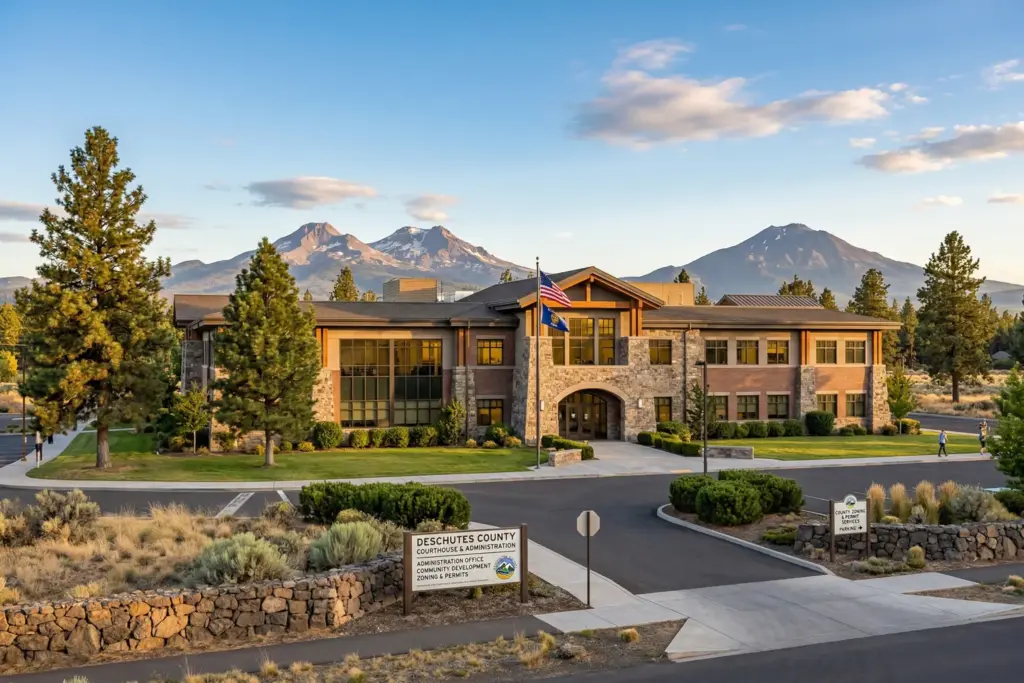
- Properties in unincorporated Deschutes County bypass Bend’s permit system entirely, with no land use permit, no operating license, and no density restrictions required.
- Oregon’s 2026 legislative session (February 2 through March 6) passed zero STR-specific bills. The state is sitting out the 2026 preemption wave that swept through Idaho, Indiana, and other states.
- Oregon Coast markets like Lincoln City and Lincoln County have reached their STR license caps, with zero new licenses available in most zones.
Bend’s STR permit system has a 500-foot density buffer for whole-house vacation rentals in residential zones. If you buy an investment property and the neighbor 400 feet away already holds a Type II permit, your application is dead on arrival. That single rule (buried in Section 3.6.500 of the Bend Development Code) has killed more investor deals in Central Oregon than any market downturn.
I’ve spent the last year tracking STR regulatory frameworks across dozens of states, and Oregon stands out for a specific reason: the state refuses to pick a side. While Idaho passed HB 583 stripping cities of STR authority and Indiana enacted HEA 1210 banning local caps, Oregon’s 2026 legislative session came and went in 35 days without a single STR bill reaching a floor vote. That means Bend, Portland, Lincoln City, and every other Oregon municipality still writes its own rulebook. For investors evaluating Bend’s 1,430 active listings and $339 average daily rate, understanding which rules apply to your specific property isn’t optional. It’s the difference between a permitted asset and an expensive mistake.
This article provides general information and should not be construed as legal advice. Consult a qualified attorney in your jurisdiction for advice specific to your situation.
Oregon’s Decentralized STR Framework
Oregon operates without statewide STR preemption, without a statewide STR registry, and without any uniform licensing standard. The state’s only universal requirement is the 1.5% Transient Lodging Tax (TLT) that applies to all short-term rentals of fewer than 30 days. Every host in Oregon must register with the Oregon Department of Revenue to collect and remit this tax quarterly, regardless of which city or county they operate in.
Beyond that 1.5% floor, everything else is local. Portland requires hosts to live on-site 270 days per year. Lincoln City has capped licenses in residential zones and stopped issuing new ones. Bend runs a two-tier permit system with density buffers. Deschutes County (which surrounds Bend) requires nothing more than a tax registration. The practical result is that two properties separated by a city limit line can face completely different regulatory burdens.
Oregon also has an ADU-specific carve-out worth knowing: cities cannot require owner-occupancy for properties with accessory dwelling units, though they can restrict STR use of ADUs through separate zoning provisions. If you’re looking at a Bend property with a detached ADU, the STR rules for the main house and the ADU may differ.
For context on how Oregon compares to the broader 2026 state legislative landscape, the 2026 STR Preemption Wave analysis covers which states moved to strip local STR authority this year and which didn’t. Oregon falls firmly in the “didn’t” column.
Bend City STR Permit Requirements
Bend’s STR program lives in two layers: a land use permit (one-time, through the Planning Division) and an operating license (annual, through the Licensing Division). You need both. Missing either one means you’re operating illegally, and the city has an active code enforcement process for unlicensed STRs.
Type I Permits (No Density Buffer)
Type I covers three scenarios:
- Infrequent whole-house rentals: You rent the entire home no more than 30 days per year or 4 rental periods (whichever comes first). This is the “I rent my house during the Bend Film Festival and maybe one ski weekend” category.
- Owner-occupied room rentals: You live in the property and rent up to 2 bedrooms while present. Think bed-and-breakfast without the breakfast.
- Commercial/mixed-use zone whole-house: If your property sits in a commercial or mixed-use zone, you can rent it as a whole-house STR without density restrictions.
Type I land use permit fee: $1,314.53 plus a 4% Long Range Planning Surcharge ($52.58), totaling roughly $1,367.
Type II Permits (500-Foot Density Buffer)
Type II is the permit most investors need: whole-house rentals in residential or Mixed-Use Riverfront zones that exceed the 30-day or 4-rental-period threshold. This is where the density rule kicks in.
Picture this: You find a three-bedroom craftsman in Bend’s Old Mill District that pencils out beautifully on the StaySTRA Bend analyzer. You run the numbers, you love the $7,522 peak-month revenue potential in July. But before you make an offer, you need to check whether any existing whole-house STR permit holder sits within 500 feet of the property boundary, measured radially. If one does, the city will deny your Type II application regardless of how strong your financials look.
Type II land use permit fee: $3,657.44 plus a 4% Long Range Planning Surcharge ($146.30), totaling roughly $3,804.
The density buffer is measured from property boundary to property boundary, not from structure to structure. And it only applies between Type II whole-house STRs. Type I permits, infrequent-use permits, and properties in the three exempt subdivisions (Deschutes Landing, Courtyards at Broken Top Units 1-8 and 21-32, and Mt. Bachelor Village) don’t count toward the buffer.
Operating License (Annual)
Once you have your land use permit, you need an operating license before your first guest checks in. The city gives you 60 days from land use permit approval to apply. Miss that window and your land use permit is voided, which means starting over (and potentially losing your density clearance if a neighbor gets permitted in the meantime).
Operating license costs:
- Initial application: $350
- Annual renewal: $255
- Transportation supplement (whole-house): $200/year
- Transportation supplement (all others): $108/year
- Late renewal fee: $55
For a typical whole-house investor, you’re looking at $350 + $200 = $550 in the first year, then $255 + $200 = $455 annually after that. Combined with the Type II land use permit, your upfront regulatory cost is approximately $4,354 before you’ve hosted a single guest.
Room Tax
All permitted STRs in Bend (except infrequent-use) must collect and remit a 10.4% room tax on gross revenue. Combined with Oregon’s 1.5% statewide TLT, your total lodging tax burden in Bend is 11.9%. On $3,686 in average monthly revenue (per StaySTRA data for Bend), that’s roughly $439 per month in tax obligations.
Renewal and Transfer Rules
Your operating license must be renewed annually, and you must prove you actually used the property as an STR at least once during the renewal period. Acceptable proof includes room tax submissions or rental receipts. There’s one interesting wrinkle: if you convert your STR to a long-term rental (12+ month lease), you can maintain your license for up to three consecutive renewals. That’s a valuable safety valve for investors who want to pivot strategies without losing their permit position in the density buffer.
On transfer: permits issued after April 15, 2015 do not transfer with the property upon sale. The new owner must reapply under current rules, including the density buffer check. Pre-2015 “Vacation Home Rental” permits do transfer. If you’re buying a property specifically for its existing STR permit, verify when that permit was originally issued.
Sponsored — OfferMarket
Buy Your First STR With Long-Term Rental Financing
Flexible, long-term financing for short-term rental buyers. Rates from 5.75%. Instant online quote, no credit pull.
Explore RTL Financing Options →Affiliate disclosure: StaySTRA may earn a referral fee.
Deschutes County Rules for Rural Properties
Here’s where it gets interesting for investors who know the area. Unincorporated Deschutes County (everything outside Bend, Redmond, Sisters, and La Pine city limits) has a dramatically lighter regulatory touch.
In unincorporated Deschutes County, there is no land use permit requirement, no operating license requirement, and no density restriction on how close STR properties can be to one another. You can rent the entire single-family dwelling or up to two rooms within it. The only requirement is registering with the county and collecting the 8% Deschutes County Transient Room Tax (plus the 1.5% state TLT, for a total of 9.5%).
Compare that to Bend’s 11.9% combined tax rate, $3,800+ in upfront permit fees, the 500-foot density buffer, and annual licensing costs. The regulatory cost gap between a property inside Bend city limits and one just outside in Deschutes County is substantial.
This is why many experienced Central Oregon STR investors target properties along the Sisters corridor, in the Sunriver area, or in other unincorporated pockets of Deschutes County. Hosts report that the Sisters corridor in particular attracts investors who want Central Oregon’s demand profile without Bend’s regulatory overhead.
The trade-off is real, though. Properties outside Bend may not benefit from the same walkability to downtown breweries, restaurants, and the Old Mill District that drive Bend’s premium ADR. You’re trading regulatory simplicity for potentially lower nightly rates.
Oregon Coast STR Markets: Lincoln City, Lincoln County, and the Cap Problem
Bend investors often compare Central Oregon to the Oregon Coast, the state’s other major STR corridor. The regulatory picture on the coast is tighter than Bend in several important ways.
Lincoln City
Lincoln City operates a zone-based cap system, and the caps are full. The R1-5 residential zone is capped at 194 STR licenses. The R1-RE zone is capped at 91. Both caps have been reached. No new licenses are being issued in these zones until existing license holders surrender or fail to renew. If you’re evaluating a Lincoln City investment property in a capped zone, you are buying a property that cannot legally operate as an STR unless it already holds a license.
Lincoln City’s transient room tax is 12%, which combined with the 1.5% state TLT brings the total to 13.5%. That’s higher than Bend’s 11.9%.
Lincoln County (Unincorporated)
Lincoln County (the broader county surrounding Lincoln City and other coastal communities) runs a region-based licensing system managed through the Sheriff’s Office. As of the most recent public data, all seven regions are at or above capacity with zero new licenses available out of 438 total active licenses. New application fee: $900. Annual renewal: $650. Those fees are significantly higher than Bend’s operating license costs.
The county also operates a 24/7 complaint hotline (541-265-0666), signaling that enforcement is active and community tensions around STRs are real on the coast.
Portland
Portland sits at the other extreme of Oregon’s regulatory spectrum. The city requires STR hosts to live on-site at least 270 days per year, effectively banning non-owner-occupied investment STRs in residential zones. Even owner-occupied hosts face a 95-day cap on unhosted (whole-house) rentals per year. Portland’s combined lodging tax rate runs approximately 16% when you stack the 1.5% state TLT, 6% city tax, 5.5% county tax, and a $4-per-night Tourism Improvement Fee.
For investors, Portland is essentially closed. Bend’s two-tier system is restrictive, but it at least provides a legal pathway for non-owner-occupied investment STRs through the Type II permit.
Sunriver: The Resort Community Wild Card
Sunriver sits about 15 miles south of Bend in unincorporated Deschutes County, which means it falls under the county’s lighter STR regulatory framework (no city permit, no density buffer, 8% county TRT). But Sunriver adds a third layer of governance that catches many investors off guard: the Sunriver Owners Association (SROA).
SROA governs the community through CC&Rs (Covenants, Conditions, and Restrictions) that function as a de facto regulatory body. If you plan to operate an STR in Sunriver, you need to satisfy three distinct layers:
- Deschutes County: Register for transient room tax collection (8% county + 1.5% state).
- SROA community-wide rules: Review the SROA Rules and Regulations document for guest access, parking, noise, and rental registration requirements. SROA dues apply to all property owners.
- Neighborhood-specific HOA: Many Sunriver subdivisions have their own neighborhood HOA with additional CC&Rs that may restrict or regulate rental activity. Some neighborhoods are more permissive than others.
The practical implication: a Sunriver property may be fully legal under county rules but restricted or prohibited by its neighborhood HOA. Before purchasing, request the SROA governing documents and any neighborhood-specific CC&Rs, and read the rental provisions carefully. “Deschutes County allows it” does not mean “your HOA allows it.”
2026 Oregon State Legislative Outlook
Oregon’s 83rd Legislative Assembly convened on February 2, 2026 and adjourned sine die on March 6 after a 35-day short session. Even-year sessions in Oregon are constitutionally limited in scope, and this one focused primarily on affordable housing bonding ($100 million in new authority) and rental application privacy protections (HB 4123).
No STR-specific bills reached a floor vote. No preemption legislation. No statewide registry proposal. No restriction bills targeting platforms or hosts. Oregon sat out the 2026 state-level STR fight entirely.
For context, the 2025 regular session did see SB 722 and HB 2070 introduced, but those targeted rent stabilization and pet fee prohibitions for long-term rentals, not short-term rentals. Neither passed.
What does this mean for investors? Oregon’s local patchwork is not going anywhere soon. The next full regular session is 2027, and there’s no indication that STR preemption or restriction is on any legislator’s priority list. If you’re investing in Bend, the rules you’re operating under today are the rules you should plan around for at least the next 18 to 24 months.
That said, the national trend is worth watching. The federal constitutional challenges to total STR bans could eventually change the legal landscape for Oregon cities that attempt outright prohibitions, even without state legislative action.
What This Means for Bend Investors
Let me put this together practically. If you’re evaluating a Bend STR investment in 2026, here’s your compliance checklist in order of importance:
1. Verify density buffer clearance before making an offer. For Type II permits, the 500-foot buffer is the single biggest regulatory risk. Contact Bend’s Planning Division (541-388-5580, ext. 3) and ask whether a Type II STR permit is available at your target address. Do this before you’re under contract, not after.
2. Budget for regulatory costs. A Type II whole-house STR in Bend carries approximately $4,354 in first-year permit and licensing costs, plus $455 annually thereafter. Add 11.9% of gross revenue for lodging taxes. These are real line items on your pro forma.
3. Know which jurisdiction you’re in. A property at the edge of Bend city limits might actually be in unincorporated Deschutes County, where the regulatory burden drops dramatically. Verify the exact jurisdiction with the county assessor’s office before assuming Bend rules apply.
4. Check permit transferability. Post-2015 STR permits do not transfer with the property. If you’re buying a property “because it has an STR permit,” that permit may evaporate at closing. Pre-2015 Vacation Home Rental permits do transfer. Verify the permit vintage.
5. Don’t assume Sunriver is simple. County rules are light, but HOA rules can be restrictive. Request and read all governing documents before purchasing a Sunriver investment property.
We do our best to keep our regulatory guides accurate and up to date, but ordinances change and we are only human. Always verify current requirements directly with your local municipality before making business decisions.
Frequently Asked Questions
Does Oregon have a statewide STR preemption law?
No. Oregon has no statewide preemption law, no statewide STR registry, and no uniform licensing standard. The only statewide requirement is the 1.5% Transient Lodging Tax on all rentals under 30 days. Every other rule is set by individual cities and counties. The 2026 Oregon legislative session passed no STR-specific bills.
How much does a Bend STR permit cost in 2026?
A Type I land use permit costs approximately $1,367 (including the 4% surcharge). A Type II permit costs approximately $3,804. Both require an additional operating license at $350 initially and $255 annually, plus a $200 annual transportation supplement for whole-house rentals. Total first-year cost for a Type II whole-house STR is approximately $4,354.
What is Bend’s 500-foot density rule for STRs?
Type II whole-house STR permits in Bend’s residential zones must maintain 500 feet of separation from any other approved whole-house STR, measured radially from property boundary to property boundary. If another Type II permit exists within that radius, the city will deny your application. Type I permits and properties in exempt subdivisions are not subject to this buffer.
Can I operate an STR in Deschutes County outside Bend city limits without a permit?
In unincorporated Deschutes County, there is no land use permit or operating license requirement for STRs, and no density restrictions. You must register with the county for transient room tax purposes and collect the 8% county tax (plus 1.5% state TLT). This lighter framework applies to properties outside the city limits of Bend, Redmond, Sisters, and La Pine.
Do Bend STR permits transfer when a property is sold?
Permits issued after April 15, 2015 do not transfer with the property. The new owner must reapply under current rules, including the density buffer check. Pre-2015 Vacation Home Rental permits do transfer with the property. New owners have 60 days from closing to obtain an operating license.
Run the Numbers for Bend
Oregon’s decentralized patchwork means the regulatory cost of an STR investment varies wildly depending on which side of a city limit line your property sits on. Before committing to a Bend purchase, run the actual revenue projections against the actual regulatory costs for your specific property. The StaySTRA Bend analyzer pulls from real booking data across the market’s 1,430 active listings. Pair that with the Bend market overview for occupancy trends, seasonal patterns, and ADR benchmarks. The numbers will tell you whether Bend’s regulatory overhead is worth it for your target property, or whether a Deschutes County address makes more sense.
Become a StaySTRA Insider
Join free — get our newsletter + 1 free property analysis/month.
No spam. Unsubscribe anytime. Free membership includes property analyses and market insights.