

Key Takeaways
- StaySTRA data shows house-category vacation rentals in Destin, Florida are averaging $8,063 per month in revenue in 2026, a figure that challenges the blanket narrative about Airbnb investing being finished.
- National STR average daily rate reached $246.62 in early 2026, up 3.6% year-over-year, even as occupancy softened slightly from pandemic-era boom levels.
- Supply growth has decelerated sharply to an estimated 4.6% in 2026, compared to the 20%-plus annual pace that flooded markets at the 2021-22 peak.
- Strong 2026 performers tracked by StaySTRA include Scottsdale AZ (59.4% occupancy), Destin FL (58.9%), and Asheville NC (revenue up 14.7% year-over-year), each still delivering attractive returns for well-priced acquisitions.
- Whether buying an Airbnb is worth it in 2026 is not a yes-or-no question. It is a market-by-market, deal-by-deal analysis, and the data provides the answer if you know where to look.
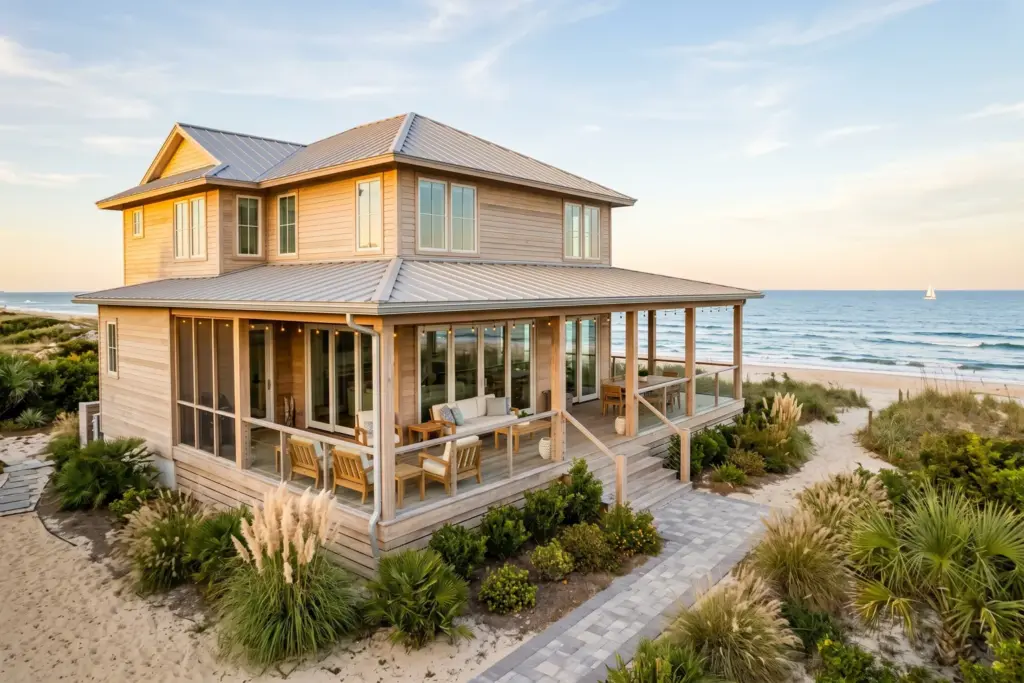
In Destin, Florida, house-category vacation rentals are averaging $8,063 per month in revenue right now, according to StaySTRA market data. That number probably does not square with what you have been reading about Airbnb investing in 2026, and that gap between the data and the narrative is exactly the reason this article exists.
The question “is buying an Airbnb still worth it in 2026” is one of the most-searched phrases in real estate investing this year. I understand why. The last three years have been noisy: oversaturation warnings, platform policy shifts, city crackdowns, and a long collective hangover from the 2021-22 boom when it seemed like every beach house in Florida and every cabin in Tennessee was generating extraordinary returns. The mood shifted. A lot of prospective investors are now genuinely confused about whether that window has closed for good.
Here is my answer, after forty years working with market data: it depends, and the dependency is entirely market-specific. Some markets are performing as well as they ever have. Some are genuinely oversupplied and deserve real scrutiny. The national aggregate figure that most of the doom-and-gloom coverage is built on tells you almost nothing useful by itself. What tells you something is the specific supply, demand, and revenue picture in the specific market you are evaluating.
Let me walk you through what the StaySTRA data actually shows in 2026, market by market, so you can make a genuinely informed decision.
What the 2026 National Numbers Actually Show
Think of national STR performance data the way you would think about average temperature across the United States. Knowing it averages 59 degrees across all fifty states on a given day tells you almost nothing about whether to pack a coat for your trip. You need to know your destination. The national aggregate is the same kind of statistic: directionally useful, not operationally useful.
That said, the national context matters. StaySTRA’s data from early 2026 shows national average occupancy at 48.4%, down about 1.5 percentage points year-over-year, with average daily rate at $246.62, up 3.6% from the same period in 2025. Revenue per available rental came in at $119.27, up 2.1% year-over-year. Total active listings tracked nationally: 1.68 million, up about 4.2%.
Two things stand out in those numbers. First, that January baseline is seasonally soft for most markets. Full-year occupancy figures in actively performing markets run considerably higher. Second, the direction of ADR and occupancy is telling a specific story: rates are climbing while occupancy has softened slightly. That is the defining characteristic of the 2026 STR market, and it matters for how you evaluate a potential deal. Revenue is not collapsing. Competition for bookings has increased in some markets. The two dynamics are not the same thing.
If you want to see how a specific property sits within its micro-market comps, the StaySTRA Analyzer builds deal-level projections from actual comparable listings, not market-wide averages. It calculates projected ADR, occupancy, monthly revenue, cap rate, and cash-on-cash return for any US property address.
Sponsored — Beeline
Finance Your Next STR With a DSCR Loan
Qualify on property cash flow, not W-2 income. Beeline specializes in fast DSCR closings for STR investors. No personal income verification required.
Check Your DSCR Eligibility →Affiliate disclosure: StaySTRA may earn a referral fee.
How 2026 Compares to the 2021-22 Peak
The 2021 and 2022 seasons were extraordinary by any historical measure. Pandemic-constrained travelers suddenly had more flexibility, more savings, and a strong preference for private accommodations over hotels. Supply had not yet caught up to that demand surge. In that environment, mediocre properties in secondary markets produced returns that would look exceptional in a normal year. Cap rates ran 7% to 10% or higher across a wide range of markets, and cash-on-cash returns that would have required careful market selection in any other year came almost automatically.
That period ended. It was always going to. Supply responded to the incentive signal: new STR listings grew at 20%-plus annual rates through 2021 and 2022. By the time demand growth decelerated to more normal rates, significantly more properties were competing for bookings in many markets. By 2026, that supply growth has slowed to an estimated 4.6% annually at the national level. That is a meaningful deceleration from the flood of inventory that hit between 2020 and 2023.
Current national cap rate benchmarks sit in the 5% to 8% range, compared to that 7% to 10% peak window. In strong, well-selected markets, experienced investors are still targeting 8% to 15% cash-on-cash returns. That range is entirely achievable. It requires more precise market selection and tighter deal analysis than it did when the rising tide was lifting everything. Don’t let the narrowing spread discourage you. Stay with me here, because the market-level data tells a more interesting story than the national averages do.
Markets That Still Pencil in 2026
The StaySTRA data makes one thing very clear: not all markets behaved the same way. Here is what the current numbers look like across four major STR market categories, all pulled from StaySTRA location pages.
Beach Markets: Destin, Florida
Destin is one of the strongest beach markets in the country, and the 2026 data supports that reputation. StaySTRA shows an average daily rate of $359, occupancy at 58.9%, and average monthly revenue of $5,611 across all property types. For house-category properties specifically, that average climbs to $8,063 per month.
A few things drive this outperformance. Destin generates consistent summer demand from the Southeast and Midwest, the Emerald Coast beach access is genuinely irreplaceable (you cannot build your way around that geographic constraint), and the rental market there skews heavily toward larger properties where per-night rates hold up well even during softer shoulder weeks. If you are evaluating a Gulf Coast property, those Destin numbers represent a legitimate positive signal for what the market can support.
To see how a specific Destin address would perform based on current comps, run it through the StaySTRA Airbnb Calculator. The tool pulls from actual listing data in that micro-market and builds the projection from real comparable performance.
Mountain and Leisure Markets: Gatlinburg and Asheville
The Smoky Mountains region continues to attract remarkable year-round demand. StaySTRA’s Gatlinburg data shows a $319 average daily rate and 54.2% occupancy, with more than 23,000 active listings in the area. That listing count is the number to watch carefully: Gatlinburg is not failing by any standard revenue measure, but a 23,000-listing market requires buyers to pay close attention to how supply is distributed within their specific target zone. The aggregate occupancy is healthy; the question is whether a specific sub-area is absorbing more supply than the average.
Asheville, North Carolina tells a more unambiguously positive story in the 2026 data. StaySTRA shows $218 ADR and 55.2% occupancy, with monthly revenue averaging $3,302. More importantly, revenue in Asheville is up 14.7% year-over-year as of April 2026. That kind of YoY growth in a market that faced real regulatory uncertainty two years ago signals genuine demand recovery. For investors evaluating western North Carolina, that trajectory is meaningfully encouraging.
Urban Resort Markets: Scottsdale, Arizona
Scottsdale is one of the more interesting STR stories in the 2026 StaySTRA data. The market shows a $273 average daily rate with 59.4% occupancy and average monthly revenue of $4,642. The occupancy figure is particularly strong for an urban market, and it reflects the consistent event-driven demand that Scottsdale generates year-round: spring training, corporate conferences, golf tournaments, and a luxury travel segment that has continued to spend at high levels even as budget travelers pulled back.
Urban resort markets like Scottsdale are meaningfully different from downtown metro STR plays. The demand profile is leisure and events, not business travel, and that distinction matters when you are modeling seasonality and revenue stability. Scottsdale’s numbers hold up because the demand is broad-based and recurring, not dependent on a single season.
If you want to compare where different states rank for STR investment returns by regulation and market depth, the StaySTRA Best States to Buy an Airbnb guide provides a data-backed state-by-state ranking that is worth reviewing before you commit to a geography.
Sponsored — Beeline
Finance Your Next STR With a DSCR Loan
Qualify on property cash flow, not W-2 income. Beeline specializes in fast DSCR closings for STR investors. No personal income verification required.
Check Your DSCR Eligibility →Affiliate disclosure: StaySTRA may earn a referral fee.
Markets That Warrant Real Caution in 2026
Honest market analysis means naming the markets where buyers need to slow down and look at the supply picture carefully before making a decision. Two patterns stand out in the current StaySTRA data.
Oversupplied Urban Markets: The Austin Example
Austin has more than 24,600 active short-term rental listings in the StaySTRA database. The market shows $231 ADR and 58.2% occupancy, which on the surface does not look catastrophic. But when you pair those numbers with the sheer volume of supply competing for bookings, the competitive dynamics for new entrants change significantly.
Think of it this way: 24,600 listings competing for roughly the same pool of leisure and business travelers means the margin for error on deal selection is much thinner than it was when that supply count was half the current level. A property that would have maintained 65% occupancy three years ago is now fighting for bookings in a much more crowded field. New hosts entering a 24,600-listing market without exceptional amenities, location, or pricing strategy are the ones most likely to underperform their projections.
Austin is not a broken market. It is a demanding one. Buyers evaluating Austin properties in 2026 need to be especially rigorous with comparable analysis and much more conservative with occupancy projections than the market’s overall average would suggest.
The Ski Trap: When High ADR Hides Low RevPAR
Ski markets can mislead prospective buyers because the nightly rates are genuinely eye-catching. Vail, Colorado appears in the StaySTRA data at $454 average daily rate, which is a high ADR number by any measure. But Vail’s occupancy comes in at 38%, with 3,377 active listings competing for a booking window concentrated in two ski seasons per year and a soft shoulder in between.
The metric that resolves this is RevPAR: revenue per available rental night, which blends your booked nights with the nights you sit empty. A $454 rate at 38% occupancy produces a very different revenue picture than $319 at 54% occupancy (the Gatlinburg comparison). The ADR looks more impressive in the brochure, but the occupancy reality shapes what you actually deposit into your account.
I have seen investors fall in love with a ski property’s peak-week revenue figures without ever running the full-year math. Forty weeks of modest bookings and eight peak weeks of strong rates requires a specific acquisition price and carrying cost structure to produce acceptable returns. The annual income is what matters, not the Christmas-week screenshot from the listing’s performance history. Run the annual numbers every time, not the peak-week numbers.
Sponsored — Beeline
Finance Your Next STR With a DSCR Loan
Qualify on property cash flow, not W-2 income. Beeline specializes in fast DSCR closings for STR investors. No personal income verification required.
Check Your DSCR Eligibility →Affiliate disclosure: StaySTRA may earn a referral fee.
The Factors That Actually Matter in 2026
After looking at STR market data across thousands of markets over the years, here is what I have found separates the deals that work from the ones that don’t in a more selective market environment.
Supply Growth Rate in Your Target Market
The most important leading indicator for any market’s trajectory is how fast supply is growing relative to demand. A market with 55% occupancy and stable listing counts is in a far better competitive position than a market with 60% occupancy and 20% annual supply growth. The second market is in the process of being repriced by competition, and entering before that repricing completes is exactly the wrong time to buy.
StaySTRA tracks listing counts by market, which gives you the ability to see this dynamic directly. The Gatlinburg 23,000-plus listing figure warrants close attention to local sub-area supply. The Asheville picture, with revenue growing 14.7% year-over-year, tells a very different story about supply-demand balance.
ADR and Occupancy Working Together
Neither metric in isolation tells you what you need to know. A market with $400 ADR and 35% occupancy generates $140 in RevPAR. A market with $220 ADR and 62% occupancy generates $136. Those two markets look dramatically different in any headline comparison, but they produce nearly identical effective revenue per available night. What matters for investment analysis is the combination, not either number standing alone.
For a deeper framework on evaluating the full metric picture before making an offer, the StaySTRA guide to buying an Airbnb property in 2026 walks through this multi-metric analysis step by step.
Property Type Advantage
The gap between Destin’s $5,611 all-property average and the $8,063 house-category average illustrates something important: in leisure markets, houses outperform condos and studio units by a consistent margin. The supply of comparable houses is more naturally constrained, and guests traveling in groups consistently pay a meaningful premium for private outdoor space, full kitchens, and the ability to spread out without sharing walls with strangers.
In a more competitive market environment, property type selection carries more weight than it did during the boom years when demand was strong enough to fill most property categories. The StaySTRA data suggests houses in leisure markets are holding up better than the broader market averages indicate.
The Investor Profile This Works Well For in 2026
Based on what the StaySTRA data shows across 2,600-plus US markets, the investors most likely to succeed with an Airbnb purchase in 2026 share a few consistent characteristics.
They are buying in destination markets with identifiable demand drivers that do not depend on general urban travel trends. Beach access, proximity to a national park, a regional cultural draw like Asheville’s arts scene, or an events calendar like Scottsdale’s. These markets have built-in demand anchors that are difficult to compete away with new supply.
They are buying house-category properties where the supply constraint is real and the premium for larger, private accommodations is consistent across seasons.
They are building projections around current occupancy rates in the market, not peak-year occupancy from three years ago. The deals that work in 2026 almost always work because the purchase price is right relative to current market revenue, not because the market itself is easy.
They are also thinking clearly about their financing structure. DSCR loans are specifically designed for STR properties, underwriting based on the property’s rental income rather than the buyer’s personal income. For buyers who are self-employed, have complex income situations, or are expanding beyond a first acquisition, understanding how DSCR qualification works relative to your target market’s current revenue profile is an important part of the deal analysis.
Sponsored — Beeline
Finance Your Next STR With a DSCR Loan
Qualify on property cash flow, not W-2 income. Beeline specializes in fast DSCR closings for STR investors. No personal income verification required.
Check Your DSCR Eligibility →Affiliate disclosure: StaySTRA may earn a referral fee.
The Investor Profile That Struggles in 2026
On the other side of the data, the investors who are most likely to struggle in 2026 share different characteristics.
They are buying in heavily supplied urban markets at acquisition prices that require 70%-plus occupancy to service the debt, in markets where 58% is the current average and new supply is still entering.
They are using peak-year revenue figures to model their deal because that is what the listing’s performance history shows, without adjusting for the competitive environment that has shifted since those years.
They are buying condos and studio units in markets where ADR compression from oversupply hits smaller properties hardest, because guests in those markets will readily substitute a comparable lower-priced unit.
Here in Santa Fe, I work around artists and craftspeople who approach their materials the same way I think good investors should approach data: looking for the truth in it, not confirmation of what they hope to see. The best investment decisions I have observed over forty years come from buyers who go looking for reasons not to proceed and only commit when the data runs out of objections. That discipline is worth more in 2026 than it was in 2021.
Running Your Own Analysis
Everything in this article is a starting point, not a conclusion. Market-level data gives you the directional picture: which categories are performing, which warrant scrutiny, and what key metrics look like across market types. But the decision about a specific property at a specific price in a specific zip code requires a different level of analysis.
The StaySTRA Analyzer is where that deal-specific work lives. Enter any US property address and the tool builds a projection from actual comparable listings in that micro-market. It calculates projected ADR, occupancy, monthly revenue, cap rate, and cash-on-cash return. It factors in DSCR for financing analysis. And it shows the competitive context around the property so you understand what you are buying into before you commit.
That is the level of analysis that separates investors who build durable STR portfolios from those who bought at peak and are now wondering where their projections went wrong. The data exists. The analysis is accessible. The question is whether you do it before you make an offer or after.
Frequently Asked Questions
Is Airbnb still profitable in 2026?
Yes, in the right markets and with the right deal structure. StaySTRA data shows house-category vacation rentals in markets like Destin, Florida averaging $8,063 per month in 2026, and Asheville, North Carolina posting 14.7% year-over-year revenue growth. National occupancy has softened from pandemic-era peaks, and supply has grown significantly in some urban metros, but destination markets with strong demand anchors continue to produce positive returns for well-priced acquisitions. The profitability question depends entirely on which market you are entering and what you are paying to get there.
What markets are worth buying an Airbnb in 2026?
StaySTRA data points to several market categories showing strength in 2026: beach markets like Destin, FL ($359 ADR, 58.9% occupancy, $8,063/mo for house-category properties), urban resort markets like Scottsdale, AZ ($273 ADR, 59.4% occupancy), and recovering mountain markets like Asheville, NC (revenue up 14.7% year-over-year). The common thread is markets with identifiable demand anchors, moderate supply growth, and a property type mix that favors house-category rentals. The Best States to Buy an Airbnb in 2026 guide offers a data-backed state-level ranking if you are still choosing a geography.
How much can you make on Airbnb in 2026?
It varies significantly by market and property type. StaySTRA market data shows monthly revenue ranging from $3,302 in Asheville to $8,063 for house-category properties in Destin. National average ADR reached $246.62 in early 2026, up 3.6% year-over-year. Strong destination markets with house-category properties are producing $6,000 to $10,000-plus per month at current occupancy rates. Urban condo markets in oversupplied metros produce significantly lower revenue. The most accurate way to estimate what you can make on a specific property is to run an address-level analysis using the StaySTRA Airbnb Calculator.
Is the Airbnb market oversaturated in 2026?
Some markets are. Some are not. Austin has more than 24,600 active listings tracked by StaySTRA. Gatlinburg exceeds 23,000. Those are legitimately crowded supply environments where new entrants face real occupancy headwinds. But markets like Destin, Scottsdale, and Asheville show occupancy rates above 55% with positive year-over-year revenue trends. Supply growth nationally has slowed from 20%-plus annually at the 2021-22 peak to an estimated 4.6% for 2026. “Oversaturation” is a market-level story, not a national one, and requires analysis of your specific target market to answer accurately.
What is a good cash-on-cash return for an Airbnb in 2026?
In strong STR markets, experienced investors typically target 8% to 15% cash-on-cash return. Cap rates in destination markets currently run 5% to 8% nationally, compared to 7% to 10% at the 2021-22 peak. Deals that hit the upper end of these targets in 2026 generally share two characteristics: they are in supply-constrained leisure markets, and they were acquired at prices that reflect today’s actual occupancy environment rather than peak-year projections. Running projected returns before locking in an acquisition price is essential. The StaySTRA Analyzer calculates both cap rate and cash-on-cash return for any US property address.
We do our best to keep our data accurate and up to date, but markets move fast and we are only human. Always verify current figures directly with local sources before making investment decisions.
Become a StaySTRA Insider
Join free — get our newsletter + 1 free property analysis/month.
No spam. Unsubscribe anytime. Free membership includes property analyses and market insights.