Key Takeaways
- Community forum research suggests roughly one in five current Airbnb hosts first discovered the platform as a guest, making the guest-to-host pipeline one of the most common origin stories in the STR industry.
- The World Cup 2026 is accelerating this pattern: hundreds of thousands of guests are staying in peak-performing STRs across 11 U.S. host cities right now, many of them experiencing high-quality hosting for the first time at scale.
- Former guests who become hosts bring real advantages in hospitality instincts and understanding what earns five stars, but consistently underestimate operational complexity and revenue timelines in year one.
- The most common aha moment is not financial. It is watching a great host execute and thinking: I already know how to do that part.
- The guest-to-host pipeline strengthens the entire STR ecosystem by seeding it with hosts who understand the experience from both sides of the door.
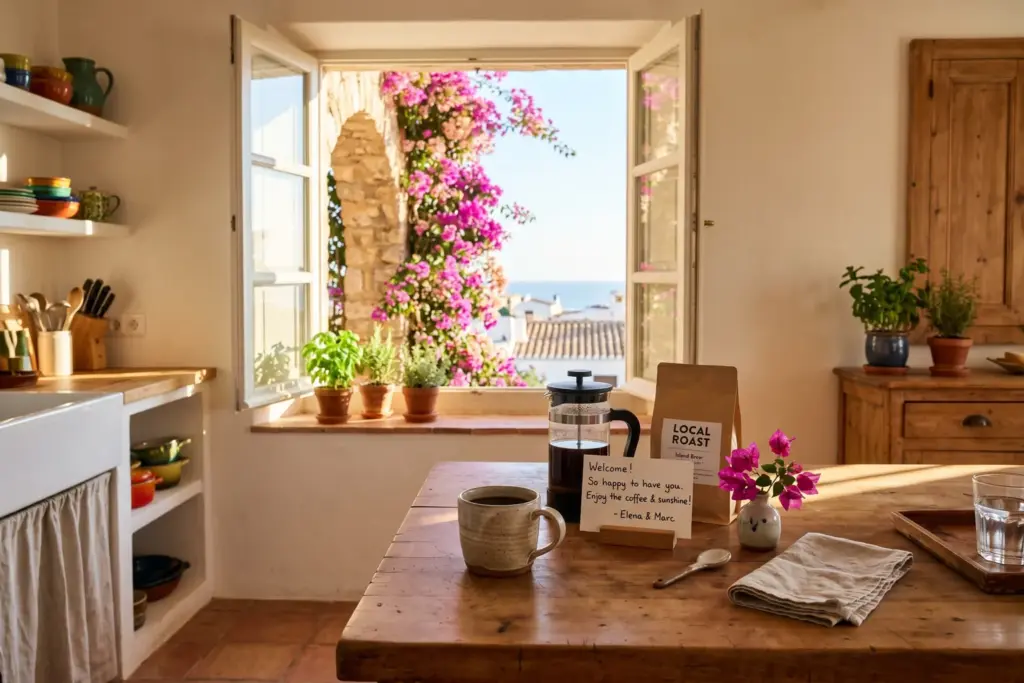
The apartment was too perfect. Second floor, two blocks from the stadium district, bougainvillea climbing the courtyard wall outside the window. On the kitchen counter sat a handwritten card from the host that read: “Bienvenido a Miami. Best ceviche is three blocks north. Ask for Marta.” There was a laminated city guide, a thoughtfully arranged coffee station with filters already counted out, and outlets everywhere a guest would think to look.
Let us call the guest Rafael. He had been booking short-term rentals for four years. He had stayed in lofts in Nashville, a beach house in Destin, a mountain cabin outside Asheville. He knew what a good STR felt like. But this apartment, during the opening week of the World Cup, was the first time the thought that had visited him quietly for years arrived with any urgency.
He pulled out his phone and texted his partner: “I keep thinking about how I would do this.”
Three weeks later, he had an appointment scheduled with a real estate agent.
A Pipeline That Has Always Existed
Rafael is not unusual. Hosts who started as guests are everywhere in the STR community. You find them in the Airbnb Community Center threads, on r/airbnb, in BiggerPockets forums where someone posts: “Been booking STRs for five years and finally decided to list my place. Here is what I learned.” Community forum research across those platforms suggests that roughly one in five current Airbnb hosts first discovered the business from the guest side. The path runs in one direction only, but a lot of people take it.
The median journey from first booking to first listing, based on the forum threads, runs three to five years. Guests spend that time observing. They catalog what works and what does not. They screenshot welcome guides they loved and make mental notes about check-ins that went sideways. They are, without fully realizing it, conducting competitive research.
What is different in 2026 is the scale of the accelerant. Airbnb launched its biggest-ever new-host incentive program in all 11 U.S. World Cup host cities, offering a $750 bonus to new hosts who complete a qualifying reservation before July 31. Industry projections put the number of guests attending World Cup matches and staying through STR platforms at more than 380,000 for the full tournament. Many of them are staying in the best-run properties in those cities, because hosts in Kansas City, Miami, and Los Angeles have had months to prepare. For a certain kind of observant guest, this is the week the thought stops being idle.
I have covered STR stories long enough to notice a pattern: people do not usually see income potential and decide to host. They see great hosting and decide they can replicate it. The financial case closes the deal. The guest experience is what opens the door.
Sponsored — OfferMarket
Buy Your First STR With Long-Term Rental Financing
Flexible, long-term financing for short-term rental buyers. Rates from 5.75%. Instant online quote, no credit pull.
Explore RTL Financing Options →Affiliate disclosure: StaySTRA may earn a referral fee.
What They Brought From the Guest Side
Let us call her Priya. She teaches elementary school in Phoenix and has been booking short-term rentals every summer for six years, choosing them specifically because they felt nothing like hotels. She loved the variability, the local handwriting in the guest book, the kitchen that let her make breakfast. She started hosting her spare bedroom in late 2024, after a stay in Sedona where the host had left a small jar of locally sourced honey with a card about where the bees came from.
“I already knew what I was building toward,” she told us. “I did not have to imagine what a good stay felt like. I had dozens of examples.”
Her setup reflected that. She wrote her welcome guide the way a guest would want to read it: short sections, scannable headers, no walls of text. She put extra blankets in an obvious place instead of a hard-to-find closet. She sourced a local coffee roaster because she remembered how a host in Flagstaff had done the same thing and it had genuinely surprised her in the best way. By month six, her occupancy was running above 70 percent. Her first set of reviews mentioned the welcome guide specifically, twice.
The guest-to-host advantage is sharpest in hospitality instincts. People who have stayed in fifty STRs do not have to guess what earns five stars. They have felt it. They know the difference between a host who set up the kitchen for themselves and one who set it up for a stranger. That knowledge is hard to teach and almost impossible to shortcut. Former guests arrive at hosting with it already installed.
What They Had to Unlearn
Let us call him David. He listed a two-bedroom in Austin in mid-2024, nine months after attending a wedding in Nashville where the STR had been so well-run he photographed the coffee station to study it later. He arrived at hosting confident, maybe too confident.
“I thought being a guest for four years meant I understood what guests wanted,” he said. “It meant I understood what I wanted as a guest.”
The gap showed up first in pricing. David set his rates based on what he himself would pay for a clean, simple property at a fair price. His first season’s guests wanted something more polished. “They were coming from Dallas and Chicago and spending real money on a trip. They were not looking for the same thing I was looking for on a road trip.” His ADR in the first three months was well below the Austin market average for his property type. He adjusted after studying his comp set more carefully, upgraded his listing photos, and improved the amenity setup. By month five, his numbers had turned around.
The second thing he had to unlearn was how to think about time. Being a guest means you interact with a property for 72 hours. Being a host means you manage every touchpoint from first inquiry to final review, often across dozens of bookings simultaneously. The mental model he brought from the guest side was real and useful but incomplete. It described the experience of the product, not the work of building and maintaining it.
This is the most consistent gap that former-guest hosts describe: they knew the destination, but not the road. As Priya put it: “As a guest you see a finished product. You do not see the three years of refinement it took to get there.”
If you are considering the transition, our article on what new STR hosts learn in their first year is one of the most honest looks at that ramp-up period we have published.
The Revenue Reality in the First Six Months
Let us call her Carolina. She lives in Kansas City, one of the World Cup host cities, and converted a one-bedroom unit in 2023 after returning from a trip to Colorado where she had stayed in a beautifully managed STR and spent the drive home calculating what the host was probably earning.
Her projection for month one: $2,800. Her actual month one: $1,040.
The gap came from three places she had not modeled carefully. New listings take time to accumulate reviews, and bookings are slower without a review history. Her market had seasonal patterns she had not fully studied. And setup costs arrived all at once in a way that her spreadsheet had smoothed out. “Online hosting content made it look like you flip the listing live and the bookings come,” she said. “The reality is you are building something. It takes months before the machine runs.”
By month eight, Carolina was consistently clearing $2,300 to $2,500 per month. The World Cup is her first major event window. Kansas City is hosting multiple World Cup matches across the tournament, and her property is fully booked through mid-July at rates more than double her normal ADR. She describes it as the moment her early projections finally arrived, just eighteen months later than she expected.
Airbnb reported average supplemental host income of $15,600 in the United States for 2025. That figure is real, but it reflects hosts who have been optimizing for multiple seasons. Year one almost always looks different. The real numbers from year one STR operators are more varied than the top-line figures suggest, and they are worth understanding before you list.
What Guest Experience Teaches You About Guests
Let us call him James. He booked more than forty STRs before he listed his first one, in Denver, in 2023. He considered himself highly prepared. He understood good hosting because he had stayed with good hosts.
The thing that surprised him most was not operations or revenue. It was how different his guests were from him.
“I am a low-maintenance traveler,” he said. “I do not need much. I book STRs because I like having a kitchen and space.” His first dozen guests left reviews that mentioned the towel situation, the number of outlets near the bed, and whether the coffee maker was automatic. One asked about the water pressure. “I had made the apartment for me. I had to rebuild it for everyone.”
This is the edge and the limitation of the guest-to-host path at the same time. The experience gives you real, embodied knowledge of what a stay feels like. But it gives you knowledge of your own stays, your own preferences, your own threshold for what matters. The hosts who translate that knowledge most effectively are the ones who remember that their guests arrive with different blueprints. They use their guest experience to start, and then they iterate based on feedback.
James now runs three properties in two states. He reviews his guest feedback every quarter and makes at least two changes each time. His guest experience gave him the foundation. His guest feedback gave him the ongoing education.
This Week Is a Recruiting Event for the Industry
Something worth naming about World Cup Week 1: the STR properties running in the 11 host cities right now are operating at or near their best. Hosts have been preparing for this window for months. Properties have been upgraded, pricing has been optimized, welcome guides have been rewritten. The guests arriving in Miami, Los Angeles, and Kansas City this week are staying in STRs that represent their hosts’ best work.
For a meaningful percentage of those guests, something is going to click. They will notice the way the space is laid out, the local recommendation in the welcome book, the way a good check-in message lands. They will think what people have been thinking ever since the first well-run vacation rental made someone say: yo podria hacer esto (I could do this).
ADR in World Cup host cities is running roughly double normal rates for the tournament window. The income potential is visible in a way it rarely is outside of major events. The quality of the hosting is high. The emotional resonance of a great stay is real. That combination is more effective at recruiting new hosts than any ad campaign Airbnb has ever run.
Sponsored — OfferMarket
Buy Your First STR With Long-Term Rental Financing
Flexible, long-term financing for short-term rental buyers. Rates from 5.75%. Instant online quote, no credit pull.
Explore RTL Financing Options →Affiliate disclosure: StaySTRA may earn a referral fee.
Why the Pipeline Matters for the Ecosystem
There is a version of STR growth that has troubled the industry throughout the 2020s: operators who arrive with spreadsheets and no sense of what makes a guest feel welcomed. Properties that are technically functional and experientially empty. Hosts who optimize for occupancy metrics but not for the stay itself.
The guest-to-host pipeline is a partial corrective to that pattern. People who arrive at hosting after years of being thoughtful guests bring something that is genuinely hard to manufacture: an instinct for the experience. They know the baseline because they have lived below it and above it. They know what earns a five-star review not from a checklist but from memory.
That matters for the guests who eventually book their properties. It matters for the hosts around them, because a rising baseline in any market improves the whole pool. And it matters for the STR ecosystem broadly, because an industry seeded with hosts who understand hospitality from the inside out is more resilient, more trusted, and more likely to survive the regulatory scrutiny that has tested short-term rentals in cities across the country.
La comunidad (the community) of hosts does well when the people joining it arrive knowing what they are walking into. The guest-to-host pipeline is, at its core, an education system that the industry does not have to fund. Guests pay for it with their bookings, learn from their stays, and bring that knowledge back in when they cross the threshold from customer to host.
If you are at that threshold now, the StaySTRA Analyzer will show you revenue projections, occupancy benchmarks, and ADR data for your specific address. It is free to use and it takes two minutes. Before you list, run the numbers. Before you choose a market, see what hosts in comparable markets are actually earning. The guest experience told you the product was worth building. The data will tell you where to build it.
We do our best to keep our content accurate and up to date, but things change and we are only human. Always verify details directly with local sources before making decisions.
Frequently Asked Questions
How many Airbnb hosts started as guests before listing their own property?
Community forum research across platforms like Reddit r/airbnb, the Airbnb Community Center, and BiggerPockets suggests roughly one in five current hosts first experienced the platform as guests before deciding to list. This pipeline is well-documented in host origin stories and appears to be accelerating during major travel events like the 2026 World Cup, when large numbers of guests experience high-quality STRs for the first time.
What do former Airbnb guests bring to hosting that first-time hosts often lack?
Former guests typically arrive at hosting with strong hospitality instincts and a clear, embodied sense of what earns five-star reviews. They tend to build welcome guides, amenity setups, and communication styles that reflect real guest experience rather than guesswork. The consistent limitation is operational: they understand the product but underestimate the work of building and maintaining it consistently across dozens of bookings.
How long does it take to start making good money as a first-time STR host?
Most first-time hosts go through a meaningful ramp-up period of six to twelve months before revenue stabilizes near their target. New listings take time to accumulate reviews, seasonal patterns take at least one full year to understand, and setup costs often arrive compressed at the start. Former guests frequently overestimate first-year income because they see the finished product of experienced hosts, not the ramp-up journey. Year one numbers are typically below projections; year two is usually where the model starts to perform consistently.
Is the World Cup 2026 a good time to list a new STR?
For hosts in the 11 U.S. host cities, the tournament window offers unusually high ADR and strong demand, along with Airbnb’s $750 new-host bonus for qualifying listings completed before July 31. First-time hosts who list specifically for the tournament should plan for a longer review-building period after the event, since tournament bookings do not always reflect normal market conditions. The World Cup can serve as a strong financial launch, but it is not a reliable indicator of what ongoing revenue will look like in a normal season.
What is the most common mistake former guests make when they start hosting?
The most consistent mistake is designing the property for themselves rather than for their actual guest mix. Former guests know what they personally value in a stay, which is a real advantage. But it becomes a limitation when they assume their guests share the same preferences. Hosts who do well long-term use their guest experience as a starting point and then iterate based on review feedback, treating their own tastes as a hypothesis rather than a finished answer.