Key Takeaways
- When you buy an existing Airbnb property, the seller’s reviews, Superhost badge, and listing history stay with the seller’s account, not the property.
- Airbnb’s Terms of Service explicitly prohibit transferring accounts to another party (Source). Vrbo has the same policy.
- The new owner must create a brand-new listing and build from zero: review count, search ranking, and algorithm trust all start fresh.
- Existing bookings on the seller’s calendar are a potential liability. Honoring them requires active coordination between buyer and seller, and the new owner typically cannot absorb them into their own account.
- DSCR lenders often underwrite based on existing STR income history, but that history belongs to the seller’s listing, which is deactivated after closing. The buyer’s new listing has no history at all.
The reviews stay with the host. That single fact is what most buyers of existing Airbnb properties discover after closing, not before.
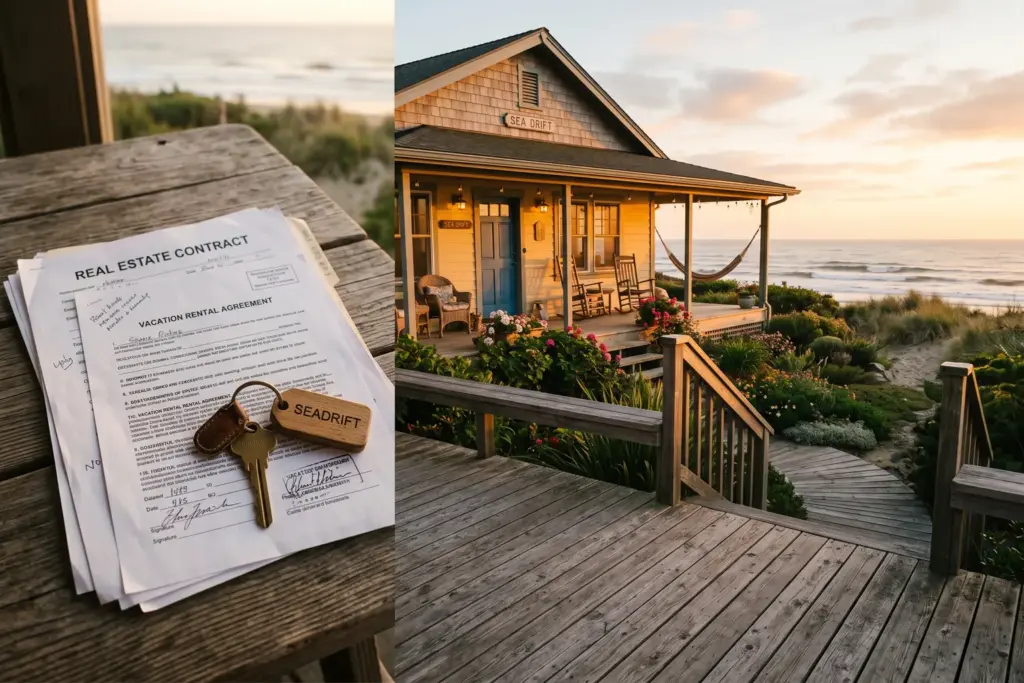
They paid a premium for a property with a 4.9-star listing, 200 five-star reviews, a Superhost badge, and a forward booking calendar that looked like proof of income. They closed. They called Airbnb. And then they read what Airbnb’s Terms of Service actually say about account transfers: you cannot do one.
The “established” Airbnb business they purchased was really two things bundled together in a way that most real estate brokers never separate. The first was the physical property. That transferred. The second was the platform presence: the search ranking, the booking history, the reputation, the algorithm trust built over years of guest interactions. That went with the seller when they walked out.
This is not a technicality buried in platform fine print. It is the operating reality for every buyer of an existing short-term rental in 2026. And it reshapes the math on nearly every STR acquisition that does not account for it.
If you are evaluating an STR acquisition right now, run the market data before you go any further. The StaySTRA Analyzer shows you what a clean-slate listing in that market can realistically earn, which is the number that actually matters to a buyer starting fresh.
What You Think You Are Buying
The pitch for acquiring an existing Airbnb is compelling. Skip the ramp-up. Skip the launch-phase grind where a new listing earns below-market rates while it accumulates reviews. Walk into an operation that already has reviews, calendar momentum, repeat guests, and a proven track record. Pay a premium for the head start and come out ahead anyway.
It sounds like it works. It does not work the way the pitch describes.
What buyers see on the listing page: the property’s occupancy history, the guest rating, the review count, the Superhost designation, the forward booking calendar. What buyers are actually acquiring: the real estate. The rest belongs to the seller’s account, and platform policy makes that distinction very clear.
Documents show the source of the confusion. Most STR acquisitions are structured as real estate transactions with a side conversation about “the business.” The purchase contract transfers title to the land and building. It does not, and legally cannot, transfer an Airbnb account. Brokers who market a property as an “established Airbnb” are describing what exists today. They are not describing what the buyer will inherit on day one of their ownership.
What Airbnb Actually Says About Transfers
Airbnb’s own policy on this is unambiguous. The platform states directly that there is no way to merge or move information or bookings between Airbnb accounts, and that there is no way to transfer ownership of an Airbnb account to a different host. The Terms of Service reinforces this: “You may not transfer your account to someone else” (Source).
That language covers everything attached to the account. The listing. The reviews. The Superhost status. The response rate history. The search ranking accumulated from years of performance data. The saved listing favorites from past guests. The listing URL that repeat guests and past visitors have bookmarked.
Vrbo operates the same way. Neither Airbnb nor Vrbo allows listings to transfer when a property sells, regardless of how long the listing has been active or how strong the rating is.
There is one limited exception worth understanding. Vrbo has a mechanism that allows a seller to request that guest reviews be forwarded to a new listing (Source). This is a narrow option, operates at the platform’s discretion, and does not transfer the listing, the URL, the algorithmic ranking, or the booking history. A buyer who successfully navigates this process ends up with some historical reviews attached to a brand-new listing that has no other performance signal. The search ranking still starts at zero. The Superhost clock still starts from scratch.
This matters more than most buyers realize. Airbnb’s algorithm does not simply read your star rating. It reads your entire listing history: how long you have been active, how consistently you have responded, how often you convert views to bookings, how your review velocity compares to other listings in the market. A new listing has none of that. It gets a brief boost as a new property, and then it competes on its own merits against every established listing in the area.
The Five-Star Reputation You Thought You Bought
The seller’s 4.9-star average with 200 reviews represents years of accumulated trust signals. Each review tells Airbnb’s algorithm that this property delivers consistent experiences. The Superhost badge signals that the host maintains a 4.8 average or higher, responds to 90 percent of messages within 24 hours, maintains fewer than one percent cancellations, and completes at least 10 stays (or 3 stays totaling at least 100 nights) per year (Source). That badge renews quarterly based on the host’s account performance, not the property’s address.
The buyer’s new listing inherits none of this. Zero reviews. No Superhost badge. No booking history. No search ranking.
Reaching the review threshold where a listing starts to function like an established one typically requires two to four months of active operation, sometimes longer in competitive markets. Industry experience with new listings suggests that roughly 20 to 30 reviews is the point where the listing starts to carry real algorithmic weight.
During that ramp-up window, new listings typically underperform. They often price lower to attract early bookings. They rank lower in search results. Guests who filter by “Superhost” or “20+ reviews” never see them at all. The revenue a buyer projected based on the seller’s trailing 12-month performance does not materialize in the first quarter of new ownership. It comes later, after the listing earns its own track record.
Sources in STR investor communities consistently surface the same pattern. Buyers who paid a premium for a high-performing listing found themselves operating what was, functionally, a new listing on the platform. The property was the same. The platform position was not.
The Existing Bookings Problem
Forward bookings create a specific problem that many buyers do not anticipate until they are two weeks from closing.
The seller’s calendar shows reservations stretching months into the future. Those reservations exist in the seller’s Airbnb account. They are binding agreements between the seller, as host, and the guests who booked. The guests did not book the address. They booked the host’s listing: the profile, the reviews, the terms the seller offered. When ownership of the property transfers, those booking agreements do not automatically transfer with it.
Buyers have three realistic options for handling existing bookings. First, the seller can add the buyer as a co-host on the existing listing, giving the buyer access to communicate with guests and manage check-ins through the seller’s account during the transition period. This is a workaround, not a transfer, and it leaves the seller’s account active in ways that can create complications if the relationship sours. Second, the seller can honor the bookings through closing from their own account, with a written agreement to pass rental income to the buyer after the deduction of platform fees. Third, the seller can cancel bookings with guest refunds, which Airbnb penalizes with cancellation fees and potential account impacts the seller will want to avoid.
None of these options is clean. All of them require explicit negotiation in the purchase contract. Most purchase contracts written by agents unfamiliar with STR operations say nothing about them at all.
Buyers who skip this negotiation often discover the problem after they take possession. Guests arrive expecting the host who had 200 reviews. The new owner handles the stay. The guest’s review, when it comes, goes on the new listing. That is how the first impression on the platform gets established.
For a complete look at what to include in the purchase contract, the STR purchase due diligence checklist covers purchase agreement protections and permit transferability alongside the other issues most buyers miss before closing.
The DSCR Loan Trap
DSCR loans are the financing tool of choice for most STR investors. They qualify the borrower based on the property’s income potential rather than personal income documentation. For an existing operating Airbnb, that means lenders want to see booking history. Twelve months of revenue data. Platform statements. Tax returns from the operation.
And here is where the acquisition math gets complicated.
The seller’s booking history is real, documented, and lendable. DSCR lenders can use that history to underwrite the loan, because it shows what the property has been capable of generating. The buyer qualifies. The deal closes. And then the seller deactivates the listing.
The buyer’s new listing, on day one of operation, has no history. The income the lender underwrote was tied to a platform presence that no longer exists. The property is the same building in the same location, but on Airbnb it is a new entry with no track record. The revenue ramp-up that follows, two to four months of below-projection performance while the listing builds reviews and search ranking, is a gap the DSCR underwriting model did not account for.
This creates a cash flow problem in the first quarter of ownership. DSCR loan payments are fixed. Revenue is not. Buyers who sized their down payment and reserves around the seller’s revenue history sometimes find themselves short during the ramp-up window.
The better-capitalized approach is to underwrite the deal as if you are launching a new listing, not acquiring an existing one. Model the first 90 days at a discount to the market average, not at the seller’s trailing revenue. Compare that conservative projection to the loan payment and carrying costs. If the deal works at the ramp-up numbers, it works. If it only works at the seller’s peak revenue, the premium you paid for the existing operation is not justified by the platform reality.
For current DSCR lenders that specialize in short-term rental acquisitions, including lenders that accept market-rate STR projections for new buyers with no listing history, the best DSCR lenders for short-term rentals in 2026 breaks down your options by loan structure and qualifying requirements.
What Buyers Should Do Instead
None of this means that buying an existing STR is a bad strategy. It means buyers need to understand what they are actually acquiring and price the deal accordingly.
The premium for a high-rated Airbnb is real only to the extent that the physical property supports it. Good properties in good markets ramp up faster than mediocre properties in mediocre markets. The reviews gave you proof of the property’s potential. They did not give you ownership of the revenue they generated.
Here is how to approach an existing STR acquisition honestly.
Price the land and building first. Run a comparable sales analysis on the property as if it were not operating as an STR at all. What does this property sell for as a second home or investment property in this market? That is your floor. Everything above that price is a premium you are paying for the STR operation, and you need to evaluate whether that premium is recoverable given the ramp-up reality.
Model the ramp-up conservatively. The seller’s trailing revenue is a ceiling, not a floor. Assume you will earn 70 to 80 percent of that figure in your first year as you build the new listing. Calculate whether the deal still works at that number. If it does not, you are overpaying for a platform reputation you will not inherit.
Negotiate the bookings explicitly. Require the purchase contract to address what happens to every existing reservation at closing. Get it in writing. Include a provision for how income from bookings that straddle the closing date gets allocated between seller and buyer. Do not assume the seller’s agent or your buyer’s agent has thought about this.
Pick the right market. In a high-demand market with genuine supply constraints, a new listing with strong photos, good pricing, and a quality property can ramp up quickly. In an oversaturated market with hundreds of competing listings, even a well-run new listing struggles. The market choice determines how fast your new listing gets traction.
Use the StaySTRA Analyzer to evaluate market conditions before you target properties. It shows occupancy trends, average daily rate data, listing counts, and market saturation signals that tell you whether a new listing has room to perform. That is the analysis that should come before the property search, not after.
For the broader buying process, the complete guide to buying an Airbnb property in 2026 walks through the full acquisition sequence, from market selection through financing and setup. And for property-level evaluation, what experienced investors look for when buying a vacation rental property covers the physical, regulatory, and operational questions that determine whether a property can succeed under new management regardless of its prior listing history.
How to Ramp Up Fast on a Clean Slate
The ramp-up period is manageable when you plan for it. New listings are not invisible. They get an initial algorithmic boost from Airbnb designed to help them accumulate early bookings. Buyers who move quickly can use that window effectively.
Strong listing photos matter more in the early days than at any other time. The listing has no reviews to signal quality, so visuals carry the entire weight of first impressions. Professional photography before launch is not optional. It is the single highest-leverage investment a new host can make.
Competitive launch pricing accelerates early review accumulation. Pricing five to ten percent below comparable established listings for the first 60 to 90 days generates the bookings that generate the reviews that generate the search ranking. It costs revenue in the short term. It buys compounding platform trust that pays off across the life of the listing.
If the seller is willing to cooperate, the co-host arrangement during the transition period lets the buyer interact with guests, respond to inquiries, and handle check-ins. The operational experience prepares the new owner to run the listing well once their own account launches.
Data indicates that new listings in well-chosen markets can reach 20 to 30 reviews within the first 60 to 90 days when priced competitively and photographed well. That is the threshold where a listing starts to feel established to both guests and the algorithm. From there, organic search visibility improves and the pressure to compete on price alone diminishes.
The regulatory picture does not transfer either. In most jurisdictions that require STR permits, those permits are issued to the property owner, not the property itself. When the property sells, the new owner must apply for a permit in their name. In markets with permit caps or registration freezes, that process may fail entirely. Confirming permit transferability before making an offer is a non-negotiable due diligence step.
Frequently Asked Questions
Do Airbnb reviews transfer when you buy an existing property?
No, not automatically. Airbnb reviews are associated with the host’s account, not the property address. When a property sells, the seller retains their account and all reviews. Both Airbnb and Vrbo explicitly prohibit account transfers. Some platforms have a limited review-request process that may forward certain reviews to a new account, but the new listing still starts without algorithmic history, search ranking, or Superhost status. The review count on the listing page reflects the seller’s years of operation. The buyer starts from zero.
What happens to existing Airbnb bookings when you buy a property?
Existing reservations remain tied to the seller’s account and are not automatically transferred to the buyer. Handling them requires explicit negotiation in the purchase agreement. Common approaches include adding the buyer as a co-host on the seller’s account during transition, having the seller honor bookings through closing with an income-sharing arrangement, or requesting guests rebook under the new listing. None of these is automatic, and buyers who skip this negotiation typically discover the problem after taking possession.
Can an Airbnb Superhost badge transfer to a new owner?
No. Superhost status is tied to the host’s account performance metrics, not the property’s address. It requires maintaining a 4.8 or higher average rating, responding to 90 percent of messages within 24 hours, maintaining below one percent cancellations, and completing at least 10 stays (or 3 stays totaling at least 100 nights) per year (Source). A new owner’s account starts with none of these metrics and must earn Superhost status independently, which requires at minimum one full quarter of qualifying performance.
How should I handle DSCR loan qualification when buying an existing Airbnb?
Most DSCR lenders will use the seller’s existing booking history to underwrite the loan. However, buyers should model their own first-year projections at a discount to the seller’s trailing revenue. The buyer’s new listing starts with zero platform history, which typically produces below-market revenue for the first 60 to 90 days. Sizing loan payments and cash reserves around the ramp-up reality prevents cash flow shortfalls in the early months of ownership. If the deal only works at the seller’s peak revenue, it does not work for you.
What is the right way to price an existing Airbnb acquisition?
Start by valuing the real estate on its own merits, independent of the STR operation. What would this property sell for as a second home or conventional investment property? That is your baseline. Any premium above that is a payment for the STR business, and that premium should be evaluated against conservative first-year revenue projections that account for the new-listing ramp-up. If the deal works at 70 to 80 percent of the seller’s trailing revenue, it is a viable acquisition. If it requires peak revenue from day one, the premium is not justified.
We do our best to keep our reporting accurate and up to date, but situations evolve and we are only human. Always verify current details directly with local officials and sources before making decisions.
Platform reputation is not a real estate asset. It is a business asset, and it lives in an account that cannot be transferred. The property is what you are buying. Make sure the property, in the right market, can build its own reputation fast enough to support the deal. The StaySTRA Analyzer gives you the market data to answer that question before you commit.
Become a StaySTRA Insider
Join free — get our newsletter + 1 free property analysis/month.
No spam. Unsubscribe anytime. Free membership includes property analyses and market insights.