

Key Takeaways
- Blue Ridge, GA has 1,484 active short-term rental listings with a $361 average daily rate and 53% annualized occupancy, generating roughly $62,500 per property annually at market averages.
- October and December are the highest-revenue months ($6,345 and $6,443 per property), driven by fall foliage demand and holiday travel to the North Georgia mountains.
- Supply has grown 77% since 2021 (from 839 to 1,484 listings), compressing occupancy from 68.6% to around 53%, though ADR has held firm above $280.
- Fannin County requires a $225 STR registration certificate with annual renewal, and operators pay a county lodging tax on gross rental income.
- Blue Ridge’s ADR of $361 beats Asheville ($244) and is competitive with Gatlinburg ($338), making it one of the strongest cabin-rate markets in the Southeast Appalachians.
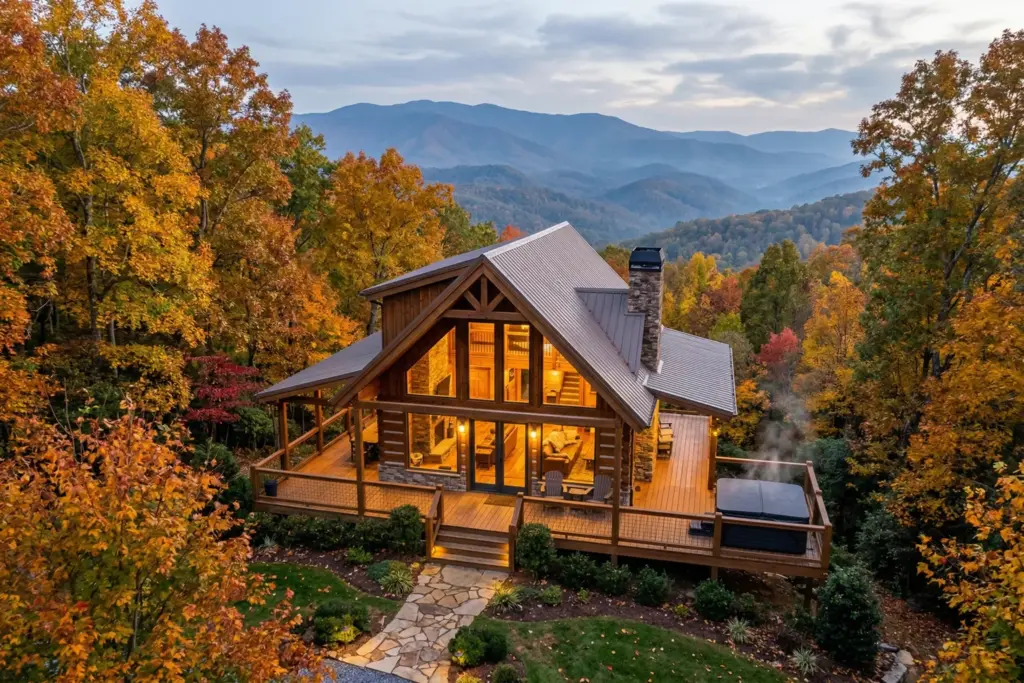
Blue Ridge, Georgia pulled a $361 average daily rate across its 1,484 active short-term rental listings in the most recent data tracked by StaySTRA. That number sits $117 higher than Asheville and $23 above Gatlinburg. For a town of roughly 1,300 residents tucked into the far northwest corner of Georgia, that kind of rate power tells you something about what travelers are willing to pay for a cabin in the North Georgia mountains.
I have spent four decades staring at data sets, and the pattern here is one I keep coming back to: a small geography with outsized pricing strength. Think of Blue Ridge like a boutique hotel sitting between two mega-resorts. It does not have the volume of Gatlinburg (3,914 listings) or the cultural cachet of Asheville (1,853 listings), but it commands premium rates because the product is specific: mountain cabins with hot tubs, fire pits, and Toccoa River access, marketed to drive-market travelers from Atlanta, Chattanooga, and Nashville.
What StaySTRA Data Shows for Blue Ridge in 2026
Let me walk you through the numbers. StaySTRA tracks 1,484 active short-term rental listings in Blue Ridge (Fannin County), Georgia. The annualized picture, month by month, paints a market with strong seasonal peaks and manageable troughs.
| Month | Occupancy | ADR | Revenue |
|---|---|---|---|
| January | 41% | $310 | $4,108 |
| February | 43% | $286 | $3,631 |
| March | 57% | $280 | $5,460 |
| April | 50% | $273 | $4,630 |
| May | 47% | $278 | $4,383 |
| June | 57% | $297 | $5,613 |
| July | 59% | $307 | $6,379 |
| August | 51% | $277 | $5,005 |
| September | 52% | $278 | $4,740 |
| October | 64% | $315 | $6,345 |
| November | 58% | $328 | $5,776 |
| December | 57% | $355 | $6,443 |
Add those revenue figures up and you land at approximately $62,513 annually for the average listing. The StaySTRA Blue Ridge analyzer estimates $55,251 in annual revenue at a 53.3% occupancy rate, which likely reflects a slightly different measurement window. Either way, this is a market where the median property clears $2,827 per month and the top quartile pulls $4,643 or more.
Stay with me on the revenue distribution, because this is where Blue Ridge gets interesting for investors.
Revenue Percentiles Tell the Real Story
StaySTRA data breaks out the revenue curve for Blue Ridge listings:
- 25th percentile: $1,499/month (properties that struggle with bookings or pricing)
- Median (50th): $2,827/month
- 75th percentile: $4,643/month
- 90th percentile: $6,507/month
That gap between the 25th and 75th percentile ($3,144 per month) is significant. In my experience, the spread usually tells you that property type, amenities, and listing quality matter more than location alone. A well-outfitted 3-bedroom cabin with a hot tub and mountain view in Blue Ridge is playing a completely different game than a basic 1-bedroom rental near the highway.
The Cabin Premium: Why Bigger Properties Win in Blue Ridge
Blue Ridge is a cabin market. That is not a marketing phrase. It is a structural reality. According to industry data, 98% of Blue Ridge listings are entire-home rentals, and 84% are classified as outdoor or unique properties. Over half of all listings accommodate eight or more guests.
Think of it like buying a fishing rod versus buying a bass boat. The rod (a small cabin) gets you in the water, but the boat (a large, amenity-loaded cabin) is what catches the trophy fish. In Blue Ridge, the trophy fish is the Atlanta family reunion group, the bachelorette party from Chattanooga, or the multigenerational Thanksgiving gathering. These groups book larger cabins, stay longer, and pay top dollar.
A two-bedroom cabin priced at $275 per night with 70% occupancy could pull roughly $5,800 per month before expenses. Scale that to a four-bedroom with premium amenities at $400 or more per night, and the math shifts considerably. The top-decile revenue figure of $6,507 per month almost certainly skews toward these larger, better-equipped properties.
Seasonal Rhythm: Fall Foliage Is King, but Summer Holds
Blue Ridge has a three-season revenue structure that separates it from beach markets and single-season ski towns.
Peak season (October through December): October is the crown jewel at 64% occupancy and $6,345 in average revenue. The fall foliage season in the North Georgia mountains draws visitors from across the Southeast. November and December stay strong ($5,776 and $6,443 respectively) as holiday travelers fill cabins for Thanksgiving and Christmas.
Summer season (June through July): These months bring 57-59% occupancy and $5,600-$6,400 in revenue. River tubing on the Toccoa, hiking, and general mountain escape demand from the Atlanta metro (90 miles south) drives this window.
Shoulder and slow months (January through February, August through September): January and February dip to 41-43% occupancy with $3,600-$4,100 in revenue. Don’t let those numbers scare you. Blue Ridge’s “slow” months still outperform many coastal markets’ off-seasons because winter cabin getaways (fireplaces, hot tubs, holiday weekends) carry their own appeal.
The booking lead time in Blue Ridge averages 35.8 days, with a median of 28 days and an average stay of 3.1 nights. These are weekend-trip numbers. Guests are planning a quick mountain escape, not a two-week vacation.
Supply Growth: The Number Investors Need to Watch
Here is where I put on my cautious hat. Blue Ridge’s listing inventory grew 77% between 2021 and the current count of 1,484 active properties. That is a big jump for a small market.
In 2021, the market had 839 listings and 68.6% annualized occupancy. Today, with nearly twice the supply, annualized occupancy sits around 53%. The ADR has remained resilient (still above $280 in every month), which tells me demand has grown, just not as fast as supply.
This is not a crisis. It is a maturation curve that most popular STR markets go through. Gatlinburg saw a similar pattern, growing from roughly 2,500 listings to nearly 4,000 while occupancy compressed. The question for any Blue Ridge investor is whether the market has stabilized or whether another wave of new cabin construction will push occupancy below a sustainable threshold.
My read on the data: the supply growth rate appears to be decelerating. The most aggressive expansion happened in 2021-2023, fueled by pandemic-era demand for rural getaways. The current pace looks more measured. But track this number quarterly. If listings push past 1,600 while occupancy drops below 48% annualized, the math starts to get tight for average-performing properties.
How Blue Ridge Compares to Asheville and Gatlinburg
Investors shopping for an Appalachian cabin market inevitably compare these three. Here is how they stack up on the metrics that matter.
| Metric | Blue Ridge, GA | Gatlinburg, TN | Asheville, NC |
|---|---|---|---|
| Active Listings | 1,484 | 3,914 | 1,853 |
| Average Daily Rate | $361 | $338 | $244 |
| Annualized Occupancy | ~53% | ~52% | ~44% |
| Est. Annual Revenue | ~$62,500 | ~$55,700 | ~$38,300 |
| Peak Month Revenue | $6,443 (Dec) | ~$7,200 (varies) | ~$4,800 (Oct) |
A few things jump out from this comparison.
Blue Ridge charges the highest nightly rate of the three. That surprised me when I first pulled the data, but it makes sense once you understand the product mix. Blue Ridge is almost entirely cabins (not apartments, not condos, not shared homes), and cabins with premium amenities command higher rates.
Gatlinburg has more than double the listings but similar occupancy, which means it is absorbing significantly more total demand. The Smoky Mountains corridor (Gatlinburg, Pigeon Forge, Sevierville combined) runs over 21,000 listings. Blue Ridge is a fraction of that size, which can be an advantage or a limitation depending on your perspective.
Asheville trails on ADR by a wide margin ($244 versus Blue Ridge’s $361), partly because its listing mix includes more urban apartments and smaller units. Asheville also faces the most restrictive regulatory environment of the three, with Buncombe County and the city of Asheville both tightening STR rules over the past two years.
For investors who looked at Gatlinburg and found it too saturated, or Asheville and found it too regulated, Blue Ridge sits in a productive middle ground: fewer listings, higher rates, and a regulatory framework that (so far) accommodates the industry.
Fannin County STR Regulations: What Investors Need to Know
Georgia does not have a statewide STR preemption law, which means county and city governments set their own rules. In Fannin County (where the vast majority of Blue Ridge-area rentals operate), the regulatory environment is structured but not hostile.
Registration Requirements
Fannin County requires all short-term rental operators to obtain an accommodation excise tax certificate. Here is what that involves:
- Application fee: $225 (initial registration)
- Annual renewal: Required by December 31 each year through the county’s online reporting system
- Late renewal penalty: $25 if not renewed by the deadline
- Ownership transfer fee: $50, with a 30-day grace period for new owners who file within 7 days of sale
The county revised its STR ordinance in August 2025, tightening up renewal deadlines and clarifying that management companies and marketplace facilitators (Airbnb, Vrbo) must ensure listed properties are properly registered.
Lodging Tax
Fannin County imposes a lodging tax on short-term rental income. Operators in unincorporated Fannin County (where most cabin rentals sit) pay a hotel/motel tax on gross rental receipts, collected and remitted to the county. The City of Blue Ridge proper may have a slightly different rate structure, but most investment cabins are in the unincorporated county areas surrounding the city.
Environmental and Safety Requirements
The county requires a cabin information worksheet as part of the annual renewal process, and environmental health requirements apply to properties with septic systems (which is common in the mountain cabin market). If you are buying a property, verify the septic system capacity matches the intended guest count before closing.
HOA Considerations
Several cabin subdivisions and developments in the Blue Ridge area have their own HOA rules governing short-term rentals. Some allow them freely, others restrict rental frequency or impose additional fees. This is one of the most overlooked compliance layers in Blue Ridge. Before purchasing any property in a managed community, request the HOA covenants and confirm STR eligibility in writing.
The Drive-Market Advantage
One of the structural strengths of the Blue Ridge market is something you cannot see in the data tables: it is a drive-market destination. Atlanta is 90 miles south. Chattanooga is 90 miles west. Nashville is about four hours northwest.
I have watched drive-market destinations weather economic downturns better than fly-to markets throughout my career. When household budgets tighten, the group that cancels the Hawaii trip still takes the weekend cabin trip. The gas and groceries for a Blue Ridge weekend run maybe $200 to $300 for an Atlanta group. The flight-and-hotel alternative could cost five times that.
This recession-resistant quality is baked into the Blue Ridge data. Even in slower months, occupancy stays above 40%. The demand floor is high because the geographic barrier to entry (for guests) is low.
Who Should (and Should Not) Invest in Blue Ridge
After 40 years of working with data, I have learned that the numbers only tell you half the story. Here is my honest read on who Blue Ridge works for.
Blue Ridge makes sense if: You want a premium cabin property in a market with strong ADR, three-season demand, and a manageable regulatory environment. You are comfortable with a $400,000 to $700,000 acquisition price. You plan to invest in amenities (hot tub, fire pit, game room, mountain view) that push your property into the 75th percentile or higher.
Blue Ridge may not be the right fit if: You are looking for a sub-$250,000 entry point (there are very few). You want urban walkability and dining-scene appeal (that is Asheville). You are uncomfortable with a market where supply grew 77% in four years, even if that growth has slowed.
The investors I see succeeding in markets like Blue Ridge are the ones who treat the property as a product, not just a piece of real estate. The cabin itself is the experience you are selling. Invest accordingly.
We do our best to keep our data accurate and up to date, but markets move fast and we are only human. Always verify current figures directly with local sources before making investment decisions.
Frequently Asked Questions
What is the average Airbnb occupancy rate in Blue Ridge, Georgia?
StaySTRA data shows Blue Ridge averages approximately 53% annualized occupancy across 1,484 active listings. October is the peak month at 64%, driven by fall foliage tourism, while January and February are the slowest at 41-43%. Properties in the top quartile by revenue consistently outperform these averages.
How much can you earn from a cabin rental in Blue Ridge, GA?
The average Blue Ridge short-term rental generates approximately $62,500 in annual gross revenue based on StaySTRA monthly data. The median property earns about $2,827 per month, while top-performing properties (90th percentile) pull $6,507 or more monthly. Actual earnings depend heavily on cabin size, amenities, and listing quality.
Do you need a permit for a short-term rental in Fannin County, Georgia?
Yes. Fannin County requires all STR operators to obtain an accommodation excise tax certificate at a cost of $225, with annual renewal by December 31. A $25 late penalty applies for missed renewals. Properties must also comply with county environmental health requirements, particularly regarding septic systems.
How does Blue Ridge compare to Gatlinburg for vacation rental investment?
Blue Ridge has fewer listings (1,484 versus 3,914) but a higher average daily rate ($361 versus $338). Estimated annual revenue per property is higher in Blue Ridge (~$62,500 versus ~$55,700). Gatlinburg absorbs far more total demand due to Great Smoky Mountains National Park traffic, but Blue Ridge offers lower competition and a simpler regulatory environment.
What is the best season for cabin rentals in Blue Ridge, Georgia?
October through December is peak season, with October generating the highest occupancy (64%) and December producing the highest average revenue ($6,443). Summer months (June and July) are the secondary peak, driven by river activities and mountain getaway demand from the Atlanta metro area. Even the slowest months (January and February) maintain 41-43% occupancy.
Run the Numbers for a Blue Ridge Property
If you are evaluating a specific cabin in Blue Ridge, the StaySTRA Blue Ridge vacation rental calculator lets you plug in a property address and get revenue projections based on real market data, comparable listings, and current occupancy patterns. It is free for one analysis per month.
For the full market data set, including monthly revenue breakdowns and listing-level comparisons, visit the Blue Ridge, GA market data page.
Become a StaySTRA Insider
Join free — get our newsletter + 1 free property analysis/month.
No spam. Unsubscribe anytime. Free membership includes property analyses and market insights.