

Key Takeaways
- Airbnb prices during major events pass through three layers: the host’s floor and ceiling, a third-party pricing tool recommendation, and Airbnb’s own Smart Pricing overlay, each with a different objective and a different party controlling the outcome.
- When Airbnb Smart Pricing is active alongside a third-party tool like PriceLabs or Wheelhouse, the two systems conflict directly, and hosts often do not know which one is setting the final rate on any given night.
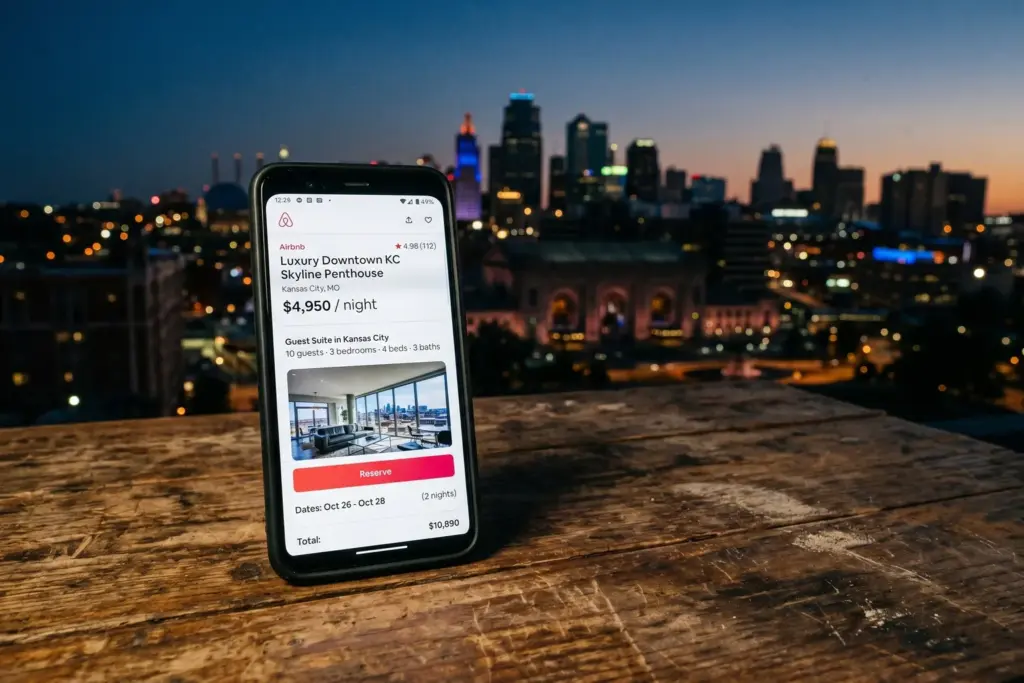
- Documented World Cup 2026 asking prices reached 0,000 per night in Kansas City and more than ,000 per night across multiple cities, but StaySTRA data shows the actual booked ADR averaged 87, revealing how far list prices diverged from market reality.
- The Los Angeles City Attorney sued Airbnb in early 2025 for enabling price gouging through its Smart Pricing tool during the wildfires, establishing a direct platform accountability precedent for any major-event surge.
- Hosts who set manual price floors and disabled last-minute discount triggers outperformed those who left algorithms in full control during World Cup match weeks.
A Kansas City Airbnb studio went from 73 per night to ,411 overnight. The host canceled the original booking, absorbed the 25 percent cancellation penalty, and relisted. The math still worked. The penalty was irrelevant. The guest was left scrambling for alternatives during one of the most sought-after travel weekends in American history.
That scenario played out thousands of times across all 11 World Cup host cities. In Dallas, asking prices for two-bedroom units hit 44 per night for match days, while the actual booked average across the market landed at 18, leaving 94 percent of similar inventory unsold. In Kansas City, individual listings reached 0,000 per night, a figure documented by hotel industry analysts and local media before the tournament even began. Fortune reported listings topping ,000 per night across multiple host cities as early as March 2026.
Every guest who saw those numbers asked the same question. Who set this price?
The answer passes through three layers, and each layer comes with its own party, its own logic, and its own argument for why someone else is responsible.
The Three-Layer Pricing System Most Hosts Cannot Fully Describe
Every Airbnb listing carries a pricing architecture that most guests and a surprisingly large number of hosts cannot accurately explain. Understanding it is the only way to assign accountability when prices spike 700 percent during a major event.
Layer 1: The host’s floor and ceiling. Every host sets a minimum price (the floor) and, optionally, a maximum price (the ceiling). These are the hard boundaries. No pricing tool or platform algorithm should push a nightly rate outside that band. The host owns this layer entirely. A 0,000-per-night listing in Kansas City reflects a floor that the host set or consciously allowed to remain. There is no algorithm that creates a ceiling violation without the host’s settings permitting it.
Layer 2: The third-party pricing tool recommendation. Tools like PriceLabs, Wheelhouse, and Beyond Pricing connect to the host’s Airbnb calendar via API. They analyze demand signals, competitor pricing, historical booking pace, local event detection, and seasonal patterns, then push a recommended nightly rate into the calendar for each date. The recommendation operates within the host’s floor and ceiling. Hosts can override specific dates, dial in sensitivity settings, or apply manual event boosts. Many don’t. Once the tool is configured, most hosts let it run without reviewing individual date recommendations.
Layer 3: Airbnb Smart Pricing. This is where accountability becomes genuinely murky. Airbnb offers its own built-in pricing tool that adjusts nightly rates automatically based on demand, local events, and comparable listings. It operates within the host’s floor and ceiling. But if a host has both a third-party pricing tool and Airbnb Smart Pricing enabled simultaneously, the two systems are in direct conflict. The third-party tool pushes a rate to the calendar. Airbnb’s system may immediately override it. Airbnb’s own documentation recommends disabling Smart Pricing when using an external tool. Most hosts who run PriceLabs or Wheelhouse have never read that recommendation, and Airbnb does not proactively surface the conflict.
Documents show this three-way structure creates pricing outcomes no single party fully controls. The host controls the band. The third-party tool controls the recommendation within that band. The platform controls what actually gets displayed to guests when Smart Pricing is active. When prices spike 500 or 700 percent, each party can credibly point to the layer they did not set.
What PriceLabs and Wheelhouse Are Actually Doing During Major Events
PriceLabs’ core algorithm, called the Hyper Local Pulse (HLP), monitors four simultaneous signals: booking pace from the prior year, early demand indicators, competitor pricing, and hotel rate levels. When those signals converge around specific dates, the algorithm raises prices automatically. It does not require hosts to manually tag the FIFA World Cup or any other event. It finds the demand signature and responds to it.
Wheelhouse works differently. Hosts select a pricing philosophy at setup, conservative, balanced, or aggressive, and the algorithm calibrates all rates from that baseline. The host’s chosen stance determines how aggressively the tool responds to demand signals. Beyond Pricing uses comparable market demand analysis with a particular emphasis on forward pacing data.
Data indicates that all three major tools encountered an unusual problem during World Cup 2026. International fan conversion rates came in at 26 to 35 percent of expected levels. Domestic demand dominated late-booking windows, with fans booking close to match dates rather than weeks in advance as the models predicted. Because booking pace was flat in the weeks leading up to specific game dates, the algorithms interpreted the flat signal as weak demand and, in documented cases, triggered last-minute discount logic on the exact dates hosts expected their biggest revenue.
Sources with direct knowledge of STR revenue management outcomes during the tournament confirm that hosts who set manual price floors and disabled last-minute discount triggers outperformed those who left the algorithm in full control. The tools were not malfunctioning. They were responding to pacing data the way they were built to respond. The pacing data was simply unlike anything these tools had been trained to interpret. A once-in-a-generation global sporting event with unusual international travel patterns and a late domestic booking wave sits outside the historical training window for any dynamic pricing algorithm.
This matters for understanding accountability. Third-party tools amplified price spikes at the top of the market, where hosts had set aggressive floors and ceilings. At the same time, those same tools may have suppressed revenue for hosts who left default settings in place and assumed the algorithm would automatically find the World Cup premium.
Platform Accountability: What Airbnb Says and What the Evidence Shows
Airbnb’s public position is that Smart Pricing helps hosts keep their calendars full by responding to real-time demand. The platform emphasizes that hosts retain control through their floor and ceiling settings. What Airbnb communicates less explicitly is that its own financial incentive is structurally different from the host’s. Airbnb earns a service fee on every completed reservation. Its algorithm is built to maximize booking volume, not per-night revenue. A night that books at 00 generates a fee. A night that goes unsold at 00 generates nothing. The platform’s pricing logic serves the platform.
That structural misalignment became legally significant during the January 2025 Los Angeles wildfires. The Los Angeles City Attorney filed a civil enforcement action against Airbnb, alleging that the platform’s Smart Pricing tool increased prices on at least 2,000 properties within the City of Los Angeles in violation of California’s anti-gouging law. The City Attorney stated directly that it was unconscionable that Airbnb permitted prices to be jacked up on thousands of rental properties, and named the Smart Pricing tool as the mechanism. Airbnb disabled Smart Pricing for listings in LA and Ventura counties after the California Attorney General formally requested it.
That case set a clear precedent. When an automated platform tool drives price spikes, regulators look at the platform first.
For World Cup 2026, Airbnb’s response took a different form. The platform deployed 13,000 support agents across North America, implemented machine learning screening for fraudulent listings, and launched a promotional campaign offering match tickets with select bookings. The ticket offer covered approximately 1,300 tickets across 16 host cities, reaching fewer than one percent of projected platform users. What Airbnb did not do was implement match-day price caps or disable Smart Pricing in host cities, the same step it took under direct regulatory pressure in California.
VRBO’s response was quieter still. The platform’s VrboCare guarantee covers fraudulent listings and host cancellations, but the program terms specify that the amount of relief provided is entirely up to VRBO, leaving platform discretion over payouts. No World Cup-specific staffing commitment or enhanced screening announcement appeared publicly from VRBO.
The Host Perspective: Were They Actually in Control?
The host who canceled a 73-per-night booking to relist at ,411 made an active choice. No algorithm did that. The decision to cancel a confirmed reservation, absorb a financial penalty, and reprice for a higher-demand booking window is a human decision, and the host owns it fully.
The situations involving algorithm-driven surges are less clean. PriceLabs, Wheelhouse, and Beyond are tools that hosts opt into, configure, and run. The host sets the floor. If the floor is 00 and the tool recommends 95 for a match date, the host can override it. Most don’t check individual date recommendations. They set the strategy and let it run for weeks or months at a time.
Property management software like Guesty adds another layer of distance between the host and the displayed price. Hosts managing multiple properties often route all pricing through a PMS that connects to a dynamic pricing tool, which connects to the OTA calendar via API. By the time a nightly rate appears on a World Cup listing, it may have passed through four automated systems since any human reviewed it. The host cannot claim ignorance as a legal defense, but many genuinely did not understand their own pricing stack.
StaySTRA data shows Kansas City’s baseline ADR stood at 12 per night in April 2026. Game-day booked rates landed between 47 and 28, a meaningful premium over that baseline. The hosts and algorithms chasing ,411 and 0,000 were generating headlines and empty calendars. In Dallas, 94 percent of match-date inventory went unsold at average asking prices of 44, while the actual booked average was 18.
The hosts who filled their calendars during World Cup match weeks understood their pricing stack. They knew whether Smart Pricing was active. They knew what their floor price meant in practice. They knew whether their third-party tool’s last-minute discount logic applied to event dates. That operational knowledge was the difference between a record revenue week and an empty calendar with a reputation problem attached.
Want to benchmark your market against what actually happened? The Kansas City STR analyzer and Dallas STR analyzer at StaySTRA break down booked ADR, occupancy, and revenue by property type so you can compare outcomes against the actual market baseline, not the asking-price headlines.
What This Means for the STR Industry’s Reputation
Price correction is already underway. Travel analysts documented a major pullback in Airbnb pricing across World Cup host cities as the tournament progressed and inventory priced out of reach sat unsold. The extreme asking prices generated the media coverage. The empty calendars confirmed the market’s verdict.
Reputational damage to the broader STR industry does not correct as quickly as asking prices do. Multiple municipalities are tightening STR rules using World Cup pricing coverage as direct evidence in public hearings. The hosts who listed studios at 95 and three-bedroom houses at ,000 gave every city council in America a data point for the next permitting debate. They were not the only ones who paid for that.
This is not primarily a regulatory story. Our earlier investigation into World Cup STR enforcement covered what happened on the compliance side. This is a trust story, and the three-layer pricing system is at the center of it. When guests see extreme prices and cannot determine whether a host, an algorithm, or a platform set them, frustration flows toward all three. That frustration becomes political pressure. Political pressure becomes regulation.
The operators who came through this tournament with their reputations intact understood something the headline-chasers did not. Markets covered in our report on STR investment fundamentals near World Cup host cities show that several secondary markets within driving distance of game venues outperformed their host-city counterparts, without the regulatory scrutiny or pricing backlash. Scarcity without scrutiny. Those operators priced at two to three times their baseline rates, filled their calendars, and generated no headlines.
For anyone evaluating whether event-area STRs are worth the investment going forward, the StaySTRA analyzer shows actual market performance data, not projected asking prices, for markets across all 11 host cities and beyond. The revenue projections that circulated in early 2026 were aspirational. Performance data tells the real story.
Sponsored — OfferMarket
Buy Your First STR With Long-Term Rental Financing
Flexible, long-term financing for short-term rental buyers. Rates from 5.75%. Instant online quote, no credit pull.
Explore RTL Financing Options →Affiliate disclosure: StaySTRA may earn a referral fee.
We do our best to keep our reporting accurate and up to date, but situations evolve and we are only human. Always verify current details directly with local officials and sources before making decisions.
Frequently Asked Questions
Who is legally responsible when an Airbnb listing shows an excessively high price during a major event?
Legal responsibility depends on how the price was set. If a host manually set a high floor price or canceled a booking to relist at a higher rate, the host bears primary responsibility. If the price was driven by Airbnb’s Smart Pricing tool, the Los Angeles City Attorney’s 2025 lawsuit against Airbnb established that the platform can bear responsibility for enabling price spikes through its automated systems. When a third-party tool like PriceLabs set the rate, accountability is less legally settled, but recent enforcement cases have focused at the platform level rather than individual hosts.
Can Airbnb’s Smart Pricing override a third-party pricing tool like PriceLabs?
Yes. If Airbnb Smart Pricing and a third-party tool like PriceLabs or Wheelhouse are both active on the same listing, they conflict directly. The third-party tool pushes a rate to the calendar via API, and Airbnb’s system may override it within the host’s floor-to-ceiling band. Airbnb’s help documentation recommends disabling Smart Pricing when using an external tool, but most hosts who run third-party tools are not aware of this conflict. The result is that the final price a guest sees may not reflect what the third-party tool intended.
How do PriceLabs and Wheelhouse detect major events like the World Cup?
PriceLabs uses a Hyper Local Pulse (HLP) algorithm that monitors four signals simultaneously: booking pace from the prior year, early demand indicators, competitor pricing, and hotel rates. It detects event demand spikes automatically without requiring hosts to manually flag events. Wheelhouse calibrates from a host-selected pricing philosophy and responds to market signals from that baseline. Both tools adjust for events, but World Cup 2026 exposed a limitation: flat international booking pace in the lead-up period caused some tools to fire last-minute discount logic on high-demand match dates, the opposite of what most hosts needed.
What actually happened to Airbnb prices in Kansas City and Dallas during World Cup 2026?
In Kansas City, asking prices ranged from 47 to ,411 per night for match days, with some individual listings reaching 0,000 per night. The actual booked ADR landed between 47 and 28, far below the extreme asking prices that made headlines. StaySTRA data shows Kansas City’s baseline ADR was 12 per night before the tournament, meaning legitimate game-day premiums were roughly 2 to 2.5 times baseline. In Dallas, the average asking price was 44 per night, but the booked average was 18 with 94 percent of match-date inventory going unsold.
Should STR hosts disable Airbnb Smart Pricing during major events?
Hosts using any third-party dynamic pricing tool should disable Airbnb Smart Pricing to prevent system conflicts. For major events specifically, experienced operators also recommend disabling last-minute discount triggers within the third-party tool, since event booking patterns often show flat pacing leading up to the event before spiking sharply in the final week. Setting a firm manual floor price for event dates and reviewing your calendar within 14 days of the event ensures no algorithm is applying discount logic to your highest-demand inventory.
Sponsored — OfferMarket
Buy Your First STR With Long-Term Rental Financing
Flexible, long-term financing for short-term rental buyers. Rates from 5.75%. Instant online quote, no credit pull.
Explore RTL Financing Options →Affiliate disclosure: StaySTRA may earn a referral fee.
Become a StaySTRA Insider
Join free — get our newsletter + 1 free property analysis/month.
No spam. Unsubscribe anytime. Free membership includes property analyses and market insights.