

Key Takeaways
- Enter the latest development: Airbnb publicly urging Congress to reform federal short-term rental (STR) laws, arguing that modernized rules will simultaneously support affordable housing and increase opportunities for hosts.
- A Balanced Legal Perspective While Airbnb frames reforms as a win-win, not all stakeholders agree.
- 2508 (2015), New York City Local Law 18 (2022).
- Officials argued that thousands of apartments were being converted from long-term housing to tourist rentals, reducing available housing and driving up rents.
Parsing Airbnb’s Congressional Campaign: What Regulatory Reform Really Means for Short-Term Rentals
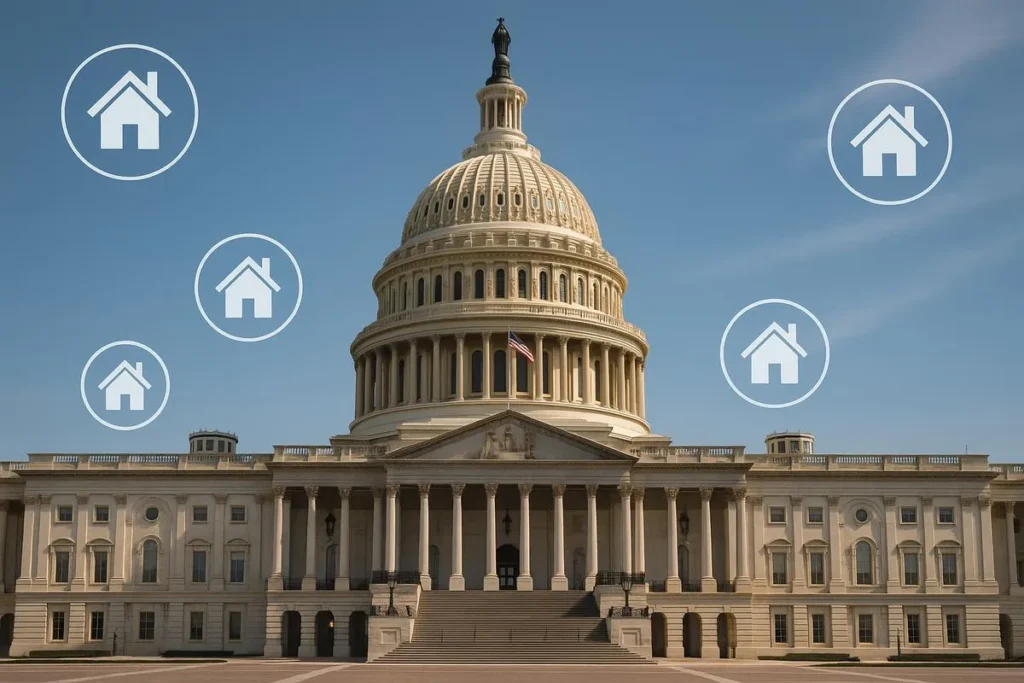
Imagine you’re a host eagerly awaiting regulatory clarity—one that could affect whether you keep your listing open, expand your portfolio, or exit entirely. Enter the latest development: Airbnb publicly urging Congress to reform federal short-term rental (STR) laws, arguing that modernized rules will simultaneously support affordable housing and increase opportunities for hosts. That’s no small claim. But what’s underneath the headlines, and who really stands to benefit?
Airbnb’s Push: Reading Between the Lines
According to a recent Reuters article, Airbnb is lobbying for Congress to overhaul STR regulations. Their pitch: clear, up-to-date rules will encourage responsible hosting, expand access to housing (by, as Airbnb argues, increasing supply for families at various income levels), and support individuals who rely on STR income.
From a legal vantage, this marks a significant shift. For over a decade, STR rules have chiefly been a local affair. Cities and counties, invoking their zoning and police powers, have created an intricate patchwork—some banning non-owner-occupied rentals outright, others capping the number of STRs or imposing steep taxes.[^1]
Airbnb’s call for federal action signals a new front in the regulatory debate. It’s also a test of how federal preemption (the principle that federal law can override conflicting state or local ordinances) might come into play. If Congress adopts new rules, localities could find their own stricter laws challenged or nullified, at least in part.[^2]
Affordability: The Great Legal Tension
Airbnb’s positioning—framing STR reform as a solution to affordable housing—is, to put it gently, controversial. Many housing advocates and some city officials argue precisely the opposite: that STRs convert long-term rental supply into short-term profits, thereby decreasing housing availability for locals and driving up rents.[^3] In contrast, Airbnb claims that streamlined rules would create certainty, encourage better compliance, and—through regulatory innovation—potentially yield new affordable options.
The legal landscape here is anything but settled. Studies on STRs’ impact on affordability have yielded mixed results, often varying by market size and regulatory regime.[^4] Local court cases, such as the challenge to New York City’s Local Law 18, underscore the high stakes and legal ambiguity: judges have both upheld and struck down regulations on constitutional and statutory grounds (often hinging on property rights or due process arguments).
Congressional Action: What’s Realistically on the Table?
Airbnb’s campaign brings a new twist to the table, but actual federal legislation faces formidable headwinds. Congress historically defers to local authorities on zoning and local land use. Any federal intervention will be legislatively complex—likely comprising broad guidelines rather than detailed preemption of local rules.
What could Congress do if it acts at all? Possible scenarios include:
- Mandating basic regulatory transparency and fairness for STR hosts (think: notice-and-hearing protections reminiscent of due process)[^5]
- Funding pilot programs with data-gathering on housing impacts
- Creating incentives for local governments to adopt “best practice” licensing frameworks
- Limiting local bans only where they conflict with federally defined economic rights, though this is a legal minefield
Who Wins? A Balanced Legal Perspective
While Airbnb frames reforms as a win-win, not all stakeholders agree. Key groups to watch:
- Hosts and Homeowners: Clear, reasonably uniform standards would offer predictability and potentially more security for those who depend on STR income.
- Renters and Communities: Some fear that weaker local control could mean more STRs and upward pressure on rents. Others argue a well-regulated STR sector could supplement affordable housing, if paired with creative legal tools (like inclusionary zoning or STR surcharges earmarked for housing funds).
- Local Governments: Risk losing flexibility to tailor policies to community character, but gain relief from costly legal battles over unclear or conflicting rules.
Closing Thoughts: The Rulebook Is Still Being Written
This isn’t merely another industry lobbying effort. It’s a sign that the battle over STR regulation—and its implications for affordable housing, local power, and property rights—is headed for Congress. What happens next may well reshape the legal framework for years to come.
For hosts, investors, and concerned neighbors alike: stay tuned and stay skeptical—regulation is a reflection of shifting community values and national priorities. In such a complex field, awareness and engagement are your strongest legal tools.
Curious what your own property might yield under the currents of future reform? Check out the StaySTRa Analyzer to forecast your possibilities.
Want to continue following the legal pulse of the STR world? Join our StaySTRa Insider mailing list for updates that cut through the noise.
[^1]: See, e.g., Santa Monica Ordinance No. 2508 (2015), New York City Local Law 18 (2022).
[^2]: For reference, see the Supremacy Clause in the U.S. Constitution, Article VI, Clause 2; also, congressional “preemption” in local land use generally requires explicit statutory language—rare and highly contested.
[^3]: Evidence is mixed. See Barron, K., Kung, E., & Proserpio, D. (2023). “The Effect of Home-Sharing on House Prices and Rents: Evidence from Airbnb.” Marketing Science, 42(1), 1-27.
[^4]: For example, compare impacts shown in large metro areas (where STRs have a modest effect) to rural markets (which see minimal impact).
[^5]: See Goldberg v. Kelly, 397 U.S. 254 (1970) for procedural due process standards.
Frequently Asked Questions
Can I legally run an Airbnb in New York City?
NYC has some of the strictest STR laws in the country under Local Law 18. Hosts must register with the city, be physically present during all stays under 30 days, limit occupancy to two guests, and can only have one active listing. Renting an entire apartment for less than 30 days without the host present is illegal in most cases.
Why did New York City restrict Airbnb so heavily?
NYC restricted STRs primarily to protect housing supply in an already tight market and enforce existing residential zoning laws. Officials argued that thousands of apartments were being converted from long-term housing to tourist rentals, reducing available housing and driving up rents. The hotel industry also pushed for stricter enforcement, citing unfair competition.
Do I need a permit to operate a short-term rental?
Most cities and counties require some form of permit, license, or registration to operate a short-term rental legally. Requirements vary significantly by jurisdiction, so check your local government website or contact your city clerk before listing your property. Operating without required permits can result in fines ranging from several hundred to several thousand dollars per violation.
How do I find the STR regulations for my area?
Start by searching your city or county government website for short-term rental or vacation rental ordinances. Many municipalities have a dedicated STR registration page with application forms and requirements. You can also contact your local planning department directly or consult with a real estate attorney who practices in your area.
What is the short-term rental tax loophole?
The STR tax loophole allows property owners who materially participate in managing their short-term rental to deduct losses against active income like W-2 wages. This works because rentals with an average guest stay of seven days or fewer are not classified as passive rental activities under IRS rules. It is one of the most powerful tax strategies available to real estate investors.
Become a StaySTRA Insider
Join free — get our newsletter + 1 free property analysis/month.
No spam. Unsubscribe anytime. Free membership includes property analyses and market insights.