

Key Takeaways
- New Jersey’s attorney general issued a formal enforcement warning to STR providers on May 21, 2026, the clearest government action of the pre-World Cup period, and it came from the consumer protection side rather than local zoning enforcement.
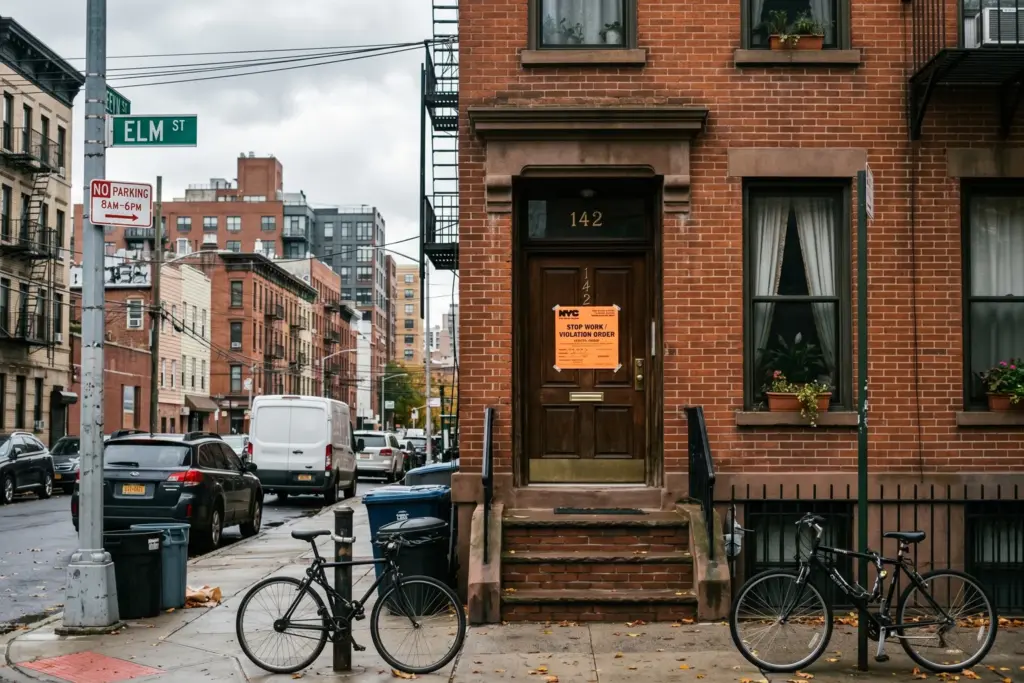
- New York City is maintaining its strictest-in-the-country enforcement posture under Local Law 18: a May 15 city council attempt to loosen the rules went nowhere, and OSE data shows 27% of registered hosts are already violating the law.
- Dallas cannot enforce its STR ban at all. The Texas Supreme Court still has not ruled, the court injunction blocking enforcement remains in place, and the city is heading into the World Cup with essentially no authority over illegal listings.
- Houston’s enforcement is showing measurable market effects: StaySTRA data shows a 7.8 percentage-point occupancy decline in April 2026 directly attributed to the new registration requirement, with 83% of active listings now compliant.
- The 11 host markets are not moving in lockstep. Three distinct enforcement postures have emerged: aggressive hold (NYC), active compliance pressure (Houston), and blocked or non-existent (Dallas).
New Jersey’s attorney general sent a formal warning to short-term rental providers on May 21, 2026. Twenty-two days before the World Cup opener. The warning, issued by AG Jennifer Davenport and the Division of Consumer Affairs, cited the state’s Consumer Fraud Act and the FTC’s Unfair or Deceptive Fees Rule. It told STR operators (in writing, on official government letterhead) that hidden fees and misleading pricing would be prosecuted, and that hosts must comply with local STR ordinances or face consequences.
That is an enforcement action. It is not a citation. It is not a fine. But it is the most recent concrete government move against the STR market in any of the 11 World Cup host cities, and it came from Trenton, not from any city hall.
The weeks since May 15 have produced a clearer picture of how enforcement actually works in the months before the biggest tourist event in American history. The rules were always on paper. What was always in question was which cities had the will, the legal authority, and the operational capacity to enforce them. The answers are complicated, and they differ dramatically city by city.
Sponsored — Beeline
Finance Your Next STR With a DSCR Loan
Qualify on property cash flow, not W-2 income. Beeline specializes in fast DSCR closings for STR investors. No personal income verification required.
Check Your DSCR Eligibility →Affiliate disclosure: StaySTRA may earn a referral fee.
New York: The Enforcement Hold
On May 15, 2026, City Council Member Mercedes Narcisse introduced a new bill to loosen Local Law 18 ahead of the World Cup. The proposal would have allowed single-family homes to be rented without a host present and raised the guest cap from two to four for the duration of the tournament.
It went nowhere. Fast.
New York City had already rejected a nearly identical proposal in March, when Mayor Zohran Mamdani said the city must “ensure that we allow New York City’s homes to remain as homes and not become hotels.” The May 15 revival of the idea tells you something about the political pressure cities are under. The proposal dying tells you something about where enforcement stands.
Documents show the real enforcement story in New York is not what the city is doing to non-registered operators. It is what is happening inside the population of operators who did get registered. The Office of Special Enforcement found that 27% of registered STR listings were already operating illegally as of April 2026, mainly by offering entire homes without the host present or by hosting more than two guests. OSE has begun issuing Notices of Intent to Revoke to non-compliant registered hosts.
A quarter of the people who went through the full registration process are still breaking the rules. That is the enforcement gap hiding inside the compliance layer.
Across the Hudson, New Jersey took a different posture. The state has more flexible STR rules than New York City, and the attorney general’s May 21 action targeted pricing practices rather than the act of hosting itself. The warning was formal and cited specific legal obligations, but no individual fines were issued on that date. It functions as a shot across the bow: a documented enforcement position established before the tournament begins, with legal authority to follow up if violations are found.
Dallas: The Unenforced Ban
Dallas went into the World Cup unable to enforce its own STR rules.
The city passed STR ordinances in 2023 restricting short-term rentals in single-family neighborhoods. A Dallas County judge halted enforcement almost immediately after the Short-Term Rental Alliance sued, arguing constitutional violations. Appeals courts sided with the operators in February, July, and August 2025. In October 2025, Dallas filed a petition with the Texas Supreme Court, telling the court that “time is of the essence” and that World Cup hosting made enforcement urgent.
As of June 1, 2026, the Texas Supreme Court has not ruled. The injunction remains in place.
Dallas is hosting World Cup matches starting June 22 with its STR ordinances effectively frozen. Hosts operating in single-family neighborhoods in Dallas face no enforcement risk from the city. Not because the city approved it. Because the city lost in court three separate times and is still waiting for a ruling that may or may not come before the first match kicks off.
This is the clearest illustration of the gap between a rule existing and a rule being enforced. Dallas has STR ordinances. Dallas has no enforcement authority. Those are two very different things for investors evaluating the market.
Sponsored — Beeline
Finance Your Next STR With a DSCR Loan
Qualify on property cash flow, not W-2 income. Beeline specializes in fast DSCR closings for STR investors. No personal income verification required.
Check Your DSCR Eligibility →Affiliate disclosure: StaySTRA may earn a referral fee.
Houston: Enforcement With a Measurable Impact
Houston’s enforcement is showing up in the data.
The city’s first STR ordinance took effect January 1, 2026. Platform notification of non-compliant listings began April 1, 2026. The ordinance requires a Certificate of Registration at $308 annually, proof of one million dollars in liability insurance, and compliance with the city’s 17% hotel occupancy tax.
StaySTRA data shows a 7.8 percentage-point occupancy decline in April 2026 directly attributed to the new registration requirements taking hold. The Houston market had 26,067 active listings as of April 2026, with an average daily rate of $159 and average monthly revenue of $2,456. City officials reported 83% compliance among active listings.
That still leaves roughly 17% of Houston’s active listings operating without required registration, accumulating potential fines of $100 to $500 per day for each day of non-compliant operation. The math gets expensive quickly.
One thing investors need to understand: platforms are not yet required to delist non-compliant Houston listings. That obligation starts January 1, 2027. Until then, unregistered hosts can still appear on Airbnb and VRBO while racking up fine exposure. The gap between what the city can do now and what platforms must do later is nine months wide.
Kansas City: Two Approaches Across One State Line
Kansas City demonstrates what happens when a World Cup metro spans a state line and two different governments.
In Missouri, Kansas City maintained standard permitting requirements but dropped the temporary permit fee to $50 for the May 3 through July 31 window, down from the standard $200. Enforcement of the underlying code continued unchanged. The message: comply, and the city will make it affordable to do so.
In Kansas, the Wyandotte County Unified Government went further. The county created a dedicated temporary licensing track for the World Cup period. More than 800 property owners applied. Roughly half were approved. The county chose revenue capture and tourism capacity over enforcement restriction.
The contrast between the two Kansas Cities is a study in what enforcement posture actually means in practice. Same tournament. Same geographic market. Two completely different government approaches, separated by a state line on the Missouri River.
Miami, Los Angeles, and the Cities With Real Penalty Structures
Miami Beach runs the most aggressive fine structure of any host city. First violation: $20,000. Second: $40,000. Subsequent violations: up to $100,000. STRs are banned entirely in single-family zoning districts, with dedicated code compliance officers monitoring listing sites.
The demand context makes Miami’s enforcement stakes unusually high. Nightly STR demand for World Cup game dates is running 54% to 118% above year-over-year levels, according to Axios Miami data from May 2026. That demand spike is exactly the kind of pressure that tempts unregistered operators to take the risk. Miami Beach’s fine schedule is not a bluff.
Los Angeles allows STRs for primary residences up to 120 days per year. Operating beyond that annual cap carries $2,000-per-day fines. LA hosts who have already used significant days in 2026 need to track their remaining allocation carefully through the World Cup window. The tournament runs through mid-July, and the 120-day clock does not pause for soccer.
Philadelphia’s code enforcement structure runs $300 per day for Class 1 violations (operating without a license), $1,000 per day for Class 2, and $2,000 per day for Class 3 violations involving hazardous conditions. Seattle requires a business license, an STR regulatory license, and one million dollars in liability insurance, with a two-unit cap per operator. Boston refused to loosen STR rules for the tournament and maintained its standard enforcement posture.
What the Numbers Actually Tell You
The picture emerging from the 11 host cities is not the one either side in the STR debate predicted.
Pro-enforcement advocates expected a coordinated crackdown. Systematic sweeps. Mass delistings as the World Cup approached. That has not happened at scale. No host city has published a count of World Cup-specific STR citations. No platform has announced mass delistings in response to U.S. city enforcement requests. The NJ AG’s action was a warning, not a fine campaign.
Anti-enforcement advocates expected the rules to buckle under the economic pressure of millions of visiting fans. Cities would temporarily loosen restrictions to capture the revenue, the thinking went. That happened in some places (Wyandotte County, Parkville, Missouri) but the major metros held firm. New York rejected two separate proposals. Boston did not move. Miami Beach’s penalty structure was not adjusted downward.
What has actually happened is more nuanced than either narrative: cities are enforcing the rules they already had, at roughly the intensity level they had before the World Cup, and the outcomes vary almost entirely based on what rules each city has and whether those rules are legally enforceable. Dallas has rules it cannot use. Houston has rules it is using but with a platform gap. New York has rules it is using aggressively but with a compliance gap inside its own registered population.
For hosts navigating this window, the practical answer is the same in every market: verified registration, documented compliance, and no assumption that tournament economics will pause enforcement. The NJ AG action is a reminder that enforcement pressure can come from directions you were not watching.
If you are evaluating a property in a World Cup host city or planning a purchase after the tournament, the StaySTRA STR Financing Guide covers how DSCR lenders are weighing regulatory risk in host markets. For the pre-tournament rules breakdown city by city, our May 15 enforcement preview covers what each city’s ordinances say heading into game days. Use the StaySTRA Analyzer to check current performance data for your target market before you commit.
Sponsored — Beeline
Finance Your Next STR With a DSCR Loan
Qualify on property cash flow, not W-2 income. Beeline specializes in fast DSCR closings for STR investors. No personal income verification required.
Check Your DSCR Eligibility →Affiliate disclosure: StaySTRA may earn a referral fee.
Frequently Asked Questions
Is Dallas actually enforcing its STR ban during the World Cup?
No. As of June 1, 2026, Dallas cannot enforce its STR ban. The city passed STR ordinances in 2023 restricting rentals in single-family neighborhoods, but a court injunction has blocked enforcement since then. Dallas filed a petition with the Texas Supreme Court in October 2025 arguing that World Cup timing made enforcement urgent. The Texas Supreme Court has not ruled. The injunction remains in place, meaning unregistered operators in Dallas are currently facing no enforcement risk from the city.
What happened in New York City with Local Law 18 and the World Cup?
New York City maintained strict enforcement under Local Law 18 throughout the pre-World Cup period. The city rejected a proposal in March 2026 to temporarily loosen the rules, and a second council bill was introduced on May 15, 2026 but found no traction. The Office of Special Enforcement found that 27% of registered STR hosts were already violating the law, mainly by offering entire homes without a host present, and began issuing Notices of Intent to Revoke to non-compliant hosts.
Did any government agency take a formal enforcement action against STR operators after May 15, 2026?
Yes. New Jersey Attorney General Jennifer Davenport issued formal enforcement guidance on May 21, 2026, warning hotels and short-term rental providers against junk fees and deceptive pricing ahead of the World Cup. The guidance cited the New Jersey Consumer Fraud Act and the FTC’s Unfair or Deceptive Fees Rule, and reminded operators they must also comply with local STR ordinances. No individual fines were announced in that release, but the guidance establishes an official enforcement posture that hosts can be held to under existing law.
How is Houston’s STR enforcement affecting the market?
Houston’s enforcement is producing measurable results. StaySTRA data shows a 7.8 percentage-point occupancy decline in April 2026 directly attributed to new registration requirements. The city reports 83% compliance among active listings out of approximately 26,000 total. The remaining non-compliant listings face fines of $100 to $500 per day, though platforms are not yet required to remove them. That obligation begins January 1, 2027.
Which World Cup host cities have the most aggressive STR enforcement right now?
Miami Beach has the highest penalty structure of any host city: $20,000 for a first offense, $40,000 for a second, and up to $100,000 for subsequent violations. New York City has the most comprehensive enforcement operation, with OSE actively monitoring compliance and issuing revocation notices to registered hosts who are still violating the rules. Both cities maintained their enforcement postures through the pre-World Cup period without loosening restrictions.
We do our best to keep our reporting accurate and up to date, but situations evolve and we are only human. Always verify current details directly with local officials and sources before making decisions.
Sponsored — Beeline
Finance Your Next STR With a DSCR Loan
Qualify on property cash flow, not W-2 income. Beeline specializes in fast DSCR closings for STR investors. No personal income verification required.
Check Your DSCR Eligibility →Affiliate disclosure: StaySTRA may earn a referral fee.
Become a StaySTRA Insider
Join free — get our newsletter + 1 free property analysis/month.
No spam. Unsubscribe anytime. Free membership includes property analyses and market insights.