

Key Takeaways
- New York City’s Office of Special Enforcement began issuing Notices of Intent to Revoke to registered STR hosts in April 2025, after finding 27% of approved listings had reverted to illegal activity.
- Austin’s July 1, 2026 platform enforcement deadline will trigger the removal of up to 7,000 unlicensed listings from major booking platforms, the largest de-facto permit removal event in U.S. STR history.
- Cities use three documented mechanisms to revoke approved permits: nuisance and compliance failures, ownership-transfer requirements, and policy-driven phase-outs at renewal.
- Federal courts have largely ruled that STR permits are not vested property rights, giving cities broad authority to revoke without compensation in most jurisdictions.
- Before buying in any permitted STR market, investors must verify whether permits survive ownership transfer, what triggers non-renewal, and the city’s actual enforcement history.
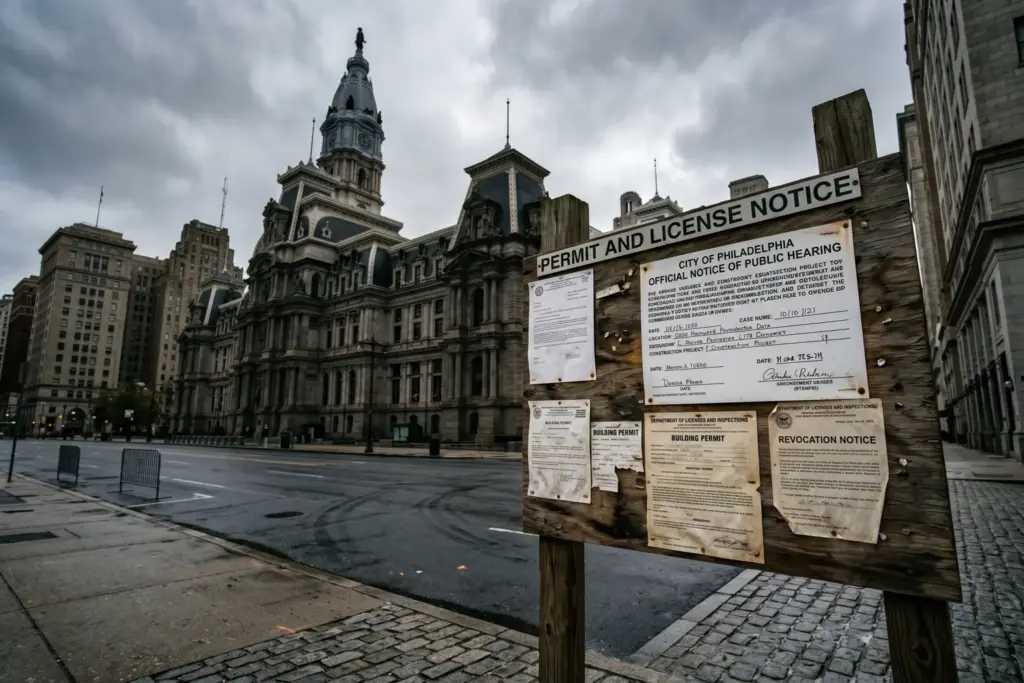
In late April 2025, New York City’s Office of Special Enforcement began sending a document that stopped some registered hosts cold. The heading was direct: Notice of Intent to Revoke. The recipients had gone through Local Law 18’s permitting process, submitted their applications, passed the city’s review, and received official registrations. The approval was supposed to be the hard part. Months later, the city was telling them the approval might not hold.
OSE’s own data showed why. Documents show that 27 percent of NYC’s registered short-term rental hosts had reverted to prohibited conduct after receiving their registrations, advertising entire units for sole-occupancy bookings or allowing reservations past the two-guest cap the city requires. The office issued formal warnings to approximately 500 registered hosts and began revocation proceedings through the city’s Office of Administrative Trials and Hearings.
This is the part of STR regulation that most investors haven’t planned for. Permit denial is a known risk. Getting approved and then losing that approval is something else entirely.
Cities across the country have spent the past several years building the legal frameworks and administrative capacity to go after permits they previously issued. The mechanisms differ by market, but the pattern is consistent enough in 2026 to call it a documented trend. Approved permits are being suspended. Renewals are being denied. Compliance failures are triggering formal revocation proceedings. And in some cities, platform enforcement deadlines are about to produce the functional equivalent of mass permit removal even for listings that technically hold valid licenses.
For STR investors, the risk calculus has changed. Getting a permit was never a guarantee. It is now clearer than ever that holding one is not either.
The Three Mechanisms Cities Use to Revoke Approved Permits
The legal paths to permit revocation vary, but three mechanisms account for most documented cases.
Mechanism 1: Nuisance Findings and Compliance Failures
The most common revocation path runs through violations. City ordinances typically specify grounds for permit suspension or revocation: documented noise complaints, occupancy violations, operating without a displayed license number, failure to maintain required insurance, or renting outside permitted zones. The trigger and the process differ, but the underlying logic is the same. The permit was issued subject to compliance, and the compliance failed.
Nashville uses a three-strikes framework. Three documented violations at a property within a permit year, and the permit is revoked or denied at renewal. The city’s enforcement focus in 2025 has centered on owner-occupancy verification. Metro Council voted in 2018 to phase out non-owner-occupied STR permits in residential neighborhoods and stopped issuing new ones in those zones as of January 1, 2022. Hosts who applied for owner-occupied permits at properties that were not their primary residence are finding those permits denied at renewal after inspectors verify the residency claim.
New York’s process adds a formalized due-process layer. OSE sends a Notice of Intent to Revoke that lists every alleged violation and the penalties the office is seeking. The host can respond and attempt to return to compliance, or contest the findings. If OSE proceeds, the case goes to OATH, where hosts can present a defense. Revocation, when finalized, can also result in denial of future renewal applications.
Mechanism 2: Ownership Transfer Requirements
This one catches investors off guard more than any other mechanism. In many jurisdictions, an STR permit is tied to the individual owner, not the property address. When the property sells, the permit does not transfer.
Austin is a documented example. The city’s STR license is explicitly non-transferable. A buyer purchasing a licensed STR property must apply for their own license from scratch. Given that Austin’s licensing process currently takes six to ten weeks, a buyer who closes without independent license approval can find themselves operating an unlicensed property immediately after purchase. The seller’s compliance record and approval history provide zero protection for the new owner.
The investment risk is specific and severe. An acquisition underwritten around an existing permit can be invalidated at closing. Investors who skip the permit-transferability check before signing a purchase agreement have discovered the problem at a moment when it is expensive to unwind.
Sponsored — Beeline
Finance Your Next STR With a DSCR Loan
Qualify on property cash flow, not W-2 income. Beeline specializes in fast DSCR closings for STR investors. No personal income verification required.
Check Your DSCR Eligibility →Affiliate disclosure: StaySTRA may earn a referral fee.
Mechanism 3: Policy Change and Phase-Out at Renewal
The third mechanism requires no individual violation at all. Cities change the permit conditions, and existing holders lose their status because they no longer fit the new rules when their permit comes up for renewal.
Nashville’s phase-out of non-owner-occupied permits in residential zones is the clearest example. No individual violation was required. The policy changed the renewal conditions, and permits held by investors whose ownership structures no longer matched the new requirements were simply not renewed. Grandfathered status, in practice, meant grandfathered until the next renewal cycle.
Sedona, Arizona formalized a version of this in October 2025. Ordinance 2025-10.10 added explicit permit suspension authority to Chapter 5.25 of the Sedona City Code. Inspectors can now suspend an operating permit when they find unresolved building or land-development code violations. The suspension creates a correction window before full revocation is pursued. Permits that are not brought into compliance within that window face revocation rather than simple non-renewal.
Four Cities With Documented Revocation Patterns
New York City
Local Law 18 created a registration system with ongoing compliance requirements, not a one-time approval. The 27 percent illegal-operation rate OSE documented in April 2026 reflects hosts who received registrations and then reverted to prohibited conduct. That number climbed from 20 percent documented in mid-2025, suggesting the compliance drift accelerated rather than corrected over time.
The OATH hearing process gives registered hosts a formal avenue to contest revocation findings. That due-process structure is real. But it also means the revocation mechanism is fully operational. OSE has issued notices, described the enforcement path publicly, and indicated that renewal applications opening in October 2026 will trigger re-verification of every registered host currently active on the platforms.
Austin, Texas
Austin’s July 1, 2026 enforcement deadline represents the largest platform-compliance enforcement action in American STR history. Starting that date, platforms must display valid STR license numbers on all Austin listings and remove any property the city flags as non-compliant within ten days. City data indicates the vast majority of Austin’s roughly 9,289 active short-term rental listings are operating without licenses, despite a requirement that has been in the city’s books since 2016. Fines for non-compliant listings after the deadline reach $2,000 per day.
For licensed hosts, the platform-enforcement mechanism creates a secondary compliance obligation. Any Austin STR listing without a valid displayed license number can be flagged, which means licensed hosts who fail to update their platform listings face removal alongside unlicensed operators. The license itself is not the only protection. How the license is displayed and documented on booking platforms determines whether the city can act against the listing.
The non-transferability issue compounds the risk for investors buying in Austin. A licensed property becomes unlicensed the moment ownership transfers. Every acquisition in Austin’s STR market requires an independent licensing timeline built into the transaction plan before closing.
Nashville, Tennessee
Data indicates Nashville’s enforcement is systematic rather than reactive. The codes department has described owner-occupancy verification as the core of its STR enforcement program. The Short Term Rental Appeals Board hears cases from permit holders seeking exemptions from the waiting periods that follow violations or non-renewals. Most cases involve operators whose permits were denied on renewal after occupancy or residency checks failed.
Nashville’s approach uses the annual renewal as the enforcement mechanism. The permit expires. The renewal application triggers verification. Operators who cannot demonstrate compliance with current rules do not receive a new permit. For investors who purchased non-owner-occupied STRs in residential zones before the 2022 phase-out, grandfathered status has been disappearing one renewal cycle at a time.
Sedona, Arizona
Sedona has been tightening STR enforcement since at least late 2023, and the suspension mechanism added in October 2025 gives the city a more formal tool to act on compliance failures without going directly to full revocation. The framework is structured as a warning system: find the violation, suspend the permit, give the owner time to fix it. Fix the violation and the suspension lifts. Do not fix it and the path to revocation is direct.
The legal landscape around Sedona’s STR regulation got more complicated in November 2025, when the Arizona Court of Appeals issued a unanimous ruling in Oak Creek Hospitality LLC v. City of Sedona. The court found that Sedona’s attempt to bar short-term rentals at a mobile home park violated Arizona’s statewide preemption statute, which prohibits local bans on vacation and short-term rentals. That ruling protects hosts from certain blanket prohibitions. It does not protect against suspension or revocation for documented building code and safety violations, which fall within the enforcement authority the city retains under state law.
Sponsored — Beeline
Finance Your Next STR With a DSCR Loan
Qualify on property cash flow, not W-2 income. Beeline specializes in fast DSCR closings for STR investors. No personal income verification required.
Check Your DSCR Eligibility →Affiliate disclosure: StaySTRA may earn a referral fee.
The Legal Question: Do Hosts Have Vested Rights in STR Permits?
The short answer, based on the case law developed through 2022 and 2025, is mostly no.
In Nekrilov v. City of Jersey City, No. 21-1786, the Third Circuit Court of Appeals upheld Jersey City’s short-term rental ordinance in August 2022. The court found that the hosts’ constitutional rights were not violated. The ordinance served legitimate public interests, including increasing housing stock and preventing nuisance, and did not constitute an unconstitutional regulatory taking. The plaintiffs argued that the restrictions effectively denied all economically beneficial use of their properties. The court disagreed. Permit restrictions that limit profitable use without eliminating all property value typically do not meet the threshold for a successful taking claim.
Federal courts have generally treated STR licenses as regulatory permits rather than property rights. The legal framework courts apply evaluates three factors: the economic impact on the property owner, the degree of interference with investment-backed expectations, and the character of the government action. Most STR revocation challenges have not cleared that bar.
State law creates exceptions in some markets. Texas courts have recognized that where municipalities never expressly prohibited STRs, property owners may have vested rights in that use. Texas state law also requires cities to provide notice before revoking a previously lawful grandfathered use through a zoning change. Those protections are state-specific and do not translate as a general rule outside Texas.
The practical implication is straightforward. Legal challenges to permit revocation are expensive, slow, and mostly unsuccessful. Treating an issued permit as a permanent entitlement is not a defensible investment thesis, and courts have repeatedly declined to recognize it as one.
What Investors Must Verify Before Buying in a Permitted Market
A property with an existing STR permit is not the same as a property with a guaranteed STR permit. The documentation that matters before closing is different in every market, but five questions show up in every verified risk analysis.
Is the permit transferable? If not, confirm the city’s current permitting timeline and verify independently that the property qualifies for a new license under current rules. Do not close assuming the seller’s permit conveys with the deed.
What are the grounds for revocation? Read the city’s STR ordinance. Revocation grounds are typically listed in the permit conditions or enforcement sections. Know whether a single violation can trigger revocation or whether the city uses a graduated process.
What triggers non-renewal? Renewal requirements sometimes differ from original application requirements. Nashville’s owner-occupancy enforcement is a direct result of renewal standards that were not consistently applied when original permits were issued years earlier. Ask specifically about current renewal criteria, not the criteria in effect when the property was first permitted.
What is the city’s enforcement history? A permit in a city with no active enforcement staff is a different asset than a permit in a city with OATH-equivalent administrative hearing capacity, published platform-enforcement deadlines, and a growing revocation record. Check whether the city has issued formal revocations, suspension notices, or non-renewal data in the past two years. Many cities publish permit status data through open data portals.
What is the city’s legislative trajectory? Nashville’s phase-out, Sedona’s new suspension framework, and NYC’s revocation program all developed over multiple years before reaching current enforcement levels. The city council’s recent legislative activity tells you where the rules are heading, not just where they are today.
Run the regulatory details through the StaySTRA Analyzer before any purchase. If you have already received a revocation or non-renewal notice, the companion guide to STR permit denial appeals covers the formal response process in detail. For investors using DSCR financing in markets with active enforcement, the StaySTRA DSCR financing guide covers how lenders evaluate regulatory risk in their underwriting.
Permit durability is not a given in 2026. It is a variable that belongs in every investor’s pre-purchase analysis.
We do our best to keep our reporting accurate and up to date, but situations evolve and we are only human. Always verify current details directly with local officials and sources before making decisions.
Frequently Asked Questions
Can a city revoke an STR permit it already approved?
Yes. Most cities include explicit revocation authority in their STR ordinances, triggered by compliance violations, nuisance findings, failure to maintain required insurance, or operating outside the conditions under which the permit was issued. New York City’s Office of Special Enforcement began issuing formal Notices of Intent to Revoke to registered hosts in April 2025, establishing that revocation is an active enforcement tool and not a theoretical risk.
Does an STR permit transfer to a new owner when a property is sold?
Not in many jurisdictions. Austin’s STR license is explicitly non-transferable: a buyer must apply for a new license independently, a process that takes six to ten weeks. Before purchasing an STR property, confirm whether the permit attaches to the owner or the property address. Assuming transferability without verification is one of the most common and costly mistakes investors make in permitted markets.
What legal recourse do hosts have if a city revokes their STR permit?
Recourse depends on the city’s administrative process and state law. Most cities with active revocation programs include a due-process step, typically a hearing before an administrative judge or board, where the host can contest the revocation. Legal challenges based on constitutional takings claims have largely failed in federal courts, which have ruled that STR licenses are regulatory permits rather than vested property rights. Texas offers stronger protections under state law than most other states. Hosts who receive a revocation or non-renewal notice should review the STR permit appeal guide for the response process.
What is the difference between permit revocation and permit non-renewal?
Revocation cancels an active permit mid-cycle, typically triggered by a documented violation. Non-renewal is a city’s decision not to issue a new permit when an existing one expires. Nashville primarily uses non-renewal as its enforcement mechanism: the permit expires, the renewal application triggers verification of current compliance, and permits held by operators who no longer meet current standards are denied. Non-renewal is often quieter than active revocation, but the practical result for the investor is the same.
Which types of STR markets carry the highest permit revocation risk?
Markets with dedicated STR enforcement staff, administrative hearing capacity, and active platform enforcement partnerships carry the highest revocation risk. Cities like Austin (July 2026 platform delisting deadline), Nashville (systematic owner-occupancy verification), and New York City (OATH revocation proceedings) have moved beyond paper regulations into operational enforcement. Owner-occupancy markets present a specific non-renewal risk for investors who purchased under grandfathered rules that have since been tightened at renewal.
Want to check permit durability and enforcement history in your target market before you buy? Run your numbers in the StaySTRA Analyzer.
Become a StaySTRA Insider
Join free — get our newsletter + 1 free property analysis/month.
No spam. Unsubscribe anytime. Free membership includes property analyses and market insights.
Sponsored — OfferMarket
Buy Your First STR With Long-Term Rental Financing
Flexible, long-term financing for short-term rental buyers. Rates from 5.75%. Instant online quote, no credit pull.
Explore RTL Financing Options →Affiliate disclosure: StaySTRA may earn a referral fee.