

Key Takeaways
- Jackson Hole, Wyoming leads the nation with 45.5% of summer nights (June through August 2026) already reserved as of early April, signaling that mountain markets are commanding earlier commitment from travelers than most coastal destinations.
- The top 10 markets by forward booking strength range from 45.5% (Jackson Hole) to 38.7% (Atlantic City/Ocean City, NJ), with a notable mix of mountain, lakefront, and coastal destinations.
- Booking windows are compressing across the board: July stays now average 29 days of lead time, down from 34 days in 2022, meaning operators in high-demand markets should be setting summer rates now, not waiting.
- Supply-constrained markets (Jackson Hole, Door County, Kenai Peninsula) are outperforming in forward bookings because regulation and geography limit new inventory, giving existing operators pricing power.
- STR supply grew about 4% nationally in 2025, but demand grew 4.9%, keeping well-positioned markets tight heading into summer.
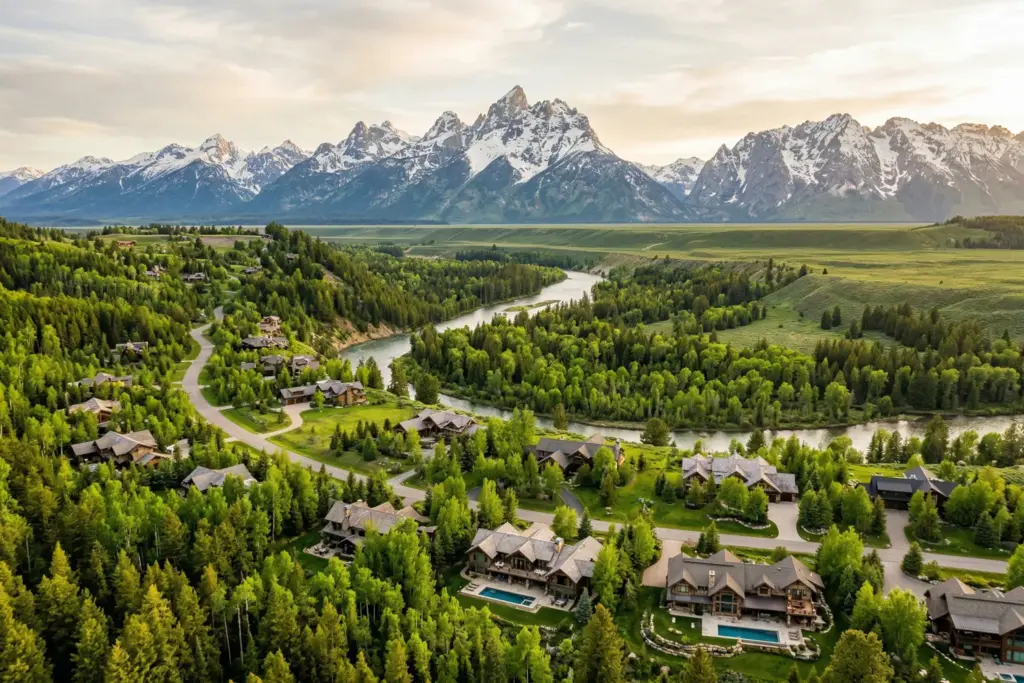
Jackson Hole, Wyoming has 45.5% of its summer nights already spoken for. Let that sink in for a moment. We are barely into April, and nearly half the available short-term rental inventory in one of America’s most exclusive mountain towns is off the table for the June through August window. If you are an investor evaluating where to buy, or an operator deciding whether to nudge your nightly rate up another $25, that number should be the starting point of your summer 2026 strategy.
I have been watching booking patterns for four decades (back when “advance reservations” meant a phone call and a paper ledger on my desk in Santa Fe). What strikes me about this year’s data is not just the strength of the numbers. It is the composition. Mountain towns and unexpected lakefront destinations are booking faster than many traditional beach markets. That is a signal worth paying attention to.
Here is what the forward-looking data tells us about which STR markets are filling up fastest for summer 2026, and what it means for your investment thesis and your pricing calendar.
The Top 10 STR Markets by Summer 2026 Forward Booking Strength
The following ranking uses forward-looking occupancy data for June through August 2026, measuring what percentage of available summer nights were already reserved as of early April 2026. Think of it like a thermometer for traveler confidence: the higher the number, the more certain guests are that they want to be in that market this summer.
| Rank | Market | % of Summer Nights Reserved | Market Type |
|---|---|---|---|
| 1 | Jackson Hole, WY | 45.5% | Mountain |
| 2 | Cape Cod, MA | 44.0% | Coastal |
| 3 | Door County, WI | 42.6% | Lakefront |
| 4 | Outer Banks, NC | 41.4% | Coastal |
| 5 | Maine Beaches | 40.7% | Coastal |
| 6 | Newport, RI | 40.4% | Coastal |
| 7 | Kenai Peninsula, AK | 40.3% | Wilderness |
| 8 | Down East / Acadia, ME | 40.2% | Coastal |
| 9 | Michigan West Coast | 39.4% | Lakefront |
| 10 | Atlantic City / Ocean City, NJ | 38.7% | Coastal |
A few things jump out immediately. Jackson Hole is not just leading. It is leading by a full 1.5 percentage points over Cape Cod, which is remarkable when you consider Cape Cod is one of the most established summer vacation markets in the country. Door County, Wisconsin, sitting at number three, is the kind of result that makes you look twice. This is a lakefront market with roughly 300 miles of shoreline that has quietly built a reputation as the “Cape Cod of the Midwest.” At 42.6%, it is booking faster than the Outer Banks.
The Kenai Peninsula in Alaska at number seven is another surprise. At 40.3%, this remote wilderness destination is holding its own against Newport and the Jersey Shore. That tells you something about the appetite for distinctive, experience-driven travel in 2026.
What These Numbers Tell Us About Mountain vs. Coastal Demand
The top 10 list contains six coastal markets, two lakefront markets, one mountain market, and one wilderness market. On the surface, coastal still dominates the count. But look at the ranking order.
Jackson Hole, the lone mountain representative, sits at the top. And this is a market where StaySTRA data shows just 349 active listings with a $589 average daily rate. Compare that to the Outer Banks, which has over 6,400 listings. Jackson Hole has roughly 5% of the Outer Banks’ inventory, yet it is booking at a higher forward rate.
Think of it like a small, high-end restaurant versus a large buffet. The restaurant with 30 seats fills up before the 600-seat buffet, not because more people want to eat there, but because there is far less room at the table. That supply constraint is a feature, not a bug, for investors already in the market.
Mountain markets beyond the top 10 are showing similar strength. Bend, Oregon and Mammoth Lakes, California both carry regulatory constraints that limit new supply. Teton County (Jackson Hole) enforces a 31-day minimum for most residential STRs and restricts permits to lodging overlay zones. These kinds of guardrails create a pricing floor that open markets simply do not have.
Booking Windows Are Getting Shorter, But Top Markets Are Defying the Trend
Here is a wrinkle that makes the forward booking data even more telling. Across the STR industry, booking lead times have been compressing steadily. PriceLabs data shows that July stays now average 29 days of advance booking, down from 34 days in 2022. Last-minute reservations (within seven days of arrival) now represent 27% of all bookings, up from 21% in 2021.
Stay with me here, because this is where the signal gets interesting.
If the overall trend is toward later booking, and yet these top 10 markets already have 39% to 45% of their summer nights locked up in early April, that means these markets are bucking the national pattern. Guests are planning earlier and committing sooner for these destinations specifically. That is a vote of confidence you cannot fake.
The AirROI booking lead time data tells a complementary story. Leisure destinations like Destin, Florida average 64.7 days of lead time, while urban markets like Austin average just 38.2 days. Scottsdale swings from 18.9 days in July to 79.3 days in March, a 4.2x seasonal variation. Mountain and resort markets tend to fall on the longer end of the booking window, which means guests in those markets are planning (and locking in rates) months ahead.
For operators, this compression matters. If you manage properties in markets outside the top 10, you cannot count on bookings arriving 60 days out the way they used to. Your pricing strategy needs to account for the possibility that 25% to 30% of your summer revenue will book within a week of arrival.
Where Pricing Power Is Strongest Right Now
If you are an operator in any of the top 10 forward-booking markets, you should be raising your summer rates now. Not next month. Now.
Here is why. When 40% or more of your market’s summer inventory is already reserved, the remaining 60% becomes more valuable by the day. Every week that passes with strong booking pace shifts leverage toward the operator. Guests who have not booked yet will have fewer options and less flexibility to comparison shop. That is the textbook definition of pricing power.
StaySTRA data for Jackson Hole shows a $589 average daily rate with 46.9% occupancy and $78,821 in median annual revenue. Big Sky, Montana, a market just over the mountain, carries a nearly identical ADR of $594 but achieves 56% occupancy and $125,000 in median annual revenue with roughly 1,000 active listings. That gap suggests Big Sky operators are capturing more nights at the same rate, likely because of a broader range of property types.
Nationally, ADR growth has stabilized around 3% annually after the wild swings of 2021 and 2022. But that is an average. In supply-constrained mountain markets, operators who price dynamically are seeing summer ADR gains well above that baseline.
For markets lower on the list (Michigan west coast at 39.4%, Atlantic City/Ocean City at 38.7%), the pricing calculus is slightly different. You still have room to push rates, but you need to watch your booking pace weekly. If your forward bookings are tracking below your market’s average, it may be too early to raise aggressively. If you are tracking above, lean into it.
Sponsored — Beeline
Finance Your Next STR With a DSCR Loan
Qualify on property cash flow, not W-2 income. Beeline specializes in fast DSCR closings for STR investors. No personal income verification required.
Check Your DSCR Eligibility →Affiliate disclosure: StaySTRA may earn a referral fee.
Supply Constraints Are the Hidden Story
A market does not land in the top 10 for forward bookings by accident. Look at what the strongest markets have in common: some combination of regulatory limits, geographic barriers, or both.
Jackson Hole has Teton County’s strict zoning overlay, permit caps, and a 31-day minimum for most residential properties. Door County, Wisconsin, has multiple townships that restrict STR permits through density limits and zoning requirements that cap how many rentals can operate in residential areas. The Kenai Peninsula is geographically remote enough that new inventory does not materialize overnight. Cape Cod has a patchwork of town-level restrictions that vary from seasonal bans to strict permitting in certain townships.
Compare that to a market like Panama City Beach or Myrtle Beach, where supply has grown steadily and regulatory friction is lower. These markets still attract strong summer demand, but they do not generate the same forward booking urgency because guests know inventory will be available.
For investors evaluating market entry, this is a critical filter. A market with 45% forward booking strength and supply constraints is telling you two things: demand is real and durable, and the competitive moat is structural. A market with 38% forward bookings and unlimited permitting tells a different story.
The World Cup Wild Card
One more factor worth watching this summer. The 2026 FIFA World Cup kicks off in June across 16 North American host cities. Early booking data shows demand surging in host cities like Fort Worth and Kansas City, though these are event-driven spikes rather than the organic leisure demand reflected in the top 10 list above.
The World Cup effect is meaningful but temporary. StaySTRA’s World Cup revenue analysis shows this could be the biggest single STR revenue event in a generation for host city operators. If you operate in or near a host city, your summer pricing strategy should layer World Cup premium on top of your baseline seasonal rates.
But do not confuse event-driven demand with the structural demand that drives the top 10 forward booking list. Jackson Hole is not filling up because of a sporting event. It is filling up because travelers have decided, months in advance, that this is where they want to spend their summer. That kind of demand is repeatable. Event demand is not.
What This Means for Your Summer Strategy
Let me bring this back to practical terms, whether you are an investor scouting markets or an operator managing a portfolio.
If You Are an Investor
The forward booking data is a demand validation tool. Markets with high advance reservation rates and supply constraints offer the most defensible investment thesis. Jackson Hole, Door County, and the Kenai Peninsula represent the extreme end of that spectrum: high demand, limited supply, and geographic or regulatory moats.
But entry costs matter. Jackson Hole’s median home price sits around $1.85 million (with median sales around $2.7 million in early 2026). Door County and the Kenai Peninsula offer significantly lower entry points with similar demand characteristics. The StaySTRA Analyzer can help you model revenue projections for specific markets before you make an offer.
If You Are an Operator
Three action items, starting today:
- Audit your summer rates against your market’s forward booking pace. If your market is above 40% reserved and you have not raised rates since last year, you are leaving money on the table.
- Shorten your minimum stay for remaining gaps. With booking windows compressing (27% of reservations now within seven days), a four-night minimum on a gap night in July is a night you might not fill. Consider dropping to two or three nights for shoulder dates around your existing reservations.
- Watch your competitive set, not just your own calendar. If comparable listings in your market are 50% booked and you are at 30%, the issue is not demand. It is your listing, your pricing, or both.
The Bigger Picture
Nationally, STR supply grew about 4% in 2025 while demand grew approximately 4.9%. That net positive demand story is real, but it does not apply evenly. The markets filling up fastest for summer 2026 are the ones where supply growth is constrained, demand is diversified beyond a single season, and travelers are willing to plan (and pay) months in advance.
Mountain and wilderness destinations are punching above their weight in this cycle. Traditional coastal markets remain strong (six of the top 10 are coastal), but they are no longer the only game in town. The data suggests a permanent broadening of where American travelers choose to spend their summer vacations and their short-term rental budgets.
That broadening is good news for the STR industry as a whole. More markets with strong demand means more investment opportunities, more pricing power for operators, and a healthier distribution of revenue across the country. I have watched markets rise and fall over 40 years of tracking this data, and the current pattern feels sustainable in a way that the 2021 gold rush did not.
We do our best to keep our data accurate and up to date, but markets move fast and we are only human. Always verify current figures directly with local sources before making investment decisions.
Frequently Asked Questions
Which STR market has the highest summer 2026 advance booking rate?
Jackson Hole, Wyoming leads the nation with 45.5% of June through August 2026 nights already reserved as of early April. This reflects both strong traveler demand and tight supply constraints from Teton County’s strict STR zoning rules and permit caps.
Are mountain STR markets outperforming coastal markets for summer 2026?
Not in volume, but in booking pace. Six of the top 10 forward-booking markets are coastal, but Jackson Hole (mountain) holds the number one spot. Mountain markets tend to have fewer listings and stricter supply constraints, which drives earlier booking commitment from travelers. The data shows a broadening of demand beyond traditional beach destinations.
How far in advance are guests booking summer 2026 vacation rentals?
Booking windows vary dramatically by market type. Leisure destinations like Destin average 64.7 days of lead time, while urban markets like Austin average 38.2 days. Overall, July booking windows have compressed from 34 days in 2022 to 29 days in 2026, and 27% of all reservations now book within seven days of arrival.
Should STR operators raise summer 2026 rates now?
Yes, if your market shows forward booking strength above 40%. When a large share of summer inventory is already reserved, the remaining supply becomes more valuable as the season approaches. Operators who wait until June to adjust rates in high-demand markets risk underpricing their most valuable nights.
What makes a summer STR market “supply constrained” and why does it matter?
Supply-constrained markets limit new STR inventory through regulatory caps, strict permitting, zoning overlays, or geographic remoteness. Examples include Jackson Hole (zoning overlay with permit caps), Door County (license caps with spacing requirements), and the Kenai Peninsula (geographic isolation). These constraints give existing operators pricing power because demand cannot be diluted by a flood of new listings.
Explore Your Market’s Summer Potential
Wondering how your market stacks up? Run the numbers for any U.S. market with the StaySTRA Analyzer to see current occupancy, ADR, and revenue data before making your next investment or pricing decision.
Become a StaySTRA Insider
Join free — get our newsletter + 1 free property analysis/month.
No spam. Unsubscribe anytime. Free membership includes property analyses and market insights.