
Key Takeaways
- Sun Valley, Idaho delivers a true dual-season STR market where July revenue ($6,008/month) rivals peak ski months, giving hosts year-round income instead of a single seasonal spike.
- Idaho’s HB 583 preemption law (effective July 1, 2026) bars local governments from imposing STR-specific permits or fees, offering regulatory certainty that Colorado mountain markets cannot match.
- At $1.1 million median home value and a 4.04% gross yield, Sun Valley’s investment math outperforms Telluride (2.76%), Aspen (0.66%), and approaches Vail (4.32%) at a fraction of the entry price.
- VRBO leads Sun Valley’s channel distribution at 37% versus Airbnb’s 34%, an unusual dynamic that rewards hosts who list across multiple platforms.
- The community tension between STR growth and workforce housing (335 long-term units lost since 2010) is real, and responsible hosting matters here as much as the numbers do.
On a Tuesday morning in early March, with fresh powder still catching light on Bald Mountain, I sat in a coffee shop on Main Street in Ketchum and listened to three people talk about the same town from completely different angles. One had just closed on a condo after spending two ski seasons as a guest. Another was a lifelong Idaho resident who converted a family property into a vacation rental during the pandemic boom. The third had moved from Vail because, as she put it, “the numbers stopped making sense over there.” Three stories, one zip code, and a valley that keeps drawing people who thought they were just passing through.
That conversation stayed with me. Bienvenidos a Sun Valley, a place where the STR investment story sounds different than it does in the crowded Colorado corridors. This is the human side of the data Edna Stewart unpacked in our Sun Valley STR Market 2026 companion piece. If her article is the spreadsheet, this one is the kitchen table.
The Investor Who Came for the Skiing and Stayed for July
Let’s call her Raquel. She spent six winters renting condos near River Run Lodge in Ketchum before she bought one of her own in 2022. The purchase was a ski play. Nothing more. She figured she would use the place December through March and let it sit dark the rest of the year.
Then came her first summer as an owner.
“I listed it in June almost as an experiment,” she told me. “By mid-July I had more bookings than I did in February.”
StaySTRA data confirms what Raquel discovered by accident. Sun Valley’s July revenue averages $6,008 per month, making it the single strongest month on the calendar. Not January. Not Presidents’ Day weekend. July. The ski season (December through March) and the summer season (June through September) produce roughly comparable revenue windows, which means Sun Valley hosts are not white-knuckling through a nine-month dead zone the way some Colorado mountain operators describe their spring and fall.
That dual-season rhythm changes the investment math. Raquel’s condo pulls in around $48,000 per year across both peaks, with shoulder months in October and May filling in the gaps through fly fishing groups and mountain biking weekends. The 400-plus miles of singletrack and world-class trout water on the Big Wood River and Silver Creek are not just tourism brochure material. They are booking engines.
“I tell people I bought a ski condo and it turned into a year-round business,” Raquel says. “Fue una sorpresa bonita.” A beautiful surprise.
The Colorado Refugee Who Found the Value Equation
Let’s call him Tomas. He spent four years operating two STR units in the Vail Valley before selling both in 2024. The reason was not burnout or regulation (though he had opinions about both). It was price.
“You look at Vail, and yes, the ADR is higher. But you are buying a $1.7 million property to chase a 4.3% gross yield,” Tomas explained. “In Aspen, that same yield drops to under one percent on a thirteen-million-dollar entry point. The returns on paper look impressive until you see what you paid to get them.”
Tomas found Sun Valley through a BiggerPockets thread. He drove up from Boise, spent a long weekend in Ketchum, and made an offer on a two-bedroom condo within a month.
The numbers that convinced him: Sun Valley’s median home value sits around $1.1 million with an average annual STR revenue of $45,000 and a 4.04% gross yield. That yield nearly matches Vail’s 4.32% on a property that costs $600,000 less. Against Telluride’s 2.76% on a $2.3 million median, or Aspen’s 0.66% on $13.2 million, Sun Valley looked like the last reasonable entry point in the mountain STR tier.
“I did not come here because Idaho is trendy,” Tomas told me. “I came because the math worked. Los numeros no mienten.“
The numbers do not lie. But there was another factor that sealed his decision.
The Law That Changed the Calculation
On March 16, 2026, Governor Brad Little signed Idaho House Bill 583 into law. Effective July 1, 2026, the law bars local governments from requiring STR-specific permits or fees and classifies short-term rentals as “nontransient residential use” for zoning purposes. Health and safety requirements (smoke detectors, CO monitors, fire extinguishers) remain intact. General nuisance and noise ordinances still apply. But the kind of patchwork local restrictions that define Colorado’s mountain markets? Gone.
Ketchum currently charges a $504 annual STR permit fee. That fee is almost certainly invalidated once HB 583 takes effect.
For investors like Tomas, this was the tipping point. In Colorado, he watched Telluride cap operating days, Steamboat Springs redraw zoning boundaries, and Vail narrowly reject a per-bedroom excise tax by just 35 votes. Each municipality plays by different rules that change from year to year. In Idaho, the state stepped in and said: not here.
“In Vail, I spent more time reading city council agendas than I did managing my properties,” Tomas said. “In Sun Valley, I can focus on being a good host.”
For a deeper look at how HB 583 fits into the broader national preemption movement, Jed Collins covered the full implications in our 2026 STR Preemption Wave analysis.
The Local Who Turned a Family Cabin Into Something More
Let’s call her June. Her grandparents built a three-bedroom cabin outside Hailey in the 1970s. For decades it was the family’s summer place. By 2020, nobody in the family was using it enough to justify the property taxes and upkeep.
“My sister said sell it. My mom said keep it. I said, what if we just rent it?” June recalled.
She listed the cabin on VRBO first (a smart instinct, since VRBO leads Sun Valley’s channel distribution at 37% compared to Airbnb’s 34%). Bookings came faster than she expected, mostly from families who wanted a quieter mountain experience than what they found in Colorado resort towns.
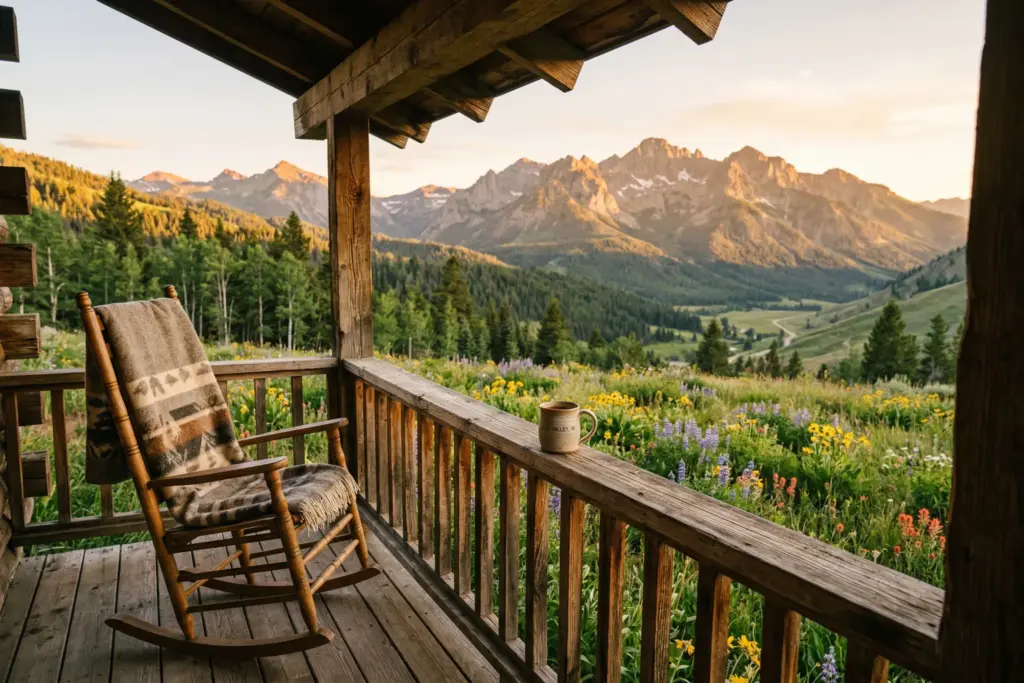
June’s cabin now generates around $38,000 per year. It is not a mansion. It does not have a hot tub or a ski-in trail. But it has a woodstove, a porch with a view of the Pioneers, and a handwritten binder that June updates every season with her favorite local restaurants, fishing spots, and hiking trails.
“People tell me the binder is the reason they come back,” June said. “That is not something a management company writes for you.”
Walking through the valley, I couldn’t help but think about what makes this market different from the Colorado towns I wrote about in Hosting at Altitude. In Telluride and Vail, the host stories often center on surviving regulatory shifts and enduring brutal shoulder seasons. In Sun Valley, the stories center on discovery. People finding a market that had not yet been picked over by institutional capital. A place where a family cabin still matters.
What the Valley Is Still Working Through
I would not be doing my job if I only told you the optimistic version. La verdad completa includes the tension.
Ketchum has lost roughly 335 long-term rental units since 2010, with a significant number converting to short-term or seasonal use. Sixty percent of local renters pay more than 30% of their income on housing. The city estimates it needs 572 community housing units by 2032 just to keep up with demand. Bluebird Village opened 51 affordable units recently, and Ketchum launched a Rental Preservation Program offering $6,000 to $12,000 incentives for owners who rent to local workers on long-term leases.
HB 583 protects STR operators from local permit restrictions, but it does not resolve the housing squeeze. That is a tension every Sun Valley host needs to sit with. The best operators I talked to are not ignoring it. June donates a percentage of her rental income to the Blaine County Housing Authority. Raquel keeps her condo priced for families rather than luxury travelers. Tomas rents his second unit long-term to a local restaurant worker at below-market rate.
Being a good neighbor is not a marketing strategy. It is the cost of belonging to a place like this. Comunidad (community) is built through choices, not just permits.
The Unusual Platform Dynamic
One detail that surprised every host I spoke with: VRBO outpaces Airbnb in Sun Valley. StaySTRA data shows VRBO controls 37% of the market’s channel distribution while Airbnb holds 34%, with Booking.com at 18% and smaller platforms filling the rest. In most U.S. mountain markets, Airbnb dominates. Sun Valley is different.
The likely reason? Sun Valley’s inventory skews heavily toward condos (72% of all listings). Condo-heavy markets with family-oriented demand tend to favor VRBO’s platform, which has historically attracted vacation planners booking further in advance. If you are listing only on Airbnb in this market, you are leaving bookings on the table.
Accuracy Note
We do our best to keep our content accurate and up to date, but things change and we are only human. Always verify details directly with local sources before making decisions.
Frequently Asked Questions
Is Sun Valley, Idaho a good market for Airbnb investment in 2026?
Sun Valley offers a 4.04% gross yield on a $1.1 million median home value with $45,000 average annual STR revenue. Its dual-season demand (ski and summer) provides more consistent income than single-season mountain markets. Idaho’s HB 583 preemption law adds regulatory stability that Colorado mountain markets lack.
What does Idaho HB 583 mean for Sun Valley vacation rental hosts?
Signed March 16, 2026 and effective July 1, 2026, HB 583 bars Idaho local governments from imposing STR-specific permits or fees. It classifies short-term rentals as nontransient residential use for zoning purposes. Ketchum’s current $504 annual permit fee will likely be invalidated. Health, safety, and general nuisance rules still apply.
How does Sun Valley STR revenue compare to Colorado ski towns?
Sun Valley’s $274 ADR is lower than Vail ($563), Telluride ($663), or Aspen ($640 and up), but entry costs are dramatically lower. At $1.1 million median home value versus $1.7 million in Vail, $2.3 million in Telluride, and $13.2 million in Aspen, Sun Valley delivers a competitive gross yield of 4.04% with less capital at risk.
Is Sun Valley a winter-only vacation rental market?
No. July is actually Sun Valley’s highest-revenue month at approximately $6,008 per month in average STR revenue. Summer draws hikers, mountain bikers (400-plus miles of singletrack), and fly fishers to the Big Wood River and Silver Creek. The ski season and summer season produce roughly comparable revenue windows.
Should Sun Valley hosts list on VRBO or Airbnb?
Both. VRBO leads Sun Valley’s channel distribution at 37% compared to Airbnb’s 34%. This is unusual for a U.S. market and likely reflects the condo-heavy inventory (72%) and family-oriented demand. Listing on both platforms maximizes booking potential.
Run Your Own Sun Valley Numbers
The stories in this piece are composites drawn from real conversations across STR communities. The data is not. If Sun Valley’s dual-season rhythm and regulatory certainty caught your attention, the next step is running the numbers on a specific property.
Sponsored — OfferMarket
Buy Your First STR With Long-Term Rental Financing
Flexible, long-term financing for short-term rental buyers. Rates from 5.75%. Instant online quote, no credit pull.
Explore RTL Financing Options →Affiliate disclosure: StaySTRA may earn a referral fee.
For the full data breakdown on Sun Valley’s ADR, occupancy, revenue, and seasonal patterns, read Edna Stewart’s companion piece: Sun Valley ID STR Market 2026.
Become a StaySTRA Insider
Join free — get our newsletter + 1 free property analysis/month.
No spam. Unsubscribe anytime. Free membership includes property analyses and market insights.