Key Takeaways
- Telluride’s 608 active short-term rental listings command a $663 average daily rate, the highest of any Colorado mountain market tracked by StaySTRA, with 37.5% annual occupancy and $62,379 in median annual revenue.
- Peak-season months (February, March, July) deliver $11,223 in average monthly revenue at 55.1% occupancy, while shoulder months drop to $3,632 at 27.5% occupancy, creating a steep seasonal revenue curve.
- Telluride’s typical home value of $2.26 million (up 13.6% year over year) produces a gross yield of just 2.8% at median revenue, making this a capital appreciation play rather than a cash-flow market for most investors.
- The 2025-2026 ski season showed occupancy down 8% and ADR down 10% year over year, placing Telluride among the softer Colorado ski markets this winter.
- Residential-zone properties face a hard cap of 29 rental days per year, making Classic License properties the only viable STR investment path in Telluride.
Telluride’s 608 active short-term rental listings pull in a $663 average daily rate, which makes it the priciest per-night mountain market in Colorado by a comfortable margin. Think of it like a boutique hotel in a box canyon: limited rooms, stunning scenery, and rates that reflect both. The catch is that those rooms sit empty more often than you might expect. Annual occupancy runs at 37.5%, and the median property generates $62,379 in gross revenue per year.
Those numbers tell a particular kind of story, and it is one that requires more context than a quick glance at ADR alone can provide. I have been pulling apart STR datasets since before Airbnb existed (literally, on paper spreadsheets in a government office in Santa Fe), and Telluride is one of those markets where the headline number and the operating reality are two very different conversations.
Let me walk through what the data actually shows.
Telluride STR Market Data at a Glance
StaySTRA data paints a clear picture of Telluride’s current market position. Here are the core metrics as of early 2026:
| Metric | Telluride (2026) |
|---|---|
| Active STR Listings | 608 |
| Average Daily Rate (ADR) | $663 |
| Annual Occupancy Rate | 37.5% |
| Median Annual Revenue | $62,379 |
| Revenue Growth (YoY) | -4.9% |
| Peak Revenue Month | February |
| Lowest Revenue Month | April |
| Average Booking Lead Time | 80 days |
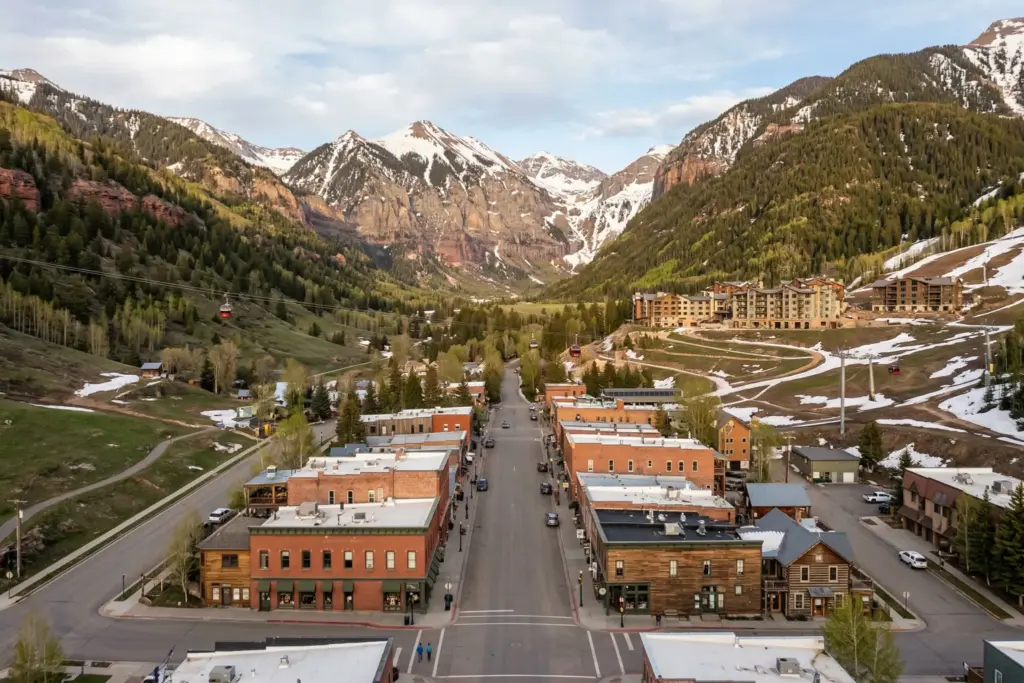
The $663 ADR jumps off the page. For context, that is higher than Jackson Hole ($589), higher than Big Sky ($594), and roughly 2.5 times the national average for short-term rentals. Telluride commands a genuine premium, and the reason is straightforward: this is a box canyon accessible by a single road (or a scenic flight into Telluride Regional Airport), surrounded by 13,000-foot peaks, with a historic downtown that has not been replicated or diluted by sprawl. Scarcity of place drives scarcity pricing.
But ADR without occupancy is like a menu price nobody orders from. At 37.5% annual occupancy, Telluride sits well below Jackson Hole (46.9%) and Big Sky (56%). That occupancy gap is the single most important number for investors to understand before writing a check.
The Seasonal Revenue Curve: Where Telluride Earns Its Money
If you are coming from a coastal STR market where summer carries 60% of annual revenue, Telluride will require a different mental model. This market earns from two peaks, but the winter peak is taller, and the valleys between are deeper than most mountain competitors.
| Season | Months | Avg Monthly Revenue | Occupancy | ADR |
|---|---|---|---|---|
| Peak | Feb, Mar, Jul | $11,223 | 55.1% | $736 |
| Shoulder | Jun, Aug, Sep, Dec, Jan | $7,025 | 37.2% | $704 |
| Low | Apr, May, Nov | $3,632 | 27.5% | $600 |
February is the single strongest month. Ski season demand, Presidents’ Day bookings, and reliable snowpack combine to push occupancy above 55% while ADR climbs to $736. March follows closely, boosted by spring break travel. July forms the summer peak, driven by the Telluride Bluegrass Festival, hiking season, and mountain biking.
Stay with me here, because the low-season numbers are where the investment math gets real. April and May are Telluride’s mud season. The ski lifts close, the summer crowds have not arrived, and monthly revenue drops to $3,632. November is similarly quiet, sitting in the gap between fall color season and ski opening. Those three months together represent a quarter of the year where your property is earning roughly a third of what it makes in peak months.
The booking lead time data reinforces this pattern. Guests book August stays an average of 106 days in advance (summer planners locking in mountain vacations) while November bookings come just 35 days ahead (last-minute travelers, if they come at all). That 71-day spread between the longest and shortest lead times tells you exactly where demand certainty lives and where it does not.
How Telluride Compares to Jackson Hole and Big Sky
Investors shopping mountain STR markets in the northern Rockies and Colorado high country often compare these three destinations. The data reveals three distinct investment profiles.
| Metric | Telluride, CO | Jackson Hole, WY | Big Sky, MT |
|---|---|---|---|
| Active Listings | 608 | 349 | ~1,000 |
| ADR | $663 | $589 | $594 |
| Occupancy | 37.5% | 46.9% | 56% |
| Median Annual Revenue | $62,379 | $78,821 | $125,000 |
| Revenue Growth (YoY) | -4.9% | +6.4% | +30% RevPAR |
| Typical Home Value | $2.26M | $1.85M | $2.6M |
Telluride charges the most per night but fills the fewest nights. That combination produces the lowest annual revenue of the three markets. Jackson Hole generates 26% more annual revenue on a lower ADR because its occupancy is nearly 10 percentage points higher. Big Sky doubles Telluride’s revenue with a similar ADR by filling rooms at 56% of the year.
Think of it like three restaurants on the same street. Telluride has the most expensive entrees, but the dining room is half empty most nights. Jackson Hole charges slightly less but keeps more tables turning. Big Sky prices competitively and fills the room. Revenue is price times volume, and Telluride’s volume is its constraint.
The revenue growth trajectory is where the story gets more concerning. Telluride declined 4.9% year over year while Jackson Hole grew 6.4% and Big Sky surged. The 2025-2026 ski season data from Key Data Dashboard shows Telluride’s occupancy down 8% and ADR down 10% compared to the prior season, making it one of the softer performers among Colorado ski markets this winter. By contrast, Snowmass saw occupancy up 26% and Steamboat Springs showed steady improvement.
For a deeper look at how these mountain peers compare, the Jackson Hole STR market analysis and Big Sky STR market analysis provide full seasonal breakdowns and regulatory context.
The Acquisition Math: Can Telluride Cash-Flow?
This is the section where I would rather give you the honest numbers than let you discover them after closing. Telluride real estate is expensive, and the STR revenue does not make the math easy.
The typical home value in Telluride sits at $2,257,315 as of February 2026 (Zillow data), up 13.6% year over year. The median listing price is even higher at $2.57 million. Town of Telluride properties run $2,115 per square foot, while Mountain Village comes in at $1,510 per square foot.
At the median annual STR revenue of $62,379 against a $2.26 million acquisition price, the gross yield is 2.76%. That is before property management fees (20-35% in resort markets), maintenance, insurance, property taxes, and HOA dues. After those expenses, most properties will not generate positive cash flow under conventional or DSCR financing.
Don’t let that number end the conversation, though. The top 25% of Telluride operators earn $9,192 or more per month, which translates to roughly $110,000 annually. At that revenue level, the gross yield climbs to 4.87%, and DSCR qualification becomes plausible with a substantial down payment (40% or more). The top 10% earn above $14,159 per month ($170,000 annualized), which changes the equation further.
The gap between median and top-quartile performance in Telluride is wider than in most markets. That spread tells you something critical: this is a market where operational execution separates profitable investments from money-losing ones. A well-positioned ski-in property with professional management and aggressive dynamic pricing can outperform the median by 75% or more. A property listed with minimal effort, sitting in a residential zone with 29-day rental caps, will underperform badly.
[easy_street_capital_cta type=”dscr”]
Telluride’s Regulatory Framework: What Investors Must Know
Telluride’s STR regulations create a two-tier market that every investor must understand before purchasing. Get this wrong and you could buy a property that legally cannot generate meaningful rental income.
Residential zone properties face the strictest limits in any major Colorado mountain market. Owners in residential zones may rent their property a maximum of three times per year, with a cumulative cap of 29 rental days. That is not a typo. Twenty-nine days. At Telluride’s ADR, that ceiling limits gross rental income to roughly $19,000 per year. For investment purposes, residential-zone properties are not viable STR acquisitions.
Classic License properties face no rental day restrictions and can operate as full-time vacation rentals. These licenses require annual renewal, with fees of $857 per bedroom. A three-bedroom condo would pay $2,571 in annual license fees. There is no cap on the number of Classic Licenses issued, but each person or entity may hold a maximum of two STR licenses.
Colorado implemented statewide STR registration in 2024, adding a state-level requirement on top of local licensing. Combined state and local lodging taxes in Telluride run approximately 14.45%, which operators must collect and remit. For a full breakdown of Colorado’s STR regulatory landscape across mountain markets, see the Colorado STR Laws 2026 guide.
The practical takeaway: if you are evaluating Telluride for STR investment, verify that your target property holds or is eligible for a Classic License before making an offer. The licensing status is as important as the location, the condition, or the price.
What the Property Mix Tells You
Telluride’s 608 active listings skew heavily toward condos and apartments, which make up 71.7% of supply. Houses account for 26.6%. Nearly all listings (99%) are entire-home rentals rather than shared spaces or private rooms.
The bedroom distribution splits roughly into thirds: one-bedroom units (33.9%), two-bedroom (28.1%), and three-plus bedroom (32.4%). Average guest capacity is 5.1 people. The dominance of smaller units reflects Telluride’s condo-heavy real estate stock, particularly in Mountain Village and along the gondola corridor.
One data point that stands out: 69.9% of Telluride listings require a minimum stay of 30 nights or more. Only 3.1% allow single-night bookings. That minimum-stay structure is unusual for a vacation rental market and likely reflects the regulatory environment pushing some owners toward monthly rentals rather than traditional short-term stays. For investors, it means the competitive field for true short-term (nightly or weekly) rentals is smaller than the 608-listing count suggests.
Cancellation policies run strict. A combined 64% of listings use either “Firm” or “Super Strict 60 Days” policies, signaling that Telluride hosts protect their booking calendar aggressively. In a market with such pronounced seasonality, a last-minute cancellation during February could mean a lost night that never gets rebooked.
What to Watch Going Forward
Three trends will shape Telluride’s STR market through the rest of 2026.
Ski season recovery. The 2025-2026 season showed weakness (occupancy and ADR both down), but one soft season does not define a market. Snowpack, timing of storms, and national travel sentiment all fluctuate year to year. If the 2026-2027 season bounces back, the current softness may represent a buying window rather than a structural shift. If back-to-back seasons weaken, the narrative changes.
Summer diversification. Telluride’s summer season (particularly July, driven by the Bluegrass Festival and outdoor recreation) is growing in importance. Markets that successfully build dual-season revenue have more resilient investment profiles. Watch whether summer 2026 forward bookings strengthen the July peak or plateau.
Supply dynamics. With 608 active listings and no cap on Classic Licenses, Telluride’s supply is theoretically expandable. But the box canyon geography, limited buildable land, and high construction costs create natural constraints that function similarly to regulatory caps. The two-license-per-person rule also limits portfolio concentration. Telluride is unlikely to see the supply surges that have diluted revenue in markets like Scottsdale or Nashville.
We do our best to keep our data accurate and up to date, but markets move fast and we are only human. Always verify current figures directly with local sources before making investment decisions.
Frequently Asked Questions
What is the average daily rate for short-term rentals in Telluride in 2026?
The market-wide average daily rate for Telluride short-term rentals is $663, the highest of any Colorado mountain market. Peak-season ADR climbs to $736 during February, March, and July. Luxury ski-in properties with five or more bedrooms can command $2,500 to $4,000 per night during winter peaks.
How many active STR listings are there in Telluride?
Telluride has 608 active short-term rental listings. The supply is dominated by condos and apartments (71.7%), with houses making up 26.6%. Nearly 70% of listings require a minimum stay of 30 nights or more, meaning the pool of traditional nightly-rental competitors is smaller than the total listing count.
Can you operate a short-term rental in any zone in Telluride?
No. Telluride’s residential zones limit short-term rentals to three bookings per year totaling no more than 29 days. Only Classic License properties can operate as full-time short-term rentals with no day caps. Classic Licenses cost $857 per bedroom annually, and each person or entity may hold a maximum of two licenses.
How does Telluride compare to Jackson Hole and Big Sky for STR investment?
Telluride has the highest ADR ($663 vs. $589 for Jackson Hole and $594 for Big Sky) but the lowest occupancy (37.5% vs. 46.9% and 56%). This produces the lowest median annual revenue of the three ($62,379 vs. $78,821 and $125,000). Telluride is a rate-driven market; Jackson Hole and Big Sky generate more total revenue through better occupancy.
Is Telluride a good market for DSCR loan financing?
At median revenue ($62,379) against a typical home value of $2.26 million, the gross yield is 2.76%, which is challenging for DSCR qualification. Top-quartile operators earning $110,000 or more annually improve the ratio to 4.87%, making DSCR financing possible with a larger down payment (40%+). Investors should underwrite conservatively using median rather than best-case revenue projections.
Run the Numbers for Telluride
The data points to a market with elite pricing power but significant occupancy challenges. Telluride rewards operators who secure Classic License properties, invest in quality and positioning, and price dynamically across its steep seasonal curve. It punishes passive investors who expect the ADR alone to carry the financial model.
Use the StaySTRA analyzer to model specific Telluride properties with current market data. Plug in your target acquisition price, estimated operating costs, and financing terms to see projected returns based on actual performance metrics. For Telluride-specific market context, explore the Colorado market data on StaySTRA.
Become a StaySTRA Insider
Join free — get our newsletter + 1 free property analysis/month.
No spam. Unsubscribe anytime. Free membership includes property analyses and market insights.